Knowing how to store beef tallow keeps a batch of rendered fat tasting clean instead of stale or sour. Tallow is stable compared with many fats, but heat, air, light and moisture still shorten its life. This guide covers containers, where to keep it and how to tell when it is time to throw it out.
Quick Answer
Store beef tallow strained, cooled and sealed in a clean, dry airtight jar. Keep it in the refrigerator for everyday use or in the freezer for long-term storage, away from light and heat. The USDA says food held at 0°F stays safe indefinitely, with only quality changing, but it publishes no shelf-life figure for tallow itself, so trust your nose.
Key Takeaways
- Strain out every bit of meat and cook off all moisture before storing.
- Use clean, dry, airtight glass jars and keep them out of light and heat.
- The freezer, at 0°F, is the safest long-term spot because frozen food stays safe indefinitely.
- Do not add fresh garlic or herbs to stored fat, because they raise a botulism risk.
- A sharp, paint-like or soapy smell, mold, or off color means discard it.
Start With Clean, Dry Fat
Storage starts at the stove. Strain the hot fat through a fine mesh sieve lined with cheesecloth to remove browned bits, which spoil faster than pure fat. Make sure the fat has finished rendering so no water remains. Moisture and food scraps are what let bacteria and mold grow, so pour the tallow into the jar only once it has settled and any cloudy liquid has been left behind.
If you are still learning to make it, see how to render beef tallow and what beef tallow is.
How to Store Beef Tallow: Counter, Fridge or Freezer
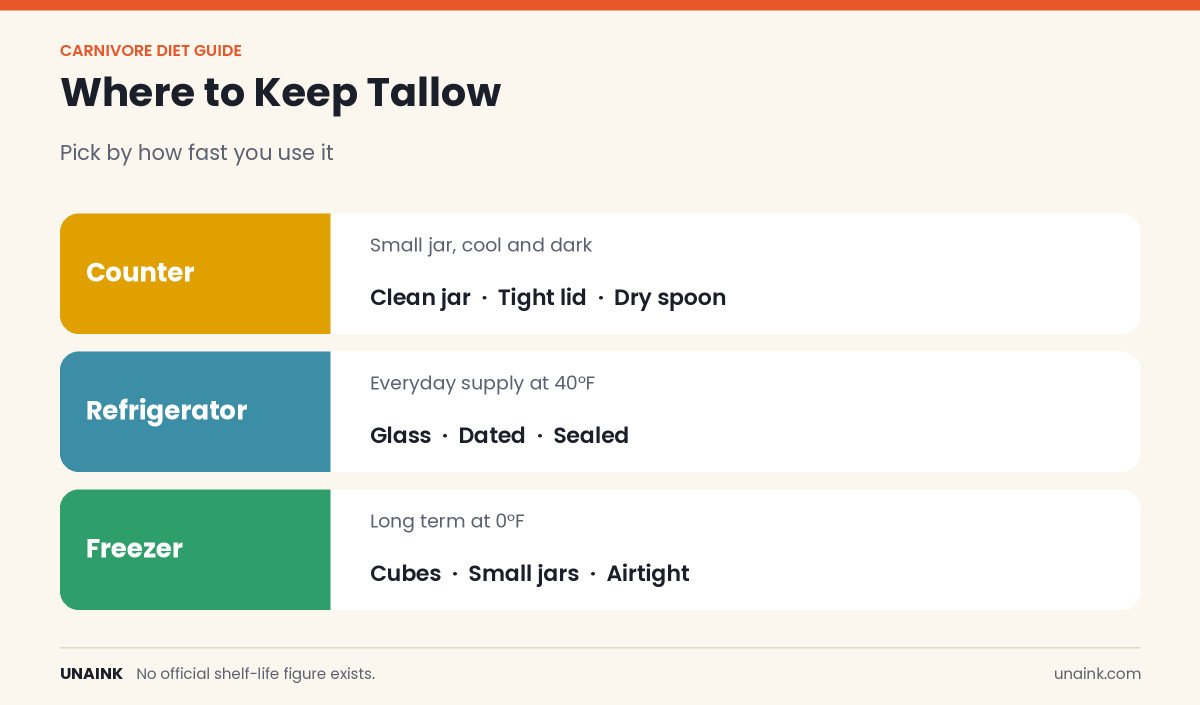
Each spot trades convenience against shelf life. The USDA offers no storage times for rendered fat, so the choices below follow cautious food safety logic rather than an official number.
| Where | Best for | Notes |
|---|---|---|
| Counter or pantry | A small jar you finish quickly | Cool, dark spot; keep away from the stove |
| Refrigerator (40°F or below) | Everyday cooking supply | Tight lid; use a clean, dry spoon |
| Freezer (0°F) | Large batches | Portion into small jars or cubes; leave headspace |
Frozen portions are handy. Pour tallow into ice cube trays, freeze, then move the cubes to a sealed freezer bag so you can take out only what you need.
Choosing Containers
Glass jars with tight lids work well because they do not absorb odors. Metal tins are fine if they are food grade. If you use plastic, choose a freezer-safe type. Leave a little space at the top of any jar you freeze, since fat expands slightly as it solidifies. Write the date on the lid so you know how old each jar is.
Keep Fresh Add-Ins Out
Seasoned tallow sounds appealing, but fresh garlic and herbs are a food safety problem in any oil or fat. Penn State Extension explains that these low-acid foods can carry botulism spores that grow in an oxygen-free environment, and it advises refrigerating oil with fresh herbs or garlic and using it within 2 to 4 days. Add seasoning to the dish, not the jar.
Signs Tallow Has Gone Off
- A sharp, bitter, paint-like or soapy smell
- Visible mold, fuzz or dark specks
- A gray, yellow-brown or dull color that was not there before
- A sour or fermented smell, which may point to water or food bits in the jar
- Any sticky, gummy texture that fresh tallow did not have
Fresh tallow smells mild and meaty, or like very little at all. When in doubt, throw it out, because a ruined batch costs far less than being sick.
Using Stored Tallow
Scoop with a clean, dry utensil every time. A wet spoon or crumbs from a pan introduce moisture and bacteria. For cooking tips, see whether you can reuse tallow and tallow versus butter. Home cooks who prefer pork fat can read how to render lard.
How to Store Beef Tallow: The Short Version
Knowing how to store beef tallow comes down to clean, dry, strained fat in airtight jars, kept cold and dark. If you are unsure how to store beef tallow for months, freeze small portions and rely on your senses, because no official shelf-life number exists.
Frequently Asked Questions
Does beef tallow need to be refrigerated?
There is no USDA rule for it. Refrigeration is the cautious choice, and the freezer is best for long storage.
How long does tallow last in the freezer?
The USDA says frozen food at 0°F stays safe indefinitely, while quality gradually declines. Use frozen tallow within a few months for the best flavor.
Why does my tallow smell sour?
Sour or fermented smells often mean moisture or food scraps in the jar. Discard it.
Can I store tallow with bits of meat in it?
It is better not to. Meat bits spoil faster than fat, so strain them out.
Can I refreeze melted tallow?
You can, but melting and refreezing repeatedly introduces air and moisture. Freeze small portions to avoid it.
Conclusion
Good storage is mostly good prep: strain well, cool fully, seal tight and keep it cold. Use small jars and the freezer for big batches, and let your nose make the final call.
Keep Reading
- How to Render Beef Tallow: Make a clean batch from suet or trimmings.
- Can You Reuse Beef Tallow?: Filtering and reusing fat after frying.
- How to Store Bacon Grease: Safe storage for another everyday fat.
- Tallow vs Lard: How the two fats differ.
Sources
- USDA FSIS: Freezing and Food Safety: Food held at 0°F stays safe indefinitely; quality changes over time.
- Penn State Extension: How to Safely Make Infused Oils: Botulism risk and storage limits for fresh herbs or garlic in oil.
- FoodSafety.gov: Cold Food Storage Charts: Refrigerator and freezer temperatures for foods.