The dirty carnivore diet is the relaxed cousin of strict carnivore eating. You still build meals around meat, fish and eggs, but you allow seasonings, sauces, processed meats and sometimes zero-sugar drinks. Supporters say the looser rules make the plan easier to keep up. Critics point out that bacon, sausage and deli meats are exactly the foods health agencies tell people to limit. This guide explains what the dirty carnivore diet allows, why it matters for your health, and how to make it less risky if you choose it.
Quick Answer
The dirty carnivore diet is an informal, more flexible version of the carnivore diet. It still centers on animal foods but allows spices, sauces, processed meats such as bacon and sausage, and drinks such as coffee or diet soda. It is easier to follow than strict carnivore, but processed meat is classified by the World Health Organization as carcinogenic to humans, so the flexibility comes with trade-offs.
Key Takeaways
- Dirty carnivore has no official definition. It generally means animal-based eating with relaxed rules about seasonings, sauces and processed meats.
- The flexibility can improve adherence, which is its main selling point.
- The WHO classifies processed meat as carcinogenic to humans, and risk rises with the amount eaten.
- Added sugar, starch and sodium in sausages, sauces and cured meats can also work against your goals.
- If you eat this way, keep processed meat occasional and read ingredient lists.
What Is the Dirty Carnivore Diet?
The term comes from the carnivore community, not from clinical research, so its meaning shifts depending on who you ask. In general, strict carnivore eating sticks to plain meat, salt and water. The dirty version tolerates anything that is mostly animal-based, even if it contains spices, small amounts of sugar or plant-derived additives.
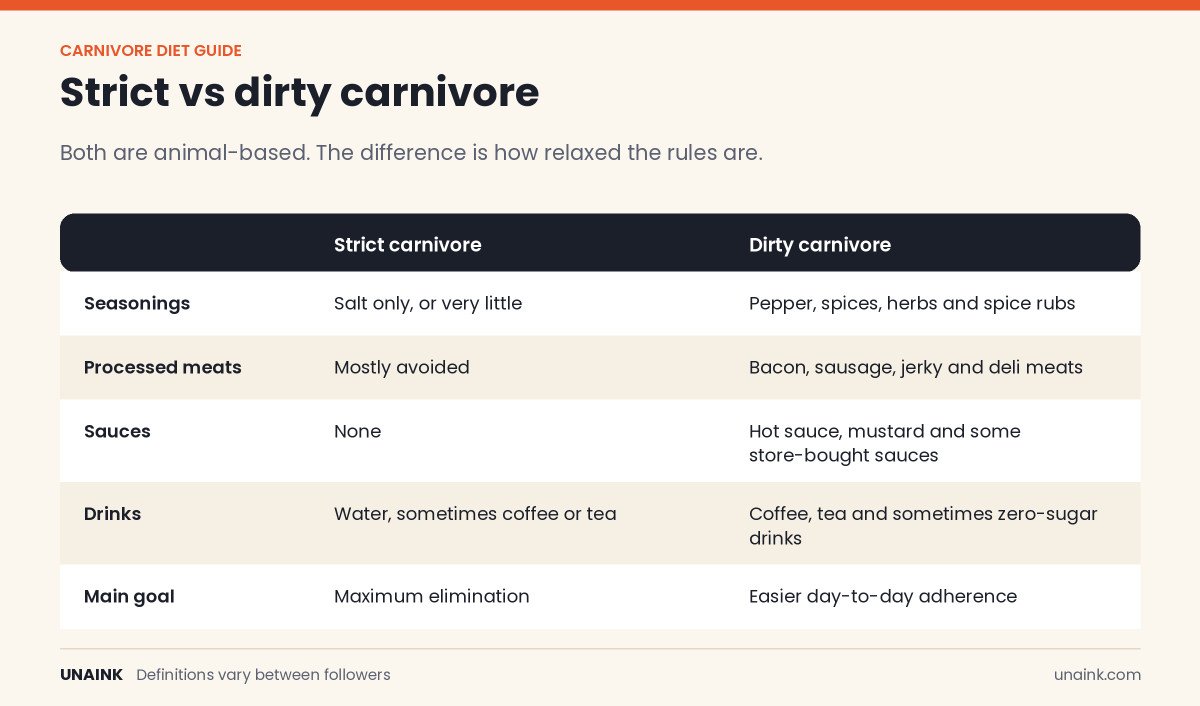
Both versions sit under the broader umbrella described in our guide to the carnivore diet. At the opposite extreme is the lion diet, which allows only ruminant meat, salt and water.
What You Can Eat on the Dirty Carnivore Diet
| Category | Typical examples | Note |
|---|---|---|
| Fresh meat, fish and eggs | Beef, pork, poultry, seafood, eggs | The foundation of the plan, as with any carnivore diet. |
| Processed meats | Bacon, sausage, hot dogs, jerky, deli meats | Convenient, but this is the main health concern. |
| Seasonings and rubs | Pepper, garlic powder, paprika, spice blends | Plant-derived, so a strict plan would skip them. |
| Sauces and condiments | Hot sauce, mustard, some barbecue sauces | Check labels for sugar, starch and oils. |
| Dairy | Cheese, cream, butter | Optional, as in many carnivore plans. |
| Drinks | Coffee, tea, sparkling water, zero-sugar sodas | Artificial sweeteners are not animal foods, and may increase cravings in some people. |
For the stricter baseline, compare this with our carnivore diet food list.
Why People Choose the Dirty Carnivore Diet
- It is easier to follow. Flavour makes plain meat less monotonous, and rules are simpler to live with.
- It fits social life. Restaurants, barbecues and travel are less awkward.
- It is convenient and cheaper. Sausage, bacon and deli meat are quick and often inexpensive.
- It can be a stepping stone. Some people start dirty and tighten up later, or go the other way after trying strict versions.
Why the Dirty Carnivore Diet Matters for Your Health
The most important difference between strict and dirty versions is processed meat. The WHO’s cancer agency classified processed meat, meaning meat that has been salted, cured, fermented or smoked, as carcinogenic to humans after a review of more than 800 studies. Red meat was classed as probably carcinogenic. The Harvard Nutrition Source notes that an analysis of ten studies found an 18 percent higher risk of colorectal cancer for each additional 50 grams of processed meat eaten daily.
That does not mean bacon is as dangerous as smoking. The same article stresses that being in the same IARC category does not mean equal risk, and the absolute risk for an individual is small. The concern is that the risk grows with the amount eaten, and a diet built around meat can add up quickly.
- Nitrates and nitrites. These curing agents can form N-nitroso compounds in the body. So-called nitrate-free products are often cured with celery juice, which is rich in nitrate, so they are not automatically safer.
- Smoking and charring. Smoked or heavily charred meat can contain polycyclic aromatic hydrocarbons and other compounds linked to cancer.
- Sodium. Cured meats and many sauces are very salty, which matters for blood pressure.
- Hidden sugar and starch. Cured bacon, sausages and sauces often contain added sugar, dextrose or fillers that undermine a low-carb goal, and may keep you out of ketosis. See whether the carnivore diet puts you in ketosis.
- Additives. Cleveland Clinic notes that even the standard carnivore plan steers away from highly processed meats such as sausage and deli cuts because of their additives. A dirty approach moves away from that advice.
The other risks of carnivore eating still apply too, including possible gaps in vitamin C, calcium and fiber, and higher LDL cholesterol. The 2026 scoping review in Nutrients found only nine human studies and could not recommend long-term adherence to a carnivore diet.
How to Do Dirty Carnivore Less Dirty
| Instead of | Try |
|---|---|
| Daily bacon, sausage and deli meat | Fresh steak, mince, chicken thighs, fish and eggs, with processed meat as an occasional extra |
| Sausages full of fillers | Sausages whose ingredients are only meat and salt, or fresh patties you season yourself |
| Sugary barbecue sauce | Salt, pepper and a plain spice rub, or mustard with no added sugar |
| Sweetened bacon and glazed meats | Plain cuts, or bacon with no added sugar and a short ingredient list |
| Heavily charred or smoked meat | Gentler cooking such as roasting, braising, stewing or pan-searing |
| Several diet sodas a day | Water, sparkling water, plain coffee or tea |
Aim to keep processed meat small and occasional, cook meat to safe internal temperatures, and read ingredient lists for sugar, starch and oils.
Who Should Be Careful With the Dirty Carnivore Diet
Everything in our general carnivore guide applies. In addition, people with high blood pressure, heart disease or kidney disease should be especially careful with the extra salt in cured meats. Anyone with a family history of colorectal cancer should discuss processed meat intake with a doctor. If you are pregnant, avoid cured and deli meats unless they are heated until steaming, as advised by many health authorities.
Frequently Asked Questions
What is the dirty carnivore diet?
It is a more flexible version of the carnivore diet that allows seasonings, sauces, processed meats and sometimes zero-sugar drinks, while still centring on animal foods.
Is the dirty carnivore diet healthy?
There is no research on it specifically. Because it permits processed meat, which the WHO classifies as carcinogenic to humans, it carries more risk than a diet built on fresh meat, fish and eggs.
Can you eat bacon on the dirty carnivore diet?
Yes, bacon is one of the most common foods in the dirty version. Choose varieties without added sugar, keep portions modest and treat it as an occasional food.
Are spices allowed on the dirty carnivore diet?
Yes. Pepper, paprika, garlic powder and spice blends are generally accepted, although they come from plants and would not be allowed on a strict plan.
Is dirty carnivore better than strict carnivore?
Neither is proven better. Dirty carnivore is easier to stick with, while strict carnivore avoids processed meat and plant additives. The best option is the one you can follow safely, with medical advice where needed.
Conclusion
The dirty carnivore diet trades purity for practicality. That can make an all-animal plan easier to live with, but processed meat, added sugar and sodium bring real downsides. If you choose this version, keep the foundation fresh and treat bacon and sausage as occasional. Season with simple spices, read labels, and keep an eye on your blood pressure, cholesterol and digestion.
Medical note
This article is for general education and is not medical advice. Talk with a doctor or registered dietitian before making major diet changes, especially if you have a health condition, take medication, or are pregnant or breastfeeding.
Keep Reading
- What Is the Carnivore Diet?: the full overview
- Carnivore Diet Food List: what to eat and what to skip
- Raw Carnivore Diet: the opposite extreme and its risks
- What Is the Lion Diet?: the strictest version
Sources
- Harvard T.H. Chan School of Public Health. Report says eating processed meat is carcinogenic: understanding the findings: WHO classification, 18 percent figure and nitrate-free labels
- Bouvard et al. Carcinogenicity of consumption of red and processed meat. The Lancet Oncology, 2015: the IARC evaluation
- Cleveland Clinic. Carnivore Diet: What Is It and Is It Healthy?: advice against highly processed meats
- Lietz, Dapprich and Fischer. Carnivore Diet: A Scoping Review. Nutrients, 2026: limits of the evidence
- Harvard Health Publishing. What is the carnivore diet?: saturated fat and LDL concerns