Can you reuse beef tallow after frying? Yes, if you strain it well, store it properly and watch for signs that it has broken down. Tallow is more stable than many oils, but frying adds moisture, food particles and flavors that shorten its life. This guide explains how to filter it and when to let it go.
Quick Answer
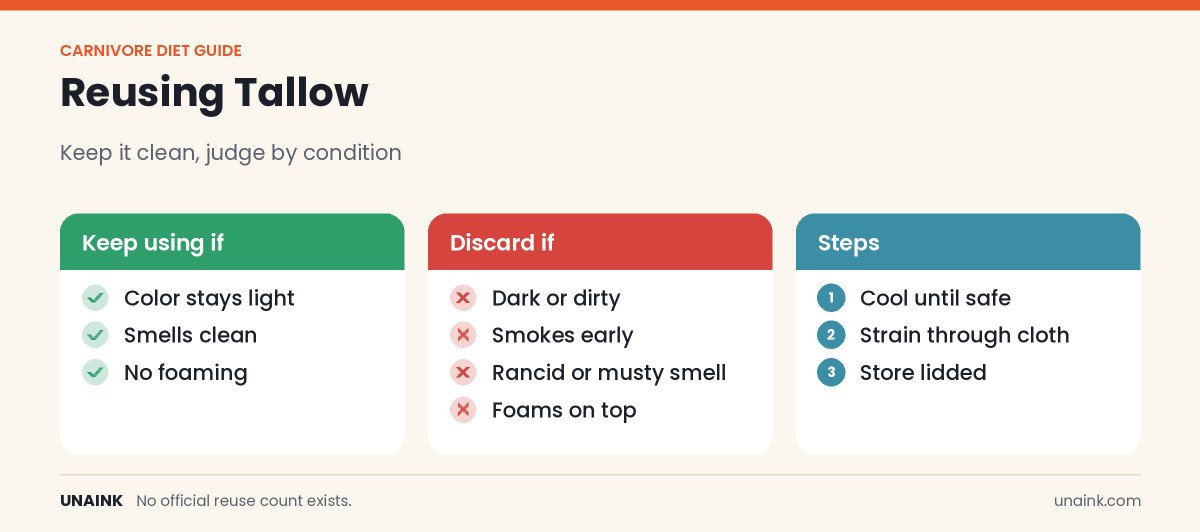
Yes, you can reuse beef tallow after frying. Let it cool until safe to handle, strain it through fine mesh or cheesecloth, and store it in a clean, lidded container, refrigerated for caution. Discard it if it is dark, smokes early, foams, or smells rancid or musty. No official reuse count exists.
Key Takeaways
- Strain out every food particle after each use, since leftover bits burn and spoil the fat.
- There is no USDA limit on reuse, so judge by color, smell, foaming and smoking.
- Store strained tallow in a lidded container away from light and heat, or refrigerate it.
- Frying fish or heavily seasoned food can leave flavors behind, so keep separate batches.
- Never add fresh garlic or herbs to stored fat.
How Reuse Works
Each time fat is heated, it breaks down a little. Water from food, crumbs and breading speed that up. Beef tallow is mostly saturated fat, which resists oxidation better than many liquid oils, yet it still darkens and picks up flavors. Careful filtering is the most useful step you can take.
How to Filter Used Beef Tallow
- Turn off the heat and let the tallow cool until it is no longer dangerously hot but still liquid.
- Set a fine-mesh strainer lined with cheesecloth or a coffee filter over a clean, heat-safe container.
- Pour slowly, so crumbs and sediment stay behind.
- Let the filtered fat settle, and discard any water or dark sludge that sinks to the bottom.
- Cover and label the container with the date and what you fried.
Tallow sets as it cools. If it hardens before you strain it, warm it gently to melt it again.
Can You Reuse Beef Tallow? Signs to Discard
Cooking educators, including King Arthur Baking, point to a few clear signs that fat has had its day. Throw it out if:
- It has turned dark or dirty
- It smokes before reaching frying temperature
- It foams on the surface
- It smells rancid or musty, beyond the scent of the food you fried
No source gives a fixed number of uses, so check the fat each time. Frying breaded or wet foods usually ruins it sooner than frying plain potatoes or steak.
Storing Filtered Tallow
Use a clean, lidded container and keep it in a cool, dark place, or in the refrigerator for extra caution. Refrigeration is also wise in warm kitchens. The USDA says frozen food at 0°F stays safe indefinitely, so the freezer is useful for extra batches. Our tallow storage guide covers jars and labeling.
Safety When Frying
Hot fat causes serious burns and fires. Keep water away from the pot, never leave it unattended, and dry food well before it goes in. Use a deep pot with room to spare, and let the fat cool fully before moving it. Do not pour used fat down the drain.
If you are making tallow from scratch, start with how to render beef tallow. To compare cooking fats, read tallow versus butter.
Can You Reuse Beef Tallow: The Short Version
Can you reuse beef tallow? Yes, with careful straining, clean storage and a close look at its color and smell. If you reuse tallow often, keep it for similar foods and throw it out at the first sign of foaming, early smoke or off odors.
Frequently Asked Questions
How many times can I reuse beef tallow?
No official count exists. Reuse it as long as it stays light, smells clean and does not foam or smoke early.
Can I fry fish and then fries in the same tallow?
You can, but fish flavors will carry over. Keep a separate batch for fish.
Should used tallow be refrigerated?
It is the cautious choice, especially if some moisture or food particles may remain.
Why is my tallow foaming?
Foam usually means water or food residue has built up. Discard the fat.
Can I mix new tallow into old?
You can top up with fresh fat, but the older fat will still influence smoke and flavor.
Conclusion
Reusing tallow saves money and reduces waste, as long as you filter it carefully and judge it by its condition. Cool it safely, strain it, store it clean and discard it when it looks or smells wrong.
Keep Reading
- How to Store Beef Tallow: Containers, cold storage and spoilage signs.
- How to Render Beef Tallow: Make a clean supply at home.
- Beef Tallow vs Butter: Compare cooking fats.
- Are Seed Oils Bad for You?: What the evidence says.
Sources
- King Arthur Baking: How to Reuse and Discard Frying Oil: Straining, storing and signs to discard.
- USDA FSIS: Freezing and Food Safety: Food at 0°F stays safe indefinitely.
- Penn State Extension: How to Safely Make Infused Oils: Why fresh garlic and herbs do not belong in stored oil.