The tallow vs lard question is really about two traditional cooking fats: tallow from cattle, lard from pigs. Both are mostly saturated and monounsaturated fat, both are used in carnivore kitchens, and both have lost ground to seed oils for decades. Each has a distinct personality in the pan.
Quick Answer
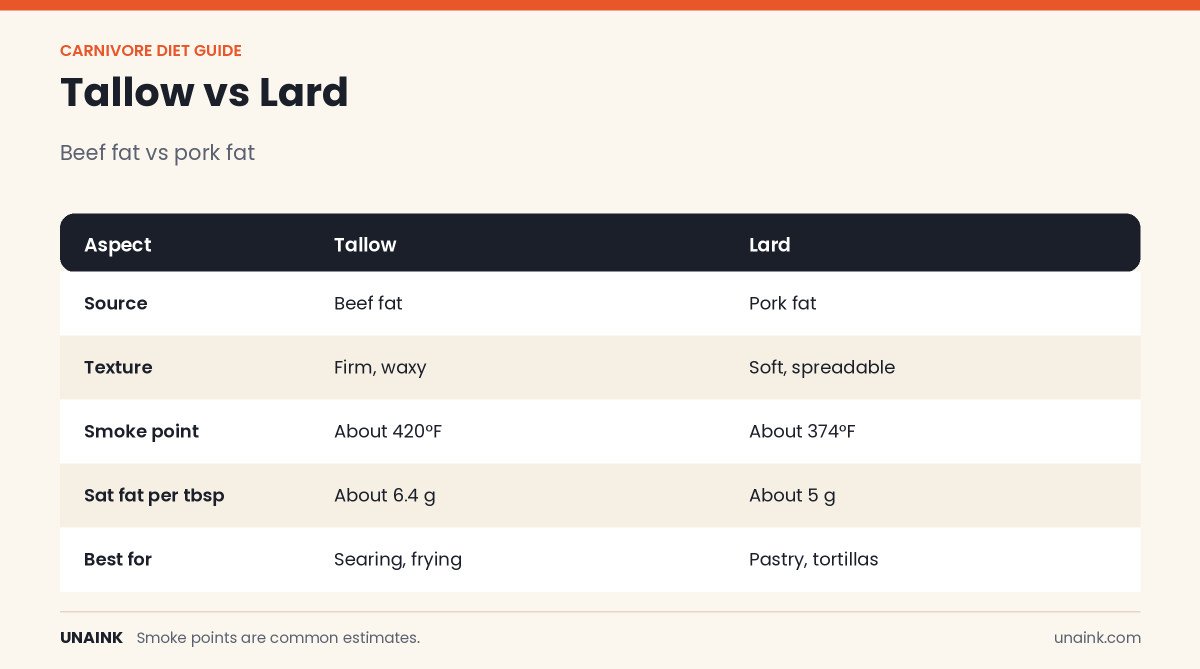
Tallow comes from beef fat and lard from pork fat. Tallow is firmer, more savory, and handles higher heat, with a smoke point around 420°F against roughly 374°F for lard. Lard is softer and gives flakier pastry. Nutritionally they are close, and lard has slightly less saturated fat per tablespoon.
Key Takeaways
- Tallow is beef fat; lard is pork fat.
- Tallow suits searing and deep-frying; lard shines in baking, tortillas, and pie crust.
- A tablespoon of tallow has about 6.4 g saturated fat; lard has about 5 g.
- Both raise LDL more than olive oil in controlled studies, so portions matter.
- Flavor and recipe usually decide the winner more than nutrition does.
Where Each Fat Comes From
Tallow is rendered from the hard fat around beef kidneys and other trimmings, and our tallow guide explains the basics. Lard is rendered pork fat. The best-known type is leaf lard, which comes from around the kidneys and is mild and clean-tasting. For step-by-step methods, see rendering tallow and rendering lard.
Taste, Texture, and Best Uses
At room temperature, tallow is firm and waxy while lard is soft and spreadable. Tallow tastes savory and beefy but fairly neutral once well rendered. Lard can carry a more noticeable pork flavor unless it is leaf lard.
- Tallow: searing steak, deep-frying, roasting, and savory dishes where beef flavor fits.
- Lard: pie crusts, biscuits, flour tortillas, and recipes that call for creaming.
- Either: eggs, burgers, and pan-fried meats.
For carnivore baking, check the recipes for carnivore tortillas and carnivore bread, where the choice of fat changes texture.
Tallow vs Lard Nutrition
Per tablespoon, USDA figures cited by Nutrition Advance show tallow at 115 calories with about 6.4 g saturated, 5.4 g monounsaturated, and 0.5 g polyunsaturated fat. Lard is also 115 calories with about 5 g saturated, 5.8 g monounsaturated, and 1.4 g polyunsaturated fat.
| Per tablespoon | Tallow | Lard |
|---|---|---|
| Calories | About 115 | About 115 |
| Saturated fat | About 6.4 g | About 5.0 g |
| Monounsaturated fat | About 5.4 g | About 5.8 g |
| Polyunsaturated fat | About 0.5 g | About 1.4 g |
| Common smoke point | About 420°F | About 374°F |
| Vitamin D | Under 1 percent DV | About 2 percent DV |
Lard has a little more vitamin D and polyunsaturated fat, and tallow is slightly more saturated. Neither is a vitamin source in cooking amounts.
Heart Health and Moderation
A 2024 randomized crossover trial found LDL about 7.5 percent higher on a lard-based diet than on an olive oil diet. Small studies of tallow show similar patterns versus unsaturated oils. People with high cholesterol or heart disease should discuss animal-fat intake with a clinician.
Also check labels. Some commercial shortening-style lards are hydrogenated, and store-bought fats may be blended with other oils. Pure, unflavored rendered fat is the cleanest choice for a carnivore plan.
Choosing Between Tallow and Lard
- Pick tallow when you want high heat and a sturdy fat that keeps well.
- Pick lard for flaky pastry and softer baked goods.
- Avoid pork products if you avoid pork for dietary or religious reasons.
- Keep both if you cook many styles of food, and compare with butter if you use dairy.
Tallow vs Lard: The Short Version
The tallow vs lard decision is mostly about flavor and heat. Use tallow for searing and frying, lard for baking, and in any tallow vs lard comparison keep the saturated fat total in mind.
Frequently Asked Questions
Is tallow healthier than lard?
Not clearly. Lard has slightly less saturated fat and more polyunsaturated fat per tablespoon, but both are animal fats that raise LDL more than olive oil. Neither is proven healthier than the other.
Can I swap tallow for lard in recipes?
Usually yes, in equal amounts. Expect firmer texture with tallow and a more tender, flaky result with lard.
Which has the higher smoke point?
Tallow, at about 420°F, compared with roughly 374°F for lard.
What is leaf lard?
Leaf lard is the soft, mild fat from around the pig’s kidneys. It is prized for pastry because it has little pork flavor.
Do tallow and lard need refrigeration?
Well-rendered fat stores best in a cool, dark place or the refrigerator. Discard any that smells rancid or shows mold.
Conclusion
Tallow and lard are close cousins with different strengths. Match the fat to the dish, keep portions reasonable, and buy pure rendered fat without added oils.
Medical note
This article is for general education and is not medical advice. Talk with a doctor or registered dietitian before making major diet changes, especially if you have a health condition, take medication, or are pregnant or breastfeeding.
Keep Reading
- What Is Beef Tallow?: Everything about the classic carnivore fat.
- How to Render Lard: Make pure lard at home.
- Beef Tallow vs Butter: Another popular fat matchup.
- Suet vs Tallow: How raw beef fat becomes cooking fat.
Sources
- Nutrition Advance: What Is Lard and Is It a Healthy Fat For Frying?: USDA-based lard nutrition and LDL trial findings.
- Nutrition Advance: Beef Tallow Nutrition, Benefits, and Drawbacks: Tallow nutrition per tablespoon.
- Food Republic: Beef Tallow Vs Lard, The Difference, Explained: Flavor, texture, uses, and smoke points.
- American Heart Association: Saturated Fats: Saturated fat guidance.