
You can season cast iron with beef tallow using the same oven method used for any cooking fat, and the result is a smooth, dark, naturally nonstick finish. Seasoning is a thin layer of fat baked onto the metal. This guide walks through the steps, based on University Extension guidance, and explains what to do if the pan comes out sticky.
Quick Answer
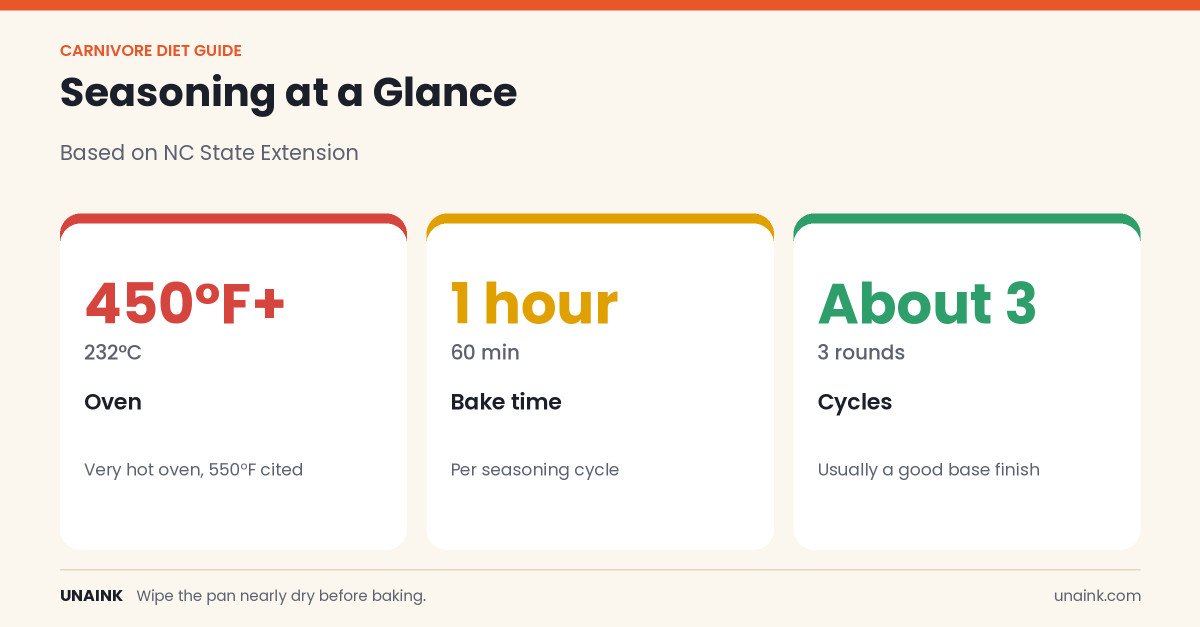
To season cast iron with beef tallow, wipe a thin layer of melted tallow over the clean, dry pan, then wipe off almost all of it. Bake the pan upside down in a very hot oven, around 450°F to 550°F, for one hour, then let it cool. Repeat about three times for a durable finish.
Key Takeaways
- The key is a thin layer: coat the pan, then wipe it until it looks nearly dry.
- NC State Extension describes baking in a very hot oven for one hour per cycle and repeating about three times.
- Run the exhaust fan, because some smoke is normal, but flames or heavy smoke are not.
- Sticky or tacky spots mean too much fat was left on the pan.
- Dry the pan completely after each wash to prevent rust.
What Seasoning Actually Is
When fat is heated on iron to a high temperature, it bonds to the surface and forms a hard, slick coating. Each layer fills tiny pores in the metal, so a pan improves with repeated use. Beef tallow is a common choice among cooks who want to avoid seed oils. For background, read what beef tallow is.
How to Season Cast Iron With Beef Tallow, Step by Step
- Wash the pan with hot water, dry it, and warm it on the stove briefly to remove every trace of moisture.
- Melt a spoonful of tallow and rub it over the whole pan, inside, outside and the handle.
- Wipe off the excess with a clean cloth until the surface looks dry, with no pooling.
- Place the pan upside down in a preheated oven, with a sheet of foil on the rack below to catch drips.
- Bake for one hour, then turn off the oven and let the pan cool until you can safely handle it.
- Repeat the coat, wipe and bake cycle two more times for a good base.
NC State Extension used canola oil in its example and notes that the oven should be very hot, citing 550°F, with 450°F mentioned elsewhere as enough. Its guidance did not test tallow, so treat the same method as a reasonable starting point.
Safety and Ventilation
Seasoning produces smoke. Turn on the vent hood, open a window and keep the oven clean of old spills. Smoke is expected, but flames or heavy smoke mean you should shut the oven off. Use oven mitts, since cast iron holds heat for a long time, and never leave a hot pan where children can reach it.
Fixing a Sticky Finish
A tacky surface usually means the fat was applied too thickly and did not fully bake on. Wipe off any wet spots, then bake the pan upside down at a high temperature for another hour. If it stays patchy, scrub with hot water, dry, and start again with thinner layers.
Caring for the Finish
NC State Extension advises cleaning with water and a damp cloth while the pan is still warm, and avoiding soap, steel wool and abrasive cleansers. Dry the pan fully, never leave it in a wet sink, and keep it out of the dishwasher. To remove rust, scrub with a wet towel and kosher salt, then season again. Our cast iron steak guide shows the pan in action.
Season Cast Iron With Beef Tallow: The Short Version
To season cast iron with beef tallow, apply the thinnest possible layer and bake it hot, repeating a few times. When you season cast iron with beef tallow carefully and dry the pan after every wash, the finish builds up with use.
Frequently Asked Questions
Can I use beef tallow instead of vegetable oil to season cast iron?
Yes, the method is the same. The extension source used canola oil, so tallow is a reasonable substitute rather than a tested one.
Why is my pan sticky?
Too much fat was left on the surface. Wipe the pan thinner next time and bake it again.
How many times should I season it?
NC State Extension says about three cycles usually give a good seasoning, and more cycles make it thicker.
Is smoke normal?
Yes, but never flames or heavy smoke.
Can I wash cast iron with soap?
NC State Extension advises against it. Use water and a damp cloth, then dry thoroughly.
Conclusion
A good cast iron finish takes patience more than skill. Use thin coats, a hot oven and good ventilation, and keep the pan dry. With regular cooking in tallow, the surface will keep improving.
Keep Reading
- How to Cook Steak in a Cast Iron Skillet: Put your seasoned pan to work.
- What Is Beef Tallow?: Background on the fat.
- How to Render Beef Tallow: Make your own supply.
- How to Store Beef Tallow: Keep your supply fresh.
Sources
- NC State Extension: Got a Cast Iron Skillet?: Oven seasoning temperature, time, cycles and care.
- Penn State Extension: How to Safely Make Infused Oils: Safe handling of oils with fresh additions.
- USDA FSIS: Freezing and Food Safety: Food storage basics.