
The ketovore diet blends the ketogenic diet with carnivore eating. Meat, fish and eggs lead the menu, while a small number of low-carb plant foods stay on the plate. It appeals to people who like the idea of a meat-first diet but are not ready to give up vegetables entirely. This guide explains what the ketovore diet is, what you can eat, how it compares with keto and carnivore, and where the evidence stands.
Quick Answer
The ketovore diet is an informal hybrid of keto and carnivore. It prioritizes animal foods and keeps carbohydrates low, but allows a limited amount of low-carb plants such as leafy greens, broccoli and avocado. It usually has more protein than standard keto and more variety than carnivore. There are no studies on ketovore itself, so its safety and benefits are inferred from keto and carnivore research.
Key Takeaways
- Ketovore is not an official or scientific term, but a popular name for a keto and carnivore hybrid.
- It is meat-first, low in carbohydrate and includes a few low-carb plant foods.
- It is less restrictive than carnivore and typically higher in protein than keto.
- Concerns from keto research apply, including higher LDL cholesterol and kidney stone risk.
- Because high protein can limit ketone production, ketosis is not guaranteed.
What Is the Ketovore Diet?
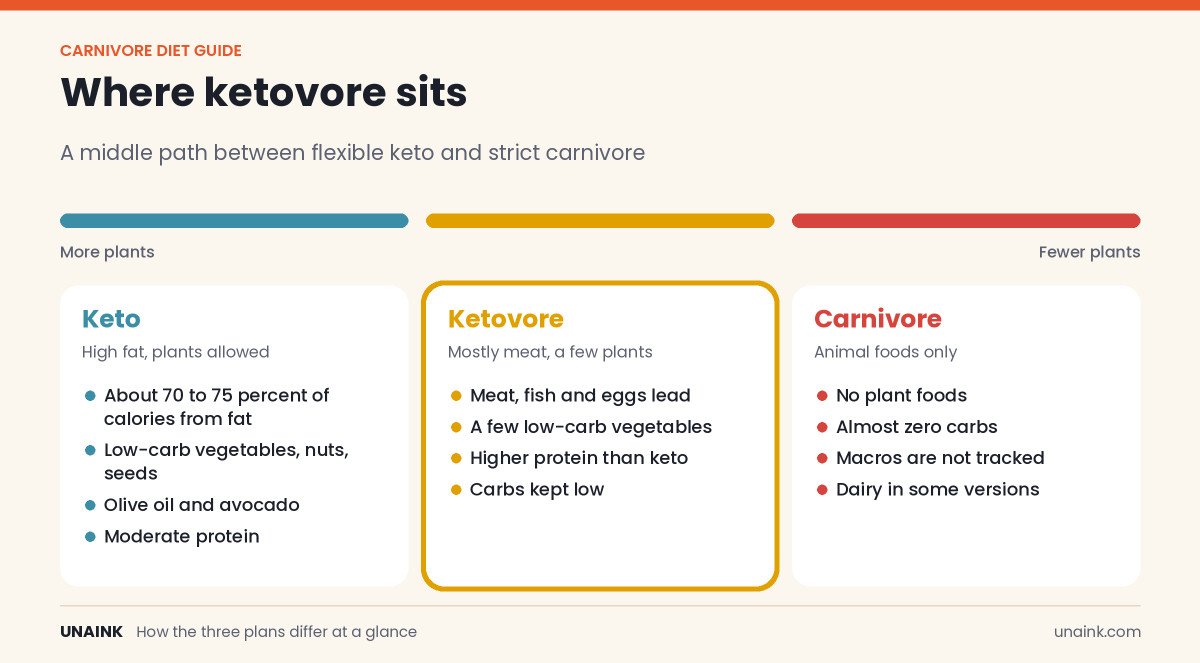
Ketovore is a nickname, not a medical definition. As The Manual notes, it is an unofficial term for a way of eating that mixes the standard keto diet with the carnivore diet. You will also see it called keto-carnivore or meat-heavy keto.
The idea is to keep carbs low enough to support ketosis while leaning on animal foods for most calories. Where keto allows nuts, seeds, berries and plenty of vegetables, ketovore keeps these to a minimum. Where carnivore removes all plants, ketovore lets a few in. It is less restrictive than the full carnivore diet but stricter than most keto menus.
Ketovore Diet Food List
| Food group | Ketovore approach |
|---|---|
| Beef, lamb, pork and poultry | The centerpiece of most meals. Fattier cuts are common. |
| Fish and shellfish | Encouraged, especially fatty fish such as salmon and sardines. |
| Eggs | A daily staple for many followers. |
| Organ meats | Optional but popular for micronutrients. |
| Butter, tallow and other animal fats | Used for cooking and for extra fat. |
| Cheese and cream | Often included in moderation if tolerated. |
| Low-carb vegetables | A small portion of leafy greens, broccoli, cauliflower, zucchini or cucumber. |
| Avocado and olives | Allowed by many followers for fat and fiber. |
| Nuts, seeds and berries | Small amounts, if any. |
| Grains, sugar, legumes and starchy vegetables | Skip. They carry too many carbs. |
For a stricter animal-only list, see our carnivore diet food list.
Ketovore vs Keto vs Carnivore
| Keto | Ketovore | Carnivore | |
|---|---|---|---|
| Plant foods | Low-carb plants welcome | A few low-carb plants | None |
| Protein level | Moderate | Higher | Higher, not tracked |
| Fat focus | Very high | High to moderate | Whatever comes with the meat |
| Carbohydrate | Low | Low | Almost zero |
| Flexibility | Highest | Middle | Lowest |
Harvard Health describes a typical keto plan as roughly 70 to 75 percent of calories from fat, about 20 percent from protein and no more than 10 percent from carbohydrate. Ketovore usually shifts that balance toward protein, which is why a ketovore plate can look more like a steak dinner than a keto buffet.
Does the Ketovore Diet Put You in Ketosis?
It can, but it is not guaranteed. Ketosis depends on very low carbohydrate intake, and very high protein can push some people out of it because the body can turn amino acids into glucose. If you want to confirm that you are producing ketones, a blood ketone meter is the most reliable check. Our guide to carnivore diet and ketosis explains how protein, fat and testing affect the result, and the same logic applies to ketovore.
Possible Benefits of the Ketovore Diet
- More flexibility than carnivore. A few vegetables make restaurant meals and family cooking easier.
- Better fiber and micronutrient access. Even small portions of greens, broccoli and avocado add fiber and plant nutrients that carnivore eating lacks.
- Low-carb effects. Cutting carbs can reduce hunger and blood sugar swings, and Harvard Health notes that keto-style diets can jump-start weight loss.
- Easier to sustain. Many people find a hybrid easier to keep up than a zero-plant plan.
Remember that these are mostly benefits of low-carb eating in general. Nobody has run a trial on ketovore itself.
Risks and Downsides
- Higher LDL cholesterol. Harvard Health notes that keto diets tend to raise LDL cholesterol, and a meat-heavy version adds saturated fat.
- Kidney stones, gout and bone health. The same source lists these as longer-term concerns for keto-style diets, and very high protein can strain the kidneys.
- Nutrient gaps. A narrow food list may fall short in fiber, magnesium, potassium and vitamin C. The 2026 scoping review of carnivore diets flagged similar gaps for plant-free plans.
- Adaptation symptoms. Fatigue, headaches and digestive changes are common during the first weeks.
- Medication issues. People taking insulin, other diabetes medicines or blood pressure drugs may need dose changes, and should not alter their diet without medical advice.
Who Might Consider Ketovore, and Who Should Skip It
Ketovore may suit healthy adults who enjoy meat, want a low-carb plan and prefer something less extreme than carnivore. It is a poor fit for anyone who is pregnant or breastfeeding. It is also a poor fit for people with kidney disease, a history of eating disorders, heart disease or high LDL cholesterol, unless a clinician approves it. Anyone who takes diabetes medication should talk to a doctor first, because very low carb eating can cause blood sugar to fall too far.
A Sample Ketovore Day
- Breakfast: scrambled eggs cooked in butter with wilted spinach.
- Lunch: a beef burger patty over greens with avocado and olive oil.
- Dinner: salmon with roasted broccoli and a knob of butter.
- Snack: a few olives and cubes of hard cheese, or a boiled egg.
Portions depend on your size, activity and goals, so treat this as an illustration, not a prescription.
How to Start the Ketovore Diet
- Check in with a clinician and get baseline blood work for cholesterol, kidney function, glucose and key vitamins.
- Pick a carb ceiling and track it for the first few weeks, so you learn what a low-carb portion looks like.
- Build meals around protein and fat and add a small serving of low-carb vegetables for fiber.
- Mind your electrolytes and fluids to ease early fatigue and headaches.
- Review after a month. Repeat labs, note how you feel and decide whether to continue, loosen or stop.
If you prefer a plan that allows fruit, see the animal based diet. If you want the strictest end of the spectrum, read about the lion diet.
Frequently Asked Questions
What does ketovore mean?
Ketovore is a blend of the words keto and carnivore. It describes a low-carb, meat-first way of eating that allows a limited amount of low-carb plant foods.
How many carbs can you eat on ketovore?
There is no official limit. Many followers aim for keto-style carbohydrate levels, often cited as about 50 grams a day or less, then adjust based on how they feel and whether they test ketones.
Is ketovore healthier than carnivore?
It is likely to supply more fiber and plant nutrients than carnivore because it includes some vegetables, but neither plan has been studied long term. Both can raise LDL cholesterol.
Can you eat vegetables on ketovore?
Yes, in small amounts. Leafy greens, broccoli, cauliflower, zucchini and cucumber are the usual choices, while starchy vegetables are avoided.
Will ketovore put you in ketosis?
Possibly, if carbs stay very low. Very high protein can limit ketone production, so testing is the only way to know for sure.
Conclusion
The ketovore diet is a practical compromise for people who like the meat-first approach of carnivore eating but want a few plants and some flexibility. It borrows its benefits and risks from keto and carnivore research, and it has no dedicated studies of its own. If you try it, favor a mix of fish, eggs and fatty cuts, add low-carb vegetables, monitor your cholesterol and kidney function, and involve a healthcare professional.
Medical note
This article is for general education and is not medical advice. Talk with a doctor or registered dietitian before making major diet changes, especially if you have a health condition, take medication, or are pregnant or breastfeeding.
Keep Reading
- What Is the Carnivore Diet?: the stricter all-animal plan
- Does the Carnivore Diet Put You in Ketosis?: how protein and fat shape ketone levels
- What Is the Animal Based Diet?: meat with fruit and honey
- 9 Carnivore Diet Benefits: what the research supports
Sources
- The Manual. Ketovore diet guide: keto vs ketovore: definition and comparison with keto
- Harvard Health Publishing. What is the carnivore diet?: keto macros, LDL, kidney stones, gout and osteoporosis
- Lietz, Dapprich and Fischer. Carnivore Diet: A Scoping Review. Nutrients, 2026: nutrient gaps on restrictive meat-based plans
- Keto-Mojo. Carnivore ketosis: a data approach: how protein and fat affect ketone levels
[…] Plans that add fruit, honey or a few low-carb vegetables are not strictly carnivore. They belong to relatives such as the animal based diet and the ketovore diet. […]