
Knowing who should not do the carnivore diet matters more than any meal plan, because a meat-only pattern removes whole food groups and changes how the body handles fat, protein, salt and fluids. Evidence on the diet is limited to small studies, so caution is the sensible default for several groups. This guide explains who is at higher risk and why.
Quick Answer
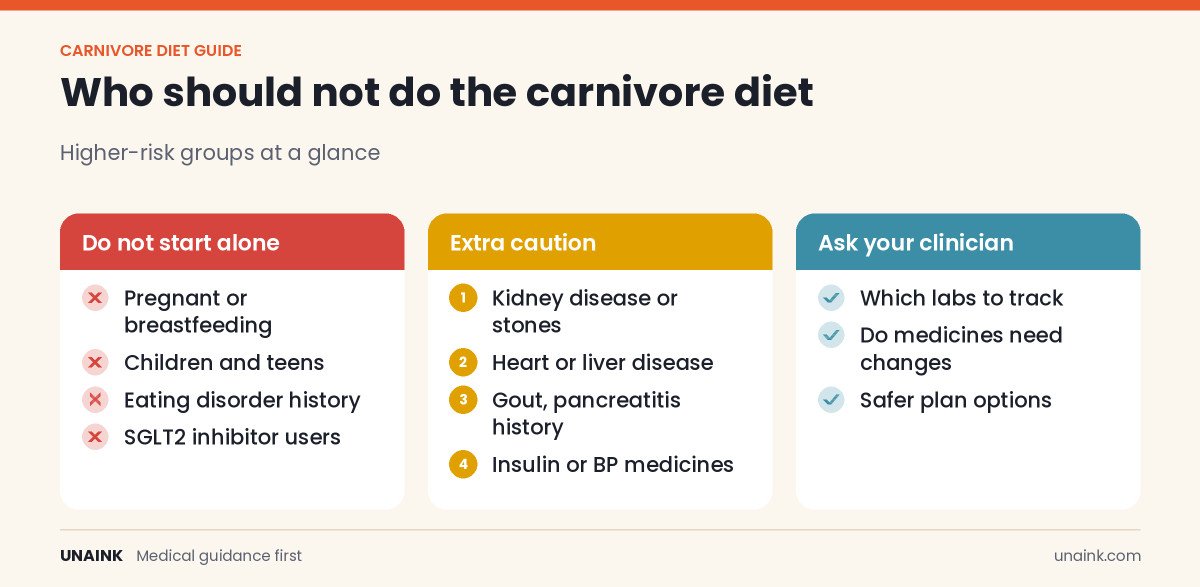
People who are pregnant or breastfeeding, children and teens, anyone with kidney disease or a history of eating disorders, and people taking SGLT2 inhibitors should not start a carnivore diet on their own. Others with heart, liver, gout or lipid problems need a clinician involved first. A 2026 review concluded long-term adherence cannot be recommended for anyone.
Key Takeaways
- A 2026 scoping review found only nine small human studies and could not recommend long-term use.
- Pregnancy, breastfeeding, childhood and adolescence are groups with no safety evidence and real nutrient concerns.
- Kidney disease, kidney stones, gout, pancreatitis and severe lipid disorders raise specific risks.
- People taking SGLT2 inhibitors face a ketoacidosis risk, and other medicines may need dose changes.
- Never change a medicine yourself; a clinician or registered dietitian should guide any major diet shift.
Why Risk Varies From Person to Person
A carnivore diet is very high in animal protein and saturated fat, very low in carbohydrate and contains no fiber. The 2026 scoping review flagged possible shortfalls in vitamin C, vitamin D, calcium, magnesium, iodine and fiber, plus higher LDL cholesterol in several studies. Healthy adults may tolerate these changes for a while. People with existing conditions have less margin.
For the basics, see what the carnivore diet is and whether it is healthy.
Pregnancy, Breastfeeding, Children and Teens
There is no good safety evidence for a carnivore diet in pregnancy or breastfeeding, and these are times of high demand for folate, calcium, iron, iodine and other nutrients. Very low-carbohydrate diets are generally not advised in either situation. Anyone pregnant or nursing should talk with their obstetric provider or a dietitian instead of experimenting. See pregnancy and breastfeeding.
For young people, the American Academy of Pediatrics in 2023 cautioned against low-carbohydrate diets for children and teens with or at risk of diabetes, citing possible slowed growth, nutrient deficiencies, poor bone health and disordered eating. It noted that evidence in youth is limited. See children and the carnivore diet.
Kidney, Heart, Liver and Lipid Conditions
The National Lipid Association advises caution with very low-carbohydrate diets for people with kidney disease, liver disease, heart failure, atrial fibrillation or established heart disease, because effects in these groups are not well understood. It lists severe hypertriglyceridemia, a history of pancreatitis caused by high triglycerides, and inherited severe high cholesterol as reasons to avoid them.
A small 2002 study of ten healthy adults found urine changes that could raise kidney stone risk on a very restrictive low-carb diet. The scoping review also described a patient with kidney stones whose urine profile and gout flares worsened and improved after stopping. See kidney concerns and gout risk.
Medicines That Change the Picture
A major diet change can alter how medicines work. Do not stop or adjust any of them yourself.
- SGLT2 inhibitors: the National Lipid Association lists them as a contraindication with very low-carb diets because of ketoacidosis risk.
- Insulin and sulfonylureas: falling blood sugar can raise the risk of hypoglycemia if doses are not reviewed.
- Blood pressure drugs and diuretics: fluid and sodium shifts may lower blood pressure further.
- Warfarin: vitamin K intake changes can affect clotting measures.
- GLP-1 medicines: reduced appetite can make it hard to meet nutrient needs on any restrictive plan.
See GLP-1 medications and carnivore for more.
Eating Disorders, Seniors and Other Cautions
A strict food rule list can feed rigid thinking and restriction, so anyone with a history of an eating disorder should avoid self-directed elimination diets and work with a qualified team. Older adults have a higher risk of low muscle mass, bone loss and declining kidney function, and Harvard Health notes osteoporosis as a long-term concern with the diet. See seniors and the carnivore diet.
People without a gallbladder may find very high fat intake uncomfortable, and those with digestive disease should discuss any elimination plan with their gastroenterologist.
Who Should Not Do the Carnivore Diet: Quick Reference
| Group | Main concern | Next step |
|---|---|---|
| Pregnant or breastfeeding | Nutrient needs, no safety data | Obstetric provider or dietitian |
| Children and teens | Growth, bones, disordered eating | Pediatrician |
| Kidney disease or stones | Protein load, urine changes | Nephrologist |
| SGLT2 inhibitor users | Ketoacidosis | Prescriber before any change |
| Diabetes on insulin | Low blood sugar | Care team, dose review |
| Severe lipid disorders | LDL, triglycerides, pancreatitis | Lipid specialist |
| Eating disorder history | Restriction triggers | Eating disorder team |
What to Ask Your Clinician
- Do my medicines need monitoring if I change how I eat?
- Which labs should I have before and after, such as lipids, kidney function and liver tests?
- Are there safer ways to reach my goal, like a dietitian-guided plan?
- What warning signs should make me stop and call?
Who Should Not Do the Carnivore Diet: The Short Version
Who should not do the carnivore diet comes down to life stage, medicines and existing conditions. If you fall into any of these groups, skip the diet unless a clinician who knows your history agrees; learning who should not do the carnivore diet is the safest first step.
Frequently Asked Questions
Is the carnivore diet safe for healthy adults?
Evidence is too limited to say. The 2026 scoping review could not recommend long-term use even for generally healthy adults.
Can you do the carnivore diet with kidney disease?
It is not advised without nephrology guidance. Very high protein and changes in urine chemistry are concerns.
Is the carnivore diet safe during pregnancy?
There is no safety evidence, and nutrient needs are high. Speak with your obstetric provider rather than trying it.
Can I do the carnivore diet if I take diabetes medicine?
Only with your prescriber involved. Doses may need review, and SGLT2 inhibitors carry a ketoacidosis risk.
What are warning signs to stop?
Persistent dizziness, heart palpitations, severe fatigue, flank pain, vomiting or confusion warrant prompt medical advice.
Conclusion
Limited evidence and several well-described risks mean the carnivore diet is not a good fit for many people. Discuss any major change with a doctor or registered dietitian, particularly if you are pregnant, young, older, take medicines or manage a chronic condition.
Medical note
This article is for general education and is not medical advice. Talk with a doctor or registered dietitian before making major diet changes, especially if you have a health condition, take medication, or are pregnant or breastfeeding.
Keep Reading
- Is the Carnivore Diet Healthy?: Benefits and risks side by side.
- Carnivore Diet Side Effects: Common problems and what they mean.
- Carnivore Diet Myths: Ten claims checked against evidence.
- Carnivore Diet Long-Term Effects: What is known beyond a few months.
Sources
- Carnivore Diet: A Scoping Review of the Current Evidence: Nine human studies, risks and conclusion
- National Lipid Association: low and very low carbohydrate diets: Contraindications and cautions
- AAP policy on low-carbohydrate diets for children and adolescents: 2023 pediatric guidance
- University of Chicago Medicine: low-carb high-protein diets and kidney stones: 2002 small study on urine chemistry
- Harvard Health: What is the carnivore diet?: LDL, kidney stones, gout, osteoporosis
- Cleveland Clinic: The carnivore diet: Heart, kidney and digestive concerns

[…] Who Should Not Do the Carnivore Diet: Groups who need medical guidance first. […]