Most carnivore diet side effects appear in the first few weeks, while the body adjusts to almost no carbohydrate and a lot more animal protein and fat. Some are mild and fade on their own. Others are warning signs that call for a clinician. Knowing which is which helps you decide what to wait out and what to get checked.
Quick Answer
Short-lived headache, fatigue, cramps, and changes in bowel habits during the first one to four weeks are common on very low carb diets and are often linked to fluid and electrolyte shifts. Symptoms that are severe, keep getting worse, or come with chest pain, fainting, bloody stools, or repeated vomiting are not normal adaptation and need prompt medical care. Research on this diet is very limited, so nobody can promise what you will or will not experience.
Key Takeaways
- Mild flu-like symptoms, headache, and fatigue often show up in the first one to two weeks and tend to settle.
- Digestive changes in either direction are common early on and usually trace back to fat load, fiber loss, or fluids.
- Later concerns include higher LDL cholesterol, kidney stones, gout, and nutrient gaps, none of which cause obvious symptoms at first.
- Chest pain, fainting, black or bloody stools, severe belly pain, and persistent vomiting need prompt care, not a wait-and-see approach.
- Evidence is mostly self-reported, so check labs with a clinician rather than relying on how you feel.
What Counts as Normal Adaptation
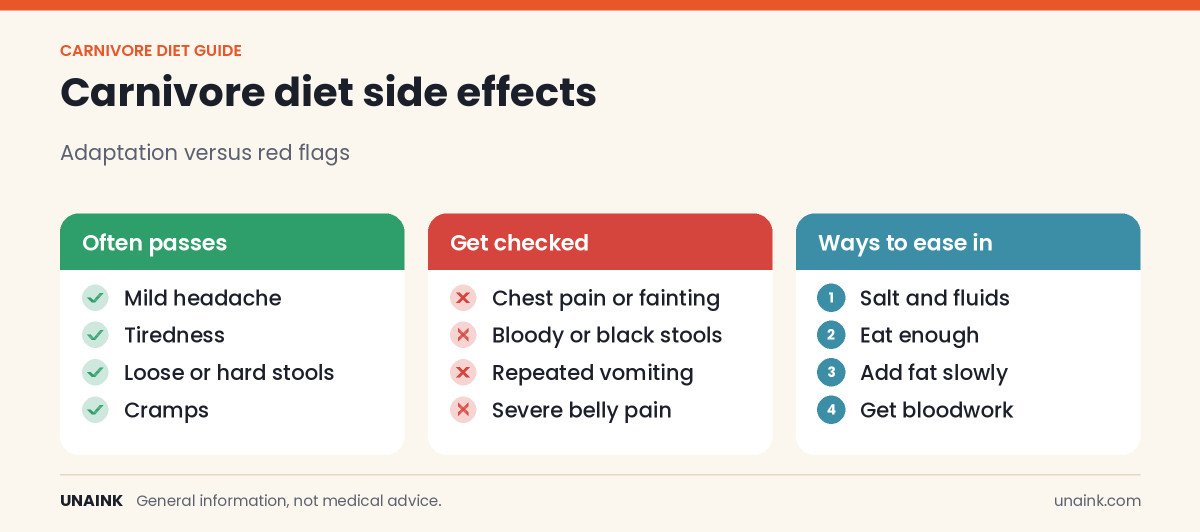
The best description of early symptoms comes from the ketogenic diet world, which also cuts carbohydrates sharply. Cleveland Clinic describes what is often called the keto flu as symptoms that begin about two to seven days after ketosis starts. A dietitian there says they typically last one to two weeks, though the range runs from about two days to roughly a month. Brain fog, headache, fatigue, irritability, nausea, cramps, and trouble sleeping are on the list.
Part of the cause is fluid loss. Cutting carbohydrates can dehydrate you, and many of the foods you drop also supplied sodium, potassium, and magnesium. That is why salt, fluids, and eating enough food are the first fixes. See carnivore flu and carnivore diet electrolytes for details.
Common Early Carnivore Diet Side Effects
| Symptom | Possible reason | Where to look first |
|---|---|---|
| Headache | Fluid and sodium loss, caffeine changes | Water, salt, sleep |
| Fatigue or low energy | Under-eating, electrolytes, adaptation | Calories, fat, rest |
| Muscle cramps | Low sodium, potassium, or magnesium | Electrolytes, hydration |
| Constipation | No fiber, low fluids, low fat | Fat, water, movement |
| Loose stools | Fat jump, dairy, supplements | Slow the fat increase |
| Bad breath, odd taste | Ketones | Often fades with time |
Digestive Changes: Both Directions
Bowel changes are among the most reported complaints. Cleveland Clinic notes that this way of eating has essentially no plant fiber and that meat can digest slowly, which is a reason for constipation. Others get the opposite: loose stools when fat intake rises too fast. Mayo Clinic lists lactose and sugar alcohols as diarrhea triggers, so dairy and sweetened products are worth reviewing.
Deeper guides: diarrhea, constipation, and bloating.
Side Effects That Build Quietly
Some effects do not feel like anything. Harvard Health points to higher LDL cholesterol because animal fat is mostly saturated, and it lists kidney stones, gout, and bone loss as longer-term worries. In the 2021 survey of 2,029 self-selected carnivore dieters, the people who reported lipid values had a median LDL of 172 mg/dL, which the authors called markedly elevated. Ask for bloodwork instead of guessing. Related reading: high cholesterol and nutrient gaps.
What the Evidence Can and Cannot Tell You
That same survey found low rates of reported adverse effects, between under 1 percent and 5.5 percent depending on the category. It is tempting to read that as proof of safety. It is not. Respondents found the survey on social media, had followed the diet for at least six months, and reported their own health. People who felt unwell likely quit before they could answer. A 2026 scoping review of nine human studies concluded that evidence is very limited and that long-term use cannot be recommended.
Red Flags: When Symptoms Are Not Normal
- Chest pain, fainting, or severe shortness of breath: call emergency services.
- A racing, pounding, or irregular heartbeat that keeps happening or comes with dizziness.
- Severe, bloody, or black diarrhea or stools, or diarrhea lasting more than two days without improvement.
- Repeated vomiting or being unable to keep fluids down.
- Severe belly pain, fever above 102°F, or signs of dehydration such as dark urine and dizziness.
- Severe leg pain with swelling or redness, or marked muscle weakness.
- Symptoms that do not ease after two to four weeks, or that keep worsening.
Who Needs a Clinician Before Starting
Anyone with kidney disease, heart disease, diabetes, gallbladder problems, or a history of eating disorders should talk with a doctor first. Medicines for blood pressure and diabetes can make symptoms worse, as Cleveland Clinic notes for keto-type diets, so do not adjust any prescription yourself. Pregnancy, breastfeeding, children, and older adults need individual guidance. See who should not do the carnivore diet.
Easing In With Fewer Problems
- Drink to thirst and add salt to food; see how much salt.
- Eat until satisfied; under-eating is a common reason for fatigue.
- Raise fat gradually if loose stools appear.
- Trial one change at a time so you can tell what helped.
- Track symptoms and book bloodwork at baseline and after a few months.
Carnivore Diet Side Effects: The Short Version
Mild early carnivore diet side effects are often temporary, while red-flag symptoms are a reason to stop guessing and call someone. Because the research is thin, tracking symptoms and labs is the safest way to judge whether carnivore diet side effects are settling or signaling a problem.
Frequently Asked Questions
How long do carnivore diet side effects last?
Early symptoms usually last one to two weeks, and sometimes up to about a month. If they persist or worsen, see a clinician.
Is a headache on carnivore normal?
Mild headaches are common early, often with fluid and sodium loss. A sudden severe headache, confusion, a stiff neck, or vision changes need emergency care.
Can this diet cause kidney stones or gout?
Harvard Health lists both as longer-term concerns. If you have a history of either, talk with your doctor first.
Do I need supplements?
Possibly. Nutrient needs differ by person, and blood tests show more than symptoms do.
Should I quit if I feel bad?
Mild symptoms may pass, but you can always change course. Seek care for anything severe, and never change prescribed medicine on your own.
Conclusion
Early discomfort is common and often manageable with fluids, salt, and enough food. What matters most is noticing the difference between adjustment and warning signs, and getting bloodwork instead of relying on feel. If anything on the red-flag list shows up, get medical care first and diet decisions second.
Medical note
This article is for general education and is not medical advice. Talk with a doctor or registered dietitian before making major diet changes, especially if you have a health condition, take medication, or are pregnant or breastfeeding.
Keep Reading
- Carnivore Flu Symptoms: What the first weeks can feel like.
- Carnivore Diet Electrolytes: Sodium, potassium, and magnesium basics.
- Carnivore Diet Long-Term Effects: What we know and do not know.
- How Long to Adapt: Typical adaptation timelines.
Sources
- Cleveland Clinic: Keto flu: Onset, duration, and remedies for early symptoms
- Harvard Health: What is the carnivore diet?: Risks including LDL, kidney stones, gout
- Behavioral Characteristics and Self-Reported Health Status among 2029 Adults Consuming a Carnivore Diet: Self-reported survey with lipid values
- Cleveland Clinic: The carnivore diet: Fiber, constipation, cramps, kidneys
- Mayo Clinic: Diarrhea: Causes and when to see a doctor