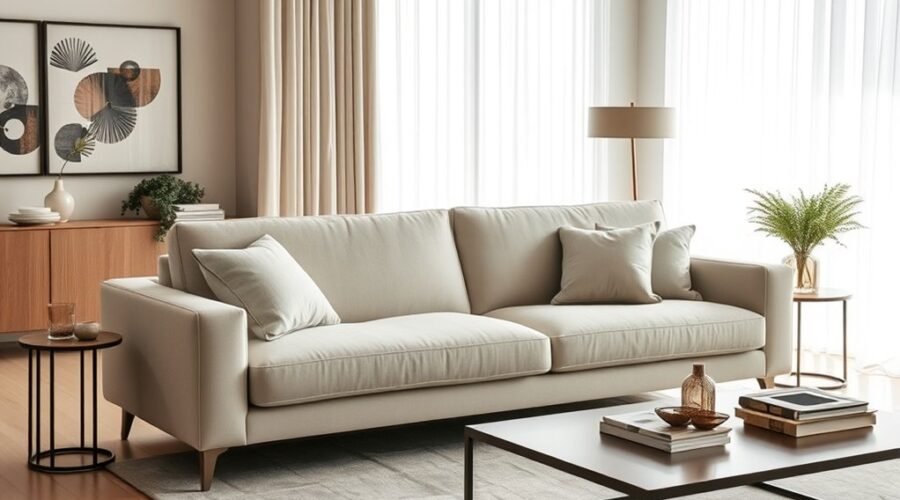
If you’re choosing a sofa for a compact room, a formal living area, or simply a cleaner look, a tight back sofa is worth considering. Its back upholstery is fixed to the frame rather than made from loose cushions, so the sofa stays neat with less daily adjustment. Comfort can range from firm and upright to softly padded, so the right choice depends on the sofa’s dimensions, back angle, padding, and how you prefer to sit.
Quick Answer
A tight back sofa has an upholstered back fixed directly to the sofa rather than removable back cushions. It offers a neat, structured appearance and requires less cushion fluffing. It may feel firmer than a loose-back sofa, but actual comfort depends on padding, seat depth, back angle, lumbar shape, and your body size.
Key Takeaways
- A tight back sofa has a fixed, upholstered back rather than removable back cushions.
- Its main benefits are a tidy silhouette, less cushion adjustment, and consistent back padding.
- A tight back can feel more upright, but it is not automatically better for posture or back pain.
- Tight back does not mean tight seat; many tight-back sofas still use removable seat cushions.
- For a small room, check actual width and total depth instead of assuming every tight-back model is compact.
- Frame quality, suspension, foam, fabric, and workmanship matter more to long-term durability than back style alone.
What Is a Tight Back Sofa?
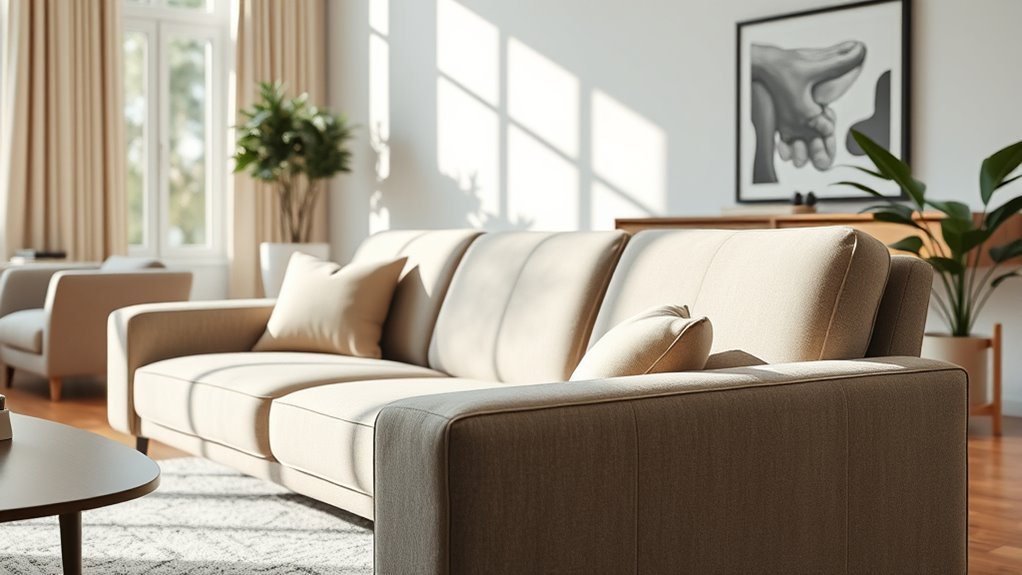
A tight back sofa is an upholstered sofa with no loose or removable back cushions. Instead, padding and upholstery are attached directly to the back structure. The result is a smooth or tufted back that stays in place when people sit down or stand up.
The term describes the back of the sofa, not necessarily the seat. A tight-back sofa may still have removable seat cushions, bench cushions, or fixed seat upholstery.
This distinction matters when shopping because several related terms are easy to confuse:
- Tight back: the upholstered back is fixed to the sofa.
- Attached back cushion: a cushion-like back is secured to the sofa and cannot normally be removed, but it may look and feel more like a conventional cushion.
- Loose back: separate back cushions can be removed, flipped, fluffed, or repositioned.
- Tight seat: the seat upholstery is fixed to the frame rather than made from removable seat cushions.
A tight back is often chosen for its tailored appearance and low day-to-day upkeep. It can work in modern, traditional, mid-century, transitional, and formal interiors depending on the arms, legs, upholstery, tufting, and overall profile.
Key Tight Back Sofa Features
Although individual sofas vary greatly, tight-back designs share a few practical characteristics that distinguish them from loose-back seating.
Fixed Back Construction
The defining feature is a back that stays attached to the sofa. There are no loose back cushions to slide forward, lean sideways, or require frequent repositioning.
| Feature | Practical Effect |
| Fixed upholstered back | Maintains a consistent profile |
| No loose back cushions | Less fluffing and repositioning |
| Smooth, channelled, or tufted upholstery | Can range from minimalist to traditional |
| Integrated padding | Back feel remains consistent but cannot be rearranged like a loose cushion |
Firm and Consistent Back Feel
Many tight-back sofas feel more structured than sofas with overstuffed loose cushions because the back padding cannot shift or collapse into a pile. That can appeal to people who prefer a more upright sitting position.
However, “tight back” does not automatically mean hard. Padding thickness, foam type, springs or webbing behind the back, upholstery, back angle, and tufting all affect the feel. Two tight-back sofas can therefore feel completely different.
Low-Maintenance Design
A fixed back removes one common maintenance task: resetting loose cushions. You still need to vacuum upholstery, clean spills according to the fabric-care code, and maintain removable seat cushions if the sofa has them, but the back itself normally stays neat without fluffing.
Tufting, channels, buttons, and deep seams can collect dust or crumbs, so a highly detailed tight back may require more vacuuming than a completely smooth one.
Pro Tip: When comparing sofas in person, sit in your normal position for at least several minutes. A back that feels pleasantly firm for 30 seconds may feel very different once you settle into the seat.
Tight Back vs. Loose Back Comfort
Neither design is universally more comfortable. A tight back usually provides a more consistent, structured surface, while a loose back gives you cushions that can move and conform more freely.
| Factor | Tight Back | Loose Back |
| Typical feel | Structured and consistent | Softer and more adjustable |
| Back-cushion adjustment | None | Cushions can be moved and fluffed |
| Appearance | Tailored and orderly | Relaxed and layered |
| Daily maintenance | Usually less back-cushion adjustment | May need regular fluffing and repositioning |
| Best suited to | People who like consistent support and a tidy look | People who like rearrangeable, sink-in cushioning |
When a Firmer Back Works Well
A more structured back can work well for conversation, reading, entertaining, or anyone who dislikes sinking deeply into back cushions. It also keeps the support surface in roughly the same position every time you sit down.
That consistency can be useful, but comfort still depends on whether the sofa fits you. If the seat is too deep, for example, you may struggle to keep your feet on the floor while also using the backrest.
When a Softer Lounging Feel Works Better
Loose-back sofas generally make it easier to rearrange cushions for lounging, napping, or curling up. You can often move a cushion behind your lower back, place it under an arm, or remove it to create more usable seat depth.
The trade-off is maintenance. Feather, down-blend, and soft fiber-filled cushions may need regular fluffing or rotation to stay even.
Best Fit by Need
- Choose a tight back if you value a tidy appearance, consistent back support, and less cushion adjustment.
- Choose a loose back if you prefer a softer, more adaptable lounging setup.
- For upright sitting, focus on seat depth, back angle, and lumbar contact in addition to back style.
- For napping, test whether the arms, seat width, and fixed back feel comfortable when you lie sideways.
- For a small room, compare actual dimensions instead of relying on the “tight back” label.
Tight Back Sofa Pros and Cons
A tight back has clear advantages, but its fixed construction also removes some of the flexibility you get from loose cushions.
| Advantages | Possible Drawbacks |
| Back stays neat without fluffing | Back cushions cannot be rearranged for different lounging positions |
| Consistent visual profile | A very firm model may feel less cozy to some users |
| Works with minimalist or tailored interiors | Built-in back padding is not as easy to remove or replace as a loose cushion |
| Fewer cushions for children or pets to displace | Deep tufting or channels can collect dust and crumbs |
Can a Tight Back Sofa Help You Sit More Upright?
A firm, fixed back may make it easier for some people to avoid sinking deeply into loose cushions, but the back style alone does not determine posture.
Important factors include seat depth, seat height, backrest angle, lumbar contour, cushion firmness, and your own body proportions. Ideally, you should be able to sit back against the sofa while keeping your feet comfortably supported instead of sliding forward to reach the floor.
A 2026 study of prolonged sofa sitting found that people with nonspecific chronic low-back pain experienced increased pain during a 30-minute sofa-sitting session, and worsening pain was associated with greater posterior pelvic tilt. The study did not test tight-back sofas against loose-back sofas, so it should not be interpreted as proof that one back style prevents pain.
Research on lumbar support also suggests that changing the support behind the lower back can alter seated spinal posture, although posture changes do not automatically translate into long-term clinical benefits.
Warning: Do not choose a sofa as a treatment for persistent back or neck pain. If sitting regularly causes pain, numbness, weakness, or other concerning symptoms, seek appropriate medical advice rather than relying on furniture style alone.
Why Tight Back Sofas Can Work in Small Spaces
A tight back can create a visually simple profile because there are no loose cushions projecting or shifting around the back. That can help a small room look orderly, but it does not guarantee that the sofa itself is shallow or compact.
Before buying for a small living room, compare these measurements:
- Overall width: the full side-to-side dimension, including arms.
- Overall depth: the distance from the front edge to the farthest point at the back.
- Seat depth: the usable sitting area from the front of the seat to the back support.
- Arm width: thick arms can consume substantial floor space without increasing seating capacity.
- Back height: a low profile may reduce visual bulk even when the sofa is fairly deep.
- Clearance: leave enough room for doors, drawers, walkways, tables, and other furniture.
A slim-arm 80-inch sofa can sometimes provide more usable seating than another 80-inch model with oversized arms. Dimensions therefore matter more than the back-cushion label.
Note: Measure the delivery path as well as the room. Check door width and height, hallways, stair turns, elevator openings, and any tight corners before ordering.
Tight Back Sofa Durability and Shape Retention
A tight back has one practical durability advantage: there are no loose back cushions to become uneven, migrate, or require repeated fluffing. The back can therefore maintain a more consistent appearance over time.
That does not mean every tight-back sofa is more durable than every loose-back sofa. Long-term performance depends on the complete construction.
Shape Retention Benefits
Because the back upholstery and padding are secured to the sofa, the back normally keeps a defined outline instead of developing the casual, compressed appearance associated with very soft loose cushions.
Tufting or channel stitching can also help control upholstery and padding, although those details are primarily design and construction choices rather than a guarantee of longevity.
What Actually Determines Long-Term Wear?
When comparing sofas, look beyond the back style and examine:
- Frame construction: ask what the load-bearing frame is made from and how major joints are reinforced.
- Seat suspension: springs or webbing affect support and how the seat ages.
- Foam and cushion construction: density, resilience, layered foam, fiber wrap, and springs can all change how a seat performs.
- Upholstery: choose a fabric or leather appropriate for your expected level of use.
- Seams and tailoring: inspect stitching, piping, corners, and tufting for consistent workmanship.
- Warranty: compare what is actually covered for the frame, cushions, mechanisms, and upholstery.
A well-built loose-back sofa can easily outlast a poorly built tight-back model. Treat the back style as a comfort and maintenance feature rather than a durability guarantee.
Tight Back Sofa Cost and Long-Term Value
There is no dependable rule that tight-back sofas cost less than loose-back sofas. Back construction is only one part of the price.
Cost is influenced by size, brand, frame materials, suspension, cushion construction, fabric or leather grade, tailoring, country of manufacture, customization, and delivery services.
A tight back may save you from replacing or restuffing separate back cushions, but repair can also be less convenient if built-in back padding or upholstery eventually needs professional attention.
For long-term value, compare the entire sofa rather than choosing by back style alone. A slightly more expensive model with a stronger frame, suitable upholstery, replaceable seat cushions, and a useful warranty may offer better value than a cheaper sofa that does not suit your daily use.
Best Room Styles for Tight Back Sofas
Tight backs are versatile because the fixed construction can be interpreted in many ways.
- Modern and minimalist: smooth upholstery, narrow arms, low backs, and simple legs create a clean profile.
- Mid-century inspired: tapered legs, compact proportions, and tailored upholstery work well with the structured back.
- Traditional: button tufting, rolled arms, skirted bases, or decorative wood details can create a more classic appearance.
- Transitional: a simple tight back paired with softer arms and neutral fabric bridges traditional and contemporary rooms.
- Formal living rooms and offices: the back stays orderly even after frequent use, which can suit spaces where presentation matters.
- Family rooms: a fixed back can reduce cushion rearranging, although stain resistance, cleanability, and seat comfort should carry more weight than appearance alone.
The upholstery color and texture will often influence the room more than the tight-back construction itself.
How to Choose a Tight Back Sofa
Start with how the sofa feels, then evaluate how well it fits your room and your routine.
1. Check Seat Depth and Height
Sit all the way back. If your feet cannot rest comfortably while your back uses the backrest, the seat may be too deep for upright sitting. If you mainly lounge with your legs up, a deeper seat may be exactly what you want.
Seat height also matters. A very low sofa can look sleek but may be harder for some people to get in and out of comfortably.
2. Evaluate the Backrest
Do not judge by firmness alone. Pay attention to where the back touches you. Some designs provide useful lower-back contact, while others are flat or reclined enough that you may prefer a small lumbar pillow.
Also check back height. A low back may look elegant but will not provide upper-back or head support.
3. Inspect the Seat Cushions
Remember that a tight back can still have loose seat cushions. Ask whether they can be removed, flipped, rotated, or replaced. Reversible cushions can make it easier to distribute wear if the upholstery and construction allow flipping.
4. Choose Upholstery for Real Life
Match the covering to the household. A delicate texture may suit a low-use sitting room, while a busy family room may benefit from durable, cleanable upholstery.
Check the manufacturer’s cleaning instructions before using water, detergents, solvents, or upholstery machines. The correct method depends on the specific fabric.
5. Look Beyond a Single Foam Number
High-density foam can be a useful specification, but density and firmness are not the same thing, and a sofa may use several layers of foam, fiber, springs, or other materials. Judge the finished seat construction rather than relying on one marketing number.
6. Measure the Sofa and the Room
Mark the sofa’s footprint on the floor with painter’s tape if necessary. Confirm that tables, recliners, doors, and walkways still function comfortably around it.
7. Test It the Way You Will Use It
Sit upright, lean back, cross your legs, curl into a corner, and lie down if the store permits it. If two people will use the sofa daily, both should test it. A model that photographs beautifully may not suit your preferred posture.
Tight Back Sofa Care and Maintenance
A tight back eliminates loose back-cushion maintenance, but the upholstery still needs routine care.
- Vacuum the back, seams, creases, and space between the seat and back regularly using an appropriate upholstery attachment.
- Blot spills promptly instead of rubbing them deeper into the fibers.
- Follow the manufacturer’s fabric-care instructions before applying a cleaner.
- Rotate removable seat cushions when the manufacturer allows it.
- Keep upholstered furniture away from unnecessary moisture and prolonged direct sunlight when possible.
- Inspect tufted buttons, seams, legs, and cushion edges periodically for developing wear.
If built-in back padding develops a significant problem, professional upholstery repair may be more practical than attempting to open the fixed back yourself.
Current Tight-Back Sofa Examples and What to Verify
Current retailer listings show that tight-back construction appears across many styles rather than one specific price or design category. For example, Crate & Barrel’s current tight-back sofa collection includes models such as Gather alongside other contemporary designs.
The original version of this guide referred to “Silica” and named Retreat and Gather. Current listings identify Gather and Retreat as Crate & Barrel sofa lines. Gather currently appears in the retailer’s tight-back category. Retreat appears in its broader sofa and FSC-certified collections, but shoppers should verify the back construction of the exact Retreat configuration rather than assuming that every model in a related collection is tight-backed.
Product assortments and configurations change, so use retailer categories as a starting point rather than a permanent specification. Confirm the product page or ask the seller whether the back is tight, attached-cushion, or loose.
Some currently listed sofas also carry FSC certification. The Forest Stewardship Council explains that its certification system covers responsible forest management and chain-of-custody tracking for eligible forest-based materials. Look for the FSC claim on the specific product rather than assuming that every product from a company is certified.
Frequently Asked Questions
Is a tight back sofa comfortable?
It can be. Tight-back sofas often feel more structured than loose-back designs, but comfort varies with padding, seat depth, back angle, seat height, upholstery, and your body proportions. Test the exact sofa rather than judging comfort from the style name alone.
What are the best tight back sofas?
The best choice is one that fits your room, sitting style, and expected use. Compare overall dimensions, seat depth, frame and suspension construction, cushion materials, upholstery, warranty, and cleaning requirements. A recognizable style label matters less than how the complete sofa is built and how comfortable it feels to you.
What does “tight back” mean on a couch?
It means the back upholstery and padding are fixed to the couch rather than supplied as removable back cushions. The seat may still have removable cushions, so a tight back does not automatically mean a tight seat.
What type of sofa is most supportive for my back?
There is no single sofa style that is most supportive for everyone. Look for a seat depth and height that fit your body, stable back support, a comfortable back angle, and enough lumbar contact for your preferred position. A tight back may feel supportive if you like a structured surface, but it is not automatically better for back pain.
Is a tight back sofa good for a small living room?
It can be, especially if the fixed back creates a simple visual profile. However, some tight-back sofas are deep or wide. Compare the sofa’s actual width, overall depth, arm width, and clearance requirements before deciding that it is suitable for a small room.
Does a tight back sofa last longer than a loose back sofa?
Not necessarily. A tight back may keep a tidier shape because there are no loose back cushions to flatten or shift, but overall lifespan depends more on the frame, joints, suspension, padding, upholstery, workmanship, and how the sofa is used.
Can I add lumbar pillows to a tight back sofa?
Yes. A small lumbar or throw pillow can change the effective seat depth and add support where you want it. Avoid an overly thick pillow that pushes you so far forward that the seat no longer fits comfortably.
Sources
- Crate & Barrel — Tight Back Sofas — current tight-back product examples and classification.
- PubMed — Low back pain during prolonged sitting on a sofa — 2026 study examining pelvic position and pain during prolonged sofa sitting.
- PubMed — Effect of a lumbar support pillow on seated posture and comfort — research on lumbar support and seated spinal posture.
- Forest Stewardship Council — How the FSC System Works — explanation of forest-management and chain-of-custody certification.
Conclusion
A tight back sofa is a strong option when you want a tidy, structured back that does not require regular cushion fluffing. It can suit compact rooms, formal spaces, family rooms, and modern interiors, but the label alone does not guarantee firmness, better posture, lower cost, longer life, or a smaller footprint.
Choose by testing the actual sofa. Pay attention to seat depth, seat height, back angle, padding, upholstery, frame construction, overall dimensions, and how naturally your body fits the seat. When those details are right, a tight back can deliver the clean appearance, consistent comfort, and straightforward upkeep that make this sofa style so appealing.