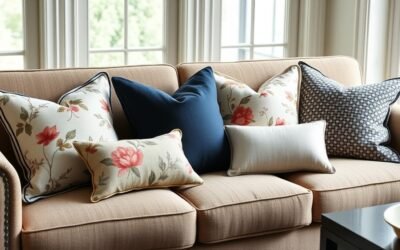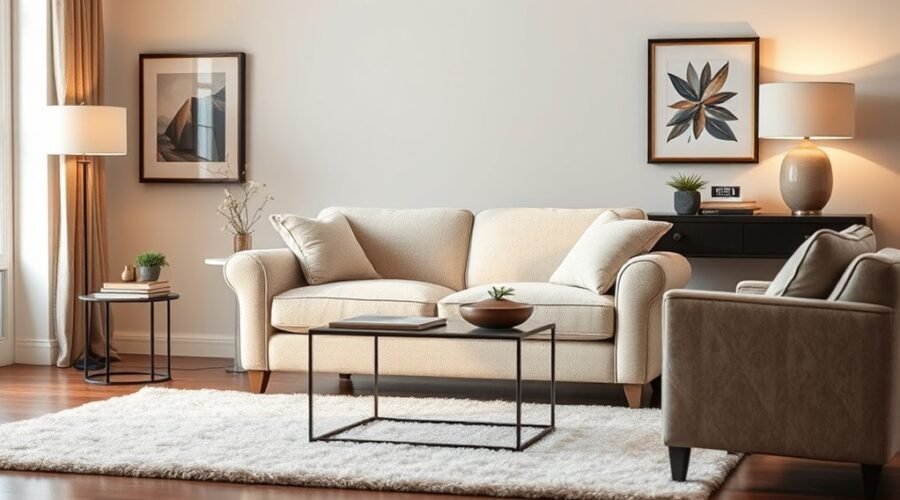
A loveseat is a compact sofa or settee designed primarily for two people. It works well in small living rooms, apartments, reading corners, offices, and larger seating groups where a full-size sofa would add too much bulk. The key is to choose the actual dimensions, seat size, upholstery, and construction that fit your room rather than relying on one “standard” loveseat size.
Quick Answer
A loveseat is a two-person sofa, settee, or double chair. It gives you more seating than an armchair while taking up less room than many larger sofas. Exact dimensions vary widely by model, so measure the room, usable seat width, and delivery path before choosing one.
Key Takeaways
- A loveseat is intended mainly for two people and is smaller than many full-size sofas.
- There is no single universal loveseat width; current models can vary substantially in overall and seat dimensions.
- Loveseats work especially well in apartments, reading nooks, offices, corners, and mixed seating layouts.
- A loveseat can stand alone in a small room or pair with a sofa and chairs in a larger conversation area.
- For long-term comfort, compare seat depth, cushion support, upholstery performance, frame construction, care needs, and warranty—not just style.
What Is a Loveseat?
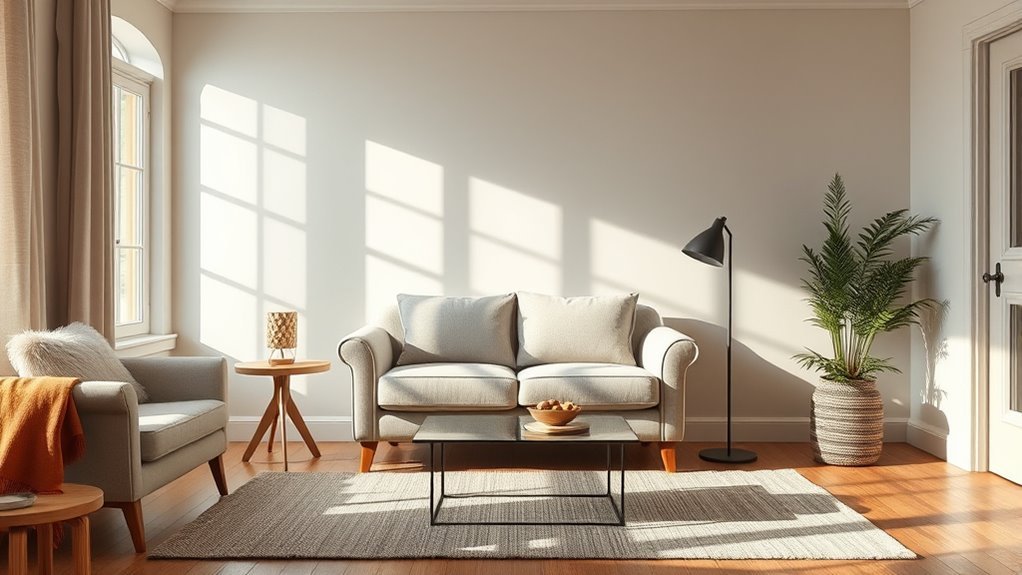
A loveseat is a two-person seating piece that falls between a large armchair and a larger sofa in scale. Merriam-Webster defines a love seat as a double chair, sofa, or settee for two people, which is a more useful definition than tying the term to one fixed width.
Loveseats are popular where you want comfortable seating without excessive visual bulk. They can sit against a wall, float in a small conversation area, fit beside a window, or pair with a larger sofa.
The name has a longer documented history than many people realize, but the common claim that the loveseat itself began as a 17th-century romantic seat is too simplistic. Merriam-Webster lists the first known use of “love seat” in 1847. Earlier two-person settees and benches certainly existed, but that does not make every earlier two-seat form a loveseat in the modern naming sense.
Note: Furniture labels are not perfectly standardized. A product sold as a loveseat, two-seat sofa, apartment sofa, or compact sofa may overlap in size with products carrying another name. Always compare the actual measurements.
Loveseat vs. Sofa: Key Differences
The clearest difference is intended seating capacity and scale. A loveseat is specifically associated with seating two people, while “sofa” is a broader category that can include compact two-seat models as well as much larger three-seat, four-seat, sectional, or modular designs.
| Feature | Loveseat | Sofa |
| Typical purpose | Seating for two in a compact footprint | General living-room seating, often for two or more people |
| Room impact | Usually lighter and easier to fit in small spaces | Can create a stronger visual anchor, especially in larger sizes |
| Best use | Apartments, corners, offices, reading areas, secondary seating | Primary seating, family rooms, entertaining, lounging |
| Price | Varies by brand, upholstery, construction, and features | Varies by the same factors; a larger size does not guarantee a fixed price difference |
Because naming varies by manufacturer, a two-person couch and a loveseat can be functionally very similar. Compare the dimensions, seat width, arms, cushions, and intended use instead of assuming the label alone tells you how large or comfortable the piece will be.
How Big Is a Loveseat?
There is no single industry-wide loveseat width that every manufacturer follows. Current product examples show why fixed ranges can be misleading. IKEA lists its SMEDSTORP loveseat at about 65 inches wide, while the UPPLAND loveseat is about 71 5/8 inches wide. That is roughly 165 to 182 cm across just two models from one manufacturer.
Overall width also does not tell you how much sitting room you get. Thick arms can reduce usable seat width, while slim arms can make a compact loveseat feel roomier. Check at least these measurements before buying:
- Overall width: the full side-to-side footprint.
- Seat width: the usable space between the arms.
- Seat depth: how much thigh and lounging support the cushion provides.
- Seat height: how easy the loveseat is to sit down on and stand up from.
- Overall depth and height: important for room clearance, sightlines, and delivery.
When a Loveseat Works Best
A loveseat works best when you need a compact seat that still feels substantial. It can solve a small-space problem, create a cozy two-person zone, or balance a larger sofa without filling every open section of the room.
Small Space Fit
In a compact living room or apartment, a loveseat can provide everyday seating while preserving more open floor area than many larger sofas. Place it where doors, drawers, and walking paths can still function naturally.
A slim-arm design can be especially useful when every inch matters because more of the total width becomes usable seat space. A loveseat can also work against a wall, beneath suitable wall art, or across from a media unit without dominating the room.
Cozy Seating Nook
A loveseat is also well suited to a reading or conversation nook. Place it near a window, in an alcove, or beside a bookcase, then add a side table and task lamp within easy reach.
Scatter cushions and a throw can soften the look, but keep accessories proportional. Too many oversized cushions can reduce the already-limited usable seat area.
Pairing With Larger Sofas
In a larger room, a loveseat can sit perpendicular to or across from a sofa to create a more defined conversation area. The two pieces do not have to match exactly. Coordinating color, leg finish, arm shape, or fabric texture is often enough to make the arrangement feel intentional.
Use the loveseat to improve balance and seating capacity without automatically adding another full-size sofa. Keep the main walking route open and avoid placing the loveseat where it blocks doors, windows, vents, or frequently used storage.
How Many People Fit on a Loveseat?
A loveseat is designed primarily for two people. One person can of course stretch out more comfortably on it, while two adults may sit side by side if the seat width and cushion layout suit them.
Comfort depends on more than the product name. A loveseat with bulky rolled arms and divided cushions may feel tighter than a model with narrow arms and one broad bench cushion, even if both have similar overall widths.
If two adults will use the loveseat every day, compare the actual seat width, seat depth, cushion firmness, arm placement, and weight capacity rather than relying only on the outside dimensions.
Best Places for a Loveseat
A loveseat can work in more places than the main living room. Good locations include:
- Small living rooms: as the primary sofa when two seats are enough.
- Larger living rooms: opposite or perpendicular to a full-size sofa.
- Reading corners: near a lamp, bookshelf, or window.
- Home offices: for visitors, reading, or a less formal work break area.
- Bedrooms: at a wall or sitting area where space allows.
- Playrooms or flex rooms: where compact seating is more useful than a large sectional.
The best location is the one that supports movement, views, conversation, and everyday use. Avoid forcing a loveseat into a corner simply because it fits physically; it should still be easy to enter, use, and clean around.
How to Measure Before Buying a Loveseat
Measuring first prevents one of the most common furniture-buying problems: a piece that fits the wall but not the room, doorway, stairwell, or elevator used to deliver it.
- Measure the placement area. Record the maximum width, depth, and height available.
- Mark the footprint. Use painter’s tape or folded cardboard on the floor to visualize how much space the loveseat will occupy.
- Check circulation. Make sure doors can open, drawers can pull out, and your normal walking route is not squeezed.
- Measure the delivery path. Check door openings, halls, stair turns, elevator dimensions, and any tight corners.
- Compare product dimensions. Include removable legs or cushions only when the manufacturer confirms they can be removed for delivery.
- Check usable seat dimensions. Confirm seat width, depth, and height if comfort for two people matters.
Pro Tip: Tape the loveseat’s full footprint on the floor and live with that outline for a day. It quickly reveals blocked walkways, awkward side-table placement, or a piece that looks smaller online than it will feel in the room.
How to Style a Loveseat
To make a loveseat feel intentional rather than squeezed in, start with scale and function. A compact seat rarely needs a mountain of decorative pillows. One or two cushions and a light throw are often enough to add color and texture without sacrificing sitting room.
Keep the palette connected to the rest of the room, then repeat one or two loveseat colors in a rug, lamp, art, or nearby chair. A side table can add function without requiring the floor area of a large coffee table.
- Place a side table where drinks, books, or a lamp are easy to reach.
- Angle or position the loveseat toward the main conversation area or focal point.
- Use a small ottoman or footstool only if it does not interrupt the walking path.
If the loveseat is paired with a larger sofa, the pieces can differ in fabric or silhouette. Repeating a finish, color family, cushion shape, or leg style helps the mix feel deliberate rather than mismatched.
Which Loveseat Fabrics and Frames Last Longer?
Durability depends on how the whole loveseat is built and how it will be used, not on a single material label. Upholstery performance varies by fiber, weave or coating, seam construction, cleaning method, traffic level, sunlight, pets, spills, and maintenance.
Upholstery Performance and Care
The Association for Contract Textiles explains that performance guidelines depend on the textile’s construction, intended application, and use environment. It also cautions that laboratory abrasion results alone do not predict real-world lifespan. That makes a tested performance specification more useful than assuming “polyester,” “microfiber,” “velvet,” or “leather” is automatically the longest-lasting choice.
For a busy home, look for upholstery information that addresses abrasion resistance, pilling, colorfastness, seam performance, cleaning instructions, and stain behavior. If the cover is removable, confirm whether it is machine washable or requires professional cleaning.
Frame and Cushion Construction
Frame quality also cannot be judged by one phrase such as “solid hardwood.” The U.S. Forest Service Wood Handbook documents different mechanical properties for solid wood and wood-based composite materials, so species, panel type, thickness, fastening, joints, adhesives, and overall engineering all matter.
When comparing loveseats, inspect the frame description, joinery, suspension or spring system, cushion construction, weight rating, warranty, and repairability. Current furniture can combine solid wood, plywood, laminated veneer lumber, particleboard, fiberboard, steel springs, and foam in the same frame.
Pocket springs can add responsive support in some cushion systems, but they are only one design approach. Foam density, cushion layering, suspension, and how firmly you prefer to sit are equally important to comfort.
Regular vacuuming, quick spill cleanup, cushion rotation when the design allows it, and following the manufacturer’s care instructions will usually do more for appearance retention than applying a generic treatment that may not suit the fabric.
When to Choose a Loveseat Over a Sofa
Choose a loveseat when the room needs two seats without the footprint of a larger sofa, when you want secondary seating beside another piece, or when a compact scale better matches the room.
- Pick a loveseat when one or two people use the room most often and space is limited.
- Choose a larger sofa when you regularly need more seating or prefer to stretch out.
- Pair a loveseat with an armchair when flexible individual seating matters.
- Pair a loveseat with a larger sofa when you want a balanced conversation area without two bulky sofas.
Do not assume a loveseat is always cheaper. Upholstery grade, reclining mechanisms, sleeper hardware, brand, custom options, and construction can make a premium loveseat cost more than a basic larger sofa.
Loveseat Types to Consider
The basic two-seat format now appears in several useful variations:
- Standard stationary loveseat: the simplest choice for everyday seating.
- Reclining loveseat: useful when lounging is the priority, but it usually needs more depth and operating clearance.
- Sleeper loveseat: adds a compact guest-sleeping function; check opened dimensions before buying.
- Storage loveseat: may hide storage under the seat or inside a chaise-style section.
- Modular two-seat configuration: useful if you want to rearrange or expand the seating later.
- Apartment or narrow-arm loveseat: prioritizes usable seating within a smaller overall footprint.
Extra mechanisms add weight, moving parts, and clearance requirements, so check the full specifications rather than assuming every loveseat fits the same way.
Loveseat Layout Ideas for Small Spaces
In a small living room, a loveseat can anchor the room without making it feel furniture-heavy. One simple layout is to place it against the longest usable wall and keep the opposite side visually light with an armchair, slim console, or open floor area.
In a narrow room, placing the loveseat near a window or across from a focal wall can help preserve a clear route through the room. In a square room, a loveseat and one or two light-scale chairs can create a compact conversation zone.
If you need more function, consider a loveseat with storage, reclining, modular, or sleeper features, but measure those functions in both closed and open positions.
Finish the space with proportional pieces: a compact side table, a small coffee table, a narrow ottoman, or wall-mounted lighting can add comfort without crowding the floor.
Frequently Asked Questions
What Is the Main Difference Between a Loveseat and a 2-Person Couch?
There is often very little practical difference. “Loveseat” traditionally refers to a double chair, sofa, or settee for two, while “2-person couch” is a broader marketing description. Compare actual width, seat dimensions, arm style, and comfort instead of relying on the name alone.
Why Do They Call It a Loveseat?
The name reflects seating sized for two people sitting together. Merriam-Webster records the first known use of “love seat” in 1847. Earlier two-person benches and settees existed, but the romantic 17th-century origin story often repeated online is not a reliable explanation of the modern term.
Is a Loveseat Enough for a Living Room?
It can be. A loveseat may be enough for one or two people in a small living room, studio, office, or apartment. If you host often or have a larger household, add chairs, an ottoman, or a larger sofa based on the number of seats you actually need.
Are Loveseats Outdated?
No. Loveseats remain a current furniture category because compact two-person seating still solves common layout problems. Modern versions include stationary, reclining, sleeper, storage, and modular designs, so the style can range from traditional to very contemporary.
How Wide Is a Loveseat?
There is no universal loveseat width. Current examples can run well beyond older “standard” ranges quoted online. For example, IKEA lists current loveseat models around 65 to more than 71 inches wide. Always use the manufacturer’s dimensions for the exact model you are considering.
Can Two Adults Sit Comfortably on a Loveseat?
Usually, yes, because a loveseat is intended for two people. Comfort still depends on usable seat width, seat depth, cushion firmness, arm thickness, and the users’ preferences. Check seat measurements rather than judging comfort from overall width alone.
Conclusion
If you want seating that feels cozy, compact, and flexible, a loveseat can be a smart choice. It can anchor a small living room, create a reading nook, or balance a larger sofa without overwhelming the floor plan. Focus on the exact dimensions, usable seat space, delivery path, upholstery performance, construction, and care requirements so the piece fits both your room and the way you live.
Sources
- Merriam-Webster: Love seat definition and word history — definition and first known use.
- IKEA SMEDSTORP loveseat — current example of loveseat dimensions and materials.
- IKEA UPPLAND loveseat — current dimensions, frame materials, upholstery data, and care information.
- Association for Contract Textiles Performance Guidelines — textile performance factors and testing context.
- U.S. Forest Service Wood Handbook — properties of wood and wood-based composite materials.