
Moving a mattress without bending or folding it starts with the right supplies and a clear path. You’ll want a mattress bag, a dolly or hand truck, and sturdy straps before you lift anything. Strip the bed, clean the surface, and measure doorways so you know where trouble may come up. Once you set the mattress on its side, the next steps get easier, but only if you handle the load the right way.
Key Takeaways
- Use a heavy-duty mattress bag and moving blankets to protect the mattress from dirt, moisture, and damage.
- Measure doorways, stairwells, and vehicle cargo space before moving to avoid forced bending or folding.
- Use a hand truck or dolly and keep the mattress upright or on its side while maneuvering.
- Secure the mattress inside a truck or van with ratchet straps so it stays flat and stable during transport.
- Move slowly with a partner, communicating clearly and checking for shifts, tears, or dents after unloading.
Gather Mattress Moving Supplies
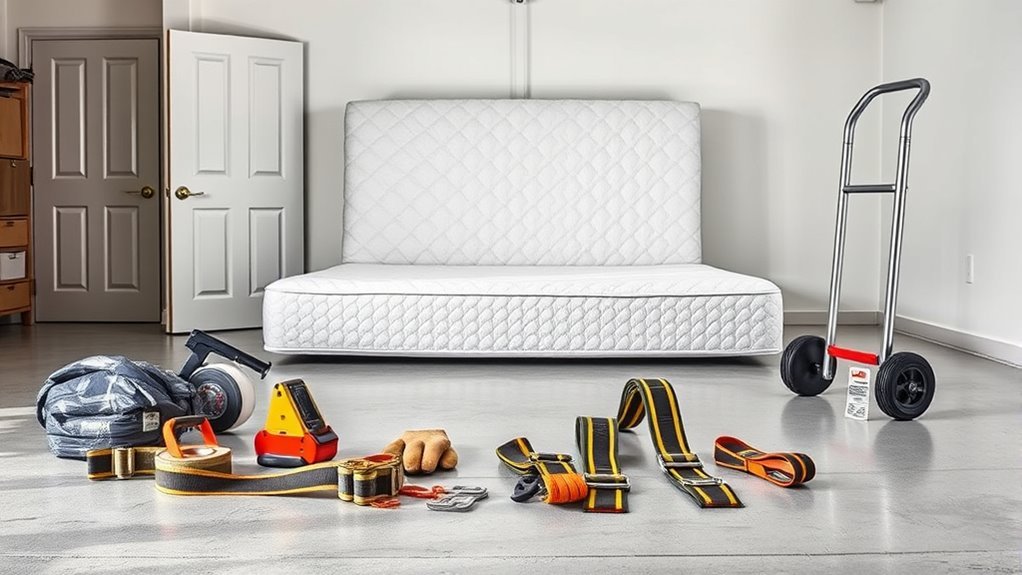
Start by gathering the right supplies so you can move the mattress safely and with less strain. Get a heavy-duty mattress bag first; it shields the mattress from dirt and moisture while you’re in transit.
Next, choose the right mover: use a hand truck for twin or full-size mattresses, and a dolly for larger ones, so you don’t have to bend or fold it. Add furniture straps to help you lift and guide the load with better control.
Keep moving blankets nearby to cushion the mattress against bumps when you load it and unload it. Before you roll toward the moving truck, collect ratchet straps so you can secure the mattress inside and stop shifting.
With these tools ready, you’ll move with more confidence, protect your body, and keep your mattress intact.
Prep Your Mattress for Moving
Start by stripping off all bedding. Then vacuum the mattress so you remove dust and allergens before you move it.
Next, slide it into a heavy-duty mattress bag and seal it tightly with packing tape to keep out moisture, dirt, and damage.
Before you lift, measure doorways and stairwells and clear a direct path so you can move it safely without bending or forcing it.
Strip and Clean
Strip off all bedding first, including sheets, mattress protectors, and any other layers, so the mattress is lighter and ready for transport.
Next, clean the mattress with a vacuum, moving slowly over the entire surface to lift dust, allergens, and debris.
Check for stains or damage, and treat spots with the right cleaner so odors and deterioration don’t spread.
Let every area dry completely before you move on; trapped moisture can lead to mold or mildew later.
When the mattress is fully dry, slide it into a protective bag to guard it from dirt, pests, and moisture during the move.
This simple routine keeps your mattress safe, preserves its condition, and helps you move with more freedom and less worry.
Bag and Seal
Once the mattress is clean and dry, put on a heavy-duty mattress bag to protect it from moisture, dirt, and pests during the move. First, inspect the bag for rips so you don’t lose protection. Stand the mattress upright against a wall, then slide it in carefully to avoid tears. Bag and seal the opening with packing tape, pressing it down so it’s sealed tightly. Add extra tape at the seam to keep it airtight and protected.
| Step | Action | Why it matters |
|---|---|---|
| 1 | Check the bag | Small damage weakens protection |
| 2 | Insert upright | Reduces strain and tearing |
| 3 | Tape the opening | Blocks moisture and odors |
Before transporting a mattress, confirm the cover stays snug.
Measure the Path
With the mattress bag sealed, map out the route before you lift it. Measure doorways, stairwells, and hallways, then compare the mattress dimensions so you know where an obstruction could stop you.
Check the vehicle’s entry height if you’re using a truck or van; the opening must let the mattress slide in without bending. Walk the route from bedroom to vehicle and spot tight corners, low ceilings, and other obstacles that could change your maneuvering plan.
- Measure each opening.
- Mark narrow turns.
- Confirm the loading height.
- Communicate the path with your partner.
Keep your move deliberate and free by staying ahead of trouble. When you know the route, you can guide the mattress with control, protect your body, and move on your terms.
Choose the Right Moving Method
First, measure your mattress and the vehicle’s cargo space so you know it’ll fit flat without bending.
Choose a large moving truck or van instead of a car, since that gives you the safest, most stable transport.
Don’t strap the mattress to a roof, because wind and road movement can damage it and make driving unsafe.
Measure Mattress And Vehicle
Measure the mattress first, then compare those dimensions with your vehicle’s cargo space so you know it can ride flat without bending or folding. Measure the mattress dimensions—length, width, and height—and confirm you’ve got the right vehicle with a flat loading space for safe transport.
- Check the opening and floor area before you lift.
- Verify the vehicle’s weight capacity so you don’t overload it.
- Use a hand truck or dolly to reduce heavy lifting and guide the mattress through tight spots.
- If you’re using a sedan, fold down the back seats only if that still lets the mattress stay flat.
When you plan this way, you protect the mattress, your body, and your freedom to move without strain.
Use Truck Or Van
A moving truck or van is usually the safest choice because it gives you enough space to keep the mattress flat, which helps protect its shape during the trip. Choose a truck or van with enough capacity for your mattress size. Then lay the mattress flat whenever possible to prevent sagging. If you use a truck, you can also stand it upright briefly, but secure it with tie-down straps so it won’t shift. For a short move, fold the back seats of a van and slide it in snugly.
| Option | Best Use | Step |
|---|---|---|
| Truck | Long move | Load carefully |
| Van | Short move | Fold seats |
| Flat position | All sizes | Protect shape |
| Upright in truck | Limited space | Strap tight |
| Large mattress | Heavy load | Check capacity |
This lets you transport your mattress safely and freely.
Avoid Roof Transport
Don’t put a mattress on your car’s roof, since it can block your view and create a serious safety hazard.
To move a mattress safely, choose a large moving truck or rental van for secure transport. If you can, fold the back seats down and load it inside the vehicle so it rides flat and stable.
For bigger beds, ask a friend to help and use a dolly or hand truck to guide it in without bending it.
- Avoid roof transport to protect yourself and others.
- Load the mattress inside the vehicle for control.
- Use ratchet straps to prevent movement.
- Skip thin rope; it won’t hold securely on the road.
Move a Mattress Through Tight Spaces
When you reach a tight doorway or hallway, stand the mattress on its side so you can use its width to your advantage and steer it more easily through the space.
Before you start, measure doorways and stairwells so you know the mattress will fit without bending or folding. Cover it with a heavy-duty bag or moving blankets to protect the mattress from scuffs and tears.
As you move a mattress, angle it vertically and tilt it slightly if you need extra clearance in especially narrow spots. Have a partner to help guide the load, and keep maintaining communication so you can move around corners, edges, and handrails without snagging.
Take small, controlled steps, and pause when the path gets tricky. This keeps you safe, keeps the mattress intact, and helps you move through tight spaces with confidence and freedom.
Lift and Load Your Mattress Safely
With your path clear, lift the mattress with your legs by bending at the knees, keeping your back straight and the mattress close to your body so you stay balanced and reduce strain.
To move a mattress with control, use a dolly or hand truck so you can keep it flat and avoid bending or folding it.
- Lift in sync with your partner and use clear communication during lift.
- Turn the mattress on its side only when you need clearance through tight spots.
- Keep your grip firm and your steps short as you lift the mattress.
- Load it onto the dolly, then transport the mattress safely.
When you reach the vehicle, guide it in without forcing the shape.
Your goal is to secure the mattress by keeping it stable and protected from shifting, so you preserve its structure and stay free from unnecessary strain.
Secure Your Mattress for the Drive
Once the mattress is on the vehicle, secure it so it can’t shift or get damaged on the road. Place it flat in a vehicle, ideally a large truck or van, so the foam keeps its shape.
Wrap it in a protective mattress bag first to block dirt and help prevent moisture. Then add moving blankets around the sides and corners for extra cushioning against scratches and tears.
Next, use heavy-duty tie-down straps to secure your mattress for the drive. Run the straps over the mattress and anchor them to fixed points in the truck bed or cargo area. Tighten them firmly, but don’t crush the mattress.
Before you leave, tug each strap to confirm it holds. During periodic stops, check the straps again and make small adjustments if needed.
With this setup, you travel with control, protect your gear, and keep the move free from unnecessary damage.
Unload Your Mattress Without Damage
Before you lift the mattress out of the vehicle, clear the unloading area of boxes, furniture, and other obstacles so you’ve got a clean path to the destination. To move a mattress safely, stand close, bend at the knees, and keep your back straight as you take control.
- Use proper lifting techniques and lift with your legs, not your spine.
- Position the mattress vertically to pass through narrow spaces and doorways without bending or folding it.
- Ask for partner assist so you can lower it evenly and avoid sudden drops.
- Once it’s inside, inspect the mattress right away for tears, dents, or other damage.
Keep your grip steady and your pace calm. If the mattress shifts, reset before moving again. A clear unloading area and careful teamwork help protect both you and the mattress.
When you handle each step with control, you keep it in prime condition and make the whole move feel freer, lighter, and safer.
Frequently Asked Questions
What Is the Easiest Way to Move a Mattress by Yourself?
The easiest way to move a mattress by yourself is to use moving equipment like a dolly, then tilt the mattress and keep it upright for better control.
Slip on protective covers for mattress safety, clear your path, and use proper lifting with your legs.
Explore transport options, like a hand truck or car roof rack.
Follow these moving techniques and handling tips, and you’ll reduce strain and stay free of injury.
How to Transport a Mattress That Cannot Fold?
Use a moving truck or large van, then wrap the mattress in a protective covering and tape it tight.
Follow mattress transportation tips: check moving truck requirements, clear best routes advised, and lift with proper lifting techniques.
With a partner, carry it flat, then secure it safely with straps.
These avoiding damage strategies help you protect your space, move freely, and keep the mattress dry, clean, and undamaged.
How to Move a Bed That’s Too Heavy?
Hire professional movers if the bed’s too heavy, because many hands make light work.
For preparing for relocation, you should use mattress lifting techniques, bend your knees, and keep your back straight to protect heavy lifting safety and avoid back strain.
Explore moving equipment options like a dolly or straps, then follow mattress transportation tips by sliding it on a blanket.
You’ll move freer, safer, and faster.
Can You Roll up a Mattress to Move It?
You can roll up some mattress types to move them, but not all. Check the maker’s guide first, then use protective covers and clean, dry surfaces.
For foam or latex, compress gently with moving supplies and secure with straps. Don’t roll too tight.
Choose safe transport methods, use proper lifting techniques, and plan storage solutions if needed.
Follow safety tips so you protect your freedom, your mattress, and your back.
Conclusion
By now, you’ve got the basics to move your mattress without bending or folding it. Gather your supplies, clean and protect the mattress, and measure your path before you lift. Keep it on its side, use a dolly or straps, and secure it tightly in the vehicle. When you unload, move slowly and check for damage. Follow these steps, and you’ll save your mattress from disaster the size of a mountain.