If you’re wondering what makes a barrister bookcase different, the key is its enclosed, compartment-style storage. Traditional versions stack as separate shelf sections, usually with glass doors that lift up and slide back into the case. They protect books from dust while keeping the contents visible, and their compact, formal look works just as well in homes as it once did in professional offices.
Quick Answer
A barrister bookcase is a glass-fronted bookcase traditionally built from individual stackable shelf sections. Each door typically lifts upward and slides back into its section. The design became well established around the turn of the 20th century and combined enclosed book storage with a form that could be expanded or moved section by section.
Key Takeaways
- A traditional barrister bookcase is made from stacked, detachable shelf sections with individual glass-front doors.
- The doors mainly reduce dust, handling, and pet contact; ordinary glass does not make books immune to sunlight or changing humidity.
- Historical sectional and “elastic” bookcases were designed so sections could be separated for easier moving.
- Modern barrister-style bookcases may copy the glass-door look without actually coming apart into separate sections.
- Current solid-wood versions can often be customized in wood species, finish, glass, hardware, and number of doors.
What Is a Barrister Bookcase?
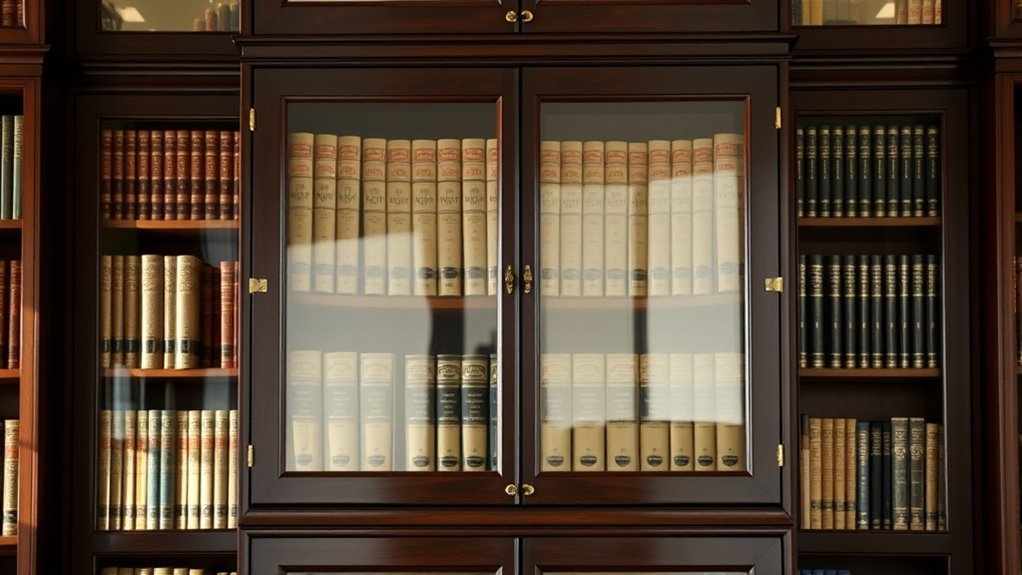
A barrister bookcase is a cabinet-like shelving unit traditionally made from separate sections that stack on top of one another. Each shelf section commonly has its own glass-front door, giving you enclosed storage without hiding the books or objects inside.
On a traditional example, the door usually pivots upward and then slides back near the top of its section. A documented Globe-Wernicke barrister-style bookcase in the Smithsonian’s National Museum of African American History and Culture, dated 1899–1929, uses this lift-and-slide arrangement and is built from separate shelf sections, a cornice, and a base.
Many antique examples were made in hardwoods such as oak, walnut, or mahogany. Today you can also find handcrafted solid-wood versions in oak, maple, cherry, hickory, walnut, and other woods, depending on the maker.
The combination of enclosed shelves, visible contents, and compact vertical storage explains why the design still works in home offices, libraries, living rooms, and other spaces.
How Is a Barrister Bookcase Different From a Regular Bookcase?
The biggest difference is the individual enclosed shelf sections. A conventional bookcase normally has one tall frame with open shelves or a pair of full-height doors. A traditional barrister bookcase is built as a stack of smaller cases, each with its own front.
- Traditional barrister bookcase: separate stackable sections, usually with lift-and-slide glass doors.
- Regular bookcase: usually one fixed frame with open or adjustable shelves.
- Modern barrister-style bookcase: may imitate the rows of glass doors but use a single non-separable cabinet.
This distinction matters if portability or adding sections is important to you. Do not assume that every piece sold as “barrister style” can be separated into individual units.
Why Do Barrister Bookcases Have Glass Doors?
Barrister bookcases use glass doors mainly to reduce dust and handling while keeping books and display pieces visible. The doors also help keep pets and everyday dirt away from the contents.
Traditional lift-and-slide doors are especially useful because they do not need the side clearance required by ordinary outward-swinging cabinet doors. You lift the glass front and slide it back into the shelf section when you want access.
Glass also contributes to the furniture’s formal appearance. Vintage pieces may use plain, beveled, or leaded glass, while modern makers offer several decorative glass choices.
Note: A closed glass door is not a substitute for proper book preservation. The Library of Congress notes that even visible light can damage collection materials. Keep valuable books away from direct sunlight and maintain a reasonably cool, stable indoor environment.
Where Did the Barrister Bookcase Get Its Name?
The name is associated with barristers and legal libraries. A barrister is a type of lawyer, particularly in the United Kingdom and other common-law systems, who traditionally specializes in advocacy and legal advice. The Cornell Legal Information Institute notes that the U.S. legal profession does not normally use the same barrister-versus-solicitor division.
The familiar explanation is that sectional bookcases suited lawyers who owned large collections of reference books and sometimes needed furniture that was easier to relocate. The portability of sectional bookcases is well documented. An 1879 U.S. patent for a sectional bookcase specifically described sections that could be taken apart for moving, and later makers developed increasingly sophisticated doors and stacking systems.
Globe-Wernicke became one of the best-known manufacturers associated with this furniture. A 1903 Globe-Wernicke patent refers to what was “commonly known as an elastic bookcase,” meaning a bookcase built from separate sections or units.
The often-repeated story that barristers routinely carried loaded bookcase sections directly from one courtroom to another is plausible within that broader portable-library tradition, but authoritative surviving sources are much clearer about the sectional furniture itself than about one exact event that created the name.
Professional offices also helped give the glass-fronted hardwood form its formal appearance. Over time, libraries and homes adopted the same design, while the barrister name remained attached to it.
How Can You Identify a Traditional Barrister Bookcase?
If you are looking at an antique or used example, focus on construction rather than the seller’s label. A traditional sectional case usually gives you several clues.
- Separate tiers: Each shelf section can normally be lifted off the section below it.
- Individual doors: Each compartment has its own glass front rather than one tall cabinet door.
- Lift-and-slide action: The door moves upward and then back into or along the top of the section.
- Base and top: Many systems use a separate plinth or base and a separate cornice or cap.
- Maker labels: Antique pieces may carry labels, stamps, plates, patent information, or model markings inside or behind the sections.
- Matching section hardware: Interlocking strips, clips, locating blocks, or other fittings keep the stacked cases aligned.
Globe-Wernicke is one well-documented name, but it was not the only company to produce sectional bookcases. A maker’s label is useful evidence, but construction details and compatible sections matter too.
Traditional vs. Modern Barrister Bookcases
A modern bookcase can look like a barrister case without being constructed in the historical sectional way. That is not necessarily a disadvantage, but you should know what you are buying.
Traditional sectional cases are useful when you want to separate the tiers for moving or potentially change the stack. Modern one-piece versions can offer the same rows of glass doors in a rigid cabinet that may feel simpler and more stable in everyday use.
Also check the door mechanism. Antique cases may use slides, pins, rollers, equalizer hardware, or other mechanical parts that can wear or become misaligned. A door that binds, drops, or will not stay aligned deserves inspection before purchase.
How Can You Customize an Amish Barrister Bookcase?
You can customize an Amish barrister bookcase in several ways, although the exact choices depend on the builder. Current solid-wood examples commonly let you choose wood species, finish, glass, hardware, and the number of doors or shelf compartments.
For example, current Amish Furniture Factory barrister bookcases offer woods including oak, maple, cherry, hickory, quarter-sawn white oak, elm, and walnut, along with different door counts and glass options.
- Choose a wood species based on grain, color, hardness, and budget.
- Select a stain or finish that works with nearby furniture.
- Pick the number of shelf compartments that fits your available height.
- Choose plain, beveled, leaded, or specialty glass when the maker offers it.
- Select hardware that matches the rest of the room.
Because made-to-order furniture varies by builder, check the finished dimensions, interior shelf dimensions, construction method, and delivery requirements before ordering.
What Can You Store in a Barrister Bookcase Today?
A barrister bookcase is not limited to law books. You can use one for ordinary books, reference materials, documents, china, glassware, photographs, collectibles, CDs, DVDs, and decorative pieces.
You may also be able to store vinyl records, but do not assume every barrister case is deep or tall enough. Interior dimensions vary considerably between designs.
Pro Tip: Measure the largest item you plan to store and compare it with the bookcase’s usable interior height, width, and depth—not just the outside cabinet dimensions. This is especially important for vinyl records, oversized books, binders, and large serving pieces.
The glass fronts let you display what is inside while reducing dust and direct handling. In a home office, that gives you organized storage without the visual clutter of completely open shelves. In a living area, the same cabinet can display collectibles or heirlooms while keeping them more protected from everyday contact.
If you plan to store unusually heavy books or objects, check the manufacturer’s shelf-load guidance instead of assuming every shelf has the same capacity.
What Should You Check Before Buying a Barrister Bookcase?
Whether you are considering an antique, a reproduction, or a new handcrafted case, check the details that affect daily use.
- Door operation: Open and close every door. It should move smoothly without binding or twisting.
- Glass condition: Look for cracks, loose panes, poorly fitted replacement glass, or damaged glazing.
- Section fit: On a modular case, make sure the tiers align securely and do not rock.
- Interior dimensions: Confirm that your books, records, binders, or display items actually fit.
- Maker information: Photograph labels, stamps, plates, and patent markings if you are researching an antique.
- Repairs and refinishing: Look for replaced hardware, altered wood, filled holes, or modifications that may affect operation or antique value.
- Overall stability: Check the base, floor contact, and any manufacturer-provided anti-tip hardware.
Warning: Tall bookcases and other heavy furniture can tip if they are unstable or climbed on. The U.S. Consumer Product Safety Commission recommends securing furniture such as bookcases to the wall with appropriate anti-tip hardware, especially in homes where children live or visit. Follow the furniture manufacturer’s anchoring instructions.
How Do You Care for a Barrister Bookcase?
For everyday care, keep the case and the books inside clean and dry. Dust the exterior and accessible shelves gently rather than allowing dust to build up.
The Library of Congress book-preservation guidance recommends keeping books in a cool, relatively dry, stable environment and away from direct or intense light. Avoid storing valuable books in damp basements, hot attics, or other locations with large temperature and humidity swings.
When cleaning glass, avoid soaking the surrounding wood, finish, or old hardware. If an antique lift-and-slide door begins to bind, do not force it. Check whether the tracks, pins, rollers, equalizer mechanism, or case alignment need attention.
When moving a genuine sectional bookcase, determine how the sections lock together before lifting anything. Antique fittings differ by maker, and forcing a section apart can damage the wood or hardware.
Frequently Asked Questions
Why Is It Called a Barrister Bookcase?
The name comes from the furniture’s association with barristers and legal libraries. Traditional sectional bookcases made large book collections easier to organize and relocate. Historical patents clearly document portable sectional construction, although the popular courtroom-to-courtroom origin story is less precisely documented than the furniture itself.
Do All Barrister Bookcases Come Apart?
No. Traditional barrister bookcases are usually sectional, with individual tiers that can be separated. Some modern barrister-style bookcases are built as a single cabinet with multiple glass doors. Check the construction before assuming a piece is modular.
How Much Does a Barrister Bookcase Cost?
Prices vary widely by construction, size, maker, wood, condition, age, glass, and customization. As of September 17, 2026, current Amish-made examples listed by Amish Furniture Factory include barrister models from roughly the mid-$1,500s to about $2,400 and above before optional upgrades and shipping. Antique prices can fall below or rise well above modern retail examples depending on maker, originality, condition, and local demand.
What Is Another Name for a Barrister Bookcase?
“Lawyer’s bookcase” is a common informal name. Historical modular designs were also described as sectional, extensible, or “elastic” bookcases. The terms overlap, but a true traditional barrister bookcase is most closely associated with stacked sections and individual glazed fronts.
Does the Glass Protect Books From Sunlight?
Not completely. Ordinary glass doors can reduce dust and handling, but light can still fade and damage books. Even UV-filtering glazing does not eliminate damage from visible light, so valuable books should be kept away from direct or intense sunlight.
How Can You Tell if a Barrister Bookcase Is Truly Sectional?
Look for separate shelf boxes stacked between a removable base and top, along with joints, locating strips, clips, or other fittings between sections. Each tier should have its own door. Maker labels and patent markings can also help identify an older sectional system.
Sources
- Smithsonian National Museum of African American History and Culture — documented Globe-Wernicke barrister-style sectional bookcase, including lift-and-slide glass doors.
- U.S. Patent 727,241, Globe-Wernicke Company — historical use of the term “elastic bookcase” for a bookcase built from separate sections or units.
- Cornell Legal Information Institute — definition and legal usage of the term “barrister.”
- Library of Congress: Storing Your Books — guidance on light, dust, temperature, humidity, shelving, and book storage.
- U.S. Consumer Product Safety Commission: Anchor It! — furniture tip-over and anchoring guidance.
- Amish Furniture Factory: Bookcases — current barrister-bookcase pricing and customization examples checked September 17, 2026.
Conclusion
Now that you know what a barrister bookcase is, you can see why the design remains useful. Traditional versions combine separate stacked sections with lift-and-slide glass doors, while modern versions may borrow the same appearance in a one-piece cabinet.
The glass fronts are excellent for keeping books and collectibles visible while reducing dust and everyday contact, but they do not replace proper protection from strong light or unstable humidity. If you are buying one, check the door mechanism, interior dimensions, section construction, stability, and maker information rather than judging it by appearance alone. With the right size, wood, finish, and construction, a barrister bookcase can provide both organized storage and the classic glass-fronted look that made the form distinctive in the first place.