
Planning a carnivore Thanksgiving menu is mostly a matter of rethinking the plate, because the big dishes already center on meat. Turkey, ham, roast beef and gravy can all fit, while stuffing, potatoes and pie are the parts you will need to swap or skip. This guide covers a full meat-based table, safe cooking temperatures and ways to host guests who eat differently.
Quick Answer
A carnivore Thanksgiving menu usually centers on a roasted turkey or a beef rib roast, a ham or sausage dish, egg-based sides, and gravy made from pan drippings and tallow. Cook everything to USDA safe temperatures, refrigerate leftovers within 2 hours, and keep the guests’ non-carnivore sides on a separate table.
Key Takeaways
- Turkey, roast beef, ham and eggs make a full carnivore table without special ingredients.
- Gravy from pan drippings and tallow replaces flour-thickened versions.
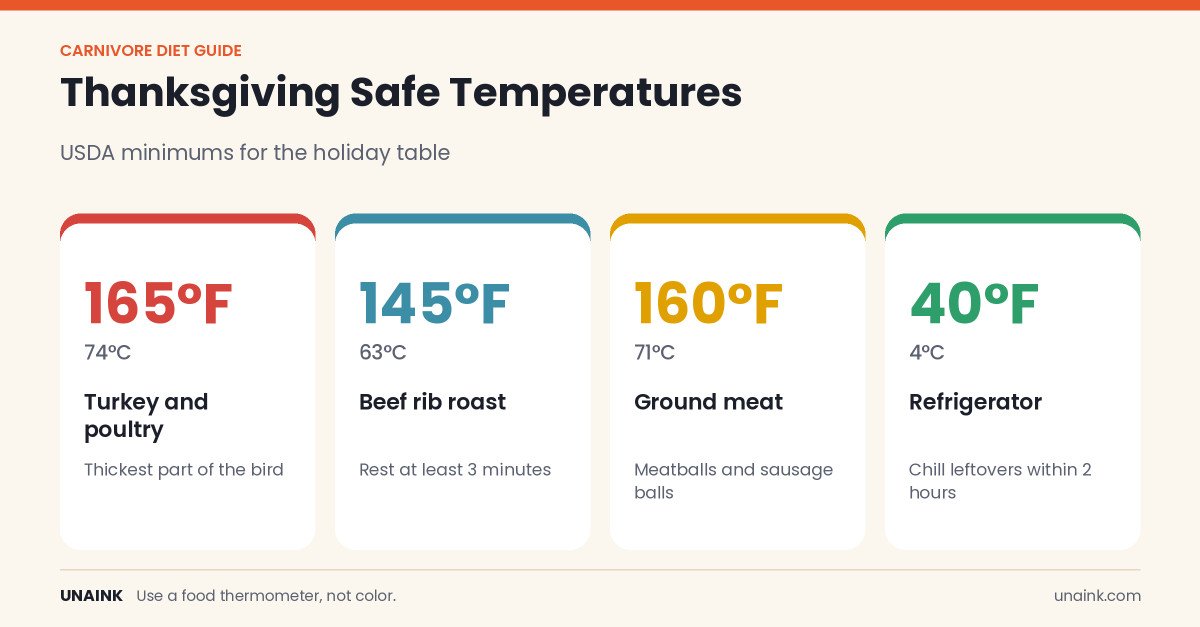
- Cook poultry to 165°F, whole cuts of beef and pork to 145°F with a 3-minute rest, and ground meat to 160°F.
- Refrigerate leftovers within 2 hours and use them within 3 to 4 days.
- Carnivore eating has limited research behind it, so one holiday meal is a poor reason to feel pressure in either direction.
Pick Your Centerpiece
A whole roasted turkey is the obvious choice, and it needs nothing more than salt, butter or tallow, and time. A dry brine of salt applied a day ahead helps the skin crisp. If your table is small, a turkey breast or a beef rib roast feeds six to eight people with far less effort.
Plan the thaw first. The USDA advises about 24 hours in the refrigerator for every 5 pounds of turkey, so a 15-pound bird needs roughly three days. See the food safety section below for faster options.
Building a Carnivore Thanksgiving Menu
Traditional sides are mostly plant-based, so replace them with dishes that still feel like part of the feast. Here are ideas that fit a strict or relaxed approach:
- Deviled eggs made with homemade carnivore mayonnaise
- Sausage balls made from plain ground pork and egg, baked until firm
- Roasted bone marrow with flaky salt, using the method in our marrow guide
- Chicken liver pâté with butter, served in small portions
- Bacon-wrapped turkey meatballs as an appetizer
- Crispy turkey skin, baked on a rack until crackling
Herbs such as sage and thyme are plants, so strict followers leave them out. A relaxed table may include them for flavor. For more menu ideas, browse our carnivore dinner ideas.
Gravy, Drinks and Dessert
Skip the flour. Strain the pan drippings, skim off most of the fat, then simmer the juices with a cup of bone broth until the gravy reduces and turns glossy. Whisk in a spoonful of tallow or butter at the end for body.
For drinks, water, sparkling water and warm broth are the simple options. Alcohol is a personal call, and we cover it in this alcohol guide. For dessert, a baked egg custard or a scoop of carnivore ice cream keeps things on plan.
Turkey and Meat Food Safety
Holiday cooking involves large cuts and a lot of handling, so a thermometer is worth more than any recipe. These are the USDA minimum internal temperatures that apply to this menu.
| Dish | Safe temperature | Note |
|---|---|---|
| Whole turkey and other poultry | 165°F (74°C) | Check the thickest part |
| Beef rib roast or other whole cuts | 145°F (63°C) | Rest at least 3 minutes |
| Fresh ham or pork roast | 145°F (63°C) | Rest at least 3 minutes |
| Ground meat, sausage balls, meatballs | 160°F (71°C) | Cook through, no pink guesswork |
| Reheated leftovers | 165°F (74°C) | Check several spots |
Bacteria multiply fast between 40°F and 140°F. Refrigerate leftovers within 2 hours of cooking, or within 1 hour if the room is above 90°F. Divide large amounts into shallow containers so they cool quickly. Leftovers keep 3 to 4 days in the refrigerator and about 3 to 4 months in the freezer for best quality.
If you are short on thawing time
Cold-water thawing takes about 30 minutes per pound. Keep the turkey in a leak-proof bag, change the water every 30 minutes, and cook it right away. Cooking from frozen is also safe, but it takes about 50 percent longer.
Hosting a Mixed Table
Few families are fully carnivore, so serve the meat dishes as the anchor and set the extras on a side table. Use separate serving spoons, and label dishes that contain flour, sugar or dairy so guests can choose. Nobody needs a lecture on your diet over dinner.
One caution: people who are pregnant, have kidney disease or take medication for diabetes or blood pressure should not change how they eat because of a holiday plan. Read who should skip this diet if you are unsure.
A Simple Timeline
- Three days ahead: move the turkey to the refrigerator to thaw.
- Day before: salt the bird, make broth, and boil eggs for the deviled eggs.
- Morning: roast the turkey, then rest it for at least 20 to 30 minutes while you finish gravy.
- Serving time: carve, check that dishes are steaming hot, and keep hot food at 140°F or warmer.
- Within 2 hours: put leftovers into shallow containers and refrigerate.
Carnivore Thanksgiving Menu: The Short Version
A carnivore Thanksgiving menu works best when it keeps the familiar centerpiece and swaps plant-based sides for eggs, marrow and rich gravy. Whatever shape your carnivore Thanksgiving menu takes, safe temperatures and quick refrigeration matter more than any single recipe.
Frequently Asked Questions
Can you eat turkey on a carnivore diet?
Yes. Turkey is a meat, and roasting it with salt and butter or tallow fits both strict and relaxed versions of the diet. Dark meat and skin add fat, which many followers prefer.
What can replace stuffing?
Baked sausage and egg muffins or sausage balls give a similar savory, crumbly bite. They contain no bread, so they will not taste identical to classic stuffing.
How long can Thanksgiving leftovers sit out?
No more than 2 hours, or 1 hour when the room is above 90°F, according to the USDA. After that, discard perishable food.
Is pie ever carnivore?
Traditional pie contains sugar, flour and fruit or pumpkin, so it is not. A baked egg custard is the closest simple option.
Can I cook the turkey a day ahead?
Yes, if you chill it within 2 hours and reheat it to 165°F. Slicing the meat first helps it cool and reheat evenly.
Conclusion
Thanksgiving already puts meat at the center, so a carnivore table takes less rebuilding than most holidays. Choose a roast you are comfortable cooking, make rich gravy, add a few egg and marrow dishes, and follow the safe temperatures. The rest is about enjoying the people at the table.
Medical note
This article is for general education and is not medical advice. Talk with a doctor or registered dietitian before making major diet changes, especially if you have a health condition, take medication, or are pregnant or breastfeeding.
Keep Reading
- Carnivore Christmas Dinner Ideas: A meat-forward plan for the next holiday table.
- Carnivore Diet Dinner Ideas: Everyday dinners built around meat and eggs.
- How to Render Beef Tallow: Make the fat that gives gravy and roasts their flavor.
- Cheating on the Carnivore Diet: What to do when a holiday meal goes off plan.
Sources
- USDA FSIS: Leftovers and Food Safety: Two-hour rule, reheating and storage times.
- Montana State University Extension: Safe Thawing Practices: Refrigerator, cold-water and microwave thawing times.
- USDA Safe Minimum Internal Temperature Chart: Minimum cooking temperatures for meat and poultry.
- FoodSafety.gov: Cold Food Storage Charts: Refrigerator and freezer storage times.