A carnivore diet food list is short on purpose. Meat, fish, eggs and animal fats go in the basket, and almost everything else stays on the shelf. The tricky part is the grey zone: dairy, bacon, coffee, spices and the plant ingredients hiding in processed meat. This guide sorts every common food into eat, eat with care, or skip, so you can shop and cook without second-guessing each label.
Quick Answer
The carnivore diet food list is built on beef, lamb, pork, poultry, fish, shellfish, eggs, organ meats and animal fats such as tallow, lard and butter. Dairy, bacon and coffee are optional and debated. Fruit, vegetables, grains, beans, nuts, seeds, sugar and plant oils are excluded. Because the list is so narrow, it helps to rotate foods, include organ meats and fish, and check with a dietitian about nutrient gaps.
Key Takeaways
- Core foods are red meat, poultry, fish, eggs, organ meats and animal fats.
- Dairy, cured meats, coffee and spices are the main gray-zone choices, and practice varies between followers.
- Every plant food is excluded, including cooking oils, sweeteners and most sauces.
- Fattier cuts matter, because very lean meat can leave you hungry and low on energy.
- The narrow list can leave gaps in vitamin C, fiber, magnesium and calcium, so plan around them.
Carnivore Diet Food List at a Glance
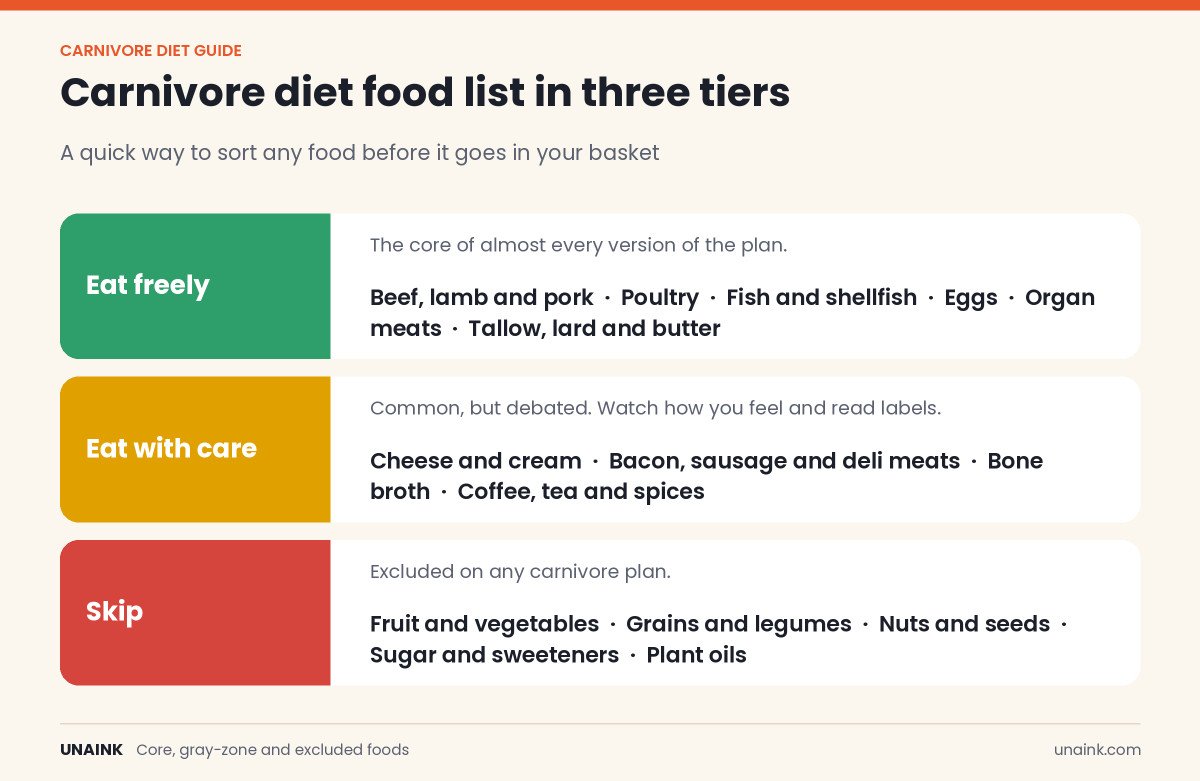
If you only remember one thing about the carnivore diet food list, use the three tiers below. Foods in the first tier appear on nearly every carnivore plan. The second tier depends on your goals and how your body responds. The third tier is off the table. For a wider introduction to the plan itself, read our guide to what the carnivore diet is.
Foods to Eat on the Carnivore Diet
Red meat
Beef is the anchor for most people. Ribeye, chuck, brisket, short ribs and ground beef with a decent fat content (around 80 percent lean) give you both protein and fat. Lamb, goat, bison and venison fit just as well. Fattier cuts are more satisfying and easier to keep up long term than lean sirloin or very lean ground beef.
Pork and poultry
Pork chops, pork belly, ribs and pork shoulder are all fair game. Chicken thighs with the skin on, duck and turkey work too, though breast meat is lean and usually needs added fat, such as butter or tallow, to keep you full. Cook poultry to 165°F (74°C), as USDA food safety guidance recommends.
Fish and shellfish
Salmon, mackerel, sardines, herring, trout, shrimp, crab, oysters and mussels all qualify. Fatty fish are especially useful on a plan that skips plant sources of omega-3 fats. Canned fish packed in water or in its own oil is convenient, but check that it is not packed in olive or soybean oil.
Eggs
Eggs are cheap, versatile and nutrient dense. Most followers eat the whole egg, yolk included, fried in butter or tallow, boiled or scrambled.
Organ meats
Liver, heart, kidney and tongue supply vitamins and minerals that muscle meat has less of, including vitamin A, B12 and iron in liver. They are also very potent, so small servings once or twice a week are a common approach. Pregnant people are usually advised to limit liver because of its high vitamin A content, so ask your clinician.
Animal fats and bone broth
Tallow, lard, duck fat, butter and ghee are the usual cooking fats. Bone broth made from simmered bones is a popular drink and cooking base, although the nutrient content depends heavily on how it is made.
Gray-Zone Foods: Eat With Care
These are the foods that split the carnivore community. None is right or wrong for everyone, so treat them as variables to test.
| Food | Common practice | What to consider |
|---|---|---|
| Cheese, cream and butter | Allowed in many versions, dropped in strict ones. | Lactose and dairy proteins bother some people. Hard cheeses contain very little lactose. |
| Bacon, sausage and deli meats | Often eaten, though some followers avoid them. | These are processed meats. The WHO classifies them as carcinogenic to humans, and many contain sugar, starch or spices. |
| Coffee and tea | Commonly allowed. | They are plant-derived, so strict plans leave them out. Too much caffeine can worsen sleep or digestion. |
| Salt, pepper and spices | Salt is nearly universal. Other spices vary. | Spices are plants. The dirty carnivore diet allows them freely, while the lion diet allows only salt. |
| Sweeteners and diet drinks | Often tolerated by relaxed followers. | They are not animal foods and may raise cravings in some people. |
Foods and Drinks to Skip
The excluded list is long, but it is simple: if it grew in the ground or on a plant, it is out. In practice that means:
- Fruit and vegetables of every kind, including potatoes and avocado.
- Bread, pasta, rice, oats, cereal and every other grain product.
- Beans, lentils, peas and soy foods.
- Nuts, seeds and nut butters.
- Sugar, honey, maple syrup and sweeteners.
- Plant oils such as olive, avocado, canola and seed oils.
- Most packaged foods, sauces, marinades and condiments.
Watch the labels
Plant ingredients hide in surprising places. Sausages can contain rusk or starch, bacon may be cured with sugar, and flavored meats often include spices, sauces or oils. If you want a clean carnivore diet food list, buy plain cuts and read ingredient lists.
A Sample Day of Carnivore Eating
This is an illustration of how the foods on the carnivore diet food list fit together in a day, not a prescription. Portions depend on your size, activity and appetite.
- Breakfast: scrambled eggs cooked in butter with a ground beef patty.
- Lunch: pan-seared salmon with extra butter, and a mug of bone broth.
- Dinner: a ribeye cooked in tallow, with a small portion of liver once or twice a week.
- Snacks if hungry: boiled eggs, leftover steak, canned sardines, or a few cubes of hard cheese if dairy suits you.
Shopping and Cooking Tips
- Buy fattier cuts. They keep you full and cost less per pound than lean steaks.
- Stock up and freeze. Ground beef, chicken thighs and eggs are among the cheapest options.
- Use a meat thermometer. USDA guidance calls for 145°F (63°C) with a three-minute rest for steaks and roasts, 160°F (71°C) for ground meat and 165°F (74°C) for poultry. See the USDA safe temperature chart.
- Rotate your proteins. Mixing beef, fish, eggs and organ meats spreads out your nutrients.
- Avoid raw shortcuts. Eating uncooked meat carries real infection risks, which we cover in the raw carnivore diet guide.
Nutrients to Watch on a Narrow Food List
A short carnivore diet food list can leave gaps. The 2026 scoping review in the journal Nutrients flagged possible shortfalls in vitamins C and D, calcium, magnesium, iodine and dietary fiber. Eating fish with edible bones, eggs, organ meats and, if you tolerate it, dairy can help. A dietitian can tell you whether supplements make sense for you, and blood tests can show where you stand.
Common Carnivore Food Mistakes
- Eating only lean meat, which often leads to hunger, low energy and poor satisfaction.
- Skipping salt and fluids during the first weeks, when headaches and fatigue are common.
- Relying on processed meats because they are convenient.
- Eating one or two foods only, which narrows your nutrient intake.
- Never checking blood work after changing your diet so drastically.
Frequently Asked Questions
Can you eat cheese on the carnivore diet?
Many people do, but strict versions leave it out. If you add dairy, start with hard cheeses and butter, which contain little lactose, and watch for bloating, skin changes or digestive upset.
Is coffee allowed on the carnivore diet?
It depends on how strict you are. Coffee and tea come from plants, so purists skip them, but many followers drink them without changing the rest of their plan.
Can you eat bacon on the carnivore diet?
Plain bacon is popular, but it is a processed meat and often cured with sugar. If you eat it, choose varieties with short ingredient lists and treat it as an occasional food rather than a daily staple.
Are eggs allowed on the carnivore diet?
Yes. Eggs are an animal food and appear on nearly every carnivore diet food list. Whole eggs, yolk included, are the usual choice.
Do you need supplements on a carnivore diet?
It depends on what you eat and your blood tests. Without plants, intake of vitamin C, magnesium, calcium and fiber can fall short, so ask a doctor or dietitian instead of guessing.
Conclusion
The carnivore diet food list is easy to remember: animal foods in, plant foods out, and a few gray-zone items you can test for yourself. Choose fattier cuts, rotate fish, eggs and organ meats, cook everything to safe temperatures, and read labels for hidden plant ingredients. Because the plan is restrictive, check in with a clinician and keep an eye on your nutrient intake.
Medical note
This article is for general education and is not medical advice. Talk with a doctor or registered dietitian before making major diet changes, especially if you have a health condition, take medication, or are pregnant or breastfeeding.
Keep Reading
- What Is the Carnivore Diet?: how the plan works and who it suits
- 9 Carnivore Diet Benefits and the Science Behind Them: what the research really says
- Dirty Carnivore Diet: what a more relaxed version allows
- Raw Carnivore Diet: the food safety risks explained
Sources
- Harvard Health Publishing. What is the carnivore diet?: which foods the plan allows and its main risks
- Cleveland Clinic. Carnivore Diet: What Is It and Is It Healthy?: typical food list and dietitian view
- Lietz, Dapprich and Fischer. Carnivore Diet: A Scoping Review. Nutrients, 2026: nutrient gaps on a plant-free diet
- USDA FSIS. Safe Minimum Internal Temperature Chart: cooking temperatures for meat and poultry
- Harvard T.H. Chan School of Public Health. Report says eating processed meat is carcinogenic: processed meat classification