


Carnivore diet diarrhea is one of the most common complaints in the first weeks of eating mostly meat. It often comes from a sudden jump in fat, a change in what reaches the colon, or a food or supplement you did not think about. Most cases are fixable with small adjustments, but some signs mean you should be seen promptly.
Quick Answer
Carnivore diet diarrhea usually happens when fat intake rises faster than your digestion can handle, when dairy, sweeteners, or magnesium supplements irritate the gut, or when spoiled or undercooked meat causes an infection. Slowing the fat increase, removing likely triggers, and replacing fluids and salt helps many people. Diarrhea lasting more than two days, bloody or black stools, a fever above 102°F, or signs of dehydration needs medical care.
Key Takeaways
- Loose stools in the first weeks are often tied to eating much more fat than before.
- Dairy, sugar alcohols, and magnesium supplements are common hidden triggers.
- Food poisoning from undercooked or poorly stored meat can look like diet diarrhea.
- Replace lost fluid and sodium, and ease the fat back down before building up again.
- Bloody or black stools, fever, severe pain, or dehydration signs call for prompt medical care.
Why Loose Stools Show Up Early
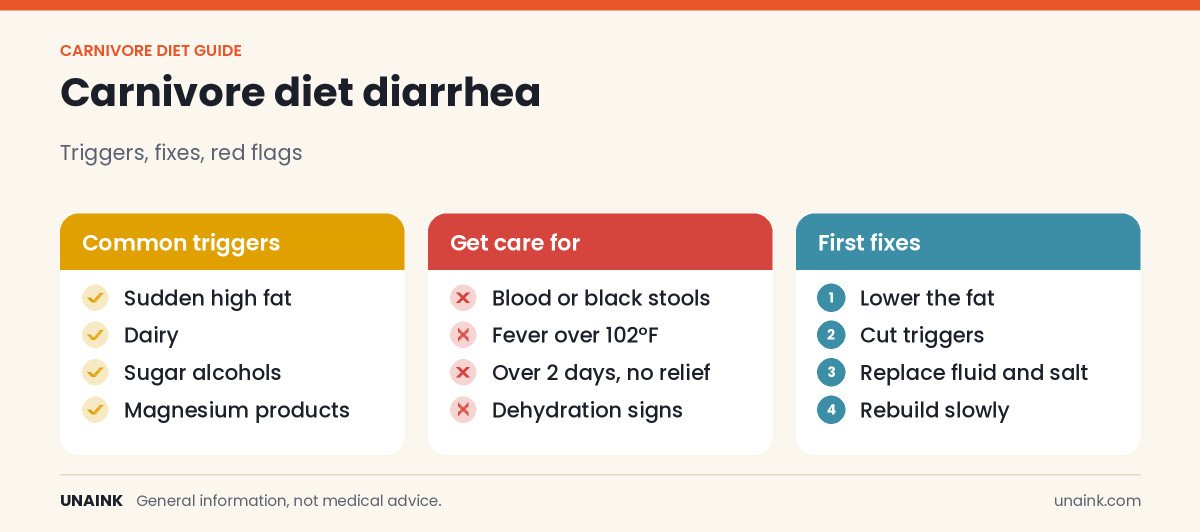
The gut has to adjust to a very different mix of food. Fat digestion depends on bile and enzymes, and a rapid rise in fatty meat, tallow, butter, or cream may outpace what your body is ready for. The result can be urgent, oily, or loose stools. Gut bacteria that used to feed on plant fiber also face a new menu, which may shift stool habits for a while. Research on how this plays out in people eating only animal foods is very limited, so treat these as likely explanations, not proven ones.
Common Triggers to Check
| Trigger | Why it can loosen stools | What to try |
|---|---|---|
| Sudden high fat | Bile and enzymes may lag behind | Step fat down, then rebuild slowly |
| Dairy | Lactose can cause diarrhea | Pause milk, cream, soft cheese |
| Sweeteners | Sugar alcohols draw water into the gut | Check labels and drop them |
| Magnesium products | Some antacids and supplements act as laxatives | Review with your pharmacist |
| Spoiled or raw meat | Bacteria or parasites | Cook and store by USDA rules |
| Gallbladder surgery | Less controlled bile release | Ask your clinician |
Mayo Clinic lists lactose, sugar alcohols such as sorbitol and erythritol, magnesium-containing antacids, and removal of the gallbladder among known causes of diarrhea. If you have had gallbladder surgery, read carnivore diet with no gallbladder.
Is It Food Poisoning?
Sometimes diarrhea has nothing to do with the diet itself. Bacteria from contaminated or poorly stored meat can cause sudden watery diarrhea, cramps, nausea, and fever. USDA guidance is to cook ground meat to 160°F, poultry to 165°F, and whole cuts to 145°F with a three minute rest, and to refrigerate cooked meat within two hours. If others who ate the same meal are ill, or you also have fever and vomiting, suspect infection and seek advice.
How to Settle Carnivore Diet Diarrhea
- Back off the fat for several days. Choose leaner cuts and cook with less added tallow or butter.
- Remove dairy, sweeteners, and unnecessary supplements.
- Eat simple foods such as plain cooked beef or eggs while things calm down.
- Drink fluids and replace sodium. Broth is a reasonable option; see bone broth.
- Once stools firm up, add fat back in small steps, one change at a time.
- Keep a short log of foods and stools to spot a pattern.
Watch for Dehydration
Diarrhea drains water and electrolytes quickly. Mayo Clinic lists excessive thirst, dry mouth, little or no urination, dark urine, dizziness, weakness, and fatigue as adult warning signs, and says dehydration can become life-threatening. If you cannot keep fluids down, or you feel faint when standing, get medical help rather than waiting it out. Salt matters here too; see how much salt on carnivore and electrolytes.
Red Flags That Need Prompt Care
- Diarrhea lasting more than two days without improvement.
- Bloody, black, or tarry stools.
- Severe belly or rectal pain.
- Fever above 102°F (39°C).
- Repeated vomiting or being unable to keep fluids down.
- Dizziness, fainting, a racing heartbeat, or very little urine.
- Diarrhea lasting weeks, which Mayo Clinic says usually points to another problem such as IBS, IBD, celiac disease, or SIBO.
Existing digestive conditions complicate things; see IBS and IBD for what is and is not known. Do not change prescribed medicine because of diarrhea without asking your prescriber.
Carnivore Diet Diarrhea: The Short Version
Most carnivore diet diarrhea eases after a few days once fat, dairy, and supplements are adjusted and fluids are replaced. If carnivore diet diarrhea lingers beyond two days or comes with blood, fever, or dehydration signs, treat it as a medical issue instead of a diet problem.
Frequently Asked Questions
How long does carnivore diet diarrhea last?
Adjustment-related loose stools often settle within days to a couple of weeks. Anything beyond two days without improvement, or lasting weeks, should be evaluated.
Is too much fat the cause?
It can be. Many people improve when they cut fat back and rebuild slowly, but infection, dairy, supplements, and medical conditions also cause diarrhea.
Should I take anti-diarrheal medicine?
Ask a pharmacist or doctor first, especially if you have a fever or bloody stools, since these medicines are not appropriate in every case.
Can I keep eating meat while I have diarrhea?
Plain, lean, well-cooked meat is usually tolerated. If you are vomiting or cannot hold food down, get medical advice.
Could my gallbladder be involved?
If it was removed, or you have gallstones, fat can be harder to handle. Talk with your clinician about fat intake.
Conclusion
Loose stools on a meat-heavy diet are common and often have a simple fix. Dial the fat back, remove irritants, replace fluid and salt, and make sure your meat is cooked and stored safely. Seek care quickly for blood, fever, severe pain, repeated vomiting, or signs of dehydration.
Medical note
This article is for general education and is not medical advice. Talk with a doctor or registered dietitian before making major diet changes, especially if you have a health condition, take medication, or are pregnant or breastfeeding.
Keep Reading
- Carnivore Diet Constipation: The opposite problem and what helps.
- Carnivore Diet Poop Changes: What stool changes can mean.
- Carnivore Diet Bloating: Gas and fullness in the first weeks.
- How to Get More Fat on Carnivore: Adding fat at a sensible pace.
Sources
- Mayo Clinic: Diarrhea: Causes, warning signs, dehydration
- Mayo Clinic: Dehydration: Dehydration symptoms and when to get care
- USDA FSIS: Safe temperature chart: Safe cooking temperatures
- Cleveland Clinic: Keto flu: Digestive symptoms during carb restriction
[…] Think of these three as a package. Fat adds lubrication and stimulates digestion, fluids soften stool, and sodium helps your body hold on to water. If you only fix one, results may be partial. Try changing a single variable for several days, then reassess. Add fat gradually to avoid the opposite problem; see carnivore diet diarrhea. […]
[…] nausea or diarrhea is the main problem, see our nausea guide and diarrhea guide for more […]