A sectional sofa combines multiple seating sections into one larger arrangement, letting you match the furniture to your room instead of forcing the room around a fixed sofa. Common options include L-shaped, U-shaped, chaise, curved, pit, reversible, and modular designs. The best choice depends on room size, traffic flow, orientation, comfort, and whether the complete sectional can actually reach the room through your doors, halls, stairs, or elevator.
Quick Answer
A sectional sofa is a multi-piece seating arrangement that can form an L, U, chaise, curved, pit, or modular layout. Choose one by measuring the room and delivery route, protecting your main walking paths, checking left- or right-facing orientation, and matching the seat depth, upholstery, and configuration to how your household actually uses the room.
Key Takeaways
- A sectional sofa combines multiple seating sections and can be fixed, reversible, or modular.
- L-shaped and chaise sectionals can work in compact or larger rooms when their footprint fits the traffic pattern.
- U-shaped, curved, and pit sectionals generally need more open floor area and work well for conversation or lounging.
- Measure the room, furniture footprint, doors, halls, stairs, elevators, and other delivery obstacles before ordering.
- For a primary walking route, aim for roughly 30 inches of clear space where the room allows, and keep chaise extensions away from busy traffic paths.
What Is a Sectional Sofa?
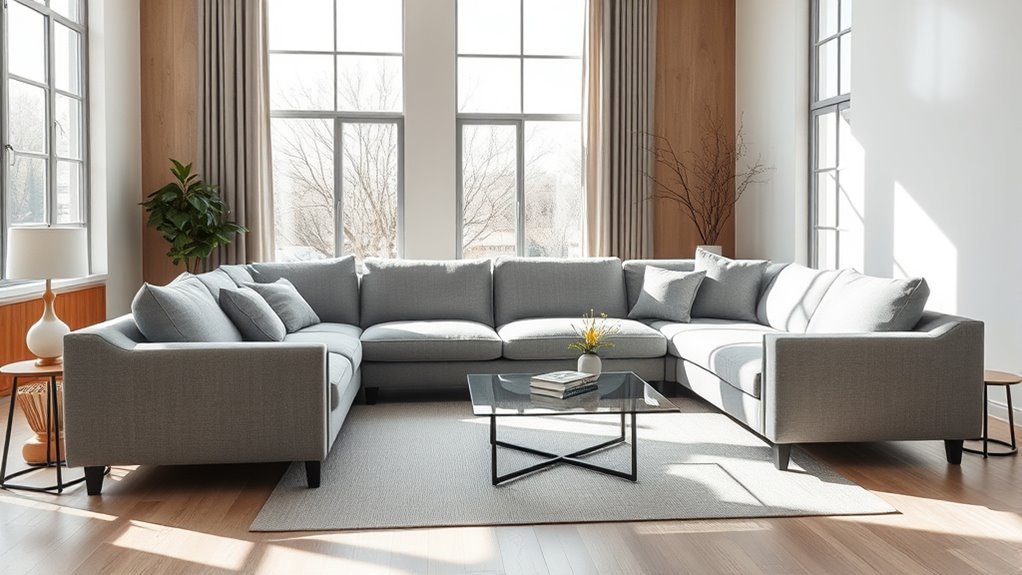
A sectional sofa is a seating arrangement made from two or more sections that combine into a larger sofa. Depending on the design, those pieces may lock into one fixed configuration or allow you to rearrange individual modules.
You might choose a sectional when you want to use a corner efficiently, seat several people together, divide an open-plan room, or create a dedicated lounging area. Unlike a standard straight sofa, a sectional can extend along two or three sides of the seating zone.
A sectional sofa adapts seating to the shape of the room, whether you need a compact chaise, a corner arrangement, or a larger conversation area.
A chaise sectional adds an extended seat for putting your feet up. A modular sectional is made from individual units that can usually be rearranged or expanded more freely. Modular designs are therefore a type of sectional in many furniture collections rather than a completely separate category.
Upholstery, cushion construction, arm style, seat depth, back height, and overall scale all affect how comfortably the sectional fits both your body and the room.
Types of Sectional Sofas
Sectional styles differ mainly by footprint and how the pieces connect. Start with the shape that suits the room rather than choosing the largest design that will physically fit.
L-Shaped Sectional
An L-shaped sectional turns at roughly a right angle. It can tuck into a corner or float farther into an open room to separate the living area from a dining or kitchen zone. Compact L-shaped designs can work in smaller rooms, while larger configurations provide substantial seating.
U-Shaped Sectional
A U-shaped sectional extends on both sides of a central seating run. It creates a natural conversation area and offers generous seating, but its deeper footprint usually makes it better suited to rooms with more open floor space.
Chaise Sectional
A chaise sectional combines regular sofa seating with one extended lounge seat. It gives you a place to stretch out without requiring the full footprint of many U-shaped configurations.
Curved Sectional
Curved sectionals use an arc instead of a sharp corner. Their shape can make face-to-face conversation feel natural, but the curved back may leave unused space if you try to push it tightly against a straight wall. They are often easier to place in an open seating area.
Pit Sectional
A pit sectional creates a deep, enclosed lounge, often with multiple wide or ottoman-like modules filling the center. It works especially well for movie rooms and casual lounging but can dominate a small room.
Fixed, Reversible, and Modular Sectionals
A fixed sectional is designed around a particular arrangement or orientation. A reversible sectional lets you move the chaise or extension from one end to the other on compatible models. A modular sectional uses separate units that can be rearranged into multiple layouts, although the exact options depend on the collection and connector system.
Note: “Sectional” describes the multi-section seating arrangement, while “modular” describes how independently the units can be configured. A sofa can therefore be both sectional and modular.
How to Measure Sectional Sofa Fit
Measure the room before comparing sectional sizes. Record the usable length and width, then mark doors, windows, vents, radiators, built-ins, fireplace hearths, and other features that affect placement. Ceiling height usually matters less for normal seating, but it can matter during delivery on stairways or when unusually tall furniture must be tilted.
Next, compare those room measurements with the sectional’s complete dimensions. For an L-shaped or chaise model, measure both legs of the footprint rather than only the longest side.
| Measure | Why It Matters |
|---|---|
| Room dimensions | Shows the maximum usable footprint and remaining circulation space. |
| Sectional width and depth | Confirms how far the main run and chaise or return extend into the room. |
| Doorways and hallways | Helps confirm the pieces can reach the room. |
| Stairs, landings, and elevators | Identifies tight turns, low clearances, and other delivery restrictions. |
| Floor outline | Lets you test scale, table placement, door swings, and walking paths before buying. |
For an important walking route, try to keep roughly 30 inches of usable clearance where the room permits. Smaller gaps can work beside furniture that people rarely walk past, but an 18-inch opening should not be treated as a universal recommendation for a main path.
Also measure the complete delivery route. Check the entry door, hallways, stairways, landings, elevators, railings, trim, and tight corners. A sectional can fit beautifully in the living room yet still be impossible to carry into it.
Pro Tip: Use painter’s tape to outline the exact sectional footprint on the floor. Then walk the normal routes through the room, open nearby doors, and place the coffee table or ottoman where it would actually sit. This reveals crowding that measurements alone can hide.
How to Choose a Left- or Right-Facing Sectional
Many chaise and L-shaped sectionals are sold in left-facing and right-facing versions. Furniture listings may also use abbreviations such as LAF and RAF for individual pieces.
A common retail convention is to determine the side while standing in front of the sectional and looking at it. If the chaise or relevant arm is on your left, it is described as left-facing; if it is on your right, it is right-facing. Because terminology can vary between manufacturers and individual modular components, always confirm the seller’s diagram before ordering.
Choose the orientation that keeps the chaise away from the busiest path through the room. Check whether it would interfere with an entry, patio door, closet, floor vent, fireplace, or frequently used walkway.
If you expect to move or rearrange the room, a reversible chaise or modular design can reduce the risk of being locked into the wrong orientation.
Best Sectional Sofa Layouts for Your Room
Which sectional layout fits your room best depends on both floor space and how people move through it.
An L-shaped setup works well in a corner or as a soft divider in an open plan. It can provide generous seating without requiring furniture on every side of the room.
An L-shaped sectional can define a seating zone while keeping the rest of the room visually open.
If you host larger groups, a U-shaped design places seating on three sides and naturally turns attention toward the center, where a coffee table or ottoman can sit.
In a smaller room, a correctly sized chaise sectional can make good use of a corner while providing a dedicated place to stretch out. A sectional is not automatically too large for a compact space; the actual width, depth, chaise length, and remaining walkway matter more than the furniture label.
For a more sculptural look, curved sofas soften straight room lines and work best where there is enough floor area to appreciate the shape instead of forcing it tightly against a wall.
For a true lounge feel, pit sectionals create a deep, immersive seating zone that suits media rooms and relaxed family spaces. Because of their footprint, tape the complete dimensions on the floor before committing.
The best layout leaves the important paths open, gives seated people a comfortable view of the room’s focal point, and does not block windows, doors, vents, or other features you use every day.
How to Choose the Right Sectional
Start by matching the sectional to the room and your routine. Measure the available space, protect the main walking path, and decide whether an L-shaped, chaise, U-shaped, curved, pit, reversible, or modular design fits the way you live.
Then evaluate comfort rather than dimensions alone. Sit in the sectional if possible. Check whether the seat depth supports your preferred posture, whether your feet rest comfortably, whether the back height feels supportive, and whether the cushions feel too soft or firm for everyday use.
Think about upholstery next. Durable, easy-care fabrics can be useful in busy homes, while removable or washable covers may simplify maintenance on models that offer them. Always follow the specific manufacturer’s cleaning instructions because care methods vary by fabric and finish.
If the sectional reclines, measure the space needed for the seats or footrests to operate. If you plan to place a coffee table in front of it, make sure people can still enter and leave the seating area without squeezing around furniture.
Finally, compare the total purchase on comfort, construction, usable seating, warranty, upholstery, flexibility, and price. A larger sectional is not automatically a better value, and a smaller one is not automatically better for a small room. The right fit is the configuration that works with your measurements and daily habits.
Frequently Asked Questions
What Are the Key Differences Between a Sofa and a Sectional Sofa?
A standard sofa is usually one straight seating unit, while a sectional combines multiple sections into a larger configuration. Sectionals can provide more continuous seating and more layout options, but their suitability depends on the actual footprint. A compact sectional may fit a small room well, while an oversized straight sofa can still overwhelm the same space.
What Is the Difference Between a Sectional Sofa and a Modular Sofa?
The terms overlap. A sectional is a sofa made from multiple sections arranged together. A modular sofa uses individual units designed for greater rearrangement, expansion, or reconfiguration. Many products are therefore accurately described as modular sectionals. Fixed sectionals offer fewer layout changes, while modular versions provide more flexibility.
When Not to Use a Sectional Sofa?
Avoid a sectional when its footprint blocks a major walkway, door, window, vent, or other essential feature, or when the delivery pieces cannot reach the room. A standard sofa with movable chairs can also be a better choice when you regularly rearrange seating or want a more formal, flexible conversation layout.
What Are the Downsides of a Sectional Sofa?
A sectional can occupy substantial floor space, limit future furniture arrangements, and be harder to deliver through tight entries. Large upholstered surfaces also mean more material to clean. Prices vary widely with size, construction, upholstery, brand, reclining mechanisms, and module count, so compare the complete configuration rather than assuming every sectional costs more than a standard sofa.
How Much Walking Space Should You Leave Around a Sectional?
For a primary walking route, roughly 30 inches of clear space is a useful target where the room allows. Less clearance may be workable in low-traffic gaps, but you should test the exact layout with painter’s tape and make sure doors, drawers, recliners, and nearby furniture can still operate normally.
Can a Sectional Sofa Work in a Small Living Room?
Yes. A compact L-shaped or chaise sectional can use a corner efficiently and may replace a sofa-and-chair combination. Check overall width, chaise depth, orientation, door swings, and the remaining walkway instead of judging the fit only by the word “sectional.”
Conclusion
A sectional sofa does more than add seats; its footprint can shape how people move, gather, relax, and use the room. Whether you prefer an L-shape, U-shape, chaise, curved, pit, reversible, or modular design, start with measurements rather than appearance alone. Protect the main walkway, confirm the orientation and delivery route, and choose proportions and comfort that suit the people who will use the sectional every day.
Sources
- IKEA — Simple Guide to Buying a New Sofa — room, entry, and stairway measuring considerations.
- Crate & Barrel — Types of Sofas & Couch Styles Buying Guide — sectional dimensions and surrounding-furniture considerations.
- Room & Board — Measuring for Furniture Delivery — doorways, hallways, stairways, elevators, and delivery-path checks.
- West Elm — Sectional Sofas Simplified — left- and right-facing sectional terminology and component setup.
- Ashley — Sectional Sofas Guide — sectional measuring and practical walkway guidance.