The raw carnivore diet takes the all-animal approach one step further: the meat, organs, eggs and sometimes dairy are eaten uncooked. Fans say raw food keeps nutrients intact and feels more natural. Food safety experts say the opposite, because cooking is the simplest way to kill the bacteria and parasites that raw animal foods can carry. This guide explains the real food safety risks of the raw carnivore diet, and who is most vulnerable. It also shows how to lower your risk if you eat any raw or rare meat.
Quick Answer
The raw carnivore diet means eating uncooked animal foods only. The main danger is foodborne illness. Raw meat, poultry, eggs and dairy can carry bacteria such as Salmonella, E. coli, Campylobacter and Listeria, and raw pork or game can carry parasites. No good evidence shows raw is healthier, and food safety agencies advise cooking meat to safe internal temperatures.
Key Takeaways
- Raw animal foods are among the foods most linked to food poisoning, according to US public health agencies.
- The CDC estimates that 48 million people in the United States get sick from foodborne illness every year, with about 128,000 hospitalizations and 3,000 deaths.
- Ground meat and poultry carry more risk than intact steaks, because bacteria spread through the meat.
- Pregnant people, young children, older adults and anyone with a weakened immune system should never eat raw animal foods.
- Cooking to USDA temperatures is the most reliable protection.
What Is the Raw Carnivore Diet?
The raw carnivore diet follows the usual carnivore rules, with meat, fish, eggs, organs and fat, but eats everything uncooked. Some followers eat raw beef, liver and egg yolks. Others add raw dairy. It is a small corner of the carnivore diet world, but it gets a lot of attention on social media. As Scientific American has noted, many popular meat-centered influencers recommend eating animal products, including dairy and eggs, raw.
Why Some People Choose Raw
- Belief in preserved nutrients. Heat does reduce some vitamins slightly, so raw seems more complete.
- The ancestral argument. Supporters say humans ate raw meat for most of history.
- Simplicity. No cooking means less time in the kitchen.
These arguments are weaker than they sound. Researchers cited in Scientific American point out that our teeth are not built for tearing raw meat and that cutting and cooking make meat much easier to eat. Some anthropologists also think cooking supplied the extra energy that helped human brains grow. Cooking is not a modern corruption of the human diet.
The Real Food Safety Risks of Raw Animal Foods
The CDC and US Department of Agriculture advise cooking meat to a safe minimum internal temperature because that step kills disease-causing germs. Public health guidance consistently ranks raw foods of animal origin among the foods most associated with food poisoning. Food safety expert Darin Detwiler of Northeastern University covers the usual culprits in his comments on raw-meat diets: raw poultry commonly carries Campylobacter and may also carry Salmonella and Clostridium perfringens. Raw meat may carry Salmonella, E. coli and Yersinia.
| Raw food | Main concerns |
|---|---|
| Raw poultry | Campylobacter, Salmonella and Clostridium perfringens. |
| Raw beef and lamb | Salmonella, E. coli and other bacteria. Ground meat is higher risk because bacteria are mixed through the meat. |
| Raw pork and wild game | Bacteria plus parasites such as Trichinella and tapeworms. |
| Raw fish and shellfish | Bacteria, viruses and parasites, depending on the species and source. |
| Raw organ meats | Bacteria, and in some animals viruses such as hepatitis E. |
| Raw eggs | Salmonella. The FDA advises cooking eggs until the yolk and white are firm. |
| Raw milk and raw dairy | Salmonella, E. coli and Listeria. The FDA warns of serious risks, especially for children, older adults and pregnant women. |
The scale of the problem is large. According to the CDC figures cited in the Northeastern article, foodborne illness sickens about 48 million people in the United States each year, hospitalizes 128,000 and kills 3,000. Most of those cases are not caused by raw-food diets, but eating raw animal foods deliberately raises the odds. For the dairy side of the story, read the FDA’s guidance on raw milk.
Who Should Avoid the Raw Carnivore Diet
- Pregnant people, because infections such as listeriosis can cause miscarriage or harm a newborn.
- Babies and young children.
- Adults aged 65 and older.
- Anyone with a weakened immune system, including people with cancer, HIV, diabetes, or transplant recipients.
- People with liver disease, kidney disease or chronic stomach conditions.
Does Raw Meat Have Any Nutritional Edge?
There is no strong evidence that a raw carnivore diet is healthier than cooking your meat. Cooking can slightly lower some B vitamins, but meat stays an excellent source of protein, iron and zinc. Very high-heat cooking can create compounds linked to cancer risk, so gentler methods such as roasting, braising and stewing are better than charring. The trade-off is that cooking gets rid of the germs, which is the larger concern.
What About Steak Tartare, Sushi and Rare Steak?
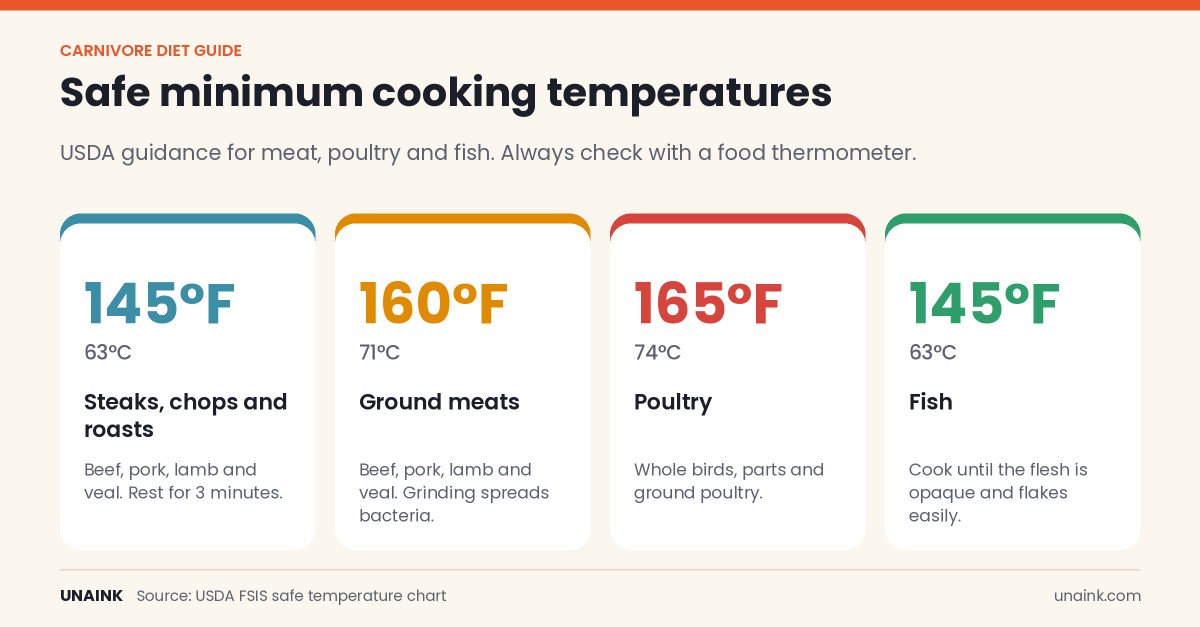
Raw meat dishes such as steak tartare, beef carpaccio and kibbeh nayyeh are eaten around the world. Restaurants that serve them usually follow strict sourcing and handling rules, which lowers risk without removing it. At home, raw ground beef is the riskiest option, because grinding spreads surface bacteria through the meat. Whole cuts such as steaks carry most of their bacteria on the outside, which is why a seared rare steak is considered lower risk than a raw burger. USDA still sets a minimum of 145°F for whole cuts, so rare steak is a personal risk decision, not an endorsed practice.
Safe Cooking Temperatures for a Carnivore Diet
If you eat meat on any version of the diet, a thermometer is the cheapest safety tool you can own. The numbers below come from the USDA food safety chart.
Kitchen habits that cut raw carnivore diet risks
- Keep raw meat separate from other foods, and use separate boards and knives.
- Wash hands, surfaces and utensils after touching raw meat or eggs.
- Refrigerate meat promptly and thaw it in the fridge, not on the counter.
- Do not leave cooked or raw meat out for long periods in warm rooms.
- Cook ground meat and poultry all the way through, and use a thermometer instead of judging by color.
When to Seek Medical Help
Food poisoning often causes vomiting, diarrhea, stomach pain, fever and body aches. Most healthy people recover. You should seek medical care if you have bloody diarrhea, a high fever, repeated vomiting that stops you keeping liquids down, signs of dehydration, or symptoms that last more than a few days. Pregnant people should contact a clinician immediately if they think they have eaten contaminated raw foods.
Frequently Asked Questions
Is the raw carnivore diet safe?
It carries real risks. Raw meat, poultry, eggs and dairy can contain harmful bacteria and parasites, and public health agencies recommend cooking animal foods to safe internal temperatures. The risk is highest for children, pregnant people, older adults and people with weakened immune systems.
Is a rare steak the same as raw meat?
Not exactly. A seared rare steak is cooked on the outside, where most bacteria live, so it is lower risk than raw ground meat. It still falls below the USDA minimum of 145°F for whole cuts.
Is raw liver safe to eat?
Raw liver can carry bacteria and, in some animals, viruses such as hepatitis E. Cooking liver thoroughly lowers the risk, and pregnant people are usually advised to limit liver for vitamin A reasons too.
Are raw eggs safe on the carnivore diet?
Raw eggs can carry Salmonella. The FDA advises cooking eggs until the yolk and white are firm, and pasteurized eggs are safer if a recipe truly needs raw egg.
Does freezing make raw meat safe?
Freezing may kill some parasites, but it does not reliably kill bacteria, so it does not replace cooking. Follow USDA guidance for cooking temperatures.
Conclusion
The raw carnivore diet adds a safety problem to an already restrictive plan. The claimed nutritional advantages of raw meat are unproven, while the infection risks are well documented. If you follow any version of carnivore eating, cook meat to USDA temperatures, handle it carefully and avoid raw ground meat, poultry, eggs and unpasteurized dairy. If you are pregnant, elderly, immunocompromised or caring for young children, avoid raw animal foods entirely.
Medical note
This article is for general education and is not medical advice. Talk with a doctor or registered dietitian before making major diet changes, especially if you have a health condition, take medication, or are pregnant or breastfeeding.
Keep Reading
- What Is the Carnivore Diet?: the main overview
- Carnivore Diet Food List: what to eat and what to skip
- Dirty Carnivore Diet: a relaxed version and its trade-offs
- What Is the Animal Based Diet?: including the raw dairy debate
Sources
- USDA Food Safety and Inspection Service. Safe Minimum Internal Temperature Chart: cooking temperatures used in the graphic
- Northeastern University. Please don’t eat raw meat, warns food safety expert: bacteria in raw meat and CDC foodborne illness estimates
- Wong, K. To Follow the Real Early Human Diet, Eat Everything. Scientific American, 2024: ancestral and cooking arguments
- U.S. Food and Drug Administration. Food Safety and Raw Milk: dangers of unpasteurized dairy
- U.S. Food and Drug Administration. The Dangers of Raw Milk (fact sheet): high-risk groups and cooking eggs until firm
- Livestrong. The Health Benefits of Eating Raw Meat for Humans: CDC position on raw foods of animal origin