Water rings on wood furniture need different treatment depending on whether the mark is a white or cloudy finish stain or a darker stain that has reached deeper into the surface. Start with the least aggressive method: blot fresh moisture, let the finish dry, identify the finish if possible, and use only gentle treatment. Dark marks, damaged finishes, antiques, and lifting veneer are better handled by a furniture-restoration professional.
Quick Answer
To remove a white water ring from wood furniture, first let the area dry, then try gentle moving air from a hairdryer on a low or cool setting. If the mark remains, a finish-compatible household or furniture-care product may help. Dark stains, peeling finish, or damaged veneer usually require professional repair or refinishing.
Key Takeaways
- White or cloudy rings often involve moisture affecting the finish rather than deeply staining the wood.
- Dark gray, brown, or black marks can indicate deeper moisture damage and are less suitable for simple home remedies.
- Use the least aggressive method first and test any treatment in a hidden area.
- Do not experiment with heat, oils, solvents, or abrasives on antiques, valuable furniture, lifting veneer, or an unknown finish.
- Coasters, trivets, prompt spill cleanup, and stable indoor conditions are the easiest ways to prevent new rings.
At a Glance
| Time Required | About 5–20 minutes for a gentle treatment, plus drying or observation time |
| Difficulty | Easy for light surface marks; advanced for dark stains or damaged finishes |
| Tools Needed | Soft white cotton cloth, hairdryer with low/cool setting, and a finish-compatible care product if needed |
| Cost | Usually minimal for a light ring; professional restoration costs vary with the finish and damage |
How to Tell What Kind of Water Ring You Have
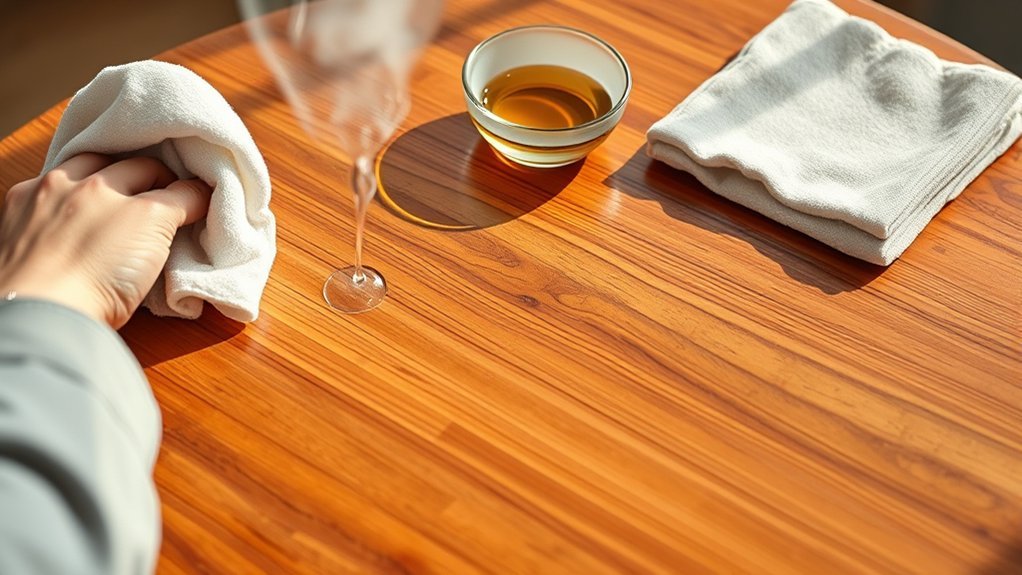
Before treating the mark, look at its color, texture, and condition. Water spills can create cloudy white patches in furniture finishes, according to the Canadian Conservation Institute.
White or cloudy rings commonly indicate that moisture has affected a clear finish. These marks may lighten as the moisture leaves the coating, so an aggressive treatment is not always necessary immediately.
Dark gray, brown, or black stains are more concerning. They can indicate that moisture has moved through a damaged coating or into the wood itself. Deep stains are less likely to disappear with a surface treatment.
Also check for bubbling, peeling, cracks, tackiness, raised grain, or lifting veneer. These symptoms point to finish or substrate damage rather than a simple white ring.
Warning: Do not use a water-drop test to identify an unknown finish. Unfinished wood and some older finishes are sensitive to water. For antiques, valuable pieces, veneer, or an unknown coating, identify the finish from manufacturer information or consult a furniture conservator or refinisher.
Remove Water Rings From Wood Furniture With Heat
Gentle moving air can help some white or cloudy water rings fade by encouraging trapped moisture to leave the finish. A hairdryer on low or cool heat is a more controllable starting point than placing a hot tool directly against the furniture. University of Georgia Extension has published a blow-dryer method for wood water rings.
Keep the dryer moving and watch the surface continuously. The goal is mild, even warmth—not a hot tabletop.
Low Heat Setup
Start with a clean, dry surface. Set the hairdryer to low or cool, hold it several inches away, and move it continuously across an area larger than the ring. Check the mark frequently instead of heating the same spot for a long period.
Stop immediately if the finish becomes tacky, develops an odor, changes color, changes gloss, or feels unusually warm. Shellac, lacquer, wax, old varnish, and repaired surfaces may respond differently to heat.
Pro Tip: Before treating a white ring, give the finish time to dry naturally. Some manufacturer guidance notes that water marks can dissipate on their own, so waiting may prevent unnecessary abrasion or chemical treatment.
Dry Cloth Barrier
If you plan to try an iron after gentler methods fail, use substantially more caution. Place a clean, completely dry cotton cloth over the mark so the metal never directly touches the finish.
The iron must have steam turned off. Use the lowest practical heat setting and make only very brief moving passes over the cloth. Lift the iron, remove the cloth, allow the surface to cool, and inspect before deciding whether another pass is appropriate.
This method is not suitable for every coating. Do not use it on an antique, unknown finish, waxed surface, damaged lacquer, lifting veneer, or a surface that already feels soft or tacky.
Short Iron Bursts
A short iron pass should last only long enough to warm the barrier cloth slightly. Do not leave the iron stationary over the ring.
If there is no improvement after a few cautious attempts, stop rather than increasing the temperature. More heat can turn a small cosmetic mark into permanent finish damage.
For valuable furniture, professional treatment is the safer option once simple drying and low-risk methods fail.
Try Mayonnaise for White Water Rings
Mayonnaise is a traditional household treatment for some white surface rings. University of Tennessee Extension material includes mayonnaise as one possible home remedy for water rings on wood.
A household remedy may improve a light surface ring, but finish compatibility matters more than the ingredient itself.
If the piece is modern, low-value furniture and the manufacturer does not prohibit oil-based products, test a very small amount on a hidden area first. If there is no unwanted color, gloss, or softness change, apply a thin film to the ring with a clean cloth.
Leave it only long enough to assess whether the mark is changing, then remove all residue with a separate clean, dry cloth. Do not saturate the surface.
Avoid mayonnaise on unfinished wood, antiques, open-grain bare wood, damaged veneer, or an unknown finish. Food oils can leave residue or alter the sheen on incompatible surfaces.
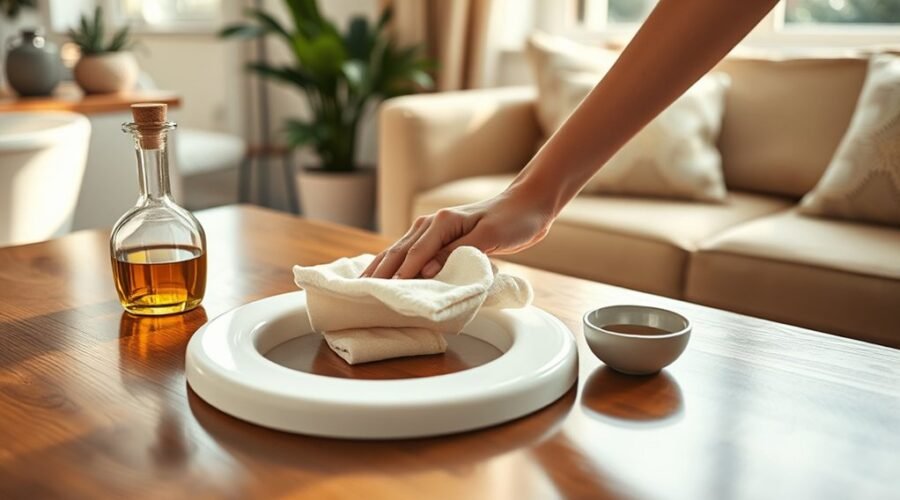
Try Olive Oil on Light Water Rings
Olive oil appears in some household wood-care advice, but it should not be treated as a universal water-ring remover. The Canadian Conservation Institute notes that wood does not need to be “fed,” and it warns that some furniture-care products can leave unwanted residues.
For that reason, manufacturer-approved products are preferable to cooking oil whenever the finish is known.
Olive Oil Application
If you still choose to test olive oil on an inexpensive modern piece, first apply a tiny amount in a concealed location. Check for darkening, uneven gloss, stickiness, or residue after the test area has rested.
Do not assume the oil needs to “penetrate the fibers.” On properly finished furniture, the coating is meant to separate the wood from surface moisture and contaminants.
If the hidden test looks acceptable, use only a very small amount on a soft cloth rather than pouring oil directly onto the furniture.
Buffing the Stain
After a brief application, wipe away all surplus oil and buff gently with a clean, dry cloth. Work with the grain and avoid aggressive circular rubbing that could change the sheen.
If the mark does not improve, adding more oil is unlikely to solve a deeper stain. Move to finish-specific care or professional assessment instead.
Note: Never combine several polishes, oils, waxes, and cleaners in rapid succession. Residue from one product can interfere with another and make later restoration harder.
Hide Water Rings With Furniture Oil
Furniture oils and color-restoring products, including products sold in Old English-style shades, may make a light blemish less noticeable by changing the surrounding color or sheen. That is different from actually removing moisture damage.
Use these products only when the product label specifically allows them on the furniture’s finish.
| Step | Action |
|---|---|
| 1 | Confirm that the product is compatible with the existing finish. |
| 2 | Test a small hidden area for color and sheen change. |
| 3 | Apply sparingly with a clean cloth, following the grain and label directions. |
| 4 | Remove all excess and stop if the surface becomes sticky or uneven. |
Furniture oil will not repair peeling finish, lifting veneer, or deep dark moisture staining. Repeated applications can also create buildup on some finishes, so more product is not necessarily better.
When to Stop and Refinish the Wood
A water ring is no longer a simple DIY problem when the finish has failed or the wood itself is stained. Stop home treatment when you see bubbling, peeling, flaking, lifting veneer, a raised or warped surface, or a dark mark that remains unchanged after the finish has fully dried.
Also stop if a treatment makes the surface sticky, cloudy, softer, lighter, darker, or glossier than the surrounding area.
Dark stains may require removal or repair of the existing coating before the underlying wood can be treated. Depending on the wood, finish, and depth of the stain, restoration can involve controlled abrasion, bleaching, color matching, and refinishing.
Those steps can permanently alter a piece. The Canadian Conservation Institute advises preserving original finishes when possible, particularly on older furniture.
If the piece is antique, valuable, sentimental, veneered, or difficult to match, consult a professional furniture restorer before sanding or stripping it.
How Wood Finish Changes the Fix
The finish is one of the most important factors in choosing a safe treatment. Furniture may be coated with lacquer, shellac, varnish, polyurethane, wax, oil, oil-wax blends, paint, or other systems, and the same remedy can behave differently on each.
| Finish | What to Know | Safer Approach |
|---|---|---|
| Varnish / polyurethane | White haze may be limited to the coating, but age and formulation matter. | Let dry first; follow manufacturer guidance and use only cautious low heat if appropriate. |
| Lacquer / shellac | Can be sensitive to heat, alcohol, solvents, and moisture. | Avoid aggressive DIY treatment; seek specialist advice if the mark persists. |
| Waxed finish | Wax may mark or soften, and incompatible products can create buildup. | Use a compatible wax-care method only on a stable clear finish. |
| Oil / oil-wax | Maintenance products are often system-specific. | Use the exact maintenance product or method recommended for that finish. |
| Unfinished wood | Water can enter the fibers directly, raise grain, and deepen staining. | Avoid wet home remedies; deep stains may require controlled sanding or professional treatment. |
| Unknown / antique finish | The finish may have historical or financial value and may react unpredictably. | Do not experiment; consult a conservator or experienced refinisher. |
The Canadian Conservation Institute’s furniture-finish guidance explains why finish identification and cautious treatment matter. There is no single remedy that is safest for every piece of wood furniture.
What Not to Use on a Water Ring
Avoid escalating immediately to strong solvents, high heat, steam, harsh scrubbing, coarse abrasives, or repeated layers of different polish products.
Toothpaste is sometimes suggested because of its mild abrasive action, but abrasives can change the sheen of a clear finish. Vinegar, alcohol, ammonia, petroleum solvents, and other household chemicals can also react differently with different coatings.
Do not sand a finished tabletop just because a white ring remains. Sanding removes finish and can create a much larger repair area than the original mark.
Prevent Water Rings on Wood Furniture
The most reliable solution is prevention. Use coasters for cold or hot drinks and trivets or protective mats under hot serving dishes. Both the Canadian Conservation Institute and furniture manufacturers recommend protecting wood surfaces from standing moisture and heat.
Blot spills promptly with a clean cloth rather than allowing water to remain on the finish. Avoid soaking the surface during routine cleaning.
Maintain reasonably stable indoor humidity because wood expands and contracts as environmental moisture changes. Large swings can stress both the wood and its finish.
Dust gently with a soft cloth and use care products appropriate for the actual finish. The National Park Service notes that paste wax can protect certain stable clear finishes, but it should not be applied indiscriminately to bare wood or incompatible coatings.
Sources
- Canadian Conservation Institute — Basic Care: Furniture and Objects Made of Wood — moisture damage, cleaning, environmental care, and preservation of original finishes.
- Canadian Conservation Institute — Care of Furniture Finishes — finish types, treatment complexity, and conservation precautions.
- U.S. National Park Service — Waxing Furniture and Wooden Objects — when wax is appropriate and when it should be avoided.
- University of Georgia Extension — Healthy Home Hacks — blow-dryer guidance for wood water rings.
- University of Tennessee Extension — Green Cleaning — household water-ring remedies including mayonnaise.
- Ethan Allen — Standard Care Procedures — manufacturer guidance on water marks, cleaning, and furniture finishes.
Frequently Asked Questions
What Condiment Can Remove Water Rings From Wooden Furniture?
Mayonnaise is a commonly suggested household remedy for a light white water ring, and University of Tennessee Extension material lists it as an option. It is not suitable for every finish, however. Test a tiny hidden area first, use very little, remove all residue, and avoid it on unfinished, antique, damaged, or unknown finishes.
Does WD-40 Remove Water Stains on Wood?
WD-40 should not be the default treatment for a water ring on finished furniture. Although it is a moisture-displacing multipurpose product, that does not establish compatibility with lacquer, shellac, varnish, polyurethane, wax, or other furniture finishes. Use a method recommended for the actual finish instead.
What Is the Best Water Stain Remover for Wood?
There is no single best remover for every wood finish. For a white cloudy mark, start by allowing the finish to dry and then try a gentle, finish-compatible method such as low moving air. For a dark stain or damaged coating, stop using surface remedies and consider professional restoration.
Are Water Stains Permanent on Wood?
Not always. Some white or cloudy marks fade as moisture leaves the finish. Dark staining, peeling, raised grain, or damaged veneer can be much harder to reverse and may require refinishing or professional restoration. Blotting fresh spills promptly reduces the chance of deeper damage.
Can Toothpaste Remove a Water Ring From Wood?
Some household guides suggest nongel toothpaste, but toothpaste is mildly abrasive and can change the sheen of a furniture finish. A less abrasive treatment is preferable, especially on glossy, antique, lacquered, or unknown finishes.
Should You Treat Water Rings on Antique Furniture Yourself?
Usually not beyond gentle drying and basic preventive care. An original antique finish can contribute to the piece’s appearance and value, and aggressive heat, solvents, abrasives, oils, or stripping can permanently alter it. A furniture conservator or experienced restorer is the safer choice.
Conclusion
Removing water rings from wood furniture starts with identifying the type of mark and using the least aggressive treatment first. White or cloudy rings may improve as the finish dries or with carefully controlled low heat, while dark stains and damaged finishes often need professional attention. Household remedies such as mayonnaise or olive oil are not universally safe, so finish compatibility and a hidden-area test matter. Prompt spill cleanup, coasters, trivets, and appropriate finish care remain the best defenses against future water rings.