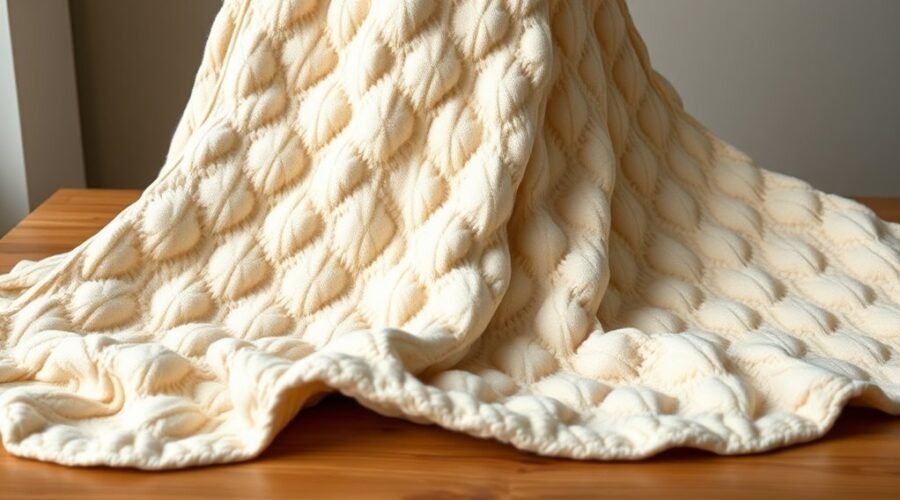
Nearly 80% of people who choose textured bedding can’t identify the weave behind it, and matelassé is a prime example. You’re looking at a double-woven fabric engineered to mimic quilting without batting or visible stitching. Weavers build in extra warp and weft yarns, then finish the cloth so certain areas shrink and rise. That controlled distortion creates the signature relief—and the key to why it performs so differently than it looks.
Key Takeaways
- Matelassé is a double-woven fabric with a raised, quilted-looking surface and a refined, structured texture.
- The texture is woven into the cloth using extra yarns, not created by batting or stitched layers.
- Shrinking yarns during finishing produce the distinct padded effect and dimensional relief.
- It is usually made from cotton or cotton blends, making it soft, breathable, and lighter than traditional quilting.
- Matelassé works well for bedding and decor because it adds texture, durability, and a polished layered look.
What Is Matelassé Fabric?
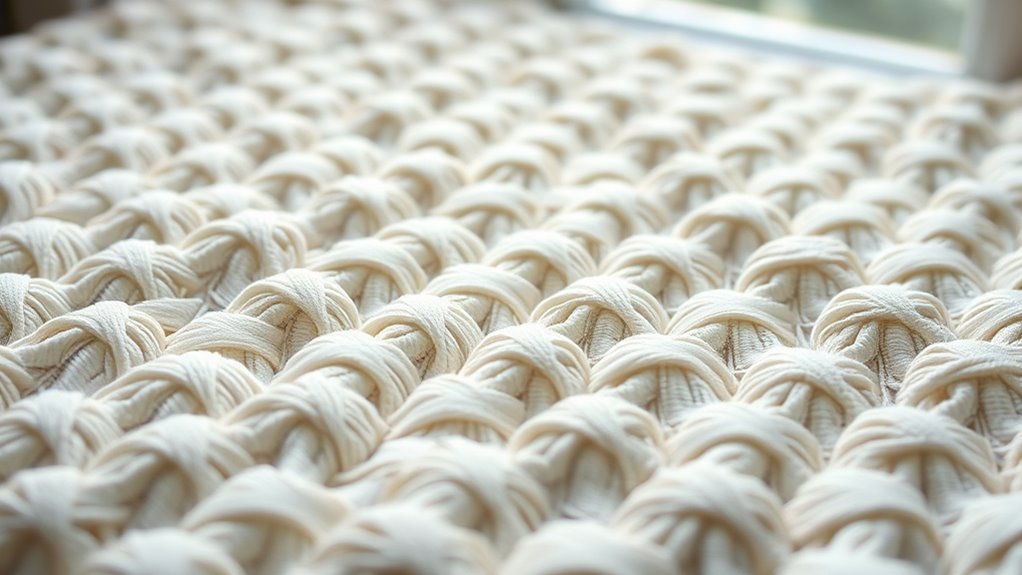
Matelassé fabric is a double-woven textile that gives you a raised, quilted appearance without batting, making it a lighter and more breathable alternative to traditional quilted materials.
You’ll recognize matelassé fabrics by their structured quilted look and their refined, textile-level relief. The term comes from French for padded or quilted, but the material relies on construction, not fill.
You’ll usually find it in cotton or cotton blends, which support softness, durability, and dependable wear. Its weaving process uses jacquard looms to integrate pattern and texture in one operation, so you get design depth without added bulk.
That makes the cloth useful when you want surfaces that feel controlled, expressive, and free from heaviness. Matelassé’s subtle texture works well in bedding, upholstery, and decorative accents, giving you versatility across interiors.
How Does Matelassé Get Its Quilted Texture?
You get matelassé’s quilted texture from the way it’s woven, not from batting or stitched layers. In this weaving technique, you introduce extra yarns into the structure so the surface can rise and sink in measured relief.
As the fabric finishes, those yarns shrink differently, tightening the form and producing a distinct quilted effect. You’ll usually see matelassé woven on jacquard looms, which let you program intricate motifs and exact repeats.
The base stays a single layer, so the cloth keeps its lightness and breathability while still showing a rich quilted appearance. Regular warp and weft yarns work with coarser cotton yarns to create the puckered surface.
That interaction gives you woven quilting with dimensional clarity, without heavy construction. When you handle matelassé, you’re feeling engineered texture: precise, durable, and visually assertive.
Is Matelassé the Same as Quilted Fabric?
Not quite: matelassé isn’t the same as quilted fabric, even though the two can look similar at a glance. You’re seeing a woven illusion, not layered padding, so the difference matters.
- Structure: matelassé is a single layer; quilted textiles use multiple stitched layers.
- Process: its quilted effect comes from weaving yarns into raised motifs, often on jacquard looms.
- Material: it’s often made from cotton or blends, giving you softness without heavy bulk.
- Use: traditional quilting adds insulation; matelassé gives you a breathable, lighter surface that feels more liberated in warm settings.
Because the texture is built into the cloth, you get depth without batting or thick seams.
That means matelassé delivers a precise, decorative surface while staying distinct from traditional quilting.
Why Matelassé Works So Well for Bedding
That built-in quilted surface is exactly why matelassé performs so well in bedding: it gives you the layered look of a coverlet without the weight of batting or extra seams.
You get a controlled quilted effect that stays airy, so your bedding layers can regulate temperature instead of trapping heat. Because matelassé breathes, it supports year-round comfort and keeps air moving while still offering enough warmth for sleep.
Its soft texture makes contact feel calm and inviting, which matters in shams, bedspreads, and other surfaces you touch every night.
For daily use, you also need durability: matelassé resists wear, tolerates frequent washing, and softens with time instead of breaking down.
That combination lets you choose a fabric that works hard, feels refined, and keeps its structure. In your bedroom, that means less friction, less bulk, and more freedom to rest.
How to Style Matelassé in Your Home
Matelassé styling works best when its texture is allowed to do the visual heavy lifting. You can deploy it as a controlled, high-impact textile that sharpens a room without clutter.
- Use matelassé in bedding layering as a coverlet or bedspread; it adds a structured textured effect and can replace extra blankets.
- Place matelassé throw pillows on sofas or beds to introduce tactile contrast while preserving a clean color field.
- Select it as an upholstery choice for chairs or headboards when you want durability, tailoring, and a refined profile.
- Extend it to decorative accents like table linens, cushions, or window treatments for cohesive, liberated styling across your home.
Keep finishes simple, lines crisp, and tones intentional. The weave already carries enough visual authority, so let matelassé define the atmosphere while your other elements stay disciplined and precise.
Frequently Asked Questions
What Is the Main Difference Between a Quilt and Matelassé?
You’ll see the main difference right away: a quilt uses layered materials and batting, while matelassé stays single-layer and woven with a raised pattern.
You can choose from many quilt types, but matelassé uses fewer bulkier layers, so it feels lighter. This improves fabric durability, expands design options, and changes care instructions.
Historically, quilts carried warmth and memory; matelassé delivers textured elegance with less weight and more freedom.
How Do You Pronounce “Matelasse”?
You pronounce it “ma-teh-lah-SAY.”
For example, if you’re discussing matelassé fabric origins in a textile studio, saying it clearly helps you explain weaving techniques, design patterns, historical significance, care instructions, and popular uses.
You’ll stress the final syllable, keep the first “t” soft, and let the second “l” linger slightly.
That French form honors the fabric’s layered structure and cultural lineage, helping you speak with precision and confidence.
What Does Matelassé Feel Like?
You’ll feel a soft, lightly cushioned texture with distinct woven patterns that rise against your skin.
It feels breathable, smooth, and substantial, not bulky, so you can use it in bedding, upholstery, and other fabric applications.
Its historical significance shows in its refined hand, while design versatility keeps it relevant.
With proper care instructions, it softens further over time without losing structure or comfort.
What Does Matelassé Mean?
Matelassé means “quilted” or “padded,” and you’re seeing a name that hints at more than texture.
You trace its fabric origin to France, where a weaving technique built raised design patterns without heavy filling. That matters: its historical significance shapes popular uses in bedding and upholstery.
You’ll want gentle care instructions, too, because the surface deserves respect.
Conclusion
When you choose matelassé, you get that tailored, quilted look without the weight of stitched batting. The double-weave structure gives the fabric its raised texture, while controlled shrinkage locks in the pattern during finishing. You might think it will feel too decorative for everyday use, but its breathable cotton construction makes it practical for bedding and home accents. So if you want dimension, durability, and comfort, matelassé gives you all three in one textile.