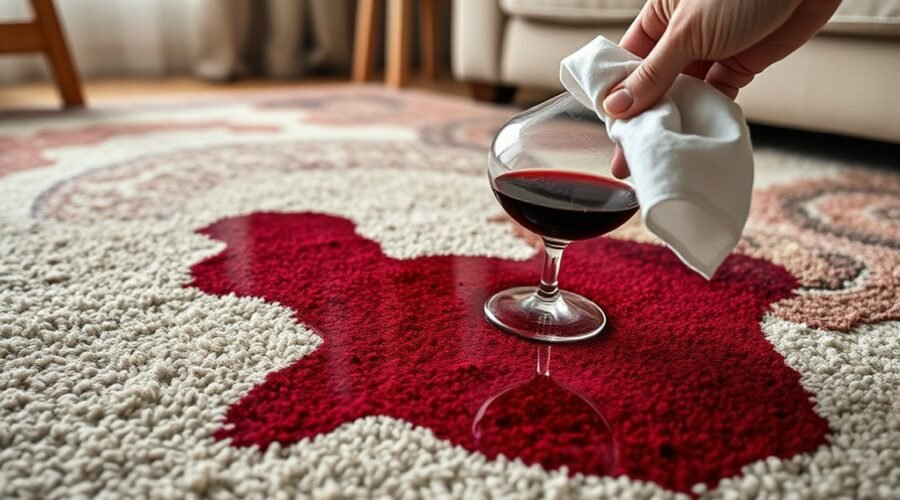
Red wine is easiest to remove from a rug while the spill is still fresh. Start by blotting up as much liquid as possible with a clean white towel, then use small amounts of water and a fiber-safe cleaning solution. Avoid scrubbing, soaking the rug, or using strong DIY chemicals before checking the rug’s care instructions.
Quick Answer
Blot fresh red wine immediately with a clean white towel, working from the outside toward the center. Lightly rinse and blot with cool water. If color remains, use a small amount of fiber-safe carpet cleaner or mild dish-detergent solution. Test every cleaner first, avoid soaking the rug, and call a professional for delicate or valuable rugs.
Key Takeaways
- Blot immediately; do not scrub or rub the stain.
- Use white towels and work from the outer edge toward the center.
- Check the rug’s fiber type and care instructions before applying vinegar, peroxide, or other cleaners.
- Use small amounts of cleaner and rinse away detergent residue to reduce resoiling.
- Professional cleaning is the safest option for valuable, handmade, delicate, color-unstable, or stubbornly stained rugs.
At a Glance
| Time Required | About 10–20 minutes of active cleaning, plus drying time |
| Difficulty | Easy for a fresh stain on a washable synthetic rug; moderate or professional-level for delicate fibers |
| Tools Needed | Clean white towels or paper towels, water, bowl or spray bottle, and a fiber-safe spot cleaner or clear hand-dishwashing liquid |
| Cost | Usually low when household supplies are already available; professional rug cleaning varies by rug size, construction, fiber, and location |
Act Fast on Red Wine Stains
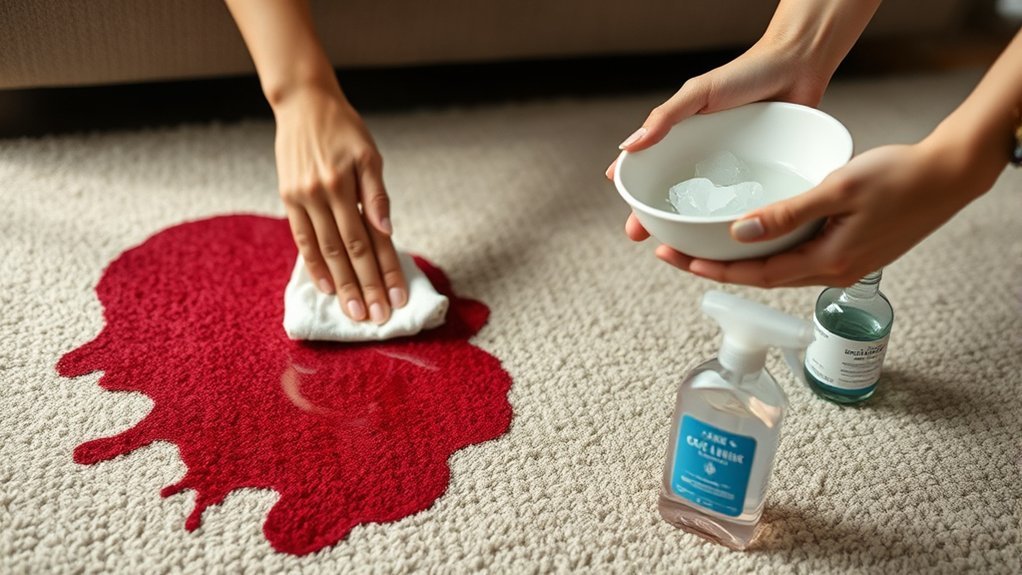
Acting quickly gives a fresh red wine stain the best chance of coming out before more liquid reaches deeper fibers. The Carpet and Rug Institute’s wine-stain guidance recommends prompt blotting with a dry white absorbent cloth or white paper towel.
For a fresh wine spill, the safest first move is simple: absorb as much liquid as possible before adding more moisture or cleaner.
The first step is to blot the area gently rather than rubbing it. Once the excess wine has been absorbed, a small amount of cool or lukewarm water can help dilute remaining color. Use only enough moisture to work on the stained fibers; flooding the rug can push liquid into the backing.
If more treatment is needed, begin with a fiber-safe spot cleaner or a very mild clear hand-dishwashing-detergent solution. Stronger treatments such as hydrogen peroxide should not be used automatically on every rug because they can affect some dyes and fibers.
Prompt, controlled treatment is more useful than aggressive scrubbing. The goal is to lift wine out of the pile while protecting the rug’s color, texture, backing, and shape.
Warning: Before wet-cleaning a wool, silk, viscose, antique, handmade, naturally dyed, or otherwise valuable rug, check its care instructions. If the fiber or dye stability is uncertain, stop after blotting and contact a professional rug cleaner.
Blot Red Wine From the Rug
The spill should be blotted immediately with a clean, dry white towel or plain white paper towel. Press gently so the towel absorbs liquid without grinding the wine farther into the pile.
Begin at the outer edge of the stain and move toward the center. Replace the towel or move to a dry section as soon as it becomes wet so removed wine is not transferred back onto the rug.
Blot, Don’t Rub
Use a clean white cloth or paper towel to press straight down on the stain and lift straight up. Rubbing or scrubbing can spread the liquid and can also distort or fray some carpet and rug fibers.
Keep changing to a clean section of towel as color transfers. Continue until the towel is picking up little or no additional wine.
Use controlled pressure rather than excessive force. The purpose is to absorb the spill, not force it into the backing.
Fresh stains usually respond better than spills that have already dried, so this initial blotting step should happen before gathering more elaborate cleaning supplies.
Work From Outside In
Start at the outside boundary of the stain and blot inward toward the center. This helps contain the spill instead of pushing it into clean surrounding fibers.
Work in small sections and keep the towel motion vertical—press, hold briefly, and lift. Avoid dragging the towel across the pile.
Use a fresh part of the towel each time wine transfers onto it. A white towel also makes it easy to see whether color is still coming out.
Once the liquid transfer slows, move to a controlled water rinse rather than continuing to press a saturated towel into the rug.
Use Clean White Towels
White towels are preferred because colored fabric or printed paper can potentially introduce additional dye or ink to a wet rug.
Press the towel onto the stain rather than rubbing it. Replace damp towels promptly to maintain absorption.
Continue in steady passes until little or no red color transfers to the towel.
At that point, the rug is ready for the next step: checking the fiber and care instructions before adding a cleaner.
Check the Rug Material Before Using a Cleaner
Not every rug should be cleaned with the same chemistry. Before applying vinegar, detergent, peroxide, or any commercial spot remover, check the care label or manufacturer instructions and identify the fiber if possible.
For ordinary colorfast synthetic carpet or rugs, a mild detergent solution may be appropriate. For wool, the WoolSafe cleaning guide recommends compatible products, small amounts of solution, application through a clean white towel, edge-to-center blotting, and avoiding overwetting.
Expensive handmade rugs, rugs with unstable dyes, or items whose care instructions prohibit water-based spot cleaning are safer in professional hands.
Note: A hidden-area test checks for obvious color transfer or texture change, but it does not override the manufacturer’s cleaning instructions.
Rinse Red Wine With Cold Water
After the initial blotting, lightly dampen the stained fibers with cool water and blot again. A misting spray bottle or damp clean cloth gives better moisture control than pouring water directly onto the rug.
Continue blotting with fresh towels so the diluted wine is transferred into the towel instead of spreading through the pile.
Avoid soaking the rug. Too much moisture can carry wine or cleaner deeper into the backing and can contribute to a stain reappearing as the rug dries.
Cold Water First
A controlled rinse with cool water is a sensible first treatment after excess wine has been absorbed. The Carpet and Rug Institute specifically recommends a cold-water rinse after wine removal, while its detergent guidance uses lukewarm water for mixing and residue removal.
Lightly dampen the affected fibers, then blot gently with clean towels. Keep working from the outer edge toward the middle.
Do not use very hot water. If a cleaning product or rug manufacturer specifies a particular water temperature, follow those instructions instead of improvising.
Blot, Don’t Soak
Moisture control matters almost as much as the cleaner itself. Use enough water to dilute and lift the remaining wine, but not enough to saturate the backing.
- Absorb as much wine as possible first.
- Apply water in small amounts.
- Blot rather than scrub.
- Keep changing to dry white towels.
- Stop adding water if the backing or floor beneath the rug is becoming wet.
Overwetting can make drying slower and may allow dissolved stain or cleaner to wick back toward the surface.
Repeat Until Clear
Repeat the light rinse-and-blot cycle while red color is still transferring to the towel.
Each pass should use a clean section of cloth so you can see whether the stain is actually lifting.
If plain water stops producing improvement and visible color remains, move to a compatible spot cleaner or mild detergent solution rather than soaking the area with more water.
Once the wine is no longer transferring, blot the area as dry as practical before evaluating whether a second treatment is needed.
Treat Red Wine Stains With Vinegar or Dish Soap
When water alone does not remove the stain, a mild cleaning solution can help. The Carpet and Rug Institute lists a detergent solution made with 1/4 teaspoon of liquid hand-dishwashing detergent per 1 cup of lukewarm water. Do not increase the concentration, because detergent residue can attract soil.
Apply a small amount of solution to a clean white cloth rather than pouring it over the rug. Blot from the outside inward, continue while color transfers, then rinse the treated fibers with clean water and blot dry.
Use clear hand-dishwashing liquid rather than laundry detergent or automatic dishwasher detergent. Laundry products can contain optical brighteners, while automatic dishwasher detergents may contain bleaching ingredients that can damage dyes or fibers.
If vinegar is appropriate for the rug, the Carpet and Rug Institute lists a solution of 1 cup white vinegar to 2 cups water. Apply it sparingly and test first. There is no need to assume that undiluted vinegar or a long soak will work better.
Pro Tip: More cleaner is not better. Small applications followed by blotting and thorough rinsing give you more control and reduce the amount of residue left behind.
Be Careful With Hydrogen Peroxide
Hydrogen peroxide appears in some carpet-manufacturer stain-removal procedures, but it should not be treated as a universal rug remedy. It can alter some colors and is not appropriate for every natural or dyed fiber.
Some online instructions recommend mixtures such as three parts hydrogen peroxide to one part dish soap. Do not apply that formula automatically to a rug. If the care instructions or rug manufacturer specifically permits peroxide treatment, follow that exact procedure and test an inconspicuous area first.
For comparison, Shaw Floors publishes a controlled carpet-care method involving detergent followed by a specific peroxide-based treatment. That manufacturer procedure is different from simply pouring a homemade peroxide-and-soap mixture onto an unknown rug.
Use Baking Soda Carefully on Stubborn Stains
Baking soda is commonly suggested for household stains and odors, but it is not the primary red-wine treatment in the Carpet and Rug Institute or WoolSafe procedures referenced here.
The common advice to mix baking soda with water in a 3:1 ratio to make a paste should therefore be treated cautiously rather than as a universal stain-removal step. Wet pastes can be difficult to remove from dense pile, and extra moisture is undesirable on rugs that should not be overwet.
Use baking soda only when the rug manufacturer permits it; do not rely on it instead of blotting, controlled cleaning, rinsing, and proper drying.
If the wine stain has already been removed and the rug’s care instructions allow baking soda, a small amount may be used as an odor-control step after the area is fully dry. Vacuum it thoroughly afterward, provided the rug manufacturer allows ordinary vacuuming.
For wool, handmade, delicate, or color-sensitive rugs, use a fiber-approved treatment or professional cleaner rather than experimenting with a wet baking-soda paste.
How to Treat a Dried Red Wine Stain
A dried red wine stain usually needs to be softened before it can be blotted effectively. Do not begin by scrubbing the dry mark.
- Check the rug’s care label and fiber type.
- Lightly dampen the stained fibers with clean cool or lukewarm water if water-based spot cleaning is allowed.
- Blot with a clean white towel and watch for color transfer.
- If needed, apply a fiber-safe spot remover or the mild detergent solution described above.
- Blot repeatedly from the edge toward the center.
- Rinse away detergent residue with small amounts of clean water.
- Blot as dry as possible and allow the rug to dry fully before judging the result.
Older stains may take several careful treatment cycles. If there is little improvement, aggressive home treatment is more likely to create color, texture, or backing problems than to improve the result.
Repeat and Check for Set-In Stains
After treatment, allow the rug to dry fully before deciding whether the stain is gone. A damp rug can look different from a dry one, and dissolved residue may move back toward the surface during drying.
If discoloration returns, first determine whether it is actual remaining wine, detergent residue, or wick-back from moisture deeper in the pile.
- Check the area after it is completely dry.
- Repeat a gentle treatment only if the care instructions permit it.
- Rinse out detergent residue thoroughly.
- Blot out as much moisture as possible.
- Watch for returning discoloration as the rug dries.
- Stop home treatment if the color, texture, or backing begins to change.
For a washable synthetic rug, one or two careful repeat cycles may improve a remaining stain. Delicate fibers require a more conservative approach.
If repeated treatment produces little improvement, professional cleaning is the safer next step.
Dry the Rug and Prevent Wick-Back
After the final rinse, press dry white towels onto the treated area to remove as much moisture as possible. Good airflow can help the rug finish drying.
Do not replace furniture on the damp area or place the rug back onto a moisture-sensitive floor until both the rug and the surface underneath are dry.
If a pale red or pink mark reappears during drying, blot it again rather than scrubbing. Persistent wick-back often means liquid reached deeper into the pile or backing and may require professional extraction.
When to Call a Professional Rug Cleaner
Professional cleaning is appropriate when the stain remains after careful home treatment or when the rug itself makes DIY cleaning risky.
Consider professional help when the rug is wool, silk, viscose, handmade, antique, naturally dyed, especially valuable, labeled for professional cleaning, or showing dye transfer during your hidden-area test.
A professional is also a sensible choice when wine reached the rug backing, the stain keeps returning after drying, the affected area is large, or previous cleaners have already changed the rug’s color or texture.
Frequently Asked Questions
Does Dawn Remove Red Wine Stains?
A clear hand-dishwashing detergent can be useful as part of a mild carpet-cleaning solution. Shaw lists Dawn, Joy, and clear Ivory as examples in one of its carpet-care procedures. The useful ingredient category is a suitable clear hand-dishwashing detergent—not the Dawn brand specifically. Test first, use a very dilute solution, and rinse out the residue.
What Is the Most Effective Red Wine Stain Remover for Carpets?
There is no single cleaner that is best for every carpet or rug. Start with prompt blotting and controlled water rinsing. If more treatment is needed, use a product approved for the fiber or a mild detergent solution. The safest choice depends on the rug’s material, dye stability, backing, care instructions, and age of the stain.
Does Red Wine Stain Permanently?
Not necessarily. Fresh spills are generally easier to remove, while older stains can become more difficult. Prompt blotting, fiber-safe cleaning, thorough rinsing, and proper drying improve the chance of removal. Some set-in stains, delicate rugs, or unstable dyes require professional treatment.
What Removes Dried Red Wine Stains?
If water-based spot cleaning is allowed, lightly re-dampen the dried stain, blot it, then use a fiber-safe spot cleaner or mild detergent solution. Rinse away residue and blot dry. Stronger treatments such as peroxide should be used only when the rug manufacturer or care instructions permit them.
Can I Use Vinegar on a Red Wine Stain?
Vinegar may be appropriate for some colorfast carpets and rugs, but test it first and follow the rug’s care instructions. The Carpet and Rug Institute lists a solution of one cup white vinegar to two cups water rather than recommending an undiluted soak.
How Should I Treat Red Wine on a Wool or Valuable Rug?
Blot the spill immediately with a clean white towel and avoid rubbing or flooding the rug. Use only a wool-compatible treatment that the care instructions permit. WoolSafe recommends compatible approved products, small amounts of cleaner, white towels, edge-to-center blotting, clean-water residue removal, and careful drying. When the rug is valuable or dye stability is uncertain, use a professional rug cleaner.
Conclusion
Acting quickly can make the difference between a manageable spill and a stubborn red wine stain. Start with blotting, controlled rinsing, and the mildest treatment suitable for the rug’s fibers. A dilute dish-detergent solution can help many ordinary colorfast carpets and rugs, while vinegar, peroxide, baking soda, and other DIY treatments require more caution.
The most important rule is to protect the rug while removing the wine. Check the care instructions, avoid scrubbing and overwetting, rinse away cleaner residue, let the area dry fully, and use a professional cleaner when the rug is delicate, valuable, color-unstable, or not responding to safe home treatment.
Sources
- The Carpet and Rug Institute — Wine Spot Solver — blotting, edge-to-center treatment, detergent and vinegar dilution, rinsing, residue control, and professional-cleaning guidance.
- The WoolSafe Organisation — Cleaning & Maintenance of Wool Carpets — wool-safe spot treatment, chemical compatibility, controlled moisture, and red-wine treatment sequence.
- Shaw Floors — Carpet Stain-Removal Guidance — mild detergent preparation, outside-in blotting, residue rinsing, drying, and controlled peroxide-based treatment.