Mildew on furniture is usually prevented by controlling moisture before fungal growth has a chance to develop. Keep indoor relative humidity below 60% and ideally around 30% to 50%, dry spills or water-damaged furniture quickly, improve airflow around large pieces, and correct leaks or condensation. Material choice also matters, but no furniture surface is completely mold-proof.
Quick Answer
To prevent mildew on furniture in damp rooms, measure humidity with a hygrometer, keep relative humidity ideally between 30% and 50%, use a dehumidifier or air conditioner when necessary, maintain airflow around furniture, and dry leaks, spills, or condensation within 24 to 48 hours. Clean dusty surfaces regularly because moisture plus residue can support mold growth.
Key Takeaways
- Aim for 30% to 50% indoor relative humidity and take action when humidity repeatedly approaches or exceeds 60%.
- Dry wet furniture and nearby building materials as quickly as possible, ideally within 24 to 48 hours.
- Leave room for air to move behind sofas, cabinets, beds, and other large pieces, especially near cold or damp walls.
- Use material-safe cleaning methods; porous upholstery may require professional restoration or disposal if mold has reached the padding.
- Metal, plastic, and properly finished furniture are generally easier to keep dry and clean, but no material is completely mold-proof.
At a Glance
| Time Required | About 10–20 minutes for routine inspection and prevention; longer if drying or cleaning is required |
| Difficulty | Easy for prevention; moderate or professional-level for moldy porous furniture |
| Tools Needed | Hygrometer, dry microfiber cloths, fan or HVAC airflow, dehumidifier when needed, and material-approved cleaner |
| Cost | Low for routine monitoring and cleaning; higher if a dehumidifier, restoration service, or replacement upholstery is needed |
What Causes Mildew on Furniture?
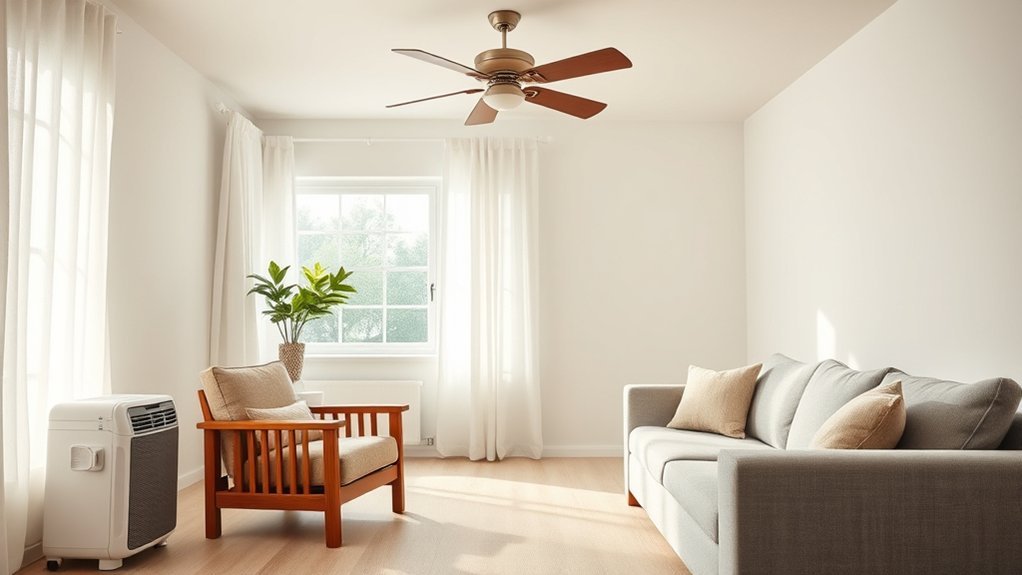
Mildew on furniture develops when fungal spores encounter enough moisture and suitable material or surface residue to grow. The main risk factors are high indoor humidity, condensation, leaks, spills, wet floors, poor drying, and stagnant air.
The U.S. Environmental Protection Agency recommends keeping indoor relative humidity below 60% and, when possible, between 30% and 50%. This does not mean mold suddenly appears at exactly 60%. Temperature, surface moisture, the type of furniture, dust, airflow, and how long the material remains damp all affect the risk.
Porous materials such as unfinished wood, fabric, foam, wicker, paper-based furniture components, and some composite boards can retain moisture longer than smooth nonporous surfaces. Dust, food residue, body oils, and other organic material can also provide material on which mold can grow.
The EPA recommends keeping indoor relative humidity below 60%, ideally between 30% and 50%, and drying wet materials within 24 to 48 hours whenever possible.
Poor ventilation becomes especially important behind wardrobes, sofas, headboards, cabinets, and other large pieces positioned against cool walls. Warm, humid air can reach a cold wall or furniture surface, cool below its dew point, and leave condensation behind.
Note: Household advice often uses the words mold and mildew interchangeably. For prevention, the important point is the same: control moisture, remove visible fungal growth safely, and dry the material completely.
How Humidity Damages Furniture
Persistent humidity can harm furniture even before visible mildew appears. Wood absorbs and releases water vapor as surrounding conditions change. Repeated moisture changes can contribute to swelling, warping, veneer movement, loosened joints, or finish problems, particularly when conditions fluctuate widely.
Humidity also increases the chance of condensation on cold surfaces. A cabinet backed tightly against an exterior wall, for example, can create a poorly ventilated pocket where the wall and the back of the cabinet stay cooler and damper than the rest of the room.
Upholstery presents another challenge because fabric, batting, and foam can hold moisture internally. A sofa may feel dry on top while the underside, back, or cushion filling remains damp.
According to EPA residential mold guidance, moisture control is the key to controlling indoor mold. Cleaning visible growth without fixing the leak, condensation, or humidity problem commonly leads to recurrence.
Best Furniture Materials for Damp Rooms
Furniture that absorbs little water and can be cleaned and dried easily is generally easier to manage in humid rooms. However, material selection should support—not replace—humidity control.
| Material | Damp-Room Performance | Important Limitation |
|---|---|---|
| Metal | Does not absorb water into the material and is usually easy to wipe clean. | Surface dust can still support mold, and some metals may corrode in persistently damp conditions. |
| Plastic or resin | Nonporous and generally easy to wash and dry. | Mold can still grow on dust, food residue, or grime on the surface. |
| Finished solid wood, including teak | A sound finish reduces direct moisture exposure, and some dense woods tolerate humid conditions better than unfinished wood. | Wood still responds to humidity and can support mold if the surface stays damp or dirty. |
| Synthetic upholstery | Some synthetic coverings dry faster and absorb less moisture than many natural fibers. | Foam, batting, dust, and the furniture frame can still remain damp and develop mold. |
| Wicker, rattan, particleboard, and other porous materials | Usable when kept consistently dry and well ventilated. | Crevices and porous components can hold moisture and make complete cleaning more difficult. |
In rooms that are frequently damp, favor furniture with smooth, cleanable surfaces and finishes that are intact. Avoid assuming that teak, plastic, stainless steel, or any other material is completely mold-proof.
Daily Habits That Prevent Mildew
The most effective prevention routine focuses on measuring moisture, correcting its source, and helping furniture dry quickly.
- Measure humidity. Place a digital hygrometer in the room rather than judging humidity by how the air feels. Aim for roughly 30% to 50% RH when practical.
- Use a dehumidifier or air conditioner when needed. If humidity stays high despite normal ventilation, mechanical dehumidification is usually more dependable than moisture-absorbing tubs alone.
- Keep air moving around furniture. Avoid pressing large furniture tightly against damp, cold, or exterior walls. Leave enough space for air to circulate behind and underneath the piece.
- Dry water quickly. Wipe spills immediately and address leaks, seepage, wet floors, or condensation rather than allowing furniture to remain damp. Water-damaged furnishings should be dried as soon as possible and ideally within 24 to 48 hours.
- Ventilate only when outdoor conditions help. Opening windows can improve drying when outdoor air is relatively dry. During very humid or rainy weather, bringing more outside moisture indoors may make the room wetter.
- Clean dust and residue. Vacuum or wipe furniture according to its care instructions, paying attention to backs, undersides, seams, cabinet interiors, and areas behind cushions.
- Inspect hidden areas. Check behind wardrobes, beneath sofas, inside cabinets, and along walls during humid weather. A musty odor, recurring condensation, or new spotting deserves investigation.
Pro Tip: If one side of a cabinet or sofa repeatedly develops mildew, inspect the wall and floor behind it. Recurrence often means the moisture source—such as condensation, a plumbing leak, rain penetration, or high room humidity—has not been corrected.
How to Clean Mildew Off Furniture
Safe mildew removal starts with the furniture material, the size of the affected area, and the source of the moisture. Hard, nonporous furniture is usually easier to clean than upholstery, foam, unfinished wood, wicker, or other porous materials.
Warning: Avoid touching visible mold with bare hands. Use appropriate gloves, eye protection, and respiratory protection when disturbing mold. Never mix bleach with ammonia or other cleaners. If mold covers more than about 10 square feet, follows major water damage, involves sewage or contaminated water, is hidden inside furniture or walls, or affects a valuable piece, consider professional remediation or restoration.
The CDC’s mold cleanup guidance recommends protecting the eyes, skin, nose, and mouth during cleanup. People with asthma, chronic lung disease, significant mold allergies, or weakened immune systems should use particular caution around mold-contaminated environments.
Assess Surface Type
Before cleaning, identify whether the affected material is nonporous, finished wood, unfinished wood, leather, fabric upholstery, foam, wicker, rattan, laminate, veneer, or a composite board.
- Check the manufacturer’s care label or cleaning instructions where available.
- Test any cleaner on a hidden area before treating a visible surface.
- Avoid saturating wood, upholstery, leather, wicker, or composite materials.
- Inspect seams, cushion undersides, backs, joints, drawers, and the wall or floor beside the furniture.
- Determine whether the contamination is superficial or has penetrated padding or other porous material.
If a piece is antique, valuable, delicate, or sentimental, the EPA recommends considering a furniture-restoration or conservation specialist instead of experimenting with aggressive household cleaners.
Clean And Dry Thoroughly
The goal is to physically remove visible growth without unnecessarily soaking the furniture, then dry the piece completely and correct the moisture source.
For routine mold on suitable hard surfaces, EPA cleanup guidance recommends scrubbing with detergent and water and drying the surface completely. Routine use of bleach or other biocides is generally not necessary for ordinary mold cleanup.
If the contamination resulted from sewage or floodwater, ordinary furniture-cleaning advice may not be sufficient. Follow public-health cleanup guidance or use an experienced water-damage professional.
Hard, Nonporous Furniture
Metal, plastic, resin, glass, and similar surfaces are usually the easiest to clean. Remove visible growth with water and an appropriate detergent, wipe away residue, and dry the surface thoroughly. Do not forget joints, feet, undersides, and hardware where moisture can remain trapped.
Wood Furniture
Use as little moisture as practical. For finished wood, start with the furniture manufacturer’s recommended cleaner or a mild cleaner suitable for the finish. Apply it to a cloth rather than soaking the wood, work gently, and dry the surface promptly.
Avoid assuming that an equal-parts vinegar solution is suitable for every wood finish. Acids, alcohol, bleach, excess water, and strong cleaners can discolor or damage some finishes.
According to NC State Extension furniture-cleaning guidance, hard-surfaced furniture can often be cleaned with mild detergent and then dried thoroughly in a well-ventilated location. Valuable or badly affected pieces may need professional restoration.
Upholstered Furniture
Upholstery requires more caution because mold can extend below the visible fabric into batting or foam. If only a small surface area was exposed briefly to clean water and the piece can be dried completely, professional upholstery cleaning may be possible.
When cushions or padding have remained wet, smell persistently musty, show widespread growth, or cannot be dried thoroughly, replacement or professional restoration may be safer than repeated surface cleaning. The EPA notes that porous materials can be difficult or impossible to clean completely once mold has grown inside them.
If HEPA vacuuming is appropriate, the material should be dry and the process should be performed in a way that minimizes spreading spores into occupied indoor areas. Avoid soaking upholstery with homemade liquid mixtures.
Leather, Wicker, and Specialty Materials
Leather finishes vary, so use a cleaner approved for the specific leather type and avoid saturation. Dry the piece promptly and condition it only if the manufacturer recommends doing so.
Wicker and rattan have many crevices and can be difficult to clean when fungal growth penetrates deeply. Use minimal moisture, increase drying airflow, and consider professional cleaning for extensive contamination.
For particleboard, MDF, or other absorbent composite materials that have swollen, softened, delaminated, or developed deep mold growth, successful restoration may be difficult.
How to Store Furniture Without Mildew
Furniture should enter storage clean and completely dry. Packing a damp piece and hoping a cover will protect it can trap the very moisture that encourages mildew.
- Choose the driest storage space available. Climate-controlled storage is useful for valuable wood, upholstery, leather, and long-term storage in humid climates.
- Measure storage humidity. A small hygrometer lets you identify persistent moisture instead of discovering the problem months later.
- Use breathable furniture covers for large pieces. Protect furniture from dust while allowing moisture to escape. Avoid tightly sealing a piece in impermeable plastic if there is any chance moisture remains inside.
- Keep furniture away from damp walls and floors. Leave room for circulation around stored pieces and raise vulnerable items above a floor that may become damp.
- Use moisture absorbers as a supplement. Desiccants can help inside drawers, cabinets, or small enclosed spaces, but they cannot compensate for a chronically humid storage room.
- Inspect periodically. Look for musty odor, condensation, spotting, damp fabric, swelling, or changes in the wall and floor around the furniture.
If mildew keeps returning despite cleaning, treat that recurrence as evidence of an unresolved moisture problem. Check humidity readings, plumbing, roof or wall leaks, exterior-wall condensation, wet flooring, HVAC drainage, and nearby stored materials.
Frequently Asked Questions
What kills mildew on furniture?
There is no single cleaner that is appropriate for every type of furniture. For many hard surfaces, EPA guidance emphasizes physically cleaning visible mold with detergent and water, drying the surface completely, and fixing the moisture problem. Bleach is not the default treatment for finished wood, fabric, leather, or other furniture materials and may damage them.
What kills mold caused by humidity?
Cleaning removes existing visible growth, but long-term control requires reducing the moisture that allowed it to grow. Keep indoor humidity below 60% and ideally around 30% to 50%, use dehumidification when necessary, improve drying and airflow, and correct condensation or leaks.
How do you protect wood furniture from humidity?
Keep room humidity stable, ideally around 30% to 50%, leave airflow around the piece, wipe spills quickly, avoid prolonged contact with damp walls or floors, and maintain the finish according to the furniture maker’s instructions. Do not soak wood during cleaning.
What surfaces will mold not grow on?
No ordinary household furniture surface should be considered completely mold-proof. Glass, metal, and many plastics do not absorb water the way porous materials do and are generally easier to clean, but mold can still grow on dust, food residue, or other organic films left on their surfaces when moisture is present.
What humidity should I keep a room at to prevent mildew on furniture?
EPA guidance recommends keeping indoor relative humidity below 60% and ideally between 30% and 50%. A digital hygrometer is the easiest way to monitor the room. If humidity remains high, reduce moisture sources and use air conditioning or a dehumidifier as needed.
When should moldy furniture be handled by a professional?
Consider professional help when mold covers more than about 10 square feet, follows extensive water damage, involves sewage or contaminated floodwater, has penetrated upholstery or hidden cavities, repeatedly returns after cleaning, or affects antique, expensive, or sentimental furniture.
Conclusion
Mildew on furniture is primarily a moisture-control problem. The most dependable prevention strategy is to keep indoor humidity below 60% and ideally around 30% to 50%, dry wet materials within 24 to 48 hours, maintain airflow around furniture, and correct leaks or condensation instead of repeatedly treating the symptoms.
When mildew does appear, choose a cleaning method that matches the material and avoid soaking porous furniture. Hard surfaces are generally easier to clean, while deeply affected upholstery, foam, wicker, composite board, antiques, and valuable pieces may require professional assessment. Once the furniture is clean and completely dry, continued humidity monitoring is what keeps the problem from returning.
Sources
- U.S. Environmental Protection Agency — A Brief Guide to Mold, Moisture and Your Home — humidity control, 24–48-hour drying, hard-surface cleaning, and porous-material guidance.
- U.S. Environmental Protection Agency — Mold Cleanup in Your Home — DIY cleanup scope, professional-remediation guidance, cleaning, and moisture correction.
- U.S. Environmental Protection Agency — Mold and Moisture Resource Directory — current moisture-control, PPE, dehumidification, and cleanup recommendations.
- Centers for Disease Control and Prevention — Mold Clean Up Guidelines and Recommendations — PPE, ventilation, bleach safety, and health precautions.
- NC State Extension — Removing Mold From Household Items — furniture-specific guidance for wood, hard surfaces, upholstery, and leather.