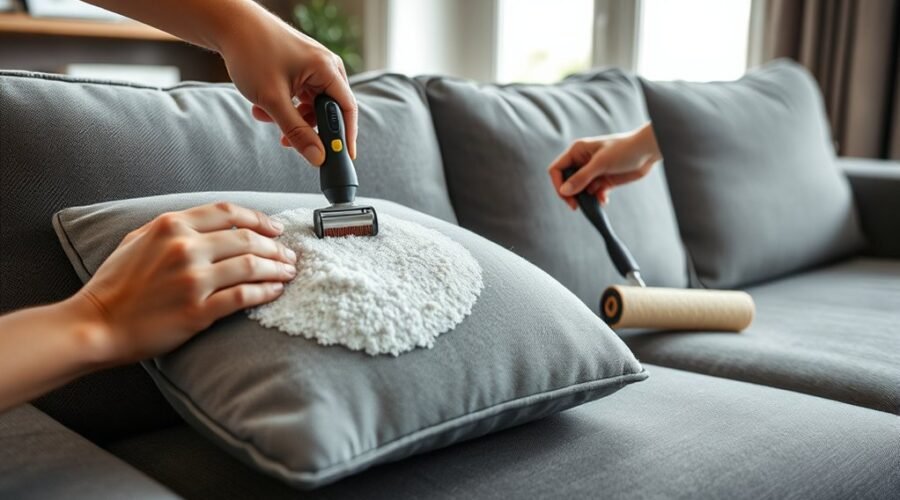
Couch pilling happens when fibers work toward the surface of upholstery, become tangled through rubbing and wear, and form small fuzzy balls. It does not automatically mean the sofa is poor quality. Most attached pills can be removed carefully with a fabric shaver or suitable fabric comb, but the safest method depends on the upholstery, its condition, and the manufacturer’s care instructions.
Quick Answer
To remove couch pilling, first vacuum away loose lint, check the sofa’s care instructions, and test your tool in a hidden area. If the fabric is suitable, use a fabric shaver with very light pressure and short passes. Stop if the upholstery snags, thins, frays, or loses its surface texture.
Key Takeaways
- Friction contributes to pilling, but fiber type, yarn construction, weave or knit structure, finishing, and daily use all affect how readily a fabric pills.
- Pilling alone does not prove that a couch is low quality or structurally worn out.
- A fabric shaver can remove attached pills on suitable upholstery, but it should be tested first and used with light pressure.
- A lint roller is best for loose lint and trimmed fibers; it may not remove pills that are firmly attached to the fabric.
- If fabric looks thin, frayed, snagged, or unstable, stop shaving rather than shaving more often.
At a Glance
| Time Required | About 10–30 minutes for a small pilled area; a full sofa can take longer. |
| Difficulty | Easy, provided the upholstery is suitable for mechanical pill removal. |
| Tools Needed | Upholstery vacuum attachment, lint roller, and an approved fabric shaver or fabric comb. |
| Cost | Low if you already own the cleaning tools; otherwise the cost depends on the fabric-care tool you choose. |
What Causes Couch Pilling?
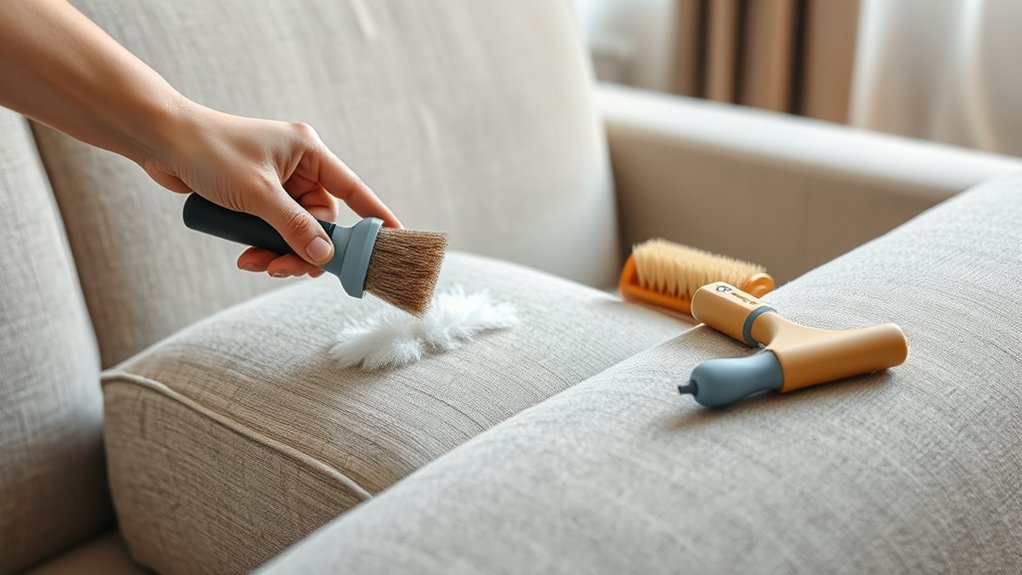
Couch pilling develops when fibers at the fabric surface loosen or work outward and become tangled into small balls that remain attached to the upholstery. Friction from sitting, shifting position, clothing, blankets, pets, and repeated contact can contribute to that process.
However, friction is only part of the explanation. Cotton Incorporated’s CottonWorks textile guidance explains that pilling is affected by several factors, including the fiber or blend, fiber dimensions, yarn and fabric construction, finishing treatments, and end use. ASTM D3512/D3512M-22 likewise describes pilling as a complex fabric property rather than a problem that can be predicted from one fiber name alone.
Cushions and armrests often show pilling first because those surfaces receive repeated contact. Blended textiles, polyester fabrics, cotton fabrics, wool fabrics, chenille, velvet, and other upholstery constructions can all perform differently depending on the yarns, surface structure, finish, and quality of the finished textile.
Lint transferred from clothing, blankets, and other textiles can also collect around pills and make them look larger or more obvious. Loose lint should not be confused with a firmly attached pill: lint can usually be lifted away, while an actual pill remains anchored to fibers in the upholstery.
Note: There is no universal period, such as the first two to six months, in which sofa pilling should be considered normal. Some new upholstery may release surface fibers early, while other fabrics pill only after extended use. Judge the actual fabric condition rather than the sofa’s age alone.
High-quality upholstery can therefore pill, and a low-cost fabric can sometimes resist pilling well. The most useful question is not simply what the fiber is, but how the complete fabric performs under abrasion and pilling tests.
How to Remove Couch Pilling
Start with the least aggressive method. Remove loose lint and debris first, inspect the fabric, and use a mechanical pill remover only when the upholstery is sound and the manufacturer’s instructions do not prohibit it.
Before You Remove Pills
- Check the sofa’s care instructions. Look under the cushions or in the manufacturer’s care guide for restrictions on brushing, vacuum attachments, washing, or mechanical treatment.
- Inspect the surface. A fuzzy ball attached by fibers is pilling. A pulled loop or long thread is a snag and should not be shaved. Thin, frayed, torn, or separating fabric needs repair rather than more fiber removal.
- Vacuum loose material. Use a normal upholstery attachment without an aggressive rotating brush unless the manufacturer specifically permits one.
- Test in a hidden area. Try the chosen shaver or comb on the back, underside, or another inconspicuous location. Check for color change, nap damage, snagging, or visible thinning.
Warning: Do not run a fabric shaver over loose threads, pulled loops, seams, buttons, piping, damaged areas, or fabric that is already thinning. A blade can catch a yarn and turn a cosmetic pilling problem into permanent upholstery damage.
Safe Shaving Methods
For suitable upholstery, a battery-operated or rechargeable fabric shaver can trim attached pills efficiently. IKEA’s textile-care guidance recommends moving a fabric shaver gently over pilled material and specifically cautions against pressing too hard.
- Make sure the fabric is clean, dry, and lying as flat as possible.
- Start with the least aggressive height or setting available on the tool.
- Keep the upholstery gently taut when the furniture construction allows it.
- Move the shaver slowly over a small section with light pressure. Do not repeatedly grind over the same spot.
- Stop immediately if the blade pulls at a yarn, catches the weave, changes the nap, or exposes a thinner-looking area.
- Empty the shaver as needed so removed fibers do not interfere with the cutting head.
- Use a lint roller or appropriate vacuum attachment afterward to collect the trimmed residue.
A fine-toothed sweater or fabric comb can provide more manual control on some textiles, but it should still be tested first. Do not assume that a comb is automatically safer for a delicate, loose, looped, or heavily textured upholstery.
A lint roller works well for loose fibers, lint, pet hair, and pill fragments left behind after treatment. It may lift lightly attached fuzz, but it usually will not cut away a firmly anchored pill.
Pro Tip: Treat one small section and compare it with the untouched fabric before continuing across the whole cushion. That makes changes in texture, color, or nap much easier to spot before they become widespread.
Brush And Vacuum
Regular vacuuming helps remove dust, lint, pet hair, and loose surface fibers before they accumulate. For a heavily used family sofa, a light weekly vacuum can be a practical routine; lightly used furniture may need less frequent attention.
Use a proper upholstery attachment and avoid excessive suction on loose or delicate material. Some manufacturers specifically discourage rotary-brush attachments because they can disturb or break fibers.
Brushing should also depend on the fabric. A soft, nonmetallic brush can be suitable for upholstery whose manufacturer permits brushing, but it should not be treated as a universal step. Herman Miller’s textile-care instructions, for example, state that some upholstery should not be brushed because brushing can damage the nap or change the character of the fabric.
After vacuuming or approved brushing, a lint roller can pick up remaining surface debris. The goal is to remove loose material without creating extra abrasion.
Troubleshooting Pilling Removal
- The shaver catches the fabric: stop immediately. Do not pull the tool through a snag. Inspect the area for loose loops, texture, or damage.
- Pills return quickly: look for repeated friction from a rough blanket, hook-and-loop fastener, coarse clothing, pet activity, or one cushion being used much more than the others.
- The surface looks fuzzy after shaving: stop and compare it with an untreated section. Further shaving may remove more face fibers without improving the appearance.
- The fabric looks thin or frayed: stop mechanical removal. Contact the furniture manufacturer or an upholstery professional before doing more work.
- The sofa is still under warranty: photograph heavy or unusual pilling before aggressive treatment and review the warranty terms. Altering the fabric may complicate a claim.
Which Couch Fabrics Pill the Most?
No single fiber name reliably tells you which couch will pill the most. Pilling resistance depends on the complete textile: fiber type and length, blend, yarn construction, weave or knit, surface finish, and intended use all matter.
Fabrics with loose surface fibers, loosely constructed yarns, fuzzy or brushed faces, or structures that allow fibers to move easily may be more prone to visible pills under friction. Blended fabrics can pill, but so can single-fiber fabrics. Likewise, chenille, velvet, wool, cotton, polyester, and other upholstery types can range from poor to excellent performers depending on how they are made.
Synthetic fibers can sometimes hold pills on the surface because strong fibers may keep the tangled ball attached instead of allowing it to break away. That does not mean every synthetic upholstery will pill heavily, nor that every natural-fiber upholstery will perform better.
How to Choose Lower-Pilling Upholstery
When shopping for a lower-maintenance couch, look for actual performance data rather than marketing terms alone. The Association for Contract Textiles uses a minimum Class 3 pilling rating under ASTM D3511 or ASTM D4970 in its voluntary guideline for woven indoor upholstery.
On common 1-to-5 pilling scales, a higher number generally represents better resistance, but compare results only when the same test method and conditions are being used. Laboratory ratings are useful screening tools, not guarantees of what will happen in every home.
- Ask for the fabric’s pilling-test result when one is available.
- Prefer a stable construction with no obvious loose loops or easily pulled surface fibers for high-contact seating.
- Consider how pets, children’s clothing, blankets, and everyday use will interact with the upholstery.
- Do not assume that the words “performance fabric,” “polyester,” “velvet,” or “natural fiber” alone settle the question.
Does Couch Pilling Mean Low Quality?
Couch pilling does not automatically mean low quality. Pilling is a surface-appearance change caused by fibers working loose and tangling, and it can occur on otherwise durable upholstery.
The Association for Contract Textiles notes that pilling and fuzzing can be aesthetic issues without reducing the durability or functionality of the material. At the same time, excessive pilling can still be disappointing and may reflect a fabric that is poorly matched to its intended use.
Look at the complete condition of the sofa. Pilling by itself is different from seam failure, holes, torn yarns, loss of fabric coverage, severe thinning, cushion failure, or other structural deterioration.
Pilling Isn’t Always Poor Quality
Wear and friction can explain couch pilling even when the underlying upholstery remains sound. Loose surface fibers can emerge and tangle through ordinary use, especially in areas that receive frequent body contact.
- Surface fibers can work outward as upholstery is used.
- Repeated contact from clothing, blankets, pets, and body movement can increase abrasion.
- Removing attached pills can restore a smoother appearance when the underlying fabric remains healthy.
Because actual pilling performance depends on construction and use, a few pills should not be treated as proof of defective workmanship. Heavy or rapidly recurring pilling on a nearly new sofa is still worth documenting and discussing with the seller or manufacturer, especially when the fabric is covered by a warranty.
Fabric Type Matters
Fabric type matters, but fiber content should be considered alongside yarn construction, weave or knit, finishing, and end-use conditions. A tightly constructed polyester upholstery may perform very well, but a different polyester fabric may not. Wool blends, cotton blends, velvets, chenilles, and other textiles show the same kind of variation.
Instead of choosing by fiber name alone, use a published pilling rating when possible. Standardized test results give a more useful comparison of finished upholstery than broad claims that one fiber is always better than another.
Regular care also helps control appearance: remove loose debris, vacuum with the correct attachment, rotate reversible cushions, and remove attached pills only when needed and when the fabric remains suitable for treatment.
How to Prevent Pilling on a Couch
You cannot guarantee that a fabric sofa will never pill, but you can reduce unnecessary abrasion and spread wear more evenly.
Rotate reversible seat cushions regularly so the same contact zones do not carry all of the wear.
- Rotate cushions. Move or flip reversible cushions according to the manufacturer’s instructions so wear is distributed more evenly.
- Vacuum regularly. Use an upholstery attachment to remove grit, dust, hair, lint, and loose fibers.
- Reduce abrasive contact. Keep exposed hook-and-loop fasteners, rough bags, sharp hardware, and other snagging surfaces away from the upholstery.
- Watch rough throws and blankets. If one accessory repeatedly rubs the same area and pilling appears underneath it, switch to a smoother material.
- Use a smooth protective cover when useful. A washable furniture cover or smooth throw can reduce direct wear in high-contact areas, provided it does not itself create excessive friction.
- Follow the manufacturer’s care directions. Cleaning methods that are appropriate for one upholstery can damage another.
For a new sofa, compare pilling-test results when available and look for a stable upholstery construction suited to the amount of use the furniture will receive.
When to Shave Couch Pills Again
There is no universal schedule for shaving couch pills. Treat the fabric based on what you can see rather than automatically shaving it every few weeks.
If a small number of pills reappear and the upholstery remains thick, stable, and undamaged, another light treatment may be appropriate. Vacuum first so loose lint does not hide the condition of the surface.
If pills return rapidly, investigate the source of friction rather than repeatedly removing more fibers. A rough blanket, frequently used seat, abrasive clothing, pet activity, or another contact point may be concentrating wear in one place.
Warning: If the fabric begins to look thin, frayed, pulled, shiny from surface loss, or noticeably different from an untreated area, do not shave it more often. Stop and ask the manufacturer or an upholstery professional for advice.
The goal is occasional pilling maintenance, not constant fiber removal. A couch that needs aggressive shaving again and again may have a fabric-performance or friction problem that should be addressed at the source.
Frequently Asked Questions
Can Pilling Be Reversed?
The fibers cannot be put back into their original position, so pilling is not literally reversed. However, attached pills can often be trimmed away with a suitable fabric shaver or fabric comb, restoring a smoother appearance. Vacuuming and a lint roller can then remove loose residue. Recurrence depends on the fabric and continued friction.
Does Pilling Mean Poor Quality?
No. Pilling can occur on otherwise durable upholstery because abrasion causes surface fibers to work loose and tangle. Fabric construction, fiber characteristics, finishing, maintenance, and use all affect pilling. Heavy pilling can still justify closer inspection, especially if it appears with thinning, broken yarns, or other deterioration.
Why Does My Couch Keep Pilling?
Recurring pilling usually means surface fibers are continuing to work loose under friction. Check which cushions or armrests receive the most use and whether rough blankets, clothing, pets, or other materials repeatedly rub those areas. The fabric’s yarn construction, fiber characteristics, finish, and pilling resistance also influence how quickly pills return.
What Is a Good Pilling Remover for a Sofa?
An electric fabric shaver is a practical option for many suitable upholstery fabrics because it trims attached pills instead of trying to pull them free. Check the manufacturer’s care instructions, test the shaver in a hidden area, start with the least aggressive setting, and use light pressure. A fabric comb may suit some materials, while a lint roller is better for loose lint and trimmed fibers.
Can a Fabric Shaver Damage a Couch?
Yes. Too much pressure, repeated passes, an unsuitable fabric, or contact with a loose yarn can cut or snag the upholstery. Never shave over pulled loops, seams, piping, buttons, frayed areas, or visibly thin fabric. Test a hidden section first and stop if the surface texture changes.
How Can I Tell Pilling From a Snag?
A pill is usually a small fuzzy ball of tangled fibers attached to the surface. A snag is a pulled loop, long thread, or displaced yarn. Pills can sometimes be trimmed safely, but a snag should not be run through a fabric shaver because the tool may pull or cut a structural yarn.
Conclusion
Couch pilling is a common surface-wear issue, and it does not automatically mean a sofa is low quality. Friction contributes to the problem, but fiber characteristics, yarn and fabric construction, finishes, and everyday use also affect how readily pills form.
The safest approach is simple: check the upholstery instructions, remove loose debris, test any shaver or comb in a hidden area, use light pressure, and stop before the face fabric becomes thin or damaged. Rotate reversible cushions and reduce unnecessary abrasion to help slow recurrence. If pilling is unusually heavy, rapidly returns, or appears with fraying or thinning, contact the manufacturer or an upholstery professional instead of repeatedly shaving away more fibers.
Sources
- Association for Contract Textiles — Physical Properties Guideline for Woven Fabrics — upholstery pilling definition, standardized testing, Class 3 guideline, and limitations of laboratory testing.
- ASTM International — ASTM D3512/D3512M-22 — factors affecting textile pilling and standardized evaluation of pilling resistance.
- Cotton Incorporated / CottonWorks — Garment Durability: Pilling — fiber, yarn, construction, finishing, and end-use factors that influence pilling.
- IKEA — Cure and Prevent the Pilling of Textiles — fabric-shaver, lint-roller, and light-pressure guidance.
- Herman Miller — Textiles Care and Maintenance — upholstery vacuuming, concealed-area testing, and cautions about brushing and aggressive cleaning.