Carnivore diet insomnia shows up for some people in the first weeks of cutting out carbs: lying awake, waking at 3 a.m., or feeling wired at bedtime. It is not universal, and plenty of people report the opposite. This guide covers the likely causes, realistic fixes, and the signs that mean a doctor should look into your sleep.
Quick Answer
Yes, some people sleep worse when they start a very low-carb diet, usually during the first one to four weeks. The evidence is weak and mostly theoretical, but common contributors include sodium and fluid shifts, caffeine, late heavy meals, and the stress of changing how you eat. Most cases settle with steady routines, enough salt and fluids, and time. Sleep trouble that lasts for months needs a medical check.
Key Takeaways
- Carnivore diet insomnia is reported by some people after cutting carbs, but research is limited and the mechanisms are mostly theoretical.
- Others report better sleep, so the effect is not the same for everyone.
- Early insomnia often overlaps with the keto flu window, which usually lasts one to two weeks and can stretch to a month.
- Caffeine, alcohol, big late meals, and low salt intake are fixable contributors.
- Insomnia lasting months, loud snoring with gasping, or night sweats with shakiness while on diabetes medicine needs medical advice.
What People Actually Report
The 2026 scoping review of nine human carnivore studies lists better sleep among the short-term benefits people described, but those reports were mostly self-reported and uncontrolled (Nutrients review). At the same time, the Sleep Foundation describes keto insomnia as theorized, with limited research, and mentions a 2023 study in which 65 percent of people on a low-calorie ketogenic diet for a month reported sleeping better (Sleep Foundation).
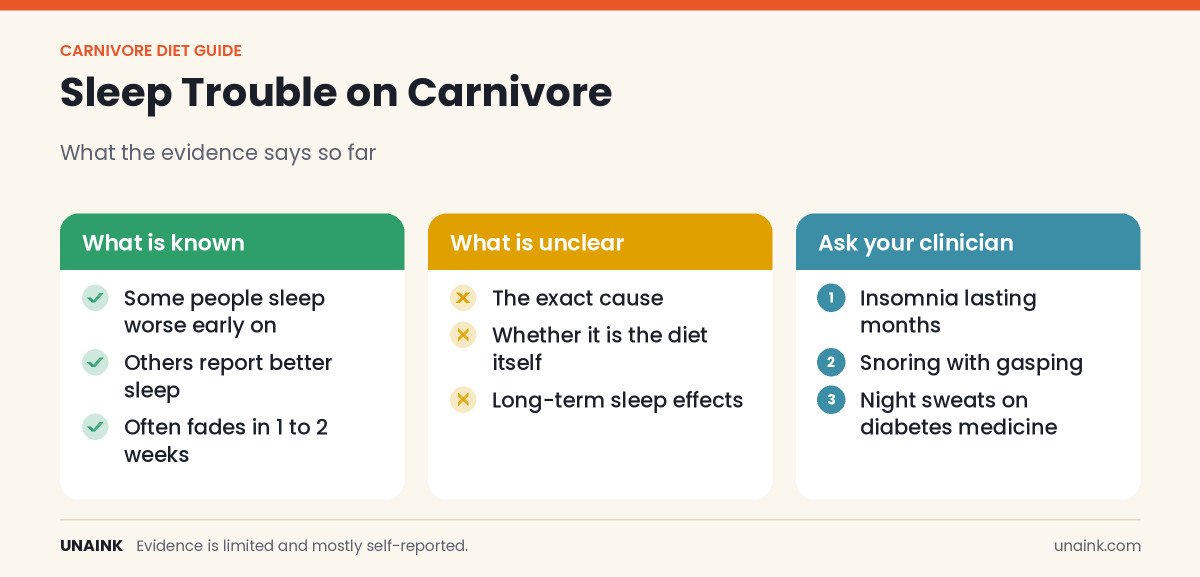
Put simply, sleep can go either way. If you are in the group that sleeps worse, it helps to look at the common triggers one at a time instead of blaming the diet as a whole.
Why Carnivore Diet Insomnia Can Happen
No one has proven a single cause. These are the ideas with the most support, plus ordinary habits that often travel with a diet change:
- Brain chemistry theory. The Sleep Foundation notes a proposal that a sudden carb drop lowers melatonin and adenosine, which help regulate sleep. It is a theory, not a settled finding.
- Keto flu. Cleveland Clinic lists trouble falling asleep among the symptoms that appear a few days after reaching ketosis and usually fade within one to two weeks (Cleveland Clinic).
- Sodium and fluid loss. Cutting carbs makes the kidneys release more sodium and water, which can cause lightheadedness, headaches, and cramps that are hard to ignore in bed (Virta Health).
- Caffeine and alcohol. Extra coffee for energy is common early on. The NHS advises avoiding caffeine and alcohol in the 6 hours before bed (NHS).
- Large late meals or under-eating. A heavy dinner can be uncomfortable, and not eating enough can leave some people waking hungry.
Triggers and What to Try
| Possible trigger | What you may notice | What to try |
|---|---|---|
| Low sodium or fluids | Cramps, headache, lightheaded feeling at night | Salt your food, sip broth, and review carnivore electrolytes |
| Caffeine or alcohol | Trouble falling asleep, restless nights | Stop caffeine 6 to 8 hours before bed and skip alcohol close to bedtime |
| Big late meal | Discomfort, heartburn, light sleep | Eat the larger meal earlier and leave a few hours before lying down |
| Under-eating | Waking hungry, feeling edgy | Add fattier cuts or eggs at dinner so the meal is filling |
| Routine disruption | Racing mind, early waking | Keep a fixed wake time and wind down for an hour |
How Long Does It Last?
When insomnia is part of keto flu, Cleveland Clinic says symptoms can last from two days to a month, but usually one to two weeks. That lines up with how long adaptation takes for most people. If you are still sleeping badly after several weeks, look beyond the diet for stress, noise, medicines, mood, or a sleep disorder.
Practical Fixes That Fit the Diet
- Keep the same wake time every day, weekends included, and get natural light early. The Sleep Foundation suggests at least 30 minutes.
- Replace lost salt and fluid with salted food and broth, spread through the day rather than loaded at night.
- Cut caffeine 6 to 8 hours before bed and avoid alcohol in the evening.
- Avoid hard exercise in the 4 hours before bed, as the NHS advises.
- If you are just starting, reduce carbs more gradually. Both Cleveland Clinic and the Sleep Foundation say a slower transition may ease symptoms.
- Use pharmacy sleep aids only briefly, if at all, and check with a doctor or pharmacist first.
When to Get Medical Help
Sleep trouble is common, but some patterns call for prompt attention:
- Insomnia that has lasted for months or keeps you from functioning during the day, including nodding off while driving.
- Loud snoring with gasping or pauses in breathing, which can point to sleep apnea (see carnivore diet and sleep apnea).
- A racing or irregular heartbeat, especially with dizziness or chest discomfort (see heart palpitations on carnivore).
- Low mood, anxiety, or hopeless thoughts that come with the sleep loss.
- If you take insulin or a sulfonylurea: nightmares, sweating enough to dampen the sheets, or waking shaky or confused can signal low blood sugar at night (NIDDK). Get medical guidance promptly and never change a dose on your own.
- If you take blood pressure medicine, Cleveland Clinic notes that some medicines can make keto flu symptoms worse, so check in with your prescriber before cutting food groups.
Carnivore Diet Insomnia: The Short Version
Carnivore diet insomnia is usually short-lived, linked to the adjustment window, and often eases with steady routines, enough salt and fluids, and less caffeine late in the day. If carnivore diet insomnia drags on for weeks or comes with warning signs, it is no longer a simple adjustment issue and deserves a clinician’s attention.
Frequently Asked Questions
Does the carnivore diet cause insomnia?
Carnivore diet insomnia can happen in some people, mostly early on, but the evidence is limited and others report better sleep. The cause is likely a mix of keto flu, fluid and sodium shifts, caffeine, and routine changes.
Why do I wake up at 3 a.m. on carnivore?
Common reasons include hunger, low sodium, alcohol or caffeine earlier in the day, and general stress. If it is new and you take diabetes medicine, ask your clinician about nighttime low blood sugar.
Should I eat more carbs to sleep better?
Some people do fine with a slower carb reduction. Whether to add carbs is your choice, but if you have diabetes or take glucose-lowering medicine, talk with your clinician before changing what you eat.
Can electrolytes help me sleep?
Replacing sodium and fluid can reduce cramps and lightheadedness that disturb sleep. There is no proof that electrolytes treat insomnia itself. See how much salt on carnivore for context.
When should I see a doctor about sleep?
See one if sleep problems last for months, affect daytime safety or mood, or come with snoring and gasping, chest symptoms, or night sweats on diabetes medicine.
Conclusion
A rough few nights of carnivore diet insomnia after a big diet change are common and usually pass. Check the simple things first: caffeine, late meals, salt, and a steady schedule. If sleep stays poor or warning signs appear, bring it to a clinician instead of waiting it out.
Medical note
This article is for general education and is not medical advice. Talk with a doctor or registered dietitian before making major diet changes, especially if you have a health condition, take medication, or are pregnant or breastfeeding.
Keep Reading
- Carnivore Flu: What the early adjustment symptoms look like.
- Carnivore Diet Electrolytes: Sodium, potassium, and magnesium basics.
- How Long to Adapt: A realistic adaptation timeline.
- Heart Palpitations on Carnivore: When a racing heart needs a check.
Sources
- Keto Insomnia: Is It Real? (Sleep Foundation): Theorized mechanisms, limited research, and sleep tips.
- Keto Flu (Cleveland Clinic): Symptoms, duration, and remedies for early adaptation.
- Insomnia (NHS): Causes, self-help, and when to see a GP.
- Carnivore Diet scoping review (Nutrients, 2026): Limited human evidence and self-reported sleep benefits.
- Low Blood Glucose (NIDDK): Symptoms of low blood sugar, including during sleep.