Excess weight is one of the main drivers of airway collapse during sleep, so many people wonder whether the carnivore diet and sleep apnea could be a way to lose weight and breathe better at night. Weight loss can help obstructive sleep apnea. But no study has tested a carnivore diet for it, and sleep apnea is a medical condition that needs proper testing and treatment.
Quick Answer
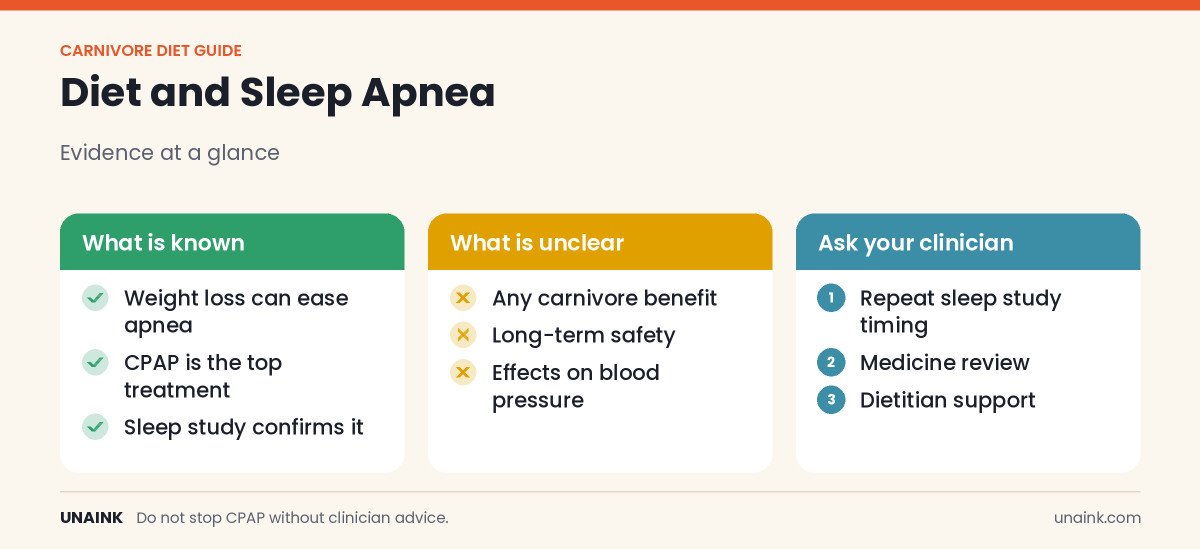
Weight loss from any safe method can ease sleep apnea, and some people lose weight on carnivore. But there is no research on carnivore specifically for sleep apnea. Mayo Clinic says some people still need treatment after losing weight, so CPAP or other therapy should not be dropped without a sleep study and your clinician’s approval.
Key Takeaways
- Obstructive sleep apnea causes repeated pauses in breathing during sleep, and a sleep study confirms it.
- Even moderate weight loss can reduce airway narrowing and daytime sleepiness.
- No trial has tested a carnivore diet for sleep apnea.
- Do not stop CPAP or another prescribed therapy because you lost weight, until a clinician retests.
- Alcohol, sedatives, and sleeping on your back can worsen sleep apnea.
What Sleep Apnea Is and Who Gets It
In obstructive sleep apnea, the throat muscles relax during sleep and the airway narrows or closes, which interrupts breathing and sleep. Common signs are loud snoring, gasping, morning headaches, and daytime sleepiness. Risk rises with excess weight, a thicker neck, age, and some anatomy differences.
Untreated sleep apnea is linked to high blood pressure and heart problems, which is why getting tested matters more than guessing.
How Treatment Works
According to Mayo Clinic, a sleep study confirms the diagnosis, and positive airway pressure (CPAP) is the most-studied and most-recommended treatment. Oral devices, positional changes, and surgery are other options for some people.
Mayo Clinic also notes that even moderate weight loss can ease airway narrowing, and that the FDA has approved tirzepatide, alongside diet and exercise, for moderate to severe sleep apnea in people with obesity. Weight-loss medicines are a medical decision.
Carnivore Diet and Sleep Apnea: What the Evidence Shows
The 2026 scoping review of the carnivore diet found only nine human studies and called the evidence very limited, and none looked at sleep apnea. Any benefit would likely come through weight loss, which can also happen on other eating patterns. See weight loss on the carnivore diet in a month. Early weight change is partly water, so retesting after sustained loss is what counts.
Sleep Problems That Can Happen on Carnivore
- Insomnia or restless sleep in the first weeks. See carnivore diet insomnia.
- Leg cramps from low electrolytes. See carnivore diet leg cramps.
- Night sweats or heart racing, which should be checked if they persist.
- Alcohol, which some people reintroduce, can worsen apnea.
- Large heavy meals late in the evening may disturb sleep for some people.
Risks and Who Needs Medical Guidance
People with sleep apnea often also have high blood pressure, type 2 diabetes, or heart disease. A high-saturated-fat, zero-fiber diet may affect cholesterol and blood sugar. Blood pressure drugs, diuretics, insulin, sulfonylureas, SGLT2 inhibitors, and GLP-1 drugs may need dose review as weight and intake change. Never adjust them yourself. See carnivore diet and high cholesterol.
A Safer Approach to Weight Loss With Sleep Apnea
- Keep using CPAP or other prescribed therapy every night.
- Ask your clinician whether a repeat sleep study is needed as weight drops.
- Choose a calorie-aware eating pattern you can sustain, with dietitian help if possible.
- Add regular movement, aiming for around 150 minutes per week as Mayo Clinic suggests.
- Limit alcohol and ask before using sleep aids.
Carnivore Diet and Sleep Apnea: The Short Version
The carnivore diet and sleep apnea have not been studied together, though weight loss can help sleep apnea in general. If you try the carnivore diet and sleep apnea treatment is part of your life, keep your therapy going and have your clinician retest before any changes.
Frequently Asked Questions
Can losing weight cure sleep apnea?
It can reduce severity, but Mayo Clinic notes some people still need treatment after losing weight.
Is the carnivore diet good for sleep apnea?
There is no research on this. Any effect would likely be through weight loss.
Can I stop my CPAP if I lose weight?
Do not stop on your own. A repeat sleep study with your clinician should guide that decision.
Does eating late affect sleep apnea?
Evidence is limited. Large late meals may disturb sleep for some people.
Does alcohol make sleep apnea worse?
Yes. Mayo Clinic advises avoiding alcohol and certain sedating medicines, which can worsen apnea.
Conclusion
Weight loss is a real tool for sleep apnea, but a meat-only diet is not a proven one. The safest path combines tested treatment, steady weight change, and clinician follow-up. If a carnivore plan helps you lose weight, share it with your sleep specialist so your therapy can be adjusted at the right time.
Medical note
This article is for general education and is not medical advice. Talk with a doctor or registered dietitian before making major diet changes, especially if you have a health condition, take medication, or are pregnant or breastfeeding.
Keep Reading
- Carnivore Diet Insomnia: Sleep trouble in the first weeks.
- Carnivore Diet and Blood Pressure: Salt, medicine, and blood pressure.
- Weight Loss on the Carnivore Diet in a Month: What early changes really mean.
- Carnivore Diet on GLP-1 Medications: Combining weight-loss drugs and diet.
Sources
- Mayo Clinic: Obstructive Sleep Apnea Diagnosis and Treatment: CPAP, weight loss, and other treatments.
- Scoping Review of the Carnivore Diet (Nutrients, 2026): Nine human studies, very limited evidence.
- Harvard Health: What Is the Carnivore Diet?: Overview and cautions.