A carnivore diet meal prep routine means cooking a few large batches of meat once or twice a week, so you are never starting from scratch when you are hungry. The menu is short, which makes prep easier than on most diets: no chopping, no sauces, no side dishes. The catch is food safety, because cooked meat only keeps for a few days in the fridge.
Quick Answer
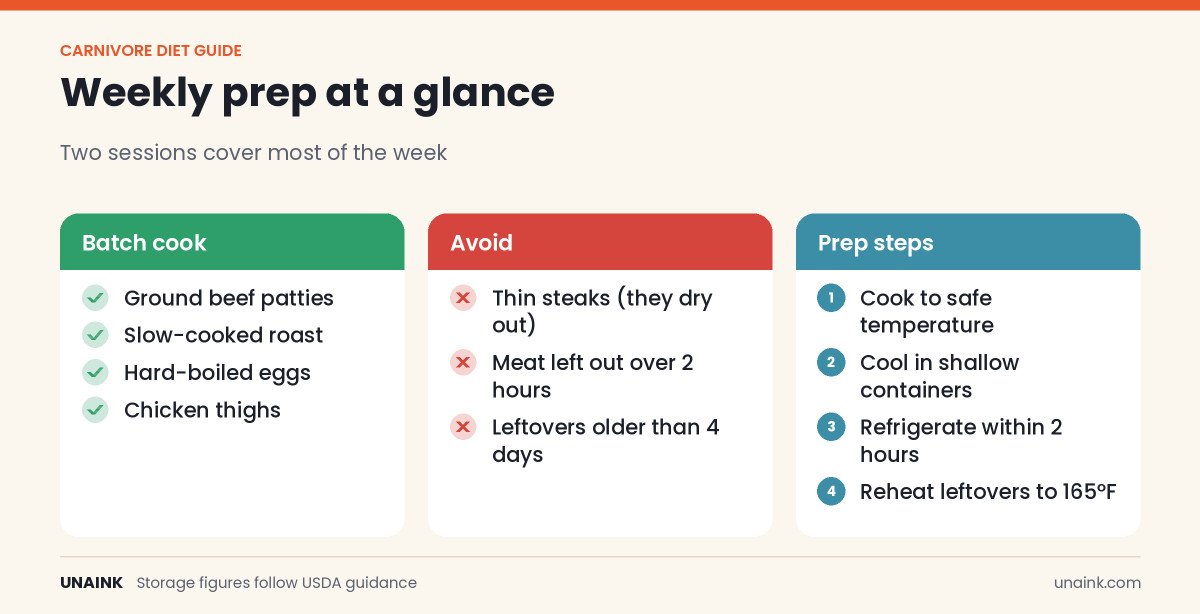
Cook two or three proteins in bulk, such as ground beef, a slow-cooked roast, and eggs, then divide them into shallow containers. USDA guidance says to refrigerate within 2 hours, eat within 3 to 4 days, and freeze the rest for 3 to 4 months. Reheat leftovers to 165°F.
Key Takeaways
- Two short cooking sessions can cover most of a week.
- Cool food in shallow containers and refrigerate within 2 hours.
- Cooked leftovers last 3 to 4 days in the fridge, or 3 to 4 months frozen for best quality.
- Reheat gently with fat or broth so lean cuts do not dry out.
- Prep does not fix nutrient gaps, so keep variety in what you cook.
Why Batch Cooking Suits a Short Menu
Most carnivore meals are a protein plus fat, which reheats well and needs no assembly. That means prep time is mostly oven or slow cooker time, not hands-on work. Having cooked meat ready also removes the moment of weakness where a hungry person grabs whatever is nearby.
Prep also helps you track what you actually eat. Portioned containers make it easier to notice if you are under-eating or leaning too lean, a common issue covered in how to get more fat on carnivore.
A Two-Session Carnivore Diet Meal Prep Plan
Splitting cooking into two sessions keeps everything inside the 3 to 4 day fridge window. Here is a simple rhythm:
- Sunday: cook a chuck roast or brisket in the oven or slow cooker, bake a tray of ground beef patties, and boil a dozen eggs.
- Sunday night: portion meals for Monday through Wednesday into shallow containers and refrigerate. Freeze a few portions for later in the week.
- Wednesday: cook a second batch, such as chicken thighs, sausage-free burgers, or pan-seared fish, for Thursday through Saturday.
- Any day: keep a jar of rendered fat and a carton of broth handy for reheating.
If you are brand new to this way of eating, start with how to start the carnivore diet before building a full prep routine.
Best Foods to Batch Cook
| Food | How to prep | Reheats well? |
|---|---|---|
| Ground beef patties | Cook to 160°F, cool, portion | Yes |
| Chuck roast or brisket | Slow cook, shred or slice with juices | Yes, best with its juices |
| Chicken thighs | Roast to 165°F | Yes |
| Hard-boiled eggs | Boil, cool, refrigerate in the shell | Eat cold or warm gently |
| Steak | Cook fresh, or slice cold the next day | Not great, tends to dry out |
Fattier cuts forgive reheating much better than lean ones. For recipe ideas, see carnivore recipes with ground beef.
Cook and Cool Meat Safely
Meal prep multiplies food safety risk, because large batches cool slowly. Follow the USDA safe temperature chart when cooking, and use these habits when storing:
- Cook whole cuts of beef, pork, and lamb to 145°F, then rest 3 minutes.
- Cook ground meat to 160°F and poultry to 165°F.
- Refrigerate within 2 hours (1 hour if the room is above 90°F).
- Divide large batches into shallow containers, and cut big roasts into smaller pieces.
- Keep the fridge at 40°F or below.
Store, Freeze, and Reheat
Per the USDA leftovers guide, refrigerated leftovers keep 3 to 4 days and frozen ones stay safe longer but can lose moisture and flavor after 3 to 4 months. Thaw in the fridge, in cold water, or in the microwave, and reheat everything to 165°F.
To keep meat juicy, reheat gently in a covered pan with a spoonful of tallow, or add a splash of homemade bone broth. Shredded roast also reheats well in its own cooking liquid.
Keep Variety in the Rotation
Eating the same two foods all week is easy, but it narrows your nutrient intake. A 2026 scoping review of nine studies found very limited evidence on this pattern and noted possible shortfalls in several vitamins and minerals; see the review in Nutrients. Mixing red meat, poultry, eggs, and fish, and adding organ meats occasionally, gives you more range.
Salt and fluids matter too, especially in the first weeks. See carnivore diet electrolytes for the basics.
Common Prep Mistakes
- Leaving a big pot on the stove to cool for hours.
- Cooking a full week of steak, which dries out by day three.
- Freezing everything in one large block that takes a day to thaw.
- Skipping labels, then guessing how old a container is.
- Prepping only lean meat and ending the week hungry.
Carnivore Diet Meal Prep: The Short Version
Good carnivore diet meal prep comes down to two cooking sessions, shallow containers, and a 3 to 4 day fridge limit. Plan your carnivore diet meal prep around fatty cuts that reheat well, and freeze whatever you will not eat in time.
Frequently Asked Questions
How long can I keep cooked carnivore meals in the fridge?
USDA guidance is 3 to 4 days for cooked leftovers at 40°F or below. If you will not eat a portion by then, freeze it.
Can I freeze cooked ground beef and steak?
Yes. Frozen food stays safe longer than 3 to 4 months, but quality can drop. Steak tends to suffer more than ground beef or roast.
What temperature should I reheat leftovers to?
USDA says 165°F, checked with a food thermometer. Sauces and broths should reach a rolling boil.
Is it safe to leave cooked meat out while it cools?
Not for long. Refrigerate within 2 hours, or 1 hour if it is above 90°F, and split big batches into shallow containers.
Does meal prep make the diet healthier?
It makes it more consistent, not automatically more complete. Variety and a clinician’s guidance still matter, since research on this diet is limited.
Conclusion
Batch cooking makes a restrictive way of eating far easier to stick with, as long as you respect cooling times, fridge limits, and safe reheating. Keep portions varied, include fat, and adjust as you learn what your week really looks like.
Medical note
This article is for general education and is not medical advice. Talk with a doctor or registered dietitian before making major diet changes, especially if you have a health condition, take medication, or are pregnant or breastfeeding.
Keep Reading
- 7 Day Carnivore Diet Meal Plan: A full week of meals to prep from.
- Carnivore Recipes With Ground Beef: Simple batch-friendly ideas.
- How Long Does Cooked Steak Last?: Safe limits for leftover steak.
- How to Get More Fat on Carnivore: Keep prepped meals satisfying.
Sources
- USDA FSIS: Leftovers and Food Safety: Storage, cooling, and reheating rules.
- USDA FSIS: Safe Temperature Chart: Minimum cooking temperatures.
- Nutrients scoping review of the carnivore diet (2026): Limited evidence and nutrient concerns.