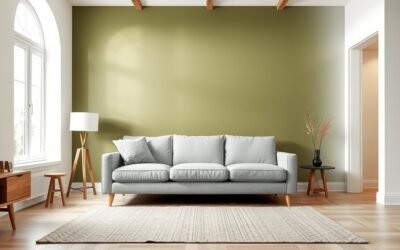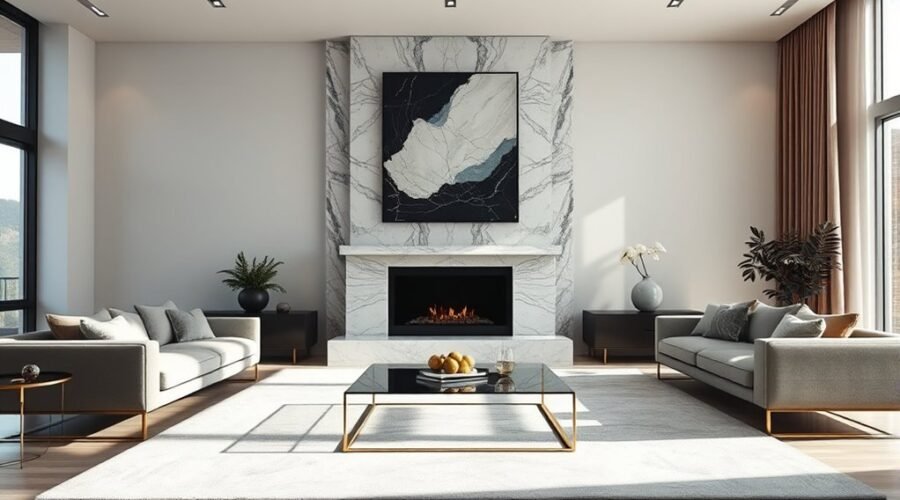
You might walk into a living room and notice that your eye keeps landing on the same wall, window, fireplace, or piece of furniture. That is your living room focal point: the dominant feature that gives the space a visual starting point. Choosing it carefully also makes furniture placement, lighting, color, and decor easier to organize.
Quick Answer
A living room focal point is the dominant feature your eye notices first and the rest of the room visually supports. It may be a fireplace, window, artwork, TV wall, or statement piece. Choose one primary anchor, arrange furniture to frame it, and keep secondary features quieter so the room feels balanced and intentional.
Key Takeaways
- A living room focal point is the main feature that receives visual attention and anchors the room’s design.
- Fireplaces, large windows, artwork, TV walls, built-ins, statement furniture, and architectural details can all become focal points.
- Choose the focal point according to both the room’s architecture and how you actually use the space.
- Furniture, lighting, color, texture, and accessories should support the primary focal point instead of competing with it.
- A room can contain secondary points of interest, but a clear hierarchy helps prevent visual clutter.
What Is a Living Room Focal Point?
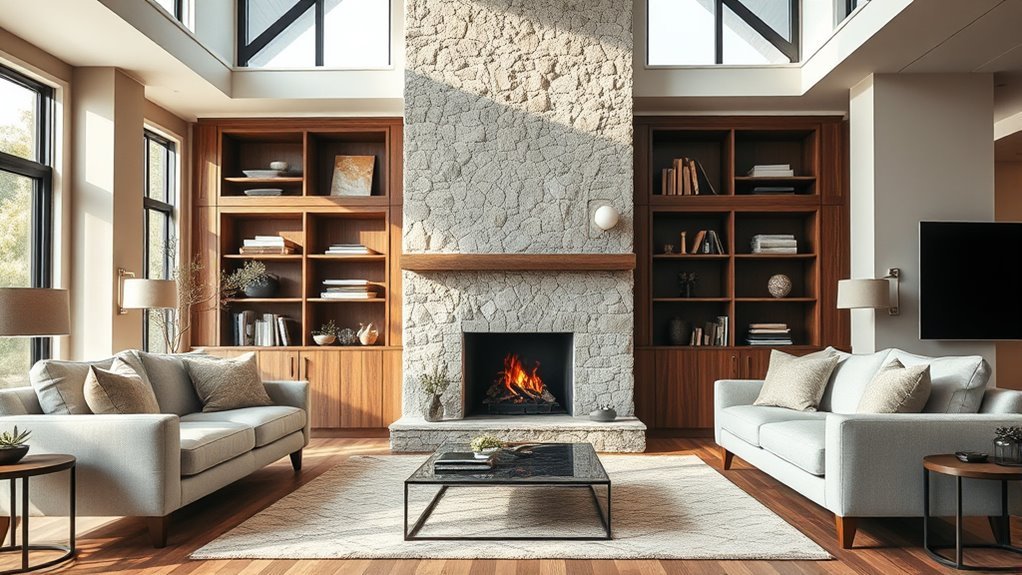
A living room focal point is the feature that receives the strongest visual emphasis when you enter or look across the room. It could be a fireplace, a broad window, a large piece of artwork, built-in shelving, a media wall, or a statement sofa.
This idea comes from the design principle of emphasis: one element is given greater visual importance while the surrounding elements support it. The focal point therefore creates a clear visual hierarchy instead of making every object demand equal attention.
Architecture can provide the focal point automatically. A fireplace, window with a strong view, exposed brick wall, built-in bookcase, arch, or other distinctive feature may already dominate the room. If nothing naturally stands out, you can create a focal point with artwork, a TV or media unit, lighting, color, furniture, or a styled wall.
Once that anchor is clear, it becomes easier to decide where the sofa, chairs, rug, lamps, and accessories belong. The goal is not to make every piece face the focal point rigidly. It is to make the overall arrangement acknowledge and support it.
Why Your Living Room Focal Point Matters
Your focal point establishes visual order. Instead of asking the eye to process every wall, color, object, and piece of furniture equally, it creates a first point of attention and lets the rest of the room act as supporting information.
That hierarchy can make a living room easier to plan. Once you know what should lead, you can decide whether the sofa should face it directly, sit perpendicular to it, or form a conversation area that still keeps the main feature visible.
Function matters just as much as appearance. The Council for Interior Design Qualification identifies space planning, furniture selection, and lighting as important parts of interior design. In practice, your focal point should work with those decisions rather than interfere with them.
For example, a fireplace may be the visual anchor in a conversation-focused living room, while a television may reasonably take priority in a room used mainly for movies and gaming. A window can lead when the view or natural light is the feature you most want to preserve.
Without a clear hierarchy, several bold features can compete for attention. That does not automatically make a room badly designed, but it does make intentional balance more important.
A useful focal point gives the room a visual priority: one feature leads, while furniture, lighting, color, and accessories help explain why it matters.
Natural Living Room Focal Point Ideas
Before buying new decor, look at what the room already gives you. Existing architectural features often make the easiest and most convincing anchors.
A fireplace naturally carries visual weight because of its size, structure, materials, and central position in many rooms. You can reinforce it with seating that faces or frames it, artwork or a mirror above it, and lighting that keeps the area visible after dark.
A large window can become the focal point when it provides an attractive view or strong natural light. Avoid placing tall furniture directly in front of it. Lower-profile seating can preserve the sightline while still defining a comfortable seating zone.
Built-in shelving, exposed beams, arches, stonework, brick, alcoves, and other architectural details can also lead the room. Keep nearby decor restrained enough that the architectural feature remains easy to read.
A distinctive piece of statement furniture, such as a sculptural sofa, cabinet, or coffee table, can provide emphasis when the room has few architectural features. Large-scale artwork can do the same on a blank wall.
What if Your Living Room Has No Natural Focal Point?
A room does not need a fireplace or dramatic window to have a strong focal point. If the architecture is neutral, choose the most useful wall or sightline and deliberately create one.
Good options include:
- Large artwork: One substantial piece can give a blank wall enough visual weight to anchor the room.
- A gallery wall: Treat the collection as one composition rather than scattering unrelated frames around several walls.
- A media wall: A TV, console, shelving, and controlled lighting can form one functional focal zone.
- A console and mirror: This works especially well on a wall visible from the main entrance.
- Statement furniture: A sofa with a distinctive color, form, or texture can lead when the architecture is quiet.
- Built-in or freestanding shelving: Books, art, and a few larger objects can create emphasis without covering the wall with small decor.
- Lighting: A sculptural pendant, chandelier, picture light, or pair of sconces can strengthen an otherwise understated feature.
Pro Tip: Stand at the living room’s main entrance and take a quick photo. The photograph often makes competing features easier to notice. If your eye jumps between several equally bold areas, reduce contrast or decoration around the ones you want to keep secondary.
How to Choose the Main Focal Point
Start with the feature your eye naturally notices, but do not stop there. The strongest architectural element is not always the best functional focal point for the way your household uses the room.
Compare the room’s architecture, main sightlines, natural light, traffic paths, and everyday activities. Then choose the feature that can serve as the clearest visual anchor without making the layout awkward.
Once you have chosen it, keep the surrounding decor controlled enough that the main feature remains easy to identify.
Identify Natural Attention
Walk into the room from its primary entrance and notice where your eyes land first. A fireplace, broad window, artwork, built-in shelving, high ceiling, unusual material, or strongly contrasting wall may already carry more visual weight than everything around it.
| Clue | What it signals | Your move |
|---|---|---|
| Strong vertical line | Height and visual weight | Let nearby furniture frame it |
| Bright opening | Natural light or a view | Keep the sightline open |
| Bold artwork | Strong color, scale, or contrast | Keep nearby decor quieter |
| Distinct architectural feature | Existing natural emphasis | Let the room layout acknowledge it |
Good furniture placement supports the main feature without crowding it or blocking normal movement through the room.
Prioritize Room Function
Next, ask what the room actually needs to do. A living room used mainly for conversation may work well around a fireplace or central seating group. A family room used every evening for television may need the media wall to take greater functional priority. A quiet sitting room may be organized around a garden view or reading area.
Try to make the focal point visible from the main seating position and, when practical, from the room entrance. Avoid choosing a visually impressive anchor that forces furniture into uncomfortable angles or blocks the natural route through the room.
When architecture and daily use conflict, function does not have to lose. Instead, establish a hierarchy: one feature can be the main functional anchor while another remains an attractive secondary point.
Balance Supporting Elements
Once you have identified the main focal point, let the rest of the room reinforce it rather than imitate its intensity.
Supporting elements can repeat a color, texture, material, line, or shape from the focal point. A stone fireplace, for example, might connect visually with a stone-topped side table or neutral textured rug without covering the whole room in the same material.
Scale matters too. Several small objects placed around a large focal feature can create visual noise. Fewer, better-scaled accessories usually make the hierarchy easier to understand.
Use secondary accents where they add depth, but keep them one step quieter through smaller scale, softer contrast, simpler styling, or less prominent lighting.
What if the TV and Fireplace Compete?
A television and fireplace are two of the most common competing living room anchors. There is no universal rule that the fireplace must win. Decide which feature matters more for the way you use the room.
If the room is primarily for conversation and the fireplace is used frequently, orient the main seating toward the fireplace while keeping the television viewable from secondary seats. If television viewing dominates, the TV can become the functional focal point while the fireplace remains an architectural feature.
If both sit on different walls, angled chairs, swivel seating, or an L-shaped furniture arrangement can acknowledge both without forcing every seat to face two directions at once.
Note: Do not combine a TV and fireplace on the same wall simply because it solves the focal-point problem. Screen height, heat, glare, viewing comfort, fireplace clearances, and manufacturer requirements should also guide the decision.
How to Style Around Your Focal Point
Arrange your sofa and chairs so they face, frame, or otherwise acknowledge the focal point. The arrangement does not need to be perfectly symmetrical. What matters is that the furniture looks intentionally related to the feature instead of randomly positioned around the room.
Keep clear sightlines. A high-backed chair, tall plant, floor lamp, or oversized accessory placed directly in front of the focal point can weaken it even when every individual item looks attractive.
Color and texture can reinforce emphasis. According to Iowa State University Extension’s design guidance, emphasis gives an element or area greater visual importance and helps establish hierarchy. Contrast is one way to create that separation.
You can therefore use a darker or lighter wall, stronger texture, larger scale, or controlled color contrast to distinguish the focal area. Alternatively, repeat one or two colors from the focal point elsewhere in smaller amounts to connect it with the rest of the room.
Lighting matters after daylight fades. Lamps, sconces, picture lights, or directional lighting can keep artwork, shelving, architecture, or another focal feature visible instead of letting it disappear into a dark wall.
How to Handle a Focal Point in a Small Living Room
In a small living room, a focal point should give the space direction without consuming unnecessary floor area.
Wall-based options often work well: artwork, a mirror, a television and slim console, a painted wall, built-in shelving, or a visually strong window. A distinctive sofa can also lead the room when there is not enough wall space for a separate decorative display.
Avoid trying to create a bold feature on every available surface. Strongly patterned curtains, an accent wall, oversized art, a colorful sofa, and a dramatic media unit can all work individually, but using them at equal intensity can make a compact room feel busier.
Instead, choose the main anchor and let the remaining elements echo it through smaller touches of color, shape, texture, or material.
How Focal Points Work in an Open-Plan Space
An open-plan home may legitimately contain more than one focal point because separate functional zones can each need their own visual anchor.
For example, the living zone might center on a fireplace or media wall while the nearby dining zone centers on a pendant light and dining table. The important distinction is that each focal point belongs to a clearly defined area rather than competing inside one small seating group.
Rugs, furniture orientation, lighting, ceiling treatments, and repeated materials can help define those zones. Keep enough visual connection between them that the whole open space still feels related.
Can a Living Room Have Two Focal Points?
Yes. A living room can contain two meaningful points of interest, especially when it is large, open-plan, or has fixed features such as both a fireplace and an impressive window.
The key is visual hierarchy. One feature should normally read as the primary focus of the main seating area, while the second works as a supporting feature rather than demanding exactly the same amount of attention.
Design guidance on emphasis and visual hierarchy from CUNY City Tech similarly distinguishes a principal focal point from secondary and tertiary accents and cautions against emphasizing too many things at once.
When Two Focal Points Work
Dual focal points work best when both can be experienced from the same furniture arrangement without creating conflicting sightlines. A fireplace and large window are a common example.
- Orient the main seating toward the feature that matters most.
- Keep the secondary feature simpler or lower in contrast.
- Repeat a few colors or materials between both areas to connect them.
- Keep walking paths open rather than using furniture to force two separate arrangements into one small area.
In a larger room, the second focal point can also belong to a different activity zone, such as a reading corner.
Choosing a Primary Focus
If two features compete, decide which one should dominate from the main seating position. Consider function, size, contrast, architecture, and what you actually want to look at most often.
A fireplace might remain the architectural focal point while a television serves as the functional one. A dramatic window may dominate during the day while artwork or lighting gains more presence at night.
Furniture, lighting, and decor should make that hierarchy understandable without requiring perfect symmetry.
Balancing Competing Design Elements
When two focal points share a room, use clear hierarchy rather than treating both as equally dominant.
- Anchor the primary seating arrangement around the main focal point.
- Keep circulation routes open and avoid blocking either feature unnecessarily.
- Use less contrast, smaller scale, or simpler styling around the secondary feature.
- Repeat compatible colors, materials, or shapes so both areas feel related.
The objective is not to eliminate every secondary point of interest. It is to make the order of attention clear enough that the room does not feel visually fragmented.
How to Arrange Furniture Around It
Start with the largest piece, usually the sofa. Position it so the focal point remains easy to see while the sofa still supports the room’s main activity.
Then add chairs or ottomans where they can participate in the seating group without cutting across the focal point or main traffic path. Chairs can sit at an angle instead of facing the feature directly.
Use a rug to define the seating zone and visually connect the sofa, chairs, and coffee table. The rug should make the group read as one arrangement rather than several unrelated objects.
Balance visual weight around the seating group with side tables, lamps, plants, and accessories, but avoid placing equally bold objects on every side of the room.
Keep circulation paths clear. People should be able to move between doorways and seating without repeatedly crossing between the main seats and the focal point.
Finally, make small adjustments. Pulling the sofa forward, turning a chair slightly, lowering the visual weight of one wall, or moving a lamp can be enough to make the focal point and seating group feel connected.
Common Living Room Focal Point Mistakes
- Trying to make everything a statement: If the fireplace, rug, curtains, artwork, sofa, lighting, and TV wall all compete at the same intensity, the room can lose hierarchy.
- Ignoring the way the room is used: A visually attractive focal point is not useful if it creates uncomfortable television viewing, blocks conversation, or forces awkward circulation.
- Blocking the focal point: Tall furniture, large plants, or bulky decor can interrupt important sightlines.
- Using an undersized feature on a large wall: A small artwork or accessory grouping may not carry enough visual weight to anchor a broad wall.
- Overdecorating around the anchor: Too many small objects can dilute the impact of the feature you intended to emphasize.
- Forgetting nighttime lighting: A focal point that depends entirely on daylight can disappear visually after sunset.
- Following architecture at the expense of function: A fireplace does not automatically have to determine every furniture decision if another activity matters more to the household.
How to Tell if Your Focal Point Is Working
Stand at the room’s main entrance and ask these questions:
- Can I identify the main feature within a few seconds?
- Does the furniture appear connected to that feature?
- Can I see the focal point from the primary seats?
- Does any large object unintentionally block it?
- Are several other walls competing with the same amount of color, pattern, scale, or lighting?
- Does the arrangement still support conversation, television viewing, reading, or whatever the room is mainly used for?
- Can people move through the room without cutting awkwardly through the seating group?
- Does the focal point still have presence after dark?
If the answer to most of these is yes, the room likely has a clear visual hierarchy. If not, start by simplifying one competing area before buying more decor.
Frequently Asked Questions
What is a focal point in a room?
A focal point is the feature or area given the strongest visual emphasis. It may be architectural, such as a fireplace or window, or created with artwork, furniture, color, texture, lighting, or a media wall. The rest of the room should generally support its visual importance rather than compete with it.
What is the purpose of a focal point?
A focal point establishes visual hierarchy and gives the room a clear place for attention to begin. It can also guide decisions about furniture placement, lighting, color, and accessories. When the focal point matches the room’s function, it can help the entire layout feel more connected.
What is a focal point in simple terms?
In simple terms, a focal point is the room’s main visual feature: the thing you want people to notice first. It might be a fireplace, window, artwork, TV wall, sofa, or another distinctive element. Other furniture and decor then play supporting roles around it.
Can you give me an example of a focal point in design?
A fireplace is a common example. You might place artwork above the mantel, arrange the main seating so the fireplace remains visible, and use lamps or sconces to reinforce that wall. A large window, oversized artwork, accent wall, built-in bookcase, or media unit can work the same way.
Can a TV be the focal point of a living room?
Yes. If television viewing is one of the room’s primary activities, a TV or media wall can reasonably become the functional focal point. Integrate it with a console, shelving, artwork, or controlled lighting so it feels intentionally connected to the room rather than like an isolated screen.
What should I use if my living room has no natural focal point?
Choose a prominent wall or sightline and create one. Large artwork, a gallery wall, statement sofa, mirror and console, shelving, a media wall, distinctive lighting, or a strong wall color can all provide enough visual emphasis to anchor the room.
Conclusion
Your living room’s focal point gives the space a clear visual priority. It might be a fireplace, artwork, window, TV wall, architectural detail, or statement piece of furniture. The best choice is the one that works with both the room’s architecture and the way you actually use the space.
Once you choose the primary anchor, arrange furniture to acknowledge it, use lighting and contrast to reinforce it, and keep secondary features from competing at the same intensity. You do not need a dramatic makeover. Often, a clearer hierarchy and a few thoughtful furniture or styling adjustments are enough to make the whole room feel more organized.
Sources
- UC Agriculture and Natural Resources — Principles of Design — supports the principles of emphasis, focal points, balance, and using furniture, color, texture, accessories, and lighting to create emphasis.
- Iowa State University Extension — Elements & Principles of Design — supports emphasis, visual importance, focal points, hierarchy, balance, scale, and related design principles.
- Council for Interior Design Qualification — What Is Interior Design? — supports the role of space planning, furniture selection, lighting, functionality, and human-centered interior design.
- CUNY City Tech — Emphasis and Visual Hierarchy — supports primary versus secondary visual emphasis and the need to avoid too many competing accented elements.