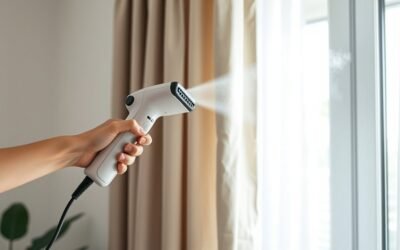
You can make a bedroom dramatically darker without hanging curtains. The most effective approach is to block light at the window first with an opaque blackout shade, compatible blackout film, a removable travel blind, or a fitted blackout insert. Then seal light around the window and door, cover unnecessary device LEDs, and reduce reflected light inside the room.
Quick Answer
To darken a bedroom without curtains, cover the window with an opaque blackout shade, compatible blackout film, removable travel blind, or fitted blackout panel. Mount coverings beyond the glass edges when possible, seal gaps around doors and windows, and cover unnecessary LEDs. For the darkest result, combine two or more methods.
Key Takeaways
- Block light at the window before trying to darken the rest of the bedroom.
- Outside-mounted blackout shades usually control edge leakage better because they can overlap the window frame.
- True blackout film is different from tinted, privacy, decorative, and solar-control film; check the product’s visible-light specifications and glass compatibility.
- Seal light under doors and around frames with a draft stopper, weatherstripping, removable blackout tape, or a fitted insert.
- Cover unnecessary device LEDs, but never cover vents, sensors, alarms, medical-equipment indicators, or safety-critical lights.
- Dark paint and furnishings can reduce reflected light, but they cannot replace physically blocking incoming light.
At a Glance
| Time Required | About 10–60 minutes for most temporary fixes; longer for permanently mounted shades |
| Difficulty | Easy to moderate |
| Tools Needed | Tape measure, scissors or utility knife, cleaning cloth; film may require a squeegee, while mounted shades may require a screwdriver or drill |
| Cost | Low for tape, cardboard, or removable panels; moderate to higher for fitted blackout film or permanent shades |
Start With The Fastest Curtain-Free Fix

If you need darkness fast, start at the main source of light: the window. A removable blackout blind, fitted opaque insert, blackout shade, or compatible opaque window film can make a much larger difference than changing paint colors or furniture.
Be careful with the term blackout window film. Some products sold as privacy, decorative, or solar-control film are dark but still transmit visible light. For example, Gila’s current Privacy Control Black film advertises glare reduction and up to 99% UV blocking, but the 99% figure refers to UV radiation rather than visible light. Check the actual product specification if complete darkness is your goal. Gila’s product specifications show why UV blocking, glare reduction, and visible-light control should be treated as separate measurements.
If brightness still enters around the perimeter, inspect the window frame and the gap under the bedroom door. A draft stopper, removable foam strip, fitted panel, or overlapping shade can stop the thin bands of light that remain after the main window is covered.
Warning: Do not assume every adhesive film is safe for every pane of glass. Insulated, laminated, Low-E, wired, tinted, and specialty glazing may have specific restrictions. Glass manufacturers note that uneven heating can create thermal stress and that applied films can affect this risk. Check both the window manufacturer’s and film manufacturer’s compatibility instructions before installation.
Install Blackout Shades Outside The Recess
Outside-mounted blackout shades are one of the cleanest curtain-free choices because the shade can extend beyond the window opening instead of stopping inside it. That overlap helps reduce the bright strips that often appear along the sides of an inside-mounted shade.
Measure the full window opening and frame, then choose a shade wide and long enough to overlap the opening according to the manufacturer’s installation instructions. More overlap generally means less side leakage, provided the shade can still operate safely and does not interfere with handles, locks, vents, or trim.
Manufacturers sell block-out roller blinds specifically for bedroom darkness. IKEA, for example, describes its TRETUR block-out roller blind as a light-blocking product that can be mounted inside or outside the recess. Actual room darkness still depends on the installation and gaps around the blind. See IKEA’s current block-out blind specifications.
Outside mounting also keeps the room visually simple: no curtain rod, no draped panels, and less fabric around the window. Choose a cordless or otherwise child-safe design when children can access the window.
Pro Tip: Install the shade, wait until the room is dark outside, turn off the bedroom lights, and stand inside for two or three minutes. Once your eyes adjust, mark every visible light strip. Those edge leaks are usually more useful to fix than adding another layer over the center of the window.
Use A Blackout Travel Blind For Total Darkness
A blackout travel blind is useful when you cannot drill into the wall or want a covering you can remove quickly. Most attach directly to glass or smooth trim with suction cups, removable adhesive, hook-and-loop strips, or another temporary fastening system.
Choose an opaque material that is larger than the visible glass area whenever possible. Covering only the glass can leave bright lines around the perimeter, while a larger panel can overlap those gaps.
Because portable blinds vary greatly, avoid relying on a generic “100% blackout” promise. The material may be fully opaque while light still enters around the edges. Fit matters as much as fabric.
Easy Suction Cup Setup
For a quick installation, clean and dry the glass before attaching a suction-cup travel blind. Oils, dust, condensation, and textured glass can weaken suction. Press each cup firmly into place and adjust the panel until it covers the illuminated glass and the brightest perimeter gaps.
This setup works well in hotels, nurseries, rental bedrooms, and temporary living spaces because it normally requires no drilling. Check the manufacturer’s instructions before attaching anything to specialty film, fragile coatings, or textured glass.
Edge-To-Edge Light Blocking
For stronger blackout, extend the opaque panel beyond the visible glass and overlap the frame where the attachment method allows it. Edge-to-edge coverage is especially important when streetlights or early-morning sunlight strike the window directly.
If a removable blind still leaks light, add removable blackout tape, low-residue painter-safe tape, magnetic strips on a compatible frame, or hook-and-loop fasteners around the problem area. Test any adhesive in an inconspicuous spot first, especially on painted trim.
A good portable blind can create a very dark sleep environment, but the final result depends on the fit rather than the marketing percentage printed on the package.
Portable For Any Window
A travel blind is especially useful when you move between hotel rooms, rentals, shared apartments, or children’s sleeping spaces. Foldable blackout fabric takes little storage space and can provide far more control than relying on whatever window treatment is already installed.
Measure the windows you use most often and choose a panel large enough to accommodate some variation. If the panel is significantly larger than the glass, fold or fasten the excess rather than leaving a loose section where light can enter.
Portable solutions are not literally suitable for every window. Very large windows, textured glass, unusual frames, or windows needed for emergency exit may require a different method.
Seal Light Leaks Around Doors And Windows
Once the window itself is covered, look for the smaller leaks. Light commonly enters under the bedroom door, between a shade and its frame, around badly fitting trim, or through a gap between an operable sash and the frame.
The U.S. Department of Energy recommends properly sealing gaps around windows and doors to control unwanted air leakage. Many of the same physical gaps can also admit visible light. DOE building guidance describes appropriate air-sealing methods around openings.
Door Bottom Draft Stoppers
A door bottom draft stopper is one of the easiest ways to stop hallway light entering beneath a bedroom door. Foam, fabric, rubber, and slide-on designs are available, and a rolled towel can work as a temporary test before you buy anything.
Choose a stopper that blocks the illuminated gap without making the door difficult to open. If the bedroom needs specific ventilation or return-air clearance for an HVAC system, do not permanently close that airflow path without checking the system requirements.
A draft stopper can also reduce unwanted airflow, but its main purpose in this setup is simply to stop the bright strip beneath the door.
Window Frame Seal Strips
Self-adhesive foam or rubber window frame seal strips can help where an operable window has a genuine gap that lets both air and light through. Choose weatherstripping designed for the specific location and thickness of the gap.
Do not pack weatherstripping into drainage channels, weep holes, locks, moving hardware, or any opening the window manufacturer says must remain clear. Replace strips when they become compressed, loose, brittle, or detached.
Cover Tiny Light Gaps
For narrow light leaks, first identify whether the opening is supposed to be there. A removable foam strip or blackout tape is useful around a removable panel or blind, while proper weatherstripping is better for an actual movable sash or door.
For cracks around fixed trim, appropriate sealant may solve both the light leak and an air leak. The U.S. Department of Energy recommends caulk, suitable low-expansion foam, or backer rod for specific gaps around window and door rough openings. Do not caulk a part of the window that is designed to move, drain, or ventilate.
Odd-shaped openings can also be covered with a cut-to-fit removable foam-board or cardboard insert. Make it easy to remove so you can open the window normally when needed.
Block Tiny Lights From Devices And Chargers
After outside light is controlled, walk through the bedroom at night and identify glowing chargers, clocks, televisions, speakers, routers, game consoles, power strips, and other electronics. These LEDs may be distracting even when they are much dimmer than the window.
NIH explains that the body’s light-dark cycle helps regulate melatonin and that bright artificial light in the late evening can interfere with normal melatonin release. Light effects depend on intensity, spectrum, timing, duration, and the person, so it is more accurate to reduce unnecessary nighttime light than to claim that every small LED has the same hormonal effect. See the NHLBI overview of the sleep-wake cycle.
Cover a nonessential indicator with a purpose-made LED dimming sticker or a small piece of opaque tape only when doing so is safe. Alternatively, move the device out of your direct line of sight, lower its display brightness, use a manufacturer’s night mode, or unplug equipment that genuinely does not need power overnight.
Warning: Never cover ventilation slots, heat-producing surfaces, smoke or carbon-monoxide alarms, medical-equipment indicators, required warning lights, cameras or sensors you rely on, or an infrared receiver you still need to operate.
Sleep-light researchers recommend making the sleep environment as dark as practical; the effect of light depends on more than simply whether a source is visible.
Try Tin Foil, Cardboard, Or Foam Panels
If you need a fast, nonpermanent fix, cardboard or a fitted opaque foam-board panel can block visible light without installing a permanent window treatment. Aluminum foil is also opaque, but it should not be treated as automatically safe for every glazing system or used as a substitute for checking window-manufacturer guidance.
| Material | Main Strength | Best Use | Main Limitation |
|---|---|---|---|
| Aluminum foil | Opaque to visible light | Very temporary blackout after glazing compatibility is considered | Appearance, condensation concerns, and possible glazing/thermal considerations |
| Cardboard | Cheap and easy to cut | Temporary removable insert | Can warp, absorb moisture, and look unfinished |
| Opaque foam board | Rigid, clean fit | Reusable custom insert | Must be stored when removed and should not block required exits |
You can make a better-looking insert by cutting cardboard or foam board slightly smaller than the frame and adding removable edge material to close the remaining gap. A dark fabric or matte covering on the room-facing side can improve appearance.
Do not assume cardboard provides certified UV protection, meaningful soundproofing, or significant insulation simply because it is opaque. Ordinary foam board may reduce some light and add a small barrier, but it is not a substitute for a tested acoustic or insulation system.
Warning: Do not permanently obstruct a bedroom window that serves as a required emergency exit. Any blackout insert over an egress window should be removable immediately without tools or complicated fasteners. Keep locks, handles, vents, and opening hardware accessible.
Use Window Film To Cut Down Light
Window film can be a clean alternative to curtains, but choose it by function rather than by color alone. The major categories behave differently:
- Opaque blackout film: intended to stop visible light through the covered glass.
- Dark privacy film: reduces brightness and visibility but may still transmit light.
- Solar-control film: primarily reduces heat or glare and normally preserves some view and daylight.
- Decorative or frosted film: primarily changes privacy and appearance; it is not automatically a blackout product.
UV performance is a separate specification. Some residential films advertise up to 99% UV rejection while still allowing substantial visible light through, so do not use a UV percentage as your blackout rating.
Removability also varies. Some static-cling products are designed to be removed and reapplied, while other films use a more permanent adhesive. Renters should check the lease and test removable products before covering a large window.
Before applying any film, identify the type of glass. Pilkington explains that thermal stress occurs when different parts of a pane develop significantly different temperatures, and its insulating-glass guidance lists applied adhesive films among factors that can increase thermal-crack risk in some situations. Review Pilkington’s thermal-stress guidance and follow the film manufacturer’s approved-glass list.
Use Dark Decor To Absorb Light
Dark décor can make an already-darkened bedroom feel dimmer by reducing reflected light. Matte deep blues, browns, charcoal, and other dark finishes generally reflect less visible light than pale glossy surfaces.
Dark furniture, bedding, rugs, throws, cushions, and artwork can therefore reduce the amount of light that bounces around the room after it enters. Matte surfaces are especially useful when a glossy wardrobe, mirror, pale wall, or polished floor is reflecting a streetlight or indicator LED toward the bed.
However, décor is a secondary measure. A dark wall cannot stop sunlight coming through uncovered glass, and dark furniture will not create total darkness by itself. Block the light source first, then use décor to control the reflections that remain.
Choose the Best Curtain-Free Blackout Method
| Method | Darkness Potential | Removable? | Best For |
|---|---|---|---|
| Outside-mounted blackout shade | Very high with good overlap | Semi-permanent | Homeowners and long-term installations |
| Opaque compatible blackout film | High through covered glass | Depends on product | Minimalist rooms where a lost outside view is acceptable |
| Travel blind | High when edges overlap | Yes | Hotels, nurseries, renters, temporary use |
| Foam-board or cardboard insert | High when fitted closely | Yes | Low-cost temporary blackout |
| Privacy or solar film | Low to moderate unless specifically opaque | Depends on product | Glare or privacy reduction rather than total blackout |
Make a Removable Blackout Window Insert
A removable insert is one of the most practical curtain-free methods for renters because it can cover the full window opening at night and come out during the day.
- Measure the inside dimensions of the window opening at several points because frames are not always perfectly square.
- Cut opaque foam board, corrugated plastic, or another lightweight rigid panel slightly smaller than the opening.
- Add soft removable edging, weatherstrip, or hook-and-loop material where needed to create a snug fit.
- Fit the panel after sunset and identify any glowing perimeter gaps.
- Add removable edge material only where needed, keeping locks, vents, and emergency-opening hardware accessible.
For a cleaner finish, cover the room-facing side with dark matte fabric or paper. Remove the insert periodically to inspect the glass and sill for trapped condensation or moisture.
Use an Eye Mask When You Cannot Black Out the Whole Room
If you cannot alter the window, an eye mask is the simplest no-install fallback. It does not darken the bedroom itself, but it reduces the light reaching your eyes while you sleep.
This can be useful in hotels, shared bedrooms, rentals with strict rules, or rooms where an emergency exit must remain completely unobstructed. Choose a mask that stays comfortably in place without pressing painfully on the eyelids.
An eye mask works best as a personal solution rather than a room-wide solution. You may still want to turn off bright displays or reposition obvious light sources that disturb you when the mask shifts.
Choose The Best Setup For Better Sleep
For a bedroom that supports better sleep, start by stopping the largest source of nighttime light. Research on indoor light and circadian physiology supports keeping the sleep environment very dark when practical. A laboratory study indexed by the U.S. National Library of Medicine found that room-light exposure before bedtime suppressed melatonin compared with very dim light, while expert consensus recommendations advise keeping nighttime ambient light very low. Read the PubMed study.
- Choose the main window covering: outside-mounted blackout shade, opaque compatible film, removable blind, or fitted insert.
- Fix edge leakage with overlap, removable strips, or properly selected weatherstripping.
- Block light beneath the door with a stopper or rolled towel when ventilation requirements allow it.
- Dim or cover unnecessary electronic indicators safely.
- Reduce reflections with dark matte décor after the actual light sources are controlled.
Room dividers can also help when the unwanted light comes from an adjoining open space rather than directly through the window. Use an opaque divider positioned between the light source and the bed; translucent dividers will soften light but will not provide true blackout.
If noise is also a problem, address it separately. Sealing obvious gaps may reduce some sound transmission, but ordinary blackout film, cardboard, decorative foam, or a travel blind should not be treated as a complete soundproofing system.
Note: Complete darkness is not safe for every situation. If you need to get up during the night, consider a very dim, low-positioned night light or another safe way to navigate without switching on a bright overhead light.
Frequently Asked Questions
How Can I Darken My Room Without Using Curtains?
Use an outside-mounted blackout shade, opaque compatible window film, removable blackout blind, or fitted blackout insert to stop light at the window. Then seal light beneath the door and around the covering, reduce unnecessary device LEDs, and use darker matte décor to limit reflections. An eye mask is useful when changing the room itself is not possible.
What Can I Put Up Instead of Curtains?
Alternatives include blackout roller shades, cellular shades with an opaque lining, removable travel blinds, compatible window film, shutters, and removable blackout inserts. For a temporary low-cost fix, fitted cardboard or opaque foam board can work. Choose the method based on how much darkness you need, whether you rent, and whether you still want daylight and an outside view during the day.
What Does Martha Stewart Use Instead of Curtains?
It is more accurate to refer to recommendations published by MarthaStewart.com than to claim that Martha Stewart personally uses one specific curtain alternative. The site’s window-treatment coverage discusses options such as blinds, Roman shades, natural woven shades, and other window treatments. For a bedroom that needs strong darkness, choose a version specifically designed for blackout rather than assuming a decorative shade will block all light.
How Can I Darken My Room Without Blackout Curtains?
An opaque blackout shade, compatible blackout film, removable travel blind, or custom window insert can replace blackout curtains. For the darkest result, extend the covering beyond the visible glass and seal remaining perimeter leaks. Dark paint and furnishings can reduce reflections, but they should be a secondary step after the incoming light is blocked.
Is Blackout Window Film the Same as Privacy Film?
No. True opaque blackout film is designed to stop visible light through the covered glass. Privacy, mirrored, decorative, and solar-control films may reduce brightness or visibility while still allowing daylight through. Check visible-light transmission or the manufacturer’s blackout specification rather than relying on how dark the film looks in product photos.
Can I Put Blackout Film on Any Window?
Not automatically. Film compatibility depends on the film, glass construction, coatings, window orientation, and manufacturer requirements. Insulated, laminated, Low-E, wired, tinted, or specialty glazing may have restrictions. Check both manufacturers’ instructions before installation because uneven heating can contribute to thermal stress in some glass systems.
What Is the Best Option for Renters?
A suction-cup travel blind, removable blackout insert, tension-mounted solution, or manufacturer-approved static-cling film is usually easier to reverse than a permanently drilled or strongly adhesive installation. Check your lease first and test removable adhesives on an inconspicuous area so you do not damage paint or trim.
Conclusion
You do not need curtains to create a genuinely dark bedroom. Start by blocking the window with a well-fitted blackout shade, compatible opaque film, travel blind, or removable insert. Then deal with the smaller leaks around frames and doors and reduce unnecessary electronic lights.
For the best result, focus on fit rather than marketing percentages. An opaque covering can still leave a bright room if light escapes around its edges, while a carefully overlapped and sealed setup can make a major difference. Dark décor can finish the job by reducing reflections, but it should come after the main light sources are controlled.
Finally, keep safety in the plan: verify window-film compatibility, avoid blocking required ventilation or emergency exits, and never cover safety-critical device indicators. With those details handled, a curtain-free bedroom can be both clean-looking and highly effective for nighttime darkness.
Sources
- National Heart, Lung, and Blood Institute — Sleep/Wake Cycle — explains how light and darkness influence melatonin and the sleep-wake cycle.
- U.S. National Library of Medicine / PubMed — Exposure to Room Light Before Bedtime — supports the discussion of evening light and melatonin suppression.
- Gila Privacy Control Black Window Film — current manufacturer specifications separating UV blocking and glare reduction claims.
- U.S. Department of Energy — Rough Opening Flashing: Air Sealing — supports proper sealing of gaps around windows and doors.
- Pilkington — Glass and Thermal Stress — explains thermal-stress breakage and factors affecting window glass.
- MarthaStewart.com — When to Choose Drapery, Curtains, or Blinds — supports the corrected discussion of window-treatment alternatives published by the site.