When you compare upholstery fabrics, you will often see a Martindale rub count or Martindale abrasion result. It tells you how a fabric performed against repeated rubbing in a controlled laboratory test. The number is useful for comparing abrasion resistance, but it is not a direct prediction of how many years a sofa, chair, or other upholstered item will last.
Quick Answer
Martindale rub count is a laboratory measure of how well a fabric resists surface abrasion. The specimen is rubbed against a specified abrasive in a Lissajous pattern under controlled conditions until a defined endpoint is reached. Higher results generally mean stronger abrasion resistance, but they do not predict exact service life or replace other fabric tests.
Key Takeaways
- Martindale measures abrasion resistance under controlled laboratory conditions, not guaranteed furniture lifespan.
- The tester moves the specimen against a specified abrasive in a multidirectional Lissajous pattern.
- Martindale abrasion testing is covered by ISO 12947 and ASTM D4966; Wyzenbeek is a different method commonly associated with ASTM D4157.
- There is no reliable direct conversion between Martindale results and Wyzenbeek double-rub results.
- For commercial woven and knit upholstery, ACT lists 20,000 Martindale cycles for low-traffic/private spaces and 40,000 cycles for high-traffic/public spaces under its specified test conditions.
What Is a Martindale Rub Count?
A Martindale rub count is a laboratory result used to describe how well a textile resists repeated surface abrasion. It is especially common on upholstery-fabric specifications because it gives designers, upholsterers, manufacturers, and buyers a standardized way to compare wear resistance.
The international ISO 12947 series covers Martindale abrasion testing, while ASTM D4966 is the ASTM Martindale abrasion-tester method for textile fabrics.
A higher result means the specimen endured more abrasion under the conditions of that test before reaching its specified endpoint. That normally makes the result useful when comparing fabrics tested by the same method, but it does not mean a fabric with twice the result will last twice as long in a home, hotel, restaurant, or vehicle.
Note: ISO does not create universal consumer categories such as “20,000 = domestic” or “30,000 = commercial.” Those bands are practical market conventions. Always combine the number with the supplier’s intended-use rating and the exact test method.
How Does the Martindale Test Work?
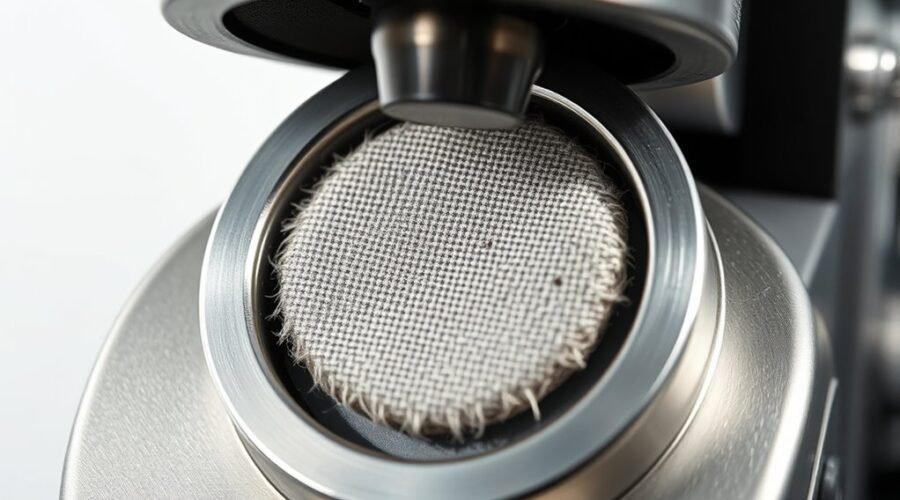
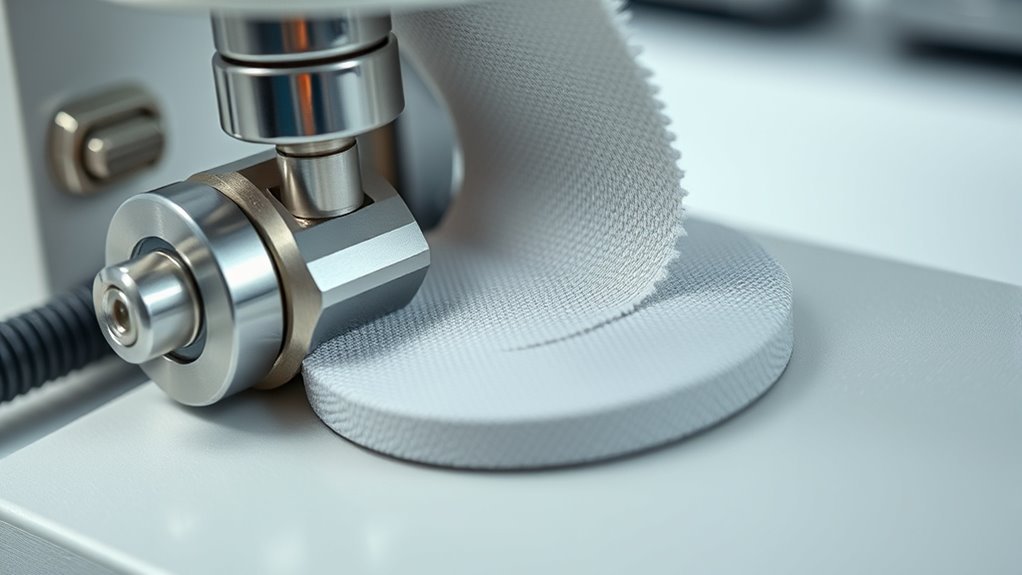
In a Martindale abrasion test, a fabric specimen is held in a testing apparatus and rubbed against a specified abrasive medium under controlled pressure or load. The movement spreads abrasion across the specimen rather than repeatedly wearing one straight line.
The machine runs for defined intervals, and the specimen is inspected according to the applicable procedure. ISO 12947-2, for example, specifies a procedure for determining specimen breakdown by inspection at fixed intervals.
The result should therefore be read together with the test standard, test conditions, and endpoint. A bare number such as “30,000” is less informative if the supplier does not identify how the fabric was tested.
Test Mechanism
The Martindale apparatus produces a multidirectional Lissajous pattern. The fabric specimen moves against a standard abrasive surface while the holder can rotate, distributing friction across the test area.
This movement is more accurately described as a Lissajous pattern than as a simple figure-eight. It is designed to expose the fabric to abrasion from changing directions so different yarn orientations and surface structures are stressed during the test.
The method can be used with woven, knitted, and nonwoven textile fabrics within the limitations of the relevant standard and specimen holder.
Abrasion Cycles
Martindale specifications are often described in everyday product literature as “rubs” or “cycles.” Formal standards use more precise apparatus terminology, while retailers and fabric suppliers sometimes use the words more loosely. For that reason, avoid trying to mathematically convert a marketing “rub count” unless you have the actual test report.
For abrasion testing, the important endpoint is the specified degree of specimen breakdown or wear. Pilling and fuzzing should not automatically be treated as the same abrasion endpoint. Those surface changes can be tested separately with a modified Martindale procedure under ISO 12945-2 or ASTM D4970/D4970M.
This distinction matters when comparing two fabrics. One may have excellent abrasion resistance but mediocre pilling performance, while another may resist pilling well but reach abrasion breakdown sooner.
How to Read Martindale Test Results
Read a Martindale result as evidence of relative abrasion resistance under the stated laboratory conditions. Higher results generally indicate that the specimen tolerated more rubbing before the test endpoint, but the number should not be treated as a guarantee of actual furniture lifespan.
Before comparing two fabrics, check that both results use the same test method and reasonably comparable test conditions. Also confirm that the fabric manufacturer approves the material for your intended application.
Understanding Score Ranges
Residential upholstery ranges seen in fabric stores are useful as rules of thumb, but they are not official ISO durability classes. A practical way to interpret them is:
- Below about 10,000: commonly reserved for decorative or very light-use applications unless the manufacturer states otherwise.
- 10,000–19,999: commonly associated with occasional or light residential seating.
- 20,000–39,999: commonly suitable for many everyday residential applications when the fabric is specifically sold for upholstery.
- 40,000+: a strong abrasion result that also reaches the Association for Contract Textiles’ Martindale benchmark for high-traffic commercial woven and knit upholstery when tested under its specified conditions.
ACT’s voluntary commercial guidance uses 20,000 Martindale cycles for low-traffic/private spaces and 40,000 cycles for high-traffic/public spaces for woven and knit upholstery under its specified ASTM D4966 conditions.
Those commercial benchmarks are more useful than calling every fabric above 30,000 “commercial grade.” Commercial projects can also have requirements for flammability, colorfastness, seam performance, cleanability, and other properties that a Martindale number does not address.
Matching Scores to Use
Match the abrasion result to the actual use of the furniture. An occasional bedroom chair experiences less repeated friction than a family-room sofa, restaurant banquette, waiting-room chair, or public-transport seat.
For a home sofa, start with fabric that the supplier specifically rates for general or heavy domestic upholstery. A result around 20,000 or higher is a practical starting point for regular use, while a busy household may prefer a fabric with a higher result plus a tight construction and suitable care properties.
For commercial work, use a recognized performance specification rather than relying on a retailer’s informal label. The Association for Contract Textiles abrasion guidance is one useful reference for contract upholstery.
Martindale Score Ranges for Upholstery
The following ranges combine common residential buying guidance with clearly identified ACT commercial benchmarks. They should be used as a selection aid rather than as a universal standard.
| Martindale result | Practical interpretation |
|---|---|
| Under 10,000 | Decorative or very light use is the safest assumption unless the fabric maker approves regular upholstery use. |
| 10,000–19,999 | Often marketed for light residential or occasional seating. |
| 20,000–39,999 | Commonly appropriate for general residential upholstery; 20,000 also matches ACT’s low-traffic commercial Martindale benchmark for woven and knit upholstery under its stated conditions. |
| 40,000+ | Strong abrasion resistance; 40,000 meets ACT’s high-traffic commercial benchmark for woven and knit upholstery under its stated conditions. |
| 100,000+ | Very high laboratory abrasion result, but not proof of proportionally longer real-world service life. |
Do not reject a fabric solely because a competing fabric has a larger number. If both comfortably meet the requirement for the intended use, other properties may matter more, including pilling resistance, lightfastness, snag resistance, cleaning performance, seam behavior, fiber content, and construction.
Martindale vs. Wyzenbeek: What’s the Difference?
Martindale and Wyzenbeek both measure abrasion resistance, but they use different apparatus and rubbing actions. Their numbers should therefore be identified by test method rather than compared as though they were the same scale.
| Feature | Martindale | Wyzenbeek |
|---|---|---|
| Common standards | ISO 12947; ASTM D4966 | ASTM D4157 |
| Movement | Multidirectional Lissajous abrasion movement | Back-and-forth oscillatory-cylinder abrasion |
| Common reporting language | Martindale rubs/cycles in product literature | Double rubs |
| Direct conversion | No dependable conversion should be assumed between the two methods. | |
Martindale is widely used internationally and in European textile specifications. Wyzenbeek is widely encountered in North American contract upholstery. The current ASTM D4157 standard covers the oscillatory-cylinder method commonly associated with Wyzenbeek testing.
The two results are not interchangeable. ACT specifically notes that there is no correlation that allows Martindale and Wyzenbeek results to be reliably converted. If two fabric samples use different tests, compare each one against the appropriate requirement for that method instead of comparing the raw numbers.
What Materials Are Martindale Tested?
Martindale abrasion testing can be applied to many textile constructions. ASTM D4966 covers woven, knitted, and nonwoven fabrics, subject to the physical limitations of the test apparatus and the applicable test procedure.
That means the method can be used on fabrics containing natural fibers such as cotton or wool, synthetic fibers such as polyester or nylon, and many blended constructions. What matters is not simply the fiber name but whether the material and specimen can be tested according to the selected method.
Upholstery textiles for residential, contract, transportation, and other demanding applications may be abrasion tested, although additional performance standards can apply to each end use.
Coated materials may also require methods specifically written for coated fabrics rather than assuming the standard uncoated-textile procedure applies. Always check the exact standard on the laboratory report.
What Martindale Testing Doesn’t Measure
Martindale abrasion testing measures abrasion resistance; it is not a complete fabric durability profile. It does not by itself tell you how a fabric performs against sunlight, stains, chemical exposure, snagging, pet claws, seam stress, fire, or repeated cleaning.
A Martindale result tells you how a specimen performed against abrasion in a laboratory. It does not tell you everything that will happen to the finished upholstery in daily use.
It also does not replace a dedicated pilling assessment. Pilling, fuzzing, and matting can be evaluated with the modified Martindale method in ISO 12945-2, which is a different performance question from abrasion breakdown.
Fabric composition, yarn construction, weave or knit structure, backing, finishes, maintenance, cleaning method, environmental exposure, and the design of the upholstered item can all affect real-world performance. The abrasion result reflects how the finished specimen behaved in that particular test; it does not separately explain which of those factors produced the result.
ASTM also cautions that laboratory abrasion resistance is only one of several contributors to real-world durability and should not automatically be treated as a prediction of actual wear life.
How to Choose Upholstery by Martindale Score
Start by matching the fabric to the furniture’s actual traffic level, then use the Martindale result as one part of the specification.
- Confirm intended use. Make sure the manufacturer describes the fabric as suitable for upholstery, not only curtains, cushions, or decorative applications.
- Check the test method. Look for ISO 12947 or ASTM D4966 when comparing Martindale abrasion results.
- Match the result to traffic. Occasional residential seating can tolerate less abrasion than a daily family sofa or commercial public seating.
- Check other performance properties. Review pilling, colorfastness, cleanability, snagging, seam performance, and any applicable fire requirements.
- Compare like with like. Do not directly convert a Martindale result into Wyzenbeek double rubs.
Pro Tip: When a fabric specification lists only a large number such as “50,000 rubs,” ask for the actual test method, test conditions, endpoint, and intended-use rating. Those details are more useful than comparing impressive-looking numbers without context.
For general domestic upholstery, a fabric specifically approved for everyday seating with a Martindale result around 20,000 or higher is a practical starting point. For heavier household use, moving higher can provide additional abrasion margin, but the highest available number is not automatically the best fabric.
For commercial or high-traffic upholstery, use the specification required by the project. ACT’s voluntary guidance uses 20,000 Martindale cycles for commercial low-traffic/private spaces and 40,000 for high-traffic/public spaces for woven and knit upholstery tested under the specified ASTM D4966 conditions.
Frequently Asked Questions
Is a 15,000 rub count good?
A 15,000 Martindale result can be suitable for light or occasional residential use when the fabric manufacturer approves it for that purpose. It is less reassuring for a heavily used family sofa or commercial seating. Check the supplier’s intended-use rating instead of relying on the number alone.
Is 30,000 Martindale good?
A 30,000 Martindale result shows substantial abrasion resistance and is commonly more than enough for many residential upholstery applications. It also exceeds ACT’s 20,000-cycle low-traffic commercial benchmark for woven and knit upholstery, although ACT uses 40,000 cycles for high-traffic/public spaces under its specified conditions.
What is a good Martindale rub test rating for a sofa?
For a regularly used home sofa, choose a fabric specifically rated for general or heavy domestic upholstery. Around 20,000 Martindale or higher is a practical starting point, while busy households may prefer 30,000 or more. Also check pilling, colorfastness, cleanability, weave construction, and the manufacturer’s care guidance.
Is 100,000 a good rub count?
A 100,000 Martindale result is a very high laboratory abrasion result, but it does not mean the fabric will last several times longer than a fabric that already meets the requirement for the same application. ACT cautions that abrasion results beyond its high-traffic guideline have not been shown to indicate increased product lifespan.
Is Martindale the same as a double-rub test?
No. Martindale and Wyzenbeek are different abrasion methods. Martindale uses a multidirectional Lissajous movement and is covered by standards such as ISO 12947 and ASTM D4966. Wyzenbeek uses an oscillatory-cylinder method commonly reported in double rubs under ASTM D4157. Their numerical results should not be directly converted.
Does a higher Martindale number always mean a better upholstery fabric?
No. A higher number generally means greater abrasion resistance in that test, but upholstery also depends on fiber and fabric construction, pilling resistance, colorfastness, snagging, cleanability, seams, maintenance, and the environment. Once a fabric comfortably meets the required abrasion level, those other properties can be more important than chasing a larger number.
Conclusion
A Martindale rub count is best used as a standardized indicator of abrasion resistance, not as a promise of how long upholstery will last. Compare fabrics tested by the same method, make sure the material is approved for your intended use, and look beyond the raw number to pilling, lightfastness, construction, cleaning requirements, and other relevant performance properties. For demanding commercial use, rely on a recognized specification such as the ACT abrasion guidelines rather than an informal “commercial-grade” label.
Sources
- ISO 12947-1:1998 — requirements for the Martindale abrasion testing apparatus.
- ISO 12947-2:2016 — procedure for determining specimen breakdown during Martindale abrasion testing.
- ASTM D4966-22(2026) — ASTM Martindale abrasion-resistance test method for textile fabrics.
- ASTM D4157-13(2022) — oscillatory-cylinder abrasion method commonly associated with Wyzenbeek testing.
- Association for Contract Textiles: Abrasion Guidance — commercial low-traffic and high-traffic abrasion benchmarks and limitations of high abrasion counts.
- ISO 12945-2:2020 — modified Martindale method for evaluating pilling, fuzzing, and matting.