Rattan furniture lasts longest when it is kept clean, dry, and away from environmental extremes. Natural rattan is a woven plant material, so prolonged direct sun, very dry air, repeated humidity swings, and excess water can make it brittle, distorted, stained, or mold-prone. The safest routine is regular dry dusting, occasional careful damp cleaning, prompt spill cleanup, and treatment products only when they are compatible with the original finish.
Quick Answer
To keep natural rattan furniture from drying out, keep it away from direct sun, heaters, and very dry air; dust it regularly; clean with minimal water; and dry spills quickly. Avoid soaking the weave or automatically applying oil. If the furniture has a lacquer, paint, stain, wax, or factory finish, follow the maker’s care instructions before adding any treatment.
Key Takeaways
- Natural rattan and synthetic resin wicker need different care, so identify the material first.
- Keep natural rattan out of prolonged direct sun, strong heat, standing water, and large humidity swings.
- Dust or vacuum gently and use only a barely damp cloth when moisture is needed.
- Do not assume lemon oil, mineral oil, tung oil, or boiled linseed oil is safe for every finish.
- Repair broken load-bearing strands, failing joints, valuable antiques, and extensive mold professionally.
At a Glance
| Time Required | About 10–20 minutes for routine cleaning; longer if the weave must air-dry |
| Difficulty | Easy for routine care; moderate to professional for broken strands or structural repairs |
| Tools Needed | Soft brush or vacuum brush attachment, microfiber cloths, mild dish soap, clean water, and a soft toothbrush for crevices |
| Cost | Usually minimal if basic household cleaning supplies are already available |
What Is Rattan Furniture?
Rattan furniture is made from rattan, a group of climbing palms whose long stems can be used for furniture frames, bindings, and woven surfaces. Rattan is valued because it is relatively lightweight, strong, and flexible enough to bend into curved furniture forms.
Rattan, cane, and wicker are not exactly the same thing. Cane usually refers to strips from the outer portion of rattan stems, while wicker describes a weaving or construction technique rather than one specific material. Wicker furniture can therefore be made from natural rattan, willow, other plant fibers, or synthetic resin.
This distinction matters for care. Natural rattan absorbs and releases moisture as environmental conditions change. Synthetic wicker is normally made from plastic or resin and generally tolerates outdoor exposure and washing better.
Note: Before cleaning or applying any treatment, check the product label, manufacturer’s instructions, or an inconspicuous area to determine whether the rattan is raw, lacquered, painted, stained, waxed, or oil-finished.
Why Rattan Furniture Dries Out
Natural rattan responds to the moisture in the surrounding air. When conditions become too dry, plant fibers lose moisture and become less flexible. Repeated cycles of swelling and shrinking can also place stress on tightly woven or restrained fibers.
The Canadian Conservation Institute notes that plant-based basketry becomes increasingly desiccated and brittle below about 40% relative humidity, while humidity above about 65% can encourage mold. Large or repeated humidity swings can also contribute to distortion and breakage.
The goal is not to make rattan wet. It is to keep the surrounding environment reasonably stable so the natural fibers are not repeatedly pushed between very dry and very damp conditions.
Direct sunlight and nearby heat sources can make the problem worse by warming and drying the material. Rattan should therefore be kept away from radiators, fireplaces, heating vents, and prolonged direct sun whenever practical.
How to Clean Rattan Furniture Gently
Gentle cleaning removes abrasive dust and debris without saturating the weave. The safest routine starts dry and adds moisture only when needed.
- Remove cushions and loose items. This gives you access to the complete woven surface.
- Dust first. Use a soft brush, feather duster, or vacuum with a clean soft-brush attachment. Use low suction around fragile or loose strands.
- Clean tight crevices. A clean, soft toothbrush can loosen debris between strands without aggressive scrubbing.
- Spot-test before damp cleaning. Test an inconspicuous area, especially on painted, stained, lacquered, or antique furniture.
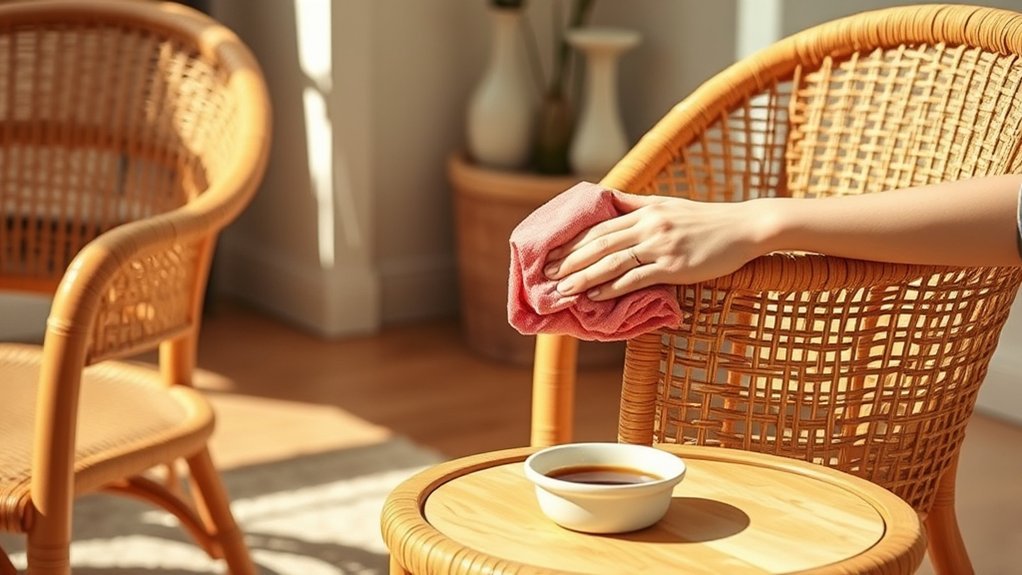
- Use minimal water. For ordinary grime, wring out a microfiber cloth until it is only slightly damp. If necessary, add a few drops of mild dish soap to water and use the dampened cloth rather than pouring liquid onto the furniture.
- Do not soak the weave. Natural rattan should not be immersed or saturated.
- Remove remaining moisture. Blot with a clean dry cloth and allow the piece to air-dry completely in a ventilated area before replacing cushions or using it.
The Canadian Conservation Institute similarly recommends dry dust removal first and, when necessary, cleaning stubborn areas with a cotton swab that is only barely damp after first testing an inconspicuous spot.
Pro Tip: Put a clean screen or piece of gauze over a vacuum nozzle when working around fragile antique weaving. It can help prevent a loose fiber or small fragment from disappearing into the vacuum.
How to Keep Rattan Furniture From Drying Out
Preventing dryness is mainly an environmental job. Natural rattan should be kept in a reasonably stable indoor setting rather than repeatedly exposed to heaters, strong sun, very dry air, rain, or damp storage.
For valuable natural rattan, use a small hygrometer if the room is known to become very dry or damp. A practical home target is a moderate, stable humidity rather than an extreme setting. As a reference point, conservation guidance warns that brittleness increases below about 40% RH and mold risk rises above about 65% RH.
- Keep rattan away from radiators, fireplaces, forced-air vents, and other strong heat sources.
- Reduce prolonged direct sunlight with curtains, blinds, or a different furniture position.
- Use a humidifier only when the room is genuinely too dry, and monitor humidity rather than guessing.
- Do not mist finished furniture or soak it in an attempt to “rehydrate” the fibers.
- Clean spills promptly and let damp areas dry with good air circulation.
Some manufacturers of specific rattan designs recommend occasionally moistening an unfinished woven surface, while others specify only damp-cloth cleaning or a particular wax or oil. That difference is why the maker’s instructions should take priority over a universal treatment routine.
Best Oils for Rattan Furniture
There is no single oil that is automatically best for every piece of rattan furniture. The correct treatment depends on the original surface finish.
Some manufacturers sell rattan that is already lacquered, painted, stained, waxed, or treated with a proprietary oil. Adding another oil may create uneven color, a sticky film, trapped dirt, or compatibility problems. For example, Baker-McGuire’s product-care guidance tells owners of its rattan and wood finishes to avoid oil-based polishes, while other manufacturers prescribe wax or oil for particular products.
For that reason, use the following order of preference:
- Follow the furniture manufacturer’s care instructions.
- If the finish is unknown, use dry cleaning and minimal damp cleaning instead of applying oil automatically.
- For unfinished or specifically oil-finished rattan, use only the treatment recommended for that piece and test a hidden area first.
- For antique, collectible, or historically important furniture, consult a furniture conservator before adding a coating or oil.
Suitable Oil Choices
Boiled linseed oil, tung oil, lemon-oil furniture products, mineral-oil products, and proprietary furniture oils are all mentioned in commercial rattan-care advice, but they are not interchangeable and should not be treated as universal moisture restorers.
- Boiled linseed oil: a drying oil sometimes used on unfinished or appropriately finished furniture, but only when compatible with the piece.
- Tung oil: another drying oil used in some furniture-finishing systems; it should not be layered over an unknown finish without compatibility guidance.
- Lemon-oil furniture products: formulations vary and may contain petroleum distillates, fragrances, or other ingredients, so the label and manufacturer guidance matter.
- Mineral oil: does not cure like a drying oil and is not a universal rattan treatment.
If the piece already has a sound lacquer or painted finish, conditioning oil may offer no benefit at all.
Applying Oil Safely
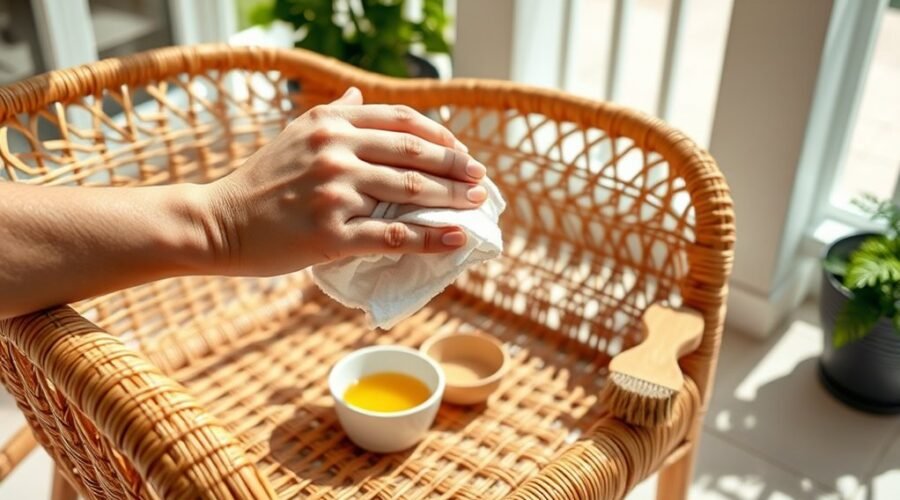
If the manufacturer specifically recommends an oil treatment, begin with clean, completely dry furniture. Test the product in a hidden area and apply a very thin coat with a lint-free cloth. Avoid flooding joints and woven recesses, and remove excess product according to the product label.
Warning: Cloths used with drying oils such as linseed or tung oil can self-heat and catch fire if they are crumpled or piled together. Follow the oil manufacturer’s disposal instructions exactly. The U.S. National Park Service documents this spontaneous-combustion hazard and advises preventing heat buildup in oil-soaked materials.
Do not set an automatic six-month or annual oiling schedule unless the manufacturer recommends one. Treat the actual finish and condition of the furniture rather than applying more product simply because a calendar date has arrived.
How to Protect Rattan Furniture From Sun Damage
Rattan furniture lasts longer when prolonged direct sunlight is reduced. Light damage to organic materials is cumulative, and strong sunlight also adds heat that can contribute to drying and color change.
Shade, curtains, blinds, covered patios, and thoughtful furniture placement are usually safer first-line protections than repeatedly adding coatings.
Limit Direct Sunlight
Move indoor rattan away from windows that receive hours of intense direct sun, particularly during the hottest part of the day. Sheer curtains or blinds can reduce exposure without leaving the room dark.
- Place natural rattan in filtered or indirect light when possible.
- Keep furniture away from hot glass and concentrated afternoon sun.
- Rotate movable pieces occasionally if one side consistently receives more light.
- Use a breathable cover in a sheltered outdoor space when appropriate, but do not cover wet furniture.
Rotating furniture can reduce visibly uneven fading, but it does not make ultraviolet exposure harmless. Reducing the total exposure is more important.
Use UV Protective Coatings
A compatible protective finish can sometimes help furniture designed for that treatment, but do not assume a solvent-based varnish is automatically better than a water-based product.
The existing finish, color, bindings, adhesives, and intended location all affect compatibility. If the manufacturer recommends a UV-resistant coating or refinishing system, follow its surface-preparation, application, ventilation, drying, and recoating instructions.
Do not add a new varnish to antique furniture, an unknown finish, or a deteriorating surface merely as preventive maintenance. An incompatible coating can be much harder to correct than ordinary fading.
Rotate And Shade Pieces
Regular rotation is useful when sunlight reaches only one side of a chair, cabinet, or table. It can distribute visible fading and normal wear more evenly.
- Rotate movable pieces occasionally rather than on a rigid schedule.
- Use awnings, blinds, curtains, or covered patios to reduce direct rays.
- Move natural rattan indoors during severe weather.
- Never trap wet furniture beneath an airtight cover.
The most effective protection remains simple: limit total exposure to strong sun, heat, and weather.
Can Rattan Furniture Get Wet?
Natural rattan can tolerate brief contact with a small amount of water during careful cleaning, but it should not remain saturated. Excess moisture can swell plant fibers, affect finishes or joints, distort the weave, and create conditions that support mold.
If natural rattan gets wet:
- Blot standing water immediately with clean absorbent towels.
- Move removable cushions away from the damp furniture.
- Place the furniture in a well-ventilated area out of harsh direct heat.
- Use normal room air circulation or a fan to speed drying.
- Do not sit on or heavily load a softened wet woven seat until it is fully dry.
- Check joints, bindings, and hidden areas for lingering dampness.
The U.S. Environmental Protection Agency recommends drying wet or damp household materials within 24–48 hours when possible to reduce the chance of mold growth.
Synthetic resin wicker is different. Outdoor plastic-rattan products can usually tolerate more water and mild soapy cleaning, although their specific manufacturer instructions should still be followed.
How to Fix Cracked Rattan Furniture
Cracked rattan should be assessed early because a small surface defect and a broken structural strand are not the same repair.
Start by cleaning the area gently and examining it under good light. Determine whether the damage is limited to the surface finish, affects a decorative strand, or crosses a load-bearing frame, binding, seat, or joint.
- Small finish crack: follow the manufacturer’s refinishing instructions if the underlying rattan remains sound.
- Loose decorative strand: it may sometimes be carefully repositioned if it is flexible and undamaged.
- Broken woven seat or back: replacement weaving is normally safer than trying to disguise the break with oil.
- Loose or failed joint: repair depends on how the frame was originally built and should not automatically involve drilling or adding screws.
- Antique or valuable rattan: avoid irreversible glue, fasteners, refinishing, or aggressive cleaning before professional assessment.
Oil does not glue a split back together. Likewise, drilling a fragile rattan member can turn a small crack into a larger structural failure. The Canadian Conservation Institute recommends referring damaged historic basketry and woven plant material to a conservator because unsuitable repair materials and methods can cause irreversible damage.
Indoor and Outdoor Rattan Care
Indoor natural rattan and outdoor synthetic wicker may look similar, but their maintenance needs can be quite different.
Natural rattan generally performs best indoors or in a dry, covered location. Outdoor resin wicker is designed to withstand more moisture and weather, although cushions, frames, coatings, and plastic strands still benefit from proper cleaning and seasonal storage.
Indoor Dusting Routine
Indoor rattan should be kept free from dust without unnecessary wet cleaning.
- Dust with a soft cloth, soft brush, or vacuum brush attachment every few weeks or whenever buildup is visible.
- Use a toothbrush or small soft brush for detailed weave.
- Blot spills immediately instead of rubbing liquid deeper into the fibers.
- Use a barely damp cloth for grime and dry the area afterward.
- Inspect seating surfaces and joints periodically for loose strands, cracking, or movement.
Furniture in a dusty home may need attention more often, while lightly used furniture in a clean room may need less.
Outdoor Weather Protection
Untreated natural rattan is not the same as all-weather resin wicker. If natural rattan is temporarily used outside, place it under cover and protect it from prolonged rain, intense sun, and temperature extremes.
For furniture intended to stay outdoors, synthetic wicker is generally the more practical option. IKEA’s outdoor-care guidance, for example, treats plastic rattan as an easy-care outdoor material that can be cleaned with a mild soapy solution and protected or stored during the off-season.
Even weather-resistant synthetic furniture should not be assumed indestructible. Follow the specific manufacturer’s guidance for freezing conditions, covers, pressure washing, UV exposure, and frame care.
Drying And Storage
Rattan should be dry before storage. Trapping moisture beneath cushions, plastic sheeting, or an airtight furniture cover can create a damp microclimate even when the room itself seems dry.
- Blot surface moisture after cleaning or spills.
- Allow air to move through the weave before covering or storing the piece.
- Avoid basements, garages, attics, or sheds that experience severe humidity or temperature swings unless they are climate controlled.
- Use breathable protection where practical and keep stored furniture off damp floors.
- Inspect stored pieces periodically for insects, loosened weaving, moisture, or mold.
For natural plant fibers, stability is more important than forcing a very low humidity level.
Rattan Furniture Maintenance Schedule
A useful maintenance schedule responds to actual dirt, use, finish, and environment instead of exposing natural rattan to water every week.
| Task | Practical Frequency |
| Dust or vacuum gently | Every few weeks or when dust is visible |
| Blot spills | Immediately |
| Damp-cloth cleaning | As needed for grime or staining; avoid unnecessary soaking |
| Check weave, joints, and bindings | Every few months and before moving heavily used pieces |
| Check room humidity | During very dry heating seasons or persistently humid weather |
| Oil, wax, or protective finish | Only when appropriate for the existing finish and recommended by the manufacturer |
Adjust the schedule for the specific piece. A dining chair used every day needs more frequent inspection than a decorative rattan table in a low-traffic room.
How to Handle Mold and Mildew on Rattan Furniture
Mold is primarily a moisture problem. If rattan repeatedly develops mold, cleaning the visible growth without correcting the humidity, leak, condensation, or storage problem will not solve the cause.
The EPA advises keeping indoor humidity below 60% when possible and drying wet furnishings promptly. If a small area of ordinary furniture develops suspected mold, move the item away from clean furnishings, correct the moisture source, and consult the manufacturer before applying cleaners that could bleach, discolor, soften, or strip the finish.
Do not automatically saturate natural rattan with bleach or strong disinfectants. Porous woven material can be difficult to clean completely once mold has penetrated deeply.
Caution: Extensive mold, recurring growth, sewage-contaminated water, strong deterioration, or mold on valuable antique furniture is a reason to seek professional remediation or conservation advice rather than aggressively scrubbing the weave.
When to Call a Furniture Repairer or Conservator
Routine dusting and careful spot cleaning are reasonable DIY jobs. Structural restoration is different.
Professional help is appropriate when:
- a seat or back has several broken load-bearing strands;
- a frame member is split through or a joint moves under normal pressure;
- bindings have failed around a structural joint;
- the original finish is valuable, unknown, or flaking;
- the piece is antique, collectible, or has sentimental value;
- previous glue or hardware repairs are failing;
- mold has penetrated deeply or returns after the environment is corrected.
A repair specialist can match the original construction more closely and avoid turning a reversible problem into permanent damage.
Frequently Asked Questions
What oil should you use on rattan furniture?
There is no universal best oil for rattan furniture. First determine how the piece was originally finished and follow the manufacturer’s care instructions. Some unfinished or oil-finished rattan may use a specified furniture oil, while lacquered, painted, stained, or factory-finished rattan may need no oil and can be harmed by incompatible polish.
Is there a spray to protect outdoor wicker furniture?
Yes, UV-resistant and water-repellent products are sold for outdoor furniture, but compatibility depends on whether the wicker is natural rattan, resin, painted, stained, or already sealed. Use only a product approved for the material and existing finish, test it in a hidden area, and follow the manufacturer’s preparation and recoating instructions.
How do you rejuvenate rattan furniture?
Start by removing dust, cleaning carefully with minimal moisture, drying the piece completely, and correcting strong sun, heat, or humidity problems. Restore the finish only with a treatment compatible with the original surface. Broken weaving or structural cracks should be repaired rather than hidden with oil.
How do you preserve rattan furniture?
Preserve natural rattan by keeping it clean, limiting direct sunlight and strong heat, avoiding excess water, maintaining reasonably stable humidity, drying spills quickly, and inspecting the weave and joints for early damage. Avoid unnecessary coatings or oils when the existing finish is unknown.
Can natural rattan furniture stay outside?
Natural rattan is generally better indoors or in a dry, covered outdoor area because prolonged rain, strong sunlight, and weather swings can damage it. For fully exposed outdoor locations, synthetic resin wicker is usually the more suitable material.
How often should rattan furniture be cleaned?
Dust or vacuum gently every few weeks or whenever buildup is visible. Use a damp cloth only when needed for grime or spills rather than wet-cleaning natural rattan on a rigid weekly schedule. Heavily used furniture may need more frequent inspection.
Conclusion
Rattan furniture can remain attractive and useful for many years when its material and finish are treated correctly. For natural rattan, focus on gentle dust removal, minimal water, quick drying, stable indoor conditions, protection from prolonged direct sunlight and heat, and early attention to loose or damaged weaving.
Most importantly, avoid treating every rattan piece the same. Synthetic outdoor wicker can usually tolerate care that would be too aggressive for natural rattan, and oils or coatings that suit one factory finish may damage another. Start with the least aggressive care method, follow the manufacturer’s instructions whenever they are available, and use professional repair for serious structural damage.
Sources
- Canadian Conservation Institute — Care of Basketry — humidity, light, cleaning, water exposure, handling, and repair guidance for woven plant materials.
- U.S. Environmental Protection Agency — A Brief Guide to Mold, Moisture and Your Home — indoor humidity and rapid drying guidance for wet household materials.
- Carl Hansen & Søn — Rattan Maintenance & Care — manufacturer guidance on vacuuming, damp cleaning, spills, sunlight, and heat.
- Baker-McGuire — Product Care — finish-specific care and cautions about oil-based polish on rattan and wood finishes.
- U.S. National Park Service — Spontaneous Combustion — fire hazard and safe handling of linseed-oil-soaked cloths.
- IKEA — Outdoor Furniture Maintenance — care guidance for synthetic/plastic rattan outdoor furniture.