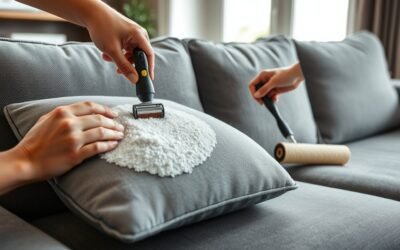
If you’ve ever seen a long pillow tucked across a bed, along a sofa, or beneath someone’s knees, you’ve probably seen a bolster pillow. Its narrow shape makes it useful for targeted support, restorative yoga, lounging, and decoration. The best bolster for you depends on shape, firmness, size, fill, and how you plan to use it.
Quick Answer
A bolster pillow is a long, narrow cushion—usually cylindrical—used for targeted support, restorative yoga, or decoration. Depending on its firmness and size, you can place one behind your lower back, under your knees, between your legs, or along a sofa. The best choice depends on where and how you plan to use it.
Key Takeaways
- Bolster pillows are long, narrow cushions made for targeted support or decoration rather than broad head cushioning.
- Side sleepers may place a suitable pillow between the legs, while back sleepers may use one under the knees to support a more comfortable position.
- Bolsters are also common in restorative yoga, lounging, reading, and home styling.
- Classic bolsters are usually cylindrical, although half-round and rectangular versions are also available.
- There is no universal bolster size or fill; choose dimensions, firmness, cover material, and care requirements around the way you intend to use it.
What Is a Bolster Pillow?
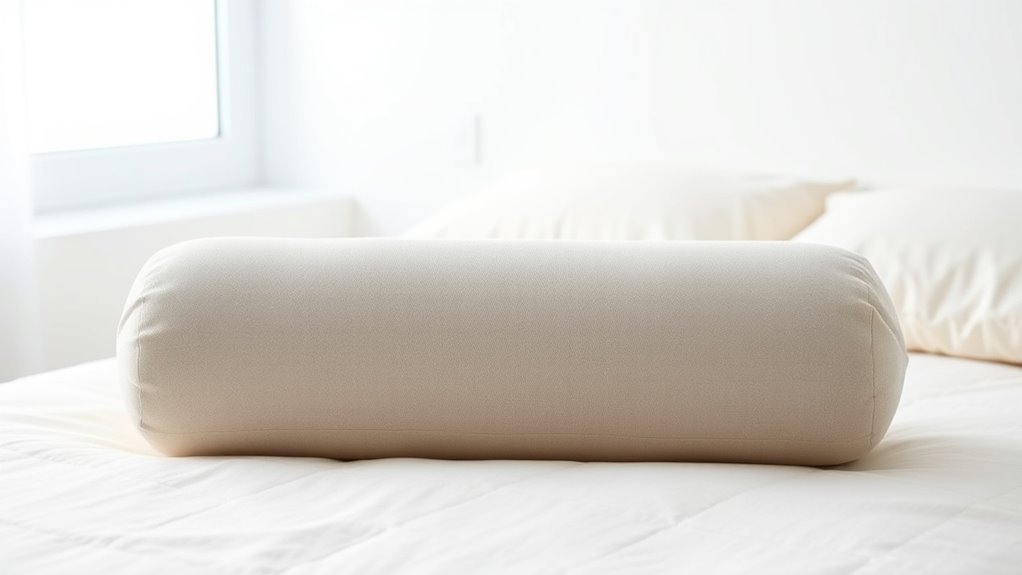
A bolster pillow is a long, narrow cushion that is usually cylindrical and often firmer than a standard bed pillow. Its concentrated shape lets you position support under or behind a particular part of your body instead of cushioning a large area.
You can use one behind your lower back while sitting, under your knees while lying on your back, between your legs while side sleeping, or as a prop during restorative yoga. Bolsters are also used as decorative accents on beds, sofas, daybeds, and benches.
Firmness varies considerably. Cotton, polyester fiber, foam, down or feather blends, and other fills can all be used, but the amount and construction of the fill determine how supportive or compressible the finished pillow feels.
The shape also separates a traditional bolster from an ordinary rectangular bed pillow. Many models have removable covers, making it easier to change the fabric or clean the surface without washing the entire insert.
Bolster Pillow vs. Body Pillow
A bolster and a body pillow can overlap in purpose, but they are not exactly the same. A traditional bolster is usually shorter, narrower, and more structured, while a body pillow is generally longer and designed to support or hug a larger portion of the body.
| Feature | Bolster Pillow | Body Pillow |
| Typical shape | Cylindrical, half-round, or compact rectangular | Long rectangular, U-shaped, C-shaped, or J-shaped |
| Main purpose | Targeted support, yoga, sitting, or decoration | Full-body hugging or support across a larger area |
| Firmness | Often medium to firm | Ranges from soft to firm |
How Bolster Pillows Support Sleep
A bolster can be useful at night when its shape and firmness fit the position you are trying to support. It does not automatically correct posture or treat back pain, but thoughtful pillow placement can reduce strain for some sleepers.
For side sleepers, placing a suitable pillow between the knees or legs can help keep the spine, pelvis, and hips more aligned. Mayo Clinic recommends this type of positioning for people who sleep on their side.
If you sleep on your back, a bolster placed under your knees may help relax the back muscles and maintain the natural curve of the lower back. The same Mayo Clinic guidance recommends a pillow under the knees for this position.
The useful part of a bolster is not the cylinder itself—it is the ability to place firm, targeted support where your sleeping position needs it.
Some people also like to hug a bolster because it gives their arms or legs somewhere comfortable to rest. That can be a pleasant personal preference, but it should not be presented as a guaranteed treatment for anxiety, insomnia, or pain.
Note: If you have persistent, worsening, or unexplained back, hip, neck, or leg pain, pillow positioning should not replace an evaluation from a qualified healthcare professional.
Best Ways to Use a Bolster Pillow
For everyday sitting, you can tuck a moderately firm bolster behind your lower back while reading, working, or relaxing. The goal is to fill an uncomfortable gap without forcing your spine into an exaggerated curve.
For side sleeping, place a bolster or another appropriately sized pillow between your knees or legs if it helps you maintain a comfortable hip and pelvic position. For back sleeping, try placing it beneath your knees rather than directly beneath the lower back.
Bolsters are also widely used as yoga props. North Carolina State University’s restorative yoga guidance describes bolsters, blocks, and blankets as common props used to support seated and reclining positions.
Adults and older children may also enjoy hugging a bolster for comfort, provided the pillow does not create an unsafe sleep environment. As with any pillow, comfort depends on the person, position, firmness, and available sleeping space.
Warning: Do not place a bolster, ordinary pillow, pillow-like toy, or other soft object in an infant’s sleep area. The American Academy of Pediatrics recommends keeping pillows and other soft items out of an infant sleep space because they can increase the risk of suffocation and other sleep-related hazards.
Bolsters also work well as decorative elements. A single cylindrical pillow can soften the lines of a bed or sofa, while matching bolsters at the ends of a daybed can create a more structured, finished look.
- Use one behind your lower back for targeted seated support.
- Place one under your knees when lying on your back if that position feels more comfortable.
- Use one between your legs for side-sleeping support.
- Use a firm yoga bolster to support restorative poses.
- Choose a decorative cover when the pillow will mainly be used on a sofa, daybed, or bed.
Bolster Pillow Shapes and Sizes
Once you know how you want to use a bolster pillow, shape and size become much easier to choose. There is no single standard dimension that works for every sleeper, yoga practice, or piece of furniture.
| Shape | How It Feels | Common Uses |
| Cylindrical | Rounded and concentrated | Knees, lumbar support, yoga, decorative beds and sofas |
| Half-round | Flat on one side and rounded on the other | Stable leg, ankle, neck, or seated support |
| Rectangular yoga bolster | Broad, firm, and stable | Restorative yoga and reclining support |
| U- or J-shaped support pillow | Wraps around more of the body | Usually sold as body or pregnancy support rather than a classic bolster |
Compact models are easier to use behind the lower back or take while traveling. Longer versions can reach across a sofa, bed, or larger portion of the legs. Diameter matters too: a thicker cylinder lifts the body farther, while a slimmer one creates a smaller change in position.
Pro Tip: Measure the space where the bolster will actually sit. For a sofa, check the available seat width and depth. For sleep support, think about how much lift you want under or between your legs. For yoga, choose a size that lets your body rest on the prop without feeling forced into the pose.
Choosing the Right Bolster Pillow Material
What a bolster is filled and covered with affects how much it compresses, how warm it feels, how easy it is to move, and how much maintenance it requires.
| Fill | Typical Feel | Best Suited To |
| Polyester fiber | Light and compressible; firmness depends on fill density | Decor, casual support, easy handling |
| Cotton | Dense and relatively firm when tightly packed | Yoga and structured support |
| Memory foam | Conforming and supportive | Targeted body support where contouring is preferred |
| Down or feather blend | Soft and highly compressible | Decorative use or softer hugging comfort rather than firm positioning |
Cover fabric matters just as much as fill. Cotton and linen can feel breathable, while polyester and blended fabrics may be easier to maintain depending on the weave and care instructions. A removable, washable cover is especially useful when the pillow will be used nightly or placed on the floor during yoga.
Do not assume that a pillow is automatically better for allergies simply because the label says synthetic, bamboo, or “hypoallergenic.” Fill type alone does not guarantee lower dust-mite exposure. If dust mites are a concern, the American College of Allergy, Asthma & Immunology recommends effective allergen-barrier encasings as part of bedroom exposure control.
Cooling claims should also be judged carefully. Some foams, fabrics, or gels are marketed as temperature-regulating, but the actual feel depends on the complete construction, room temperature, bedding, and individual preference.
How to Choose the Right Bolster Pillow
Start with the job you want the pillow to do. A decorative bolster can be softer than one intended to stay firmly beneath your knees, and a yoga bolster generally needs more structure than a pillow you mainly plan to hug.
- Choose the purpose first. Decide whether you need sleep positioning, seated lumbar support, yoga support, travel convenience, or decoration.
- Match the firmness to the job. Firmer construction is usually better when the pillow needs to hold a body part at a consistent height. Softer fills work better when cushioning and comfort matter more than precise positioning.
- Check length and diameter. Larger is not automatically better. A bolster that is too thick can push your body into an uncomfortable position, while one that is too small may provide little useful support.
- Look for a practical cover. Removable covers simplify cleaning and let you change the look without replacing the insert.
- Read the care label before buying. Some inserts can be washed, while others should only be spot-cleaned or aired. Foam and natural fills often need different care from polyester fiber.
Bolster Pillow Care and Cleaning
Check the manufacturer’s care label before washing any bolster. A removable cover can often be cleaned separately, but the insert may require spot cleaning rather than machine washing.
Keep the pillow completely dry before putting the cover back on. Trapped moisture can create odors and shorten the life of the filling. If the bolster is used on the floor for yoga, wash or clean the cover more often when it becomes visibly soiled or after heavy use.
If you are sensitive to dust mites, consider using a washable allergen-barrier encasing beneath the decorative cover. This is more evidence-based than relying on a particular filling material to control allergens.
Frequently Asked Questions
Are all bolster pillows the same size?
No. Bolsters vary widely in length, diameter, shape, and firmness. Compact versions may work well for travel or lumbar support, while longer versions suit beds, sofas, yoga, or support beneath both legs. Choose the dimensions for the intended position rather than looking for one universal standard size.
What is the 2-2-1 pillow rule and how does it work?
The 2-2-1 pillow rule is mainly an interior-styling formula, not a medical sleep-positioning rule. A common version uses two larger pillows, two somewhat smaller pillows, and one accent or lumbar pillow to create a layered arrangement on a sofa or bed. Knoll describes the same basic five-pillow styling principle. You can use a bolster as the final accent pillow, but the arrangement itself is about appearance rather than spinal alignment.
How big should a bolster pillow be?
There is no single correct size. For neck or lumbar use, a smaller diameter may feel more natural. For support under the knees or across a sofa, you may prefer a longer pillow. Measure the space first and choose a diameter that provides support without lifting your body into an uncomfortable angle.
Why are bolsters common in parts of Asia?
There is no single reason shared by all Asian cultures, so it is better not to generalize. Long hugging or sleeping pillows are familiar in several parts of South and Southeast Asia and have different local names and traditions. For example, Malaysia’s Dewan Bahasa dan Pustaka lists bantal peluk as a Malay term for a bolster or long hugging pillow. Depending on the household, a bolster may be used for sleeping, hugging, back support, or decoration.
Is a bolster pillow the same as a body pillow?
Not usually. A classic bolster is relatively narrow and structured, often cylindrical, while a body pillow is generally longer and designed to support or hug a larger portion of the body. U-shaped and J-shaped pillows are more commonly sold as body or pregnancy pillows than as traditional bolsters.
Can a baby sleep with a bolster pillow?
No bolster or other pillow should be placed in an infant’s sleep area. The American Academy of Pediatrics recommends keeping pillows, pillow-like toys, loose bedding, and other soft objects out of the infant sleep space to reduce the risk of suffocation and other sleep-related hazards.
Conclusion
A bolster pillow can be useful for targeted sleep positioning, sitting, restorative yoga, travel, or home decor. The most important factors are not simply whether the pillow is cylindrical or attractive, but whether its size, firmness, fill, and cover suit the way you plan to use it. Choose enough support to feel comfortable without forcing your body into an awkward position, follow the care instructions, and use appropriate safe-sleep practices around infants.
Sources
- Mayo Clinic — Sleeping Positions That Reduce Back Pain — supports pillow placement between the legs for side sleepers and under the knees for back sleepers.
- American Academy of Pediatrics — Safe Sleep — supports keeping pillows and other soft objects out of an infant’s sleep space.
- American College of Allergy, Asthma & Immunology — Home Environment Control — supports allergen-barrier encasings and practical dust-mite exposure control.
- North Carolina State University — Restorative Yoga — supports the use of bolsters and other props in supported restorative poses.
- Dewan Bahasa dan Pustaka — Bolster Dictionary Entry — supports the definition of a bolster as a long, narrow pillow and the Malay term bantal peluk.
- Knoll — Pillows & Decor — supports the 2-2-1 concept as a decorative pillow-arrangement principle rather than a clinical sleep rule.