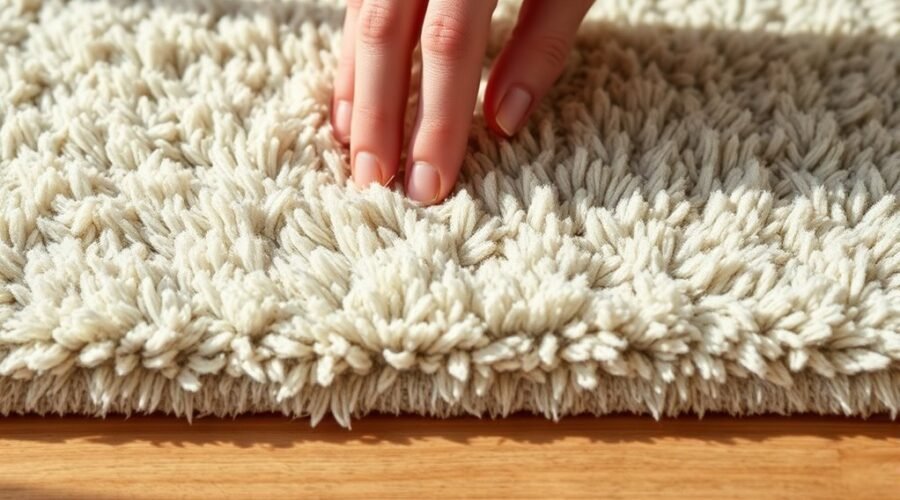
If you’ve ever stepped from a cloud-soft rug onto a flatter one, you know the difference isn’t just visual. Rug pile height is the distance from a rug’s backing to the top of its surface fibers, and it affects how the rug feels, cleans, wears, and works with furniture. The best choice depends on comfort, traffic, maintenance, door clearance, and how you actually use the room.
Quick Answer
Rug pile height is the distance from the rug’s backing to the top of its fibers. Lower piles are easier to vacuum and suit busy rooms, dining areas, doors, and rolling chairs; taller piles feel softer and warmer but usually need more careful cleaning. Always compare the actual measurement, not just “low,” “medium,” or “high” labels.
Key Takeaways
- Pile height measures the raised fibers from the backing or foundation to the fiber tips; it is not the same as the rug’s total thickness.
- As a practical shopping guide, under about 0.25 inch is often called low pile, 0.25 to 0.5 inch medium pile, and over 0.5 inch high pile, but retailers do not use one universal classification.
- Low pile is usually easier to vacuum and works well in busy areas, under dining chairs, near doors, and beneath rolling office chairs.
- High pile provides more cushioning and texture but may require different vacuum settings and can interfere with doors, wheels, or some furniture.
- Pile height affects performance, but fiber, density, twist, weave, backing, and overall construction matter too.
What Is Rug Pile Height?
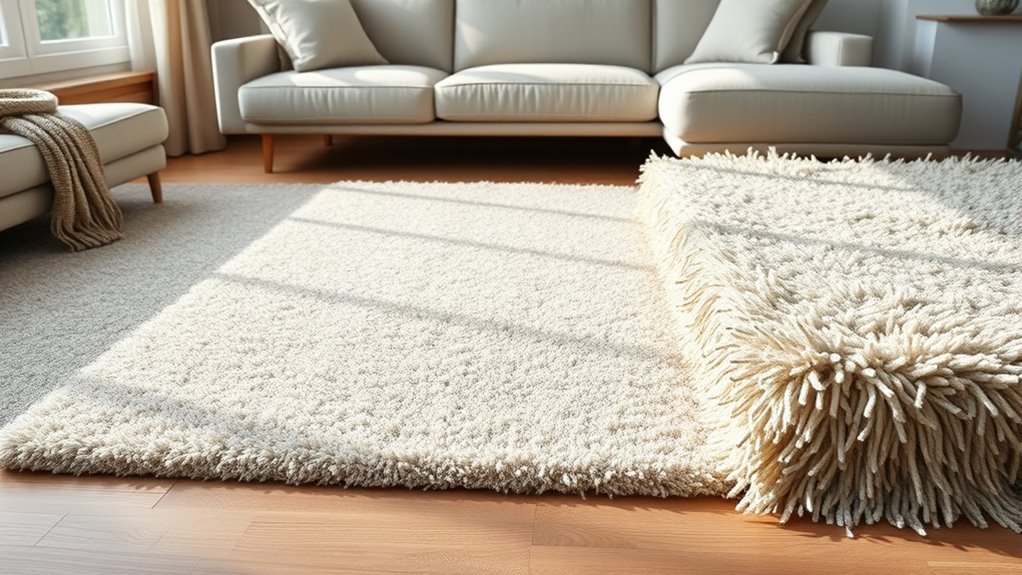
Rug pile height is the vertical length of the raised surface fibers, measured from the rug’s backing or foundation to the fiber tips. It is one of several construction details that influence texture, cushioning, cleaning, and how a rug performs in daily use.
For easy comparison, this guide uses three practical ranges:
| Pile Type | Practical Range | Typical Feel | Common Uses |
| Low pile | Under about 0.25 in. (6 mm) | Firm, flat, streamlined | Entries, hallways, dining rooms, offices |
| Medium pile | About 0.25–0.5 in. (6–13 mm) | Moderately cushioned | Living rooms, bedrooms, general-use spaces |
| High pile | Over about 0.5 in. (13 mm) | Plush, deep, cushioned | Bedrooms, lounges, low-traffic comfort areas |
Note: These ranges are useful shopping shorthand, not universal industry definitions. Brands and retailers classify pile differently, so compare the actual inch or millimeter measurement when choosing between rugs.
A taller pile often feels softer because there is more fiber above the backing, while a shorter pile generally feels firmer. However, height alone does not determine softness or quality. A dense, well-made low- or medium-pile wool rug can feel substantial even though its fibers are relatively short.
Pile construction can also influence acoustics and insulation. Research on carpet construction has found that pile height can affect sound absorption and thermal resistance, although density, backing, fiber, and other construction variables matter as well. Research published in The Journal of the Textile Institute found pile height to be an important variable in the handmade carpets tested.
Low vs High Rug Pile Height
The choice between low and high pile is less about which one is universally “better” and more about what the room needs.
Low-pile rugs have shorter fibers and a flatter surface. They are typically easier to vacuum, allow dining chairs and wheels to move with less resistance, and are less likely to interfere with a swinging door. This makes them practical for entryways, dining rooms, hallways, kitchens, and home offices.
High-pile rugs have longer fibers that create more texture and cushioning. They can make a bedroom or quiet lounge feel warmer and more inviting, but crumbs, hair, and small debris may settle deeper into the fibers. Some high-pile and shag constructions also need special vacuuming techniques.
The Carpet and Rug Institute notes that shorter pile generally performs better in heavy-traffic carpet applications, but it also emphasizes that construction matters. Density, fiber characteristics, twist, and other design factors can influence durability.
Pile Height vs Rug Thickness, Density, and Construction
Pile height is easy to see on a product page, but it should not be the only specification you compare.
- Pile height measures only the raised fibers above the backing.
- Total rug thickness may include pile, foundation, backing, attached cushioning, or other layers.
- Pile density describes how closely the fibers or tufts are packed.
- Fiber affects texture, resilience, cleaning requirements, moisture behavior, and stain performance.
- Construction includes factors such as cut pile, loop pile, hand-knotting, tufting, weaving, and fiber twist.
This is why two rugs with the same 0.4-inch pile can feel completely different. One may be dense and firm, while another feels looser and softer.
Pile height also does not automatically determine stain resistance. A low-pile rug may make crumbs and surface dirt easier to reach, but the rug’s fiber, finish, color, construction, and care instructions have a larger role in how it responds to spills and stains.
How Rug Pile Height Affects Comfort and Durability
Pile height changes both the feel underfoot and the kind of wear a rug is likely to experience.
High-pile rugs provide deeper cushioning and a plush surface that works well where comfort matters most. Taller fibers can also contribute to insulation and sound absorption, but they may flatten, crush, or show pressure marks where furniture and repeated traffic concentrate.
Low-pile rugs provide a firmer surface and usually make routine vacuuming simpler. Shorter fibers are particularly useful where shoes, chairs, pets, or frequent foot traffic put more demands on the floor covering.
Medium-pile rugs sit between those two extremes. They can provide noticeable cushioning while remaining manageable for everyday cleaning, which is why they are common in living rooms and bedrooms.
Do not judge durability by height alone. A dense, tightly constructed rug may outperform a loosely constructed rug even when their pile heights are similar.
Best Rug Pile Height by Room
Matching pile height to the way a room functions is usually more useful than choosing based on appearance alone.
| Room | Good Starting Point | Why |
| Living room | Low to medium | Balances comfort, traffic tolerance, and routine cleaning. |
| Bedroom | Medium to high | Traffic is usually lighter, so extra softness is easier to accommodate. |
| Dining room | Low | Chair legs move more easily and crumbs are easier to reach. |
| Hallway or entryway | Low | Handles repeated traffic while keeping a lower profile near doors. |
| Home office with rolling chair | Low | A firmer surface creates less resistance for casters. |
| Home office with stationary seating | Low to medium | You can add more cushioning when chair movement is not an issue. |
For homes with children or pets, a low-to-medium pile can also simplify frequent vacuuming and cleanup. The best choice still depends on the fiber and manufacturer’s care instructions.
Doors, Furniture, and Mobility
Before buying a thick rug, check more than the room dimensions. Measure the clearance under any door that will swing across the rug. Remember that the rug’s total thickness, including backing and any rug pad, determines whether the door clears it.
Furniture matters too. Deep pile can allow narrow furniture legs to sink farther into the surface and can make dining chairs or office-chair casters harder to move. If furniture will be repositioned frequently, a lower pile is generally more practical.
Mobility devices deserve similar consideration. The 2010 ADA Standards for Accessible Design limit permanently installed carpet pile on applicable accessible routes to 1/2 inch and note that lower pile reduces wheelchair roll resistance. Those standards do not automatically make a residential area rug an ADA-regulated surface, but the underlying mobility principle is useful when selecting rugs for wheelchair or walker users.
Cleaning and Maintenance by Pile Height
Routine maintenance becomes more important as fibers get longer because dirt and hair can settle farther below the visible surface.
For low- and medium-pile rugs, regular vacuuming is usually straightforward, although you should still follow the rug manufacturer’s instructions for brush height, suction, spot cleaning, and professional cleaning.
For high-pile, shag, cabled, or thick-loop rugs, check the care label before using a rotating brush roll. The Carpet and Rug Institute’s high-pile vacuum guidance warns that brush rollers can cause irreversible texture changes in some high-pile carpets. A suction-only setting or an appropriately adjusted brush may be recommended for certain constructions.
Warning: Do not assume the strongest vacuum setting is safest for a plush or shag rug. Check the rug and vacuum manufacturer’s instructions first, especially if the rug has long, loose, looped, or delicate fibers.
For dust control, the U.S. Environmental Protection Agency recommends routinely vacuuming carpets and upholstered furniture and notes that HEPA filtration can help keep some collected dust from escaping back into the room.
Pile height alone should not be treated as an allergy solution. Cleaning frequency, moisture control, filtration, the rug’s construction, and the rest of the indoor environment all matter.
How to Measure Rug Pile Height
You can estimate rug pile height at home with a rigid ruler, but keep pile height separate from total rug thickness.
- Find the top of the backing or foundation. Measure the fibers above that point rather than from the underside of a thick backing.
- Place the ruler vertically beside the pile. Avoid pressing the fibers down.
- Read to the fiber tips. Record the measurement in inches or millimeters.
- Check several areas. Worn areas may be flatter than less-used sections.
- For shag rugs, gently straighten a representative strand and measure its approximate length from the foundation to its tip.
Flatweave rugs do not have the same raised cut-or-loop pile, so there may be no pile height to measure. They still have an overall thickness, which matters for door clearance and furniture placement.
Pro Tip: If you are buying online, use the manufacturer’s stated pile height when available and compare it with the total thickness specification. If only one measurement is listed, check whether it includes the backing before using it to plan door or furniture clearance.
A home ruler measurement is an approximation rather than a laboratory test. The active ASTM D6859-18(2024) standard uses a specified measuring instrument and pressure foot for applicable finished level-pile floor coverings.
Frequently Asked Questions
What Is a Comfortable Rug Pile Height?
For many rooms, a medium pile around 0.25 to 0.5 inch offers a comfortable balance of cushioning and practical maintenance. If softness is the main goal, a taller pile may feel better underfoot. If easy vacuuming, chair movement, or door clearance matters more, choose a lower pile. Density and fiber also affect how comfortable a rug feels.
What Is a Good Carpet Pile Height?
There is no single best pile height for every carpet or rug. Around 0.25 to 0.5 inch is a versatile range for many residential spaces, while shorter pile is useful in busy rooms and taller pile suits quieter spaces where cushioning matters more. Also compare density, fiber, construction, cleaning requirements, flooring compatibility, cost, color, and expected traffic.
Are High Pile Rugs Better?
High-pile rugs are better when your priority is plushness, cushioning, texture, and a cozy feel. They are not automatically better for durability or maintenance. Longer fibers can require more careful vacuuming and may be less convenient around doors, rolling chairs, heavy traffic, or frequent spills. Choose high pile where its comfort benefits match the way the room is used.
What Is Better, Low or High Pile Carpet?
Low pile is generally more practical for heavy traffic, frequent vacuuming, dining chairs, doors, and wheeled furniture. High pile is usually better when softness and cushioning are more important than easy maintenance. Neither height guarantees quality or durability on its own; fiber, density, twist, weave, backing, and overall construction also influence performance.
Is a 0.5-Inch Rug Medium or High Pile?
It depends on the seller’s classification. In the practical ranges used in this guide, 0.5 inch sits at the upper end of medium pile, with anything above it treated as high pile. Other retailers use different cutoffs, so the actual 0.5-inch measurement is more useful than the category name when comparing products.
What Pile Height Is Best Under a Dining Table or Office Chair?
A low-pile rug is usually the easiest choice for both. Under a dining table, shorter fibers make chair movement and crumb cleanup simpler. Under a rolling office chair, a firm low pile creates less wheel resistance than a plush surface. Check the rug’s total thickness and backing as well, especially where doors or casters need clearance.
Conclusion
Choosing the right rug pile height comes down to matching the rug to the room. Low pile offers a flatter, easy-to-maintain surface for busy areas, dining spaces, doors, and rolling chairs. Medium pile adds more cushioning without becoming extremely plush, while high pile provides deeper softness for bedrooms and low-traffic spaces.
Do not shop by the low-, medium-, or high-pile label alone. Check the actual measurement, total rug thickness, density, fiber, construction, cleaning instructions, and available clearance. Those details will tell you far more about how the rug will perform in everyday life.
Sources
- Carpet and Rug Institute — Frequently Asked Questions — supports guidance on carpet construction, durability, traffic, and shorter pile.
- Carpet and Rug Institute — Vacuums for High Pile Carpet — supports high-pile and shag vacuum-care guidance.
- ASTM International — D6859-18(2024) — current formal test method for pile thickness of applicable level-pile floor coverings.
- U.S. Department of Justice — 2010 ADA Standards for Accessible Design — supports pile-height and rolling-resistance accessibility context.
- U.S. Environmental Protection Agency — Sources of Indoor Particulate Matter — supports routine vacuuming and HEPA-filtration guidance for indoor dust.
- The Journal of the Textile Institute — Effects of Weaving Parameters on Acoustic and Thermal Insulation Properties of Handmade Carpets — supports the relationship between carpet construction, pile height, sound absorption, and thermal resistance.