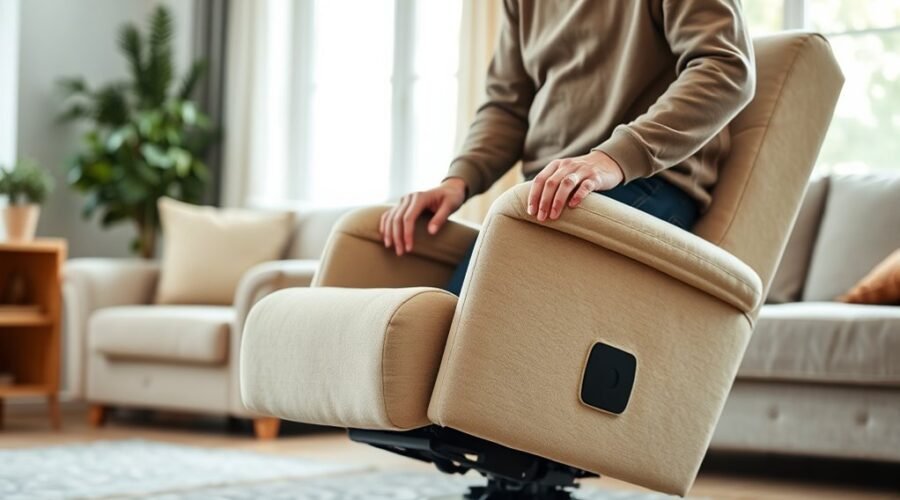
If standing up from a regular recliner takes more effort than it used to, a lift chair can provide powered assistance during that transition. It raises and tilts the seat forward so you do not have to produce the entire sit-to-stand movement on your own. That can make transfers easier and more controlled, although a lift chair should not be treated as a stand-alone fall-prevention device or a substitute for medical or rehabilitation care.
Quick Answer
A lift chair is a motorized recliner that raises and tilts its seat to help you move between sitting and standing. It can reduce the physical effort required for a transfer and may be useful for people with mobility limitations, arthritis, weakness, or certain recovery needs. Fit, positioning, safety, and medical needs still matter.
Key Takeaways
- A lift chair combines a recliner with a powered seat-lift mechanism that assists with sitting down and standing up.
- It may make transfers easier for people with weakness, joint problems, or mobility limitations, but it is not proven to prevent every fall.
- Two-position, three-position, and infinite-position chairs provide different levels of recline and independent adjustment.
- Correct seat dimensions, weight capacity, room clearance, controls, and backup power are more important than optional comfort features.
- Leg elevation may help some types of swelling, but edema can have serious causes and should not be self-treated solely with a recliner.
- Under Original Medicare, qualifying coverage concerns the seat-lift mechanism and requires specific medical criteria; the entire furniture cost is not automatically covered.
What Is a Lift Chair?
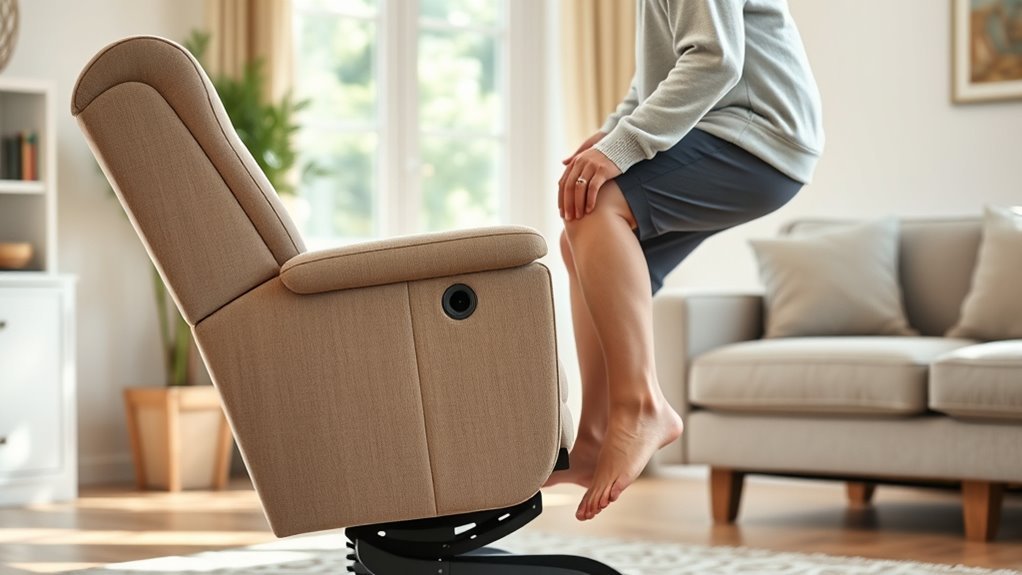
A lift chair, also called a power lift recliner, looks much like a standard reclining chair but includes an electrically powered lift mechanism. When you press the hand control, the chair can rise and tilt forward to help move you toward a standing position. It can also lower you gradually when you sit down.
This type of assistance can be useful when pushing up from a conventional chair is difficult because of limited leg strength, painful joints, mobility limitations, or certain recovery needs. Many models use a wired or wireless remote control and also provide ordinary reclining positions for reading, resting, or elevating the legs.
The lifting function is different from simply choosing a taller chair. Instead of staying at a fixed height, the mechanism actively raises the user during the transfer.
Note: A lift chair is an assistive device. If you are suddenly having difficulty standing, repeatedly losing your balance, or becoming weaker, ask a healthcare professional about the underlying cause rather than relying only on furniture changes.
How a Lift Chair Helps You Stand
When you are ready to stand, the chair’s motor raises the seat and usually tilts it forward. That brings your body closer to an upright transfer position and supplies part of the movement that your legs, hips, and arms would otherwise have to produce.
A lift chair assists the sit-to-stand movement; it does not replace the strength, balance, or walking ability needed once you are on your feet.
For someone who can safely bear weight and walk after standing, that powered assistance may make the transfer feel smoother and less demanding. It can also reduce the need to push aggressively through the armrests.
That does not mean a lift chair automatically prevents falls. Balance problems can come from medications, vision changes, muscle weakness, blood-pressure changes, neurological conditions, hazards in the home, and many other causes. The chair addresses only one part of the transfer.
Lift Chair vs. Recliner: Key Differences
Both lift chairs and standard recliners provide comfortable seating and a footrest, but their main functions are different.
| Feature | Lift Chair | Standard Recliner |
|---|---|---|
| Standing assistance | Raises and tilts the seat toward standing | No powered standing assistance |
| Recline | Usually powered; range depends on model | Manual or powered, depending on model |
| Independent positioning | Available on many multi-motor models | Usually more limited |
| Power requirement | Required for the lifting mechanism | Not required on manual recliners |
| Medicare | Seat-lift mechanism may qualify under specific rules | Ordinary furniture is not covered as DME |
If your main problem is difficulty moving between sitting and standing, the lift function is the meaningful difference. If you only want a comfortable place to recline, a conventional recliner may be sufficient.
Lift Chair Positions Explained
Position terminology varies somewhat between manufacturers, but you will commonly see two-position, three-position, and infinite-position lift chairs.
- Two-position: Provides upright seating plus a moderate TV-style recline. It is generally intended for reading, conversation, and everyday sitting rather than deep recline.
- Three-position: Reclines farther and is better suited to resting or napping. On traditional single-motor designs, the back and leg support usually move together.
- Infinite-position: Uses independent adjustment of major chair sections, allowing the backrest and footrest to be positioned separately on many models.
Some infinite-position models also advertise zero-gravity, lay-flat, or other specialized positions. Manufacturer terminology matters. For example, Pride Mobility’s position guide describes its zero-gravity position as placing the thighs and lower legs higher than the torso.
Note: “Zero gravity” does not automatically mean that every model places your feet above your heart. If a clinician specifically wants above-heart leg elevation, verify the actual chair geometry before buying.
How Lift Chairs Can Support Safer Transfers
A lift chair can provide a slower, powered transition between sitting and standing instead of requiring you to force yourself upward from a low seat. For an appropriately selected user, that may make the transfer more controlled.
It is important not to turn that practical benefit into a promise that the chair will prevent falls. According to the CDC’s September 2026 older-adult fall data, more than one in four older people falls each year, and falls have many contributing causes.
CDC reports about 4.5 million emergency-department visits related to falls among older people each year. A lift chair can assist one transfer task, but broader fall prevention may require strength, balance, medication, vision, footwear, and home-safety assessment.
Fall Risk Reduction
A lift chair may reduce the amount of effort required to rise, but evidence about falls should be described carefully. The chair itself is not a guarantee against imbalance or injury.
You can make lift-chair use safer by:
- keeping your feet in a stable position before activating the lift;
- waiting until you are balanced before stepping away;
- keeping the floor around the chair clear of cords, rugs, and clutter;
- using any walker, cane, or other mobility device according to your clinician’s instructions; and
- asking for supervised practice if you are uncertain about transferring safely.
Stable Standing Support
As the seat rises, it supports part of your body weight and brings you closer to standing height. That can be helpful if weakness, stiffness, or pain makes a conventional sit-to-stand transfer difficult.
However, you still need enough control to remain stable once the chair has lifted you. If you cannot safely bear weight, maintain balance, or take the next step after standing, a different transfer aid or hands-on assistance may be more appropriate.
Warning: Keep children, pets, blankets, clothing, oxygen tubing, electrical cords, and your hands and feet away from the chair’s moving lift, scissor, and footrest mechanisms. Never place an object underneath the chair to stop or support its movement.
Who Benefits Most From a Lift Chair?
A lift chair may be useful when standing from an ordinary chair is difficult but you can still participate safely in the transfer and remain mobile once upright.
People who may benefit include those who:
- have arthritis or painful joints that make repeated sit-to-stand movements difficult;
- have muscle weakness or certain neurological mobility limitations;
- are recovering from surgery or injury and have been advised to limit transfer effort;
- need a higher, more controlled transfer surface; or
- currently rely on substantial arm pushing to get out of a chair.
For caregivers, powered lifting may reduce how much manual assistance is needed in some situations. It does not eliminate the need for appropriate transfer techniques or supervision when the user requires them.
A physical therapist, occupational therapist, physician, or other qualified clinician can help determine whether a lift chair matches your strength, balance, walking ability, home environment, and rehabilitation goals.
Lift Chair Features for Comfort
Once the lift function meets your mobility needs, compare comfort features. More features are not automatically better; the most useful chair is one that fits your body and is easy for you to operate.
| Feature | Why It Matters |
|---|---|
| Seat height, width, and depth | Determines body fit and how well your feet and legs are supported |
| Recline range | Matches reading, resting, napping, or positioning needs |
| Independent back and footrest control | Allows more customized positioning |
| Simple hand control | Important if hand strength, dexterity, vision, or memory is limited |
| Battery backup | Can help return the chair from a reclined position during certain power failures; availability varies by model |
| Heat or massage | Optional comfort features, not substitutes for medical treatment |
| Upholstery | Affects cleaning, temperature comfort, friction, and durability |
How Lift Chairs May Help With Edema
Leg elevation can help some people manage swelling, but the benefit comes from the position of the legs, not from the lift chair itself. MedlinePlus guidance on foot, leg, and ankle swelling notes that raising the legs above the heart while lying down may help reduce swelling in appropriate situations.
The cause matters. Edema can be associated with prolonged sitting, medicines, vein problems, pregnancy, injury, heart failure, kidney disease, liver disease, blood clots, and other conditions. A chair should not be used to self-diagnose or treat the underlying problem.
Leg Elevation Benefits
If your healthcare professional recommends elevation, a lift chair with sufficient leg positioning may make it easier to maintain that posture comfortably.
- Elevation may reduce some dependent swelling in the lower legs.
- Independent footrest adjustment can make positioning easier.
- A comfortable position may make it easier to follow an elevation plan for the recommended amount of time.
Do not assume that a simple raised footrest is enough for every condition. The required height and duration should match your clinician’s advice.
Feet Above Heart
For some types of lower-leg swelling, health guidance recommends raising the legs above heart level. Not every lift chair can achieve that position, even if the manufacturer calls a setting “zero gravity.”
If above-heart elevation is important, test the chair or confirm its specifications while considering your own body proportions. A position that works for one person may not place another person’s feet at the same relative height.
Swelling Relief Support
A chair that allows appropriate leg elevation can be a convenient part of a swelling-management plan, but it should be combined with whatever treatment your healthcare professional recommends for the underlying cause.
Warning: Seek prompt medical advice for unexplained swelling in one leg, severe or suddenly worsening swelling, redness or warmth, or swelling associated with other concerning symptoms. Emergency symptoms such as chest pain, coughing up blood, faintness, or shortness of breath require urgent medical attention.
How to Choose the Right Lift Chair Size
A chair can have excellent features and still be a poor choice if it does not fit you. Check the exact manufacturer sizing chart rather than buying solely by labels such as small, medium, or large.
- Seat width: You should have enough room to sit comfortably without excessive side-to-side movement.
- Seat depth: Your back should be supported without the front edge of the seat pressing hard behind your knees.
- Seat-to-floor height: In the normal seated position, your feet should be well supported rather than dangling.
- Back height: Make sure your head, shoulders, and torso receive the support you expect when reclining.
- Weight capacity: Follow the published capacity for the exact chair and size you are buying. Do not rely on a generic capacity range.
Pro Tip: If possible, sit in the exact chair or a correctly sized version before buying. Test the normal seated position, full lift, full recline, remote control, footrest support, and how easily you can move away from the chair after standing.
Lift Chair Safety Tips
Because a lift chair contains powered moving parts, setup and daily habits matter.
- Keep the full path of the footrest, backrest, and lifting base clear.
- Do not allow children or pets underneath or immediately around the chair while it is moving.
- Route electrical cords where the mechanism cannot pinch them and where they will not become a trip hazard.
- Keep the transformer and electrical components dry and properly ventilated.
- Do not exceed the exact model’s published weight limit.
- Do not modify the frame, motor, controls, or safety components.
- Confirm how the model behaves during a power failure and whether it includes or supports backup power.
- Have unusual noises, jerky motion, damaged wiring, or unreliable controls checked before continued use.
If your medical condition affects judgment, balance, movement control, or your ability to operate the remote, supervised use may be safer.
What to Check Before You Buy
Before ordering, make sure the lift chair works for both your body and your room.
- Exact weight rating: Confirm the capacity for the exact model and size.
- Seat dimensions: Compare seat width, depth, and height with the intended user.
- Recline type: Decide whether you need a simple TV recline, deeper three-position recline, or independently adjustable infinite positioning.
- Room clearance: Measure behind, beside, and in front of the chair in both its fully reclined and fully lifted positions.
- Walking space: Make sure you can safely step away with any cane, walker, or caregiver assistance you normally use.
- Controls: Check button size, labeling, hand strength requirements, and whether the remote can be reached easily.
- Power backup: Determine whether the chair can return you to a usable position during an outage.
- Service and warranty: Check who repairs the motor, electronics, frame, and upholstery in your area.
- Delivery: Confirm doorway dimensions, stairs, assembly, and removal of packaging before purchase.
If the chair is being considered because of a new medical problem, significant weakness, surgery, repeated falls, or difficult transfers, involve a healthcare or rehabilitation professional before choosing the final configuration.
Medicare Coverage for Lift Chairs
Original Medicare does not simply pay for any powered recliner because it is easier to stand from. CMS treats the qualifying seat-lift mechanism as the DME component and applies specific medical-necessity criteria.
Under the current CMS Seat Lift Mechanisms Local Coverage Determination, all of the following must be met for the mechanism to qualify:
- You must have severe arthritis of the hip or knee or a severe neuromuscular disease.
- The seat-lift mechanism must be part of your treating practitioner’s course of treatment and prescribed to improve your condition or arrest or slow deterioration.
- You must be completely incapable of standing from a regular armchair or another chair in your home; simply having difficulty rising from a low chair is not enough under the policy.
- Once standing, you must have the ability to walk.
CMS also states that appropriate therapeutic approaches, such as medication or physical therapy when applicable, must have been tried and failed to enable the transfer. Documentation requirements still apply.
Note: The old CMS Certificate of Medical Necessity for seat-lift mechanisms is no longer required for services on or after January 1, 2023. Current claims rely on the applicable order, medical records, coverage criteria, and supplier documentation.
CMS coding guidance also separates the seat-lift mechanism from the chair itself when they are supplied as one complete unit. See the current CMS Seat Lift Mechanisms Policy Article for current billing details.
For covered DME generally, Medicare.gov states that after the Part B deductible, you typically pay 20% of the Medicare-approved amount when the supplier accepts assignment. Your actual out-of-pocket cost can vary, and this does not mean Medicare pays 80% of the retail price of an entire lift recliner.
Is a Lift Chair Worth It?
A lift chair can be worth considering when the lifting function solves a real daily transfer problem and the chair fits your body, room, and abilities.
The strongest reasons to consider one are practical:
- you regularly struggle to rise from an appropriately sized chair;
- powered assistance makes the transfer easier to control;
- you can safely stand and continue walking once lifted;
- the reclining positions meet a genuine comfort or positioning need; and
- the chair reduces the amount of physical assistance you normally require without creating new safety problems.
A lift chair is less useful if poor fit, severe balance problems, inability to bear weight, unsafe walking, or another medical issue remains the main obstacle. In those situations, a clinician may recommend a different transfer strategy or mobility aid.
Frequently Asked Questions
What Are the Disadvantages of Lift Chairs?
Lift chairs cost more than basic recliners, require electricity, contain moving parts that can create pinch or entrapment hazards, and need enough room to lift and recline safely. A poorly fitted chair can also be uncomfortable or make transfers awkward. Mechanical repairs, battery replacement, upholstery wear, and power outages are additional considerations.
Will Medicare Pay for a Power Lift Chair?
Original Medicare may cover a qualifying seat-lift mechanism when CMS medical criteria and documentation requirements are met. Coverage is not simply based on difficulty standing, and Medicare does not automatically pay the full cost of the recliner furniture. After the Part B deductible, covered DME generally leaves the beneficiary responsible for 20% of the Medicare-approved amount when assignment applies.
Do Physical Therapists Recommend Lift Chairs?
A physical therapist or occupational therapist may recommend a lift chair for a particular person after assessing strength, balance, transfer ability, walking, pain, home setup, and rehabilitation goals. It is not a universal recommendation. In some cases, therapy, a different chair height, transfer training, or another assistive device may be more appropriate.
What Is the Best Lift Chair for Seniors?
There is no single best lift chair for every older adult. Start with correct seat height, width, depth, back support, weight rating, controls, and room clearance. Then choose the amount of recline and independent adjustment you will actually use. Heat, massage, USB ports, and decorative upholstery should come after fit, transfer safety, and reliable operation.
Do Lift Chairs Prevent Falls?
A lift chair can make the sit-to-stand transfer easier and more controlled for an appropriate user, but it should not be described as a guaranteed fall-prevention device. Falls have many causes, including balance and strength problems, medication effects, vision, footwear, blood-pressure changes, and environmental hazards.
Can a Lift Chair Help With Swollen Legs or Edema?
A lift chair may make leg elevation easier, and elevation can help some types of lower-leg swelling. It does not treat every cause of edema. Unexplained, severe, sudden, one-sided, red, hot, or painful swelling should be medically evaluated, especially when accompanied by breathing or chest symptoms.
Conclusion
A lift chair can make the transition between sitting and standing easier by raising and tilting the seat instead of leaving you to generate the entire movement yourself. The best choice is not simply the chair with the most motors or comfort extras. It is one that fits your body, provides the positioning you actually need, operates safely in your room, and matches your ability to stand and walk.
If you are buying one because of major weakness, repeated falls, surgery, severe arthritis, neurological disease, or unexplained swelling, involve your healthcare or rehabilitation team. And if Medicare coverage matters, check the current CMS rules before purchasing because eligibility applies to the seat-lift mechanism under specific criteria rather than automatically covering the complete recliner.
Sources
- CMS — Seat Lift Mechanisms LCD L33801 — current Medicare medical-necessity criteria for seat-lift mechanisms.
- CMS — Seat Lift Mechanisms Policy Article A52518 — documentation and coding rules, including treatment of the mechanism and chair.
- Medicare.gov — Durable Medical Equipment Coverage — Part B DME cost and supplier-assignment information.
- CDC — Facts About Older Adult Falls — current fall statistics and risk context.
- MedlinePlus — Foot, Leg, and Ankle Swelling — causes of swelling and leg-elevation guidance.
- Pride Mobility — Power Lift Recliner Position Guide — manufacturer terminology for two-position, three-position, infinite, and zero-gravity configurations.