The beef tallow vs butter choice matters on a carnivore diet because both are animal fats that many people cook with every day. They look similar in a pan, yet they behave differently under heat and sit differently on a nutrition label. Here is a fair comparison of smoke point, flavor, composition, and heart-health context.
Quick Answer
Beef tallow handles high heat better, with a smoke point commonly cited around 375 to 420°F, while butter begins to smoke near 300°F. Butter is about 80 percent fat and adds creamy flavor, while tallow is nearly pure fat with a savory, beefy taste. Both are high in saturated fat, so portion size still matters.
Key Takeaways
- Tallow suits searing, frying, and roasting; butter suits gentle sautéing, sauces, and finishing.
- Butter contains water and milk solids, which can burn and may bother people sensitive to dairy.
- Both fats are roughly half saturated fat, so neither is a free pass for unlimited intake.
- Tallow has been reported to raise LDL less than butter in small studies, but plant oils did better.
- Many carnivore eaters keep both on hand and use each for what it does best.
Smoke Point and Cooking Performance
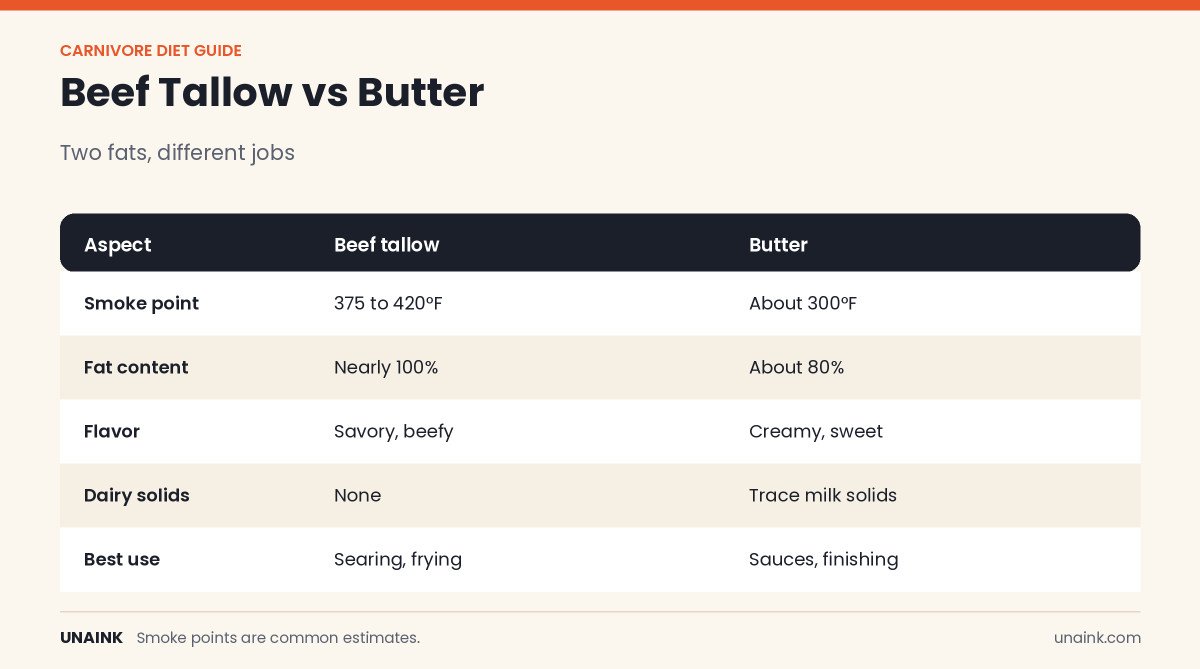
Butter is roughly 80 percent fat, with the rest mostly water and milk solids. Those solids brown and then scorch around 300°F, which is why butter burns when you try to sear a steak at full heat. Tallow has almost no water or solids, so it tolerates temperatures up to roughly 420°F.
Smoke point is a guide, not a cliff. Fats degrade gradually, and a fat that smokes heavily produces off flavors and irritating fumes. For high-heat jobs, use tallow. For low-to-medium heat, butter is fine, and adding it near the end of cooking keeps its flavor intact.
Beef Tallow vs Butter Nutrition
One tablespoon of tallow has about 115 calories and 12.8 g of fat, according to USDA data. About 6.4 g of that is saturated, roughly 5.4 g monounsaturated, and about 0.5 g polyunsaturated. Butter has a similar saturated share, and a tablespoon contributes around 7 g of saturated fat.
| Feature | Beef tallow | Butter |
|---|---|---|
| Fat content | Nearly 100 percent | About 80 percent |
| Water and milk solids | Almost none | Around 20 percent |
| Saturated fat per tablespoon | About 6.4 g | About 7 g |
| Common smoke point | 375 to 420°F | About 300°F |
| Dairy proteins and lactose | None | Trace amounts |
| Best for | Searing, frying, roasting | Sautéing, sauces, finishing |
Neither fat is a meaningful source of vitamins in the amounts you cook with. Butter from grass-fed cows can carry more vitamin A and K2 than tallow, though the quantity per tablespoon is small.
Flavor and Texture
Butter tastes creamy and slightly sweet. Tallow is savory with a gentle beef note, and it gives fried foods a crisp crust. Cooks often use tallow for eggs, burgers, and steaks, then finish with a pat of butter for richness.
If you want to make your own, our guide to how to render beef tallow walks through the process, and what beef tallow is explains the basics.
Heart Health Context
The American Heart Association recommends keeping saturated fat below 6 percent of calories, about 13 g on a 2,000 calorie diet, and lists both butter and beef fat as sources. One tablespoon of tallow can use around half of that limit.
A small three-week study of 10 men found tallow lowered LDL cholesterol compared with butter, but raised it compared with olive oil. Experts quoted by AARP note that evidence for treating either fat as a health food is weak. People with high LDL, heart disease, or a family history should ask a clinician how much animal fat suits them.
Who Might Prefer Which
- Choose tallow if you cook at high heat, avoid dairy, or want a neutral cooking fat that stores well.
- Choose butter if you tolerate dairy and want flavor for low-heat cooking, sauces, and eggs.
- Consider ghee if butter bothers you but you still want a dairy flavor, since it removes most milk solids.
- Rotate both if you like variety, which also spreads out your fat sources.
If dairy causes digestive trouble, see how stricter and looser carnivore styles handle it.
Beef Tallow vs Butter: The Short Version
The beef tallow vs butter decision comes down to heat and flavor. Use tallow for hot cooking and butter for gentle cooking, and in the beef tallow vs butter matchup remember that both contribute plenty of saturated fat.
Frequently Asked Questions
Is beef tallow healthier than butter?
Not clearly. They have similar saturated fat levels, and small studies suggest tallow may raise LDL slightly less than butter, but plant oils like olive oil performed better. Neither has strong evidence as a health food.
Can I substitute tallow for butter in recipes?
Yes for most cooking, using about the same amount. Expect a savory taste and no water, so baked goods may be less tender and sauces will lack the dairy flavor.
Does tallow taste like beef?
Only mildly, and well-rendered tallow is quite neutral. A faint savory note shows up in fried foods.
Is butter allowed on carnivore?
Many people include it, others avoid dairy at first. It is a personal choice, and some use it only when they tolerate it well.
Which fat lasts longer?
Properly rendered tallow stores well in a cool, dark place or the refrigerator, while butter spoils faster. Follow the storage guidance on the package for butter.
Conclusion
Tallow and butter are not rivals so much as tools. Keep tallow for searing and frying, reach for butter for flavor, and keep an eye on total saturated fat if you have cholesterol concerns.
Medical note
This article is for general education and is not medical advice. Talk with a doctor or registered dietitian before making major diet changes, especially if you have a health condition, take medication, or are pregnant or breastfeeding.
Keep Reading
- What Is Beef Tallow?: The basics of this traditional cooking fat.
- How to Render Beef Tallow: Step-by-step instructions at home.
- Ghee vs Butter: Which one digests better for dairy-sensitive eaters.
- Tallow vs Lard: Two classic animal fats compared.
Sources
- Nutrition Advance: Beef Tallow Nutrition, Benefits, and Drawbacks: USDA-based nutrition per tablespoon and small cholesterol studies.
- Tasting Table: The Essential Differences Between Butter And Beef Tallow For Cooking: Smoke point and flavor comparison.
- American Heart Association: Saturated Fats: Recommended saturated fat limit.
- AARP: Is Beef Tallow Healthy?: Expert views from Tufts and Stanford researchers.