Carnivore diet ketosis is one of the most common questions about the plan, and the answer is more nuanced than most people expect. With almost no carbohydrate on the plate, it seems obvious that an all-meat diet should flip the body into fat-burning mode. In practice, plenty of carnivore eaters measure low ketones. This guide explains what ketosis is, why the carnivore diet may or may not produce it, how to test, and what to do if your numbers stay low.
Quick Answer
Not automatically. Carnivore diet ketosis is likely because the plan is extremely low in carbohydrate. However, very high protein, lean cuts and frequent eating can keep blood ketones below the usual 0.5 mmol/L threshold. The only way to know is to test, ideally with a blood ketone meter. Many people feel good on carnivore without being in ketosis.
Key Takeaways
- Ketosis is a state in which the body makes ketones from fat, usually defined as blood ketones of at least 0.5 mmol/L.
- Harvard Health calls carnivore the most ketogenic of the keto-style diets because carbs are nearly absent.
- Protein can be converted to glucose, so a high-protein, low-fat carnivore plan can suppress ketones.
- Testing once a day at a consistent time, at least three hours after eating, gives the clearest picture.
- Ketosis is not required to feel well on the diet, and it is not safe for everyone.
What Is Ketosis?
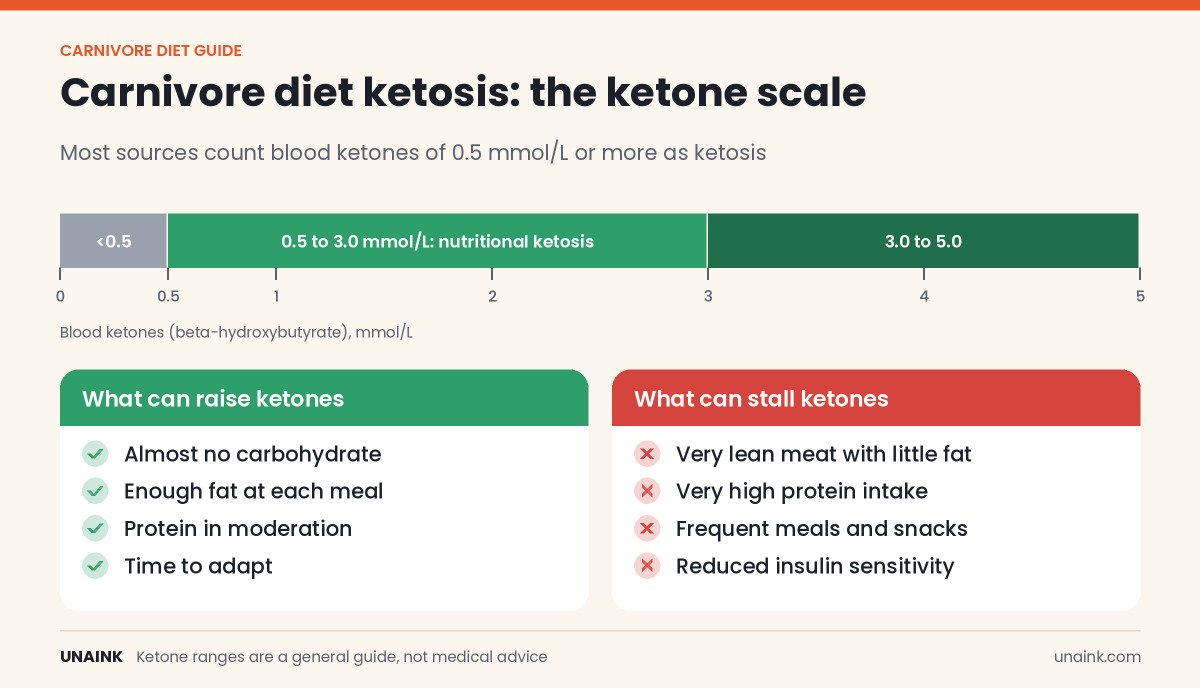
Ketosis happens when the body runs low on glucose and starts converting fat into ketones for fuel. The main ketone measured in blood is beta-hydroxybutyrate, often shortened to BHB. Most sources set the line for ketosis at 0.5 millimoles per liter (mmol/L). The commonly quoted range for nutritional ketosis runs from 0.5 up to around 3 mmol/L, although some sources give a higher upper limit.
Do not confuse nutritional ketosis with ketoacidosis
Diabetic ketoacidosis is a dangerous medical emergency, mostly affecting people with type 1 diabetes and sometimes people on certain diabetes medicines. If you have diabetes or take drugs such as SGLT2 inhibitors, speak to your doctor before attempting a very low carb diet. Seek urgent care for persistent nausea, vomiting, stomach pain, fast breathing or confusion.
Does the Carnivore Diet Put You in Ketosis?
For carnivore diet ketosis, the answer is that it can, but it does not always. Harvard Health describes the carnivore diet as the most ketogenic keto-style plan because it allows almost no carbohydrate. The fat content is simply whatever comes with the meat, fish, eggs and dairy you eat. Low carbs are the main trigger for ketone production, so in theory carnivore eating should do it.
The catch is protein. When protein intake is high and fat intake is low, the liver can turn some amino acids into glucose in a process called gluconeogenesis. That keeps insulin higher and can hold ketone production down. Keto-Mojo explains that many carnivore eaters rely on lean meat. This creates a high-protein, lower-fat pattern that often leads to low glucose and low ketones, even though the diet contains no plants.
Researchers reading the carnivore literature have noticed the same problem. A summary of the 2026 scoping review points out that the carnivore diet is often assumed to be ketogenic. It adds that many participants in the studies may not have been in consistent ketosis. For background on the plan, see our guide to what the carnivore diet is.
What Decides Whether You Reach Ketosis on Carnivore
| Factor | Helps ketosis | Can stall ketosis |
|---|---|---|
| Fat intake | Fatty cuts such as ribeye, pork belly and whole eggs | Chicken breast, lean ground beef, very lean steaks |
| Protein amount | Moderate protein for your body size | Very high protein relative to fat |
| Carbohydrate | Plain meat, fish and eggs | Hidden carbs from sauces, marinades and some dairy |
| Meal timing | Fewer, larger meals | Constant snacking that keeps insulin elevated |
| Insulin sensitivity | Healthy sensitivity | Insulin resistance or prediabetes |
| Time on the diet | Several days to a couple of weeks of adaptation | Testing too early, before glycogen is used up |
Your carnivore diet ketosis results also depend on your size, activity and genetics, so two people eating the same meal can see different numbers.
How to Test Carnivore Diet Ketosis
- Blood ketone meter. The most precise at-home option. It measures BHB directly, and a reading of 0.5 mmol/L or higher is the usual sign of ketosis.
- Breath analyzers. They estimate acetone and are convenient, but less precise.
- Urine strips. Cheap and useful in the first days, although they tend to become less reliable as your body adapts.
Keto-Mojo suggests a simple routine: for several days, eat as you normally do, then test glucose and ketones once daily, ideally fasting or at least three hours after food. Writing down your meals alongside the readings shows you which habits matter. If you want a deeper reading, some people also track the glucose-ketone index, which compares both numbers.
What to Do If Your Ketones Stay Low
- Add fat. Choose fattier cuts and cook with tallow or butter if you eat dairy.
- Check your protein. If you are eating very large amounts of lean meat, shift part of that intake toward fatty cuts.
- Reduce grazing. Try fewer, larger meals and fewer snacks.
- Look for hidden carbs. Sauces, flavored meats and some dairy products can add more than you think.
- Be patient. Give yourself a couple of weeks before judging the result.
These carnivore diet ketosis tips are experiments, not guarantees. If low readings come with fatigue, hunger or other symptoms, a clinician or registered dietitian can help you adjust safely.
Do You Need Ketosis on the Carnivore Diet?
No. Many people report feeling better on carnivore eating without ever reaching ketosis, and no evidence shows that ketosis is required for any benefit. Treat carnivore diet ketosis as a measurement, not a goal in itself. Your overall health markers matter more, such as LDL cholesterol, kidney function and nutrient levels. We discuss them in our guide to the carnivore diet benefits and risks.
Adaptation Symptoms and How to Handle Them
When carbohydrate intake drops, the first week or two can bring fatigue, headaches, brain fog, cramps and digestive changes. Drinking enough fluids and replacing sodium often helps. Harvard Health also notes that keto-style diets tend to raise LDL cholesterol and carry longer-term concerns such as kidney stones, so periodic blood tests are sensible.
If you want a gentler route to ketosis, the ketovore diet allows a few low-carb plants, while the animal based diet usually does not aim for ketosis at all.
Frequently Asked Questions
How long does it take to get into ketosis on carnivore?
It varies. Many people reach ketosis within several days to a couple of weeks. The timing depends on how much glycogen they have stored, their activity level and how much protein and fat they eat. Testing is the only reliable way to know.
Will too much protein kick you out of ketosis?
It can in some people. Excess protein can be converted into glucose, which may keep insulin higher and ketones lower. Individual responses vary, so track your readings and adjust your fat and protein balance.
What ketone level counts as ketosis?
Most sources define ketosis as blood BHB of 0.5 mmol/L or higher. The commonly quoted nutritional ketosis range runs from about 0.5 to 3 mmol/L.
Is carnivore diet ketosis the same as keto ketosis?
The metabolic state is the same. The difference is how you get there: keto plans track macros and allow low-carb plants, while carnivore removes plants and does not set targets, so protein can run higher.
Is it dangerous to be in ketosis?
Nutritional ketosis is not the same as diabetic ketoacidosis, but it is not suitable for everyone. People with type 1 diabetes, those on certain diabetes medicines, and anyone who is pregnant or has kidney disease should speak with a doctor first.
Conclusion
Carnivore diet ketosis is likely but not guaranteed. Near-zero carbs create the right conditions, yet very high protein, lean cuts and frequent meals can keep ketones low. If you care about the number, test with a blood meter, adjust your fat and protein balance, and give yourself time. If you do not, focus on health markers instead, and involve a healthcare professional before making major changes.
Medical note
This article is for general education and is not medical advice. Talk with a doctor or registered dietitian before making major diet changes, especially if you have a health condition, take medication, or are pregnant or breastfeeding.
Keep Reading
- What Is the Carnivore Diet?: the complete overview
- Carnivore Diet Food List: which cuts and fats to choose
- Ketovore Diet Explained: low carb with a few plants
- 9 Carnivore Diet Benefits: what the evidence really shows
Sources
- Harvard Health Publishing. What is the carnivore diet?: carnivore as the most ketogenic plan, plus LDL and kidney concerns
- Keto-Mojo. Carnivore ketosis: a data approach: why carnivore does not always produce ketosis and how to test
- MTN Tactical. Research Review: The Carnivore Diet, Short-Term Gains, Long-Term Unknowns: summary of the 2026 scoping review and ketosis uncertainty
- Lietz, Dapprich and Fischer. Carnivore Diet: A Scoping Review. Nutrients, 2026: the underlying review