The animal based diet is a meat-centered eating style that adds fruit, honey and often dairy to the plate. It sits between strict carnivore eating and a regular mixed diet, and it was popularized by physician Paul Saladino, who first promoted a plant-free plan and later broadened it. Supporters say it keeps the benefits of eating meat while avoiding the hardest parts of carnivore life. This guide explains what the animal based diet includes, how it compares with similar plans, and what the evidence says.
Quick Answer
The animal based diet builds meals around meat, organ meats, eggs and animal fats, then adds fruit, honey and dairy as carbohydrate sources. It minimizes seed oils, refined sugar, ultra-processed food and most vegetables, grains and legumes. There are no clinical trials of the diet as defined, and concerns include saturated fat, red meat intake, low fiber and the infection risk of raw dairy.
Key Takeaways
- The animal based diet is meat-first but, unlike carnivore, includes fruit, honey and often dairy.
- It was popularized by Dr. Paul Saladino after he moved away from strict carnivore eating.
- Followers limit seed oils, refined sugar, ultra-processed food and most vegetables.
- There are no controlled trials of the plan, and scientists dispute the ancestral arguments used to justify it.
- Raw dairy, high red meat intake and few vegetables are the main safety concerns.
What Is the Animal Based Diet?
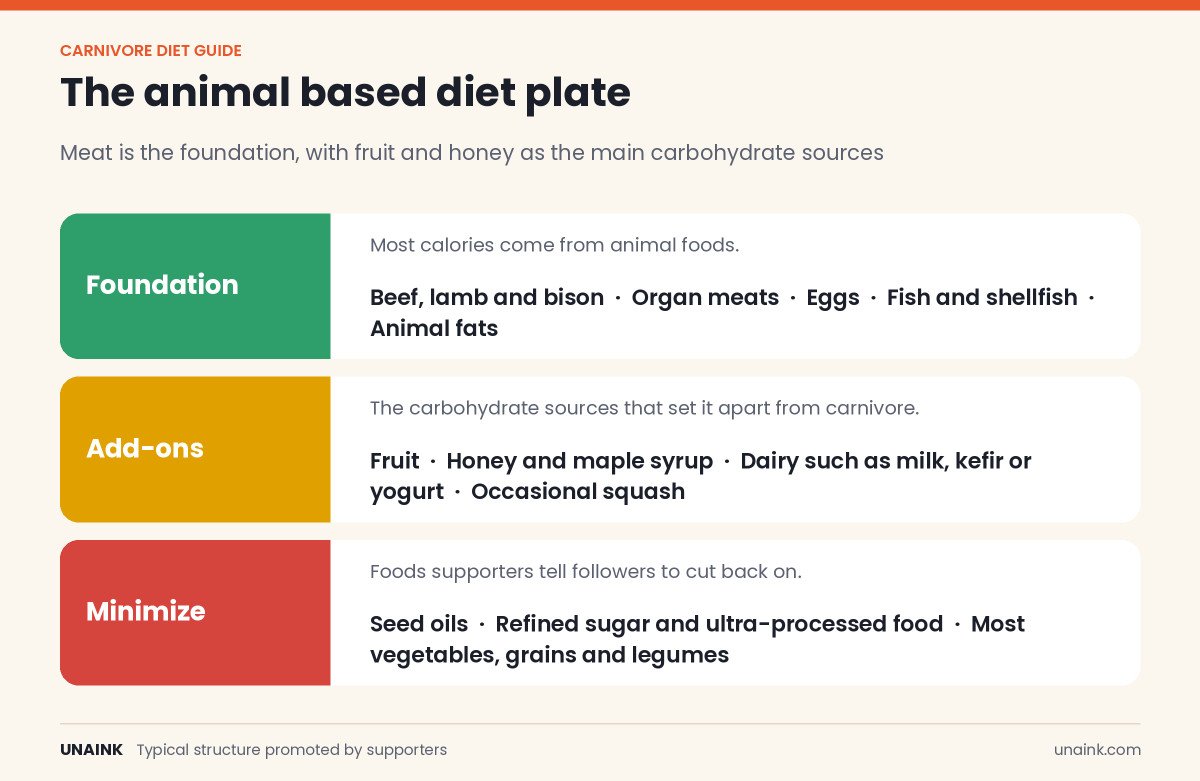
Think of the animal based diet as carnivore eating with a carbohydrate escape hatch. Beef, lamb, eggs, fish and organ meats supply most of the calories. Fruit and honey provide quick energy, and dairy products such as milk, kefir or yogurt are common. Many followers also eat starchy plants such as squash now and then, while avoiding most vegetables, grains and legumes.
Paul Saladino, a physician and author of The Carnivore Code, helped bring the pattern to a wide audience through social media and his podcast. He had previously been one of the best-known advocates of strict meat-only eating and later added carbohydrates such as fruit and honey. Supporters describe the result as a more sustainable and less extreme version of carnivore eating.
Animal Based Diet Food List
Foundation foods
- Red meat such as beef, lamb and bison, with fattier cuts favored.
- Organ meats, especially liver, heart and kidney.
- Eggs, often cooked in butter or tallow.
- Fish and shellfish.
- Animal fats such as tallow, butter and ghee.
Carbohydrate and add-on foods
- Whole fruit, including berries, citrus and tropical fruit.
- Honey and sometimes maple syrup.
- Dairy, with supporters preferring raw or cultured products such as kefir and yogurt.
- Occasional starchy plants such as squash or sweet potato, depending on the follower.
Foods to minimize
- Seed oils such as canola, soybean and sunflower oil.
- Refined sugar and ultra-processed foods.
- Most vegetables, which supporters argue are loaded with natural defense chemicals.
- Grains and legumes.
Some followers include fermented vegetables or other plants, so the rules are looser than they are for carnivore eating. Compare this with the stricter list in our carnivore diet food list.
Animal Based Diet vs Carnivore, Keto and Ketovore
| Diet | Plants | Carbohydrates | Typical style |
|---|---|---|---|
| Animal based | Fruit, honey, some starches | Moderate | Meat-first with fruit and dairy |
| Carnivore | None | Almost none | All animal foods |
| Ketovore | A few low-carb plants | Low | Keto with more meat |
| Lion diet | None | Almost none | Ruminant meat, salt, water |
| Keto | Low-carb plants | Low | High fat, moderate protein |
The key difference is carbohydrate. Because it allows fruit and honey, this approach is generally not ketogenic, and it does not aim to keep you in ketosis. If ketosis matters to you, see our guide on whether the carnivore diet puts you in ketosis.
Why People Choose the Animal Based Diet
- More flexible than carnivore. Fruit and dairy make eating out and family meals easier.
- Carbohydrates for training. Fruit and honey can fuel exercise better than a near-zero carb plan, according to supporters.
- Fewer ultra-processed foods. The plan centers on single-ingredient foods.
- A variety of flavors. Sweet and savoury foods can both appear on the plate, which many find easier to maintain.
These are claimed advantages, not proven ones. Nobody has tested the diet head to head against alternatives.
What Does the Evidence Say?
There are no clinical trials of the animal based diet as supporters define it. The closest research is on carnivore eating, and the 2026 scoping review in Nutrients found only nine human studies, all small or short, and could not recommend long-term adherence. Adding fruit and honey changes the carbohydrate picture, but it does not create a new evidence base.
Supporters often argue that humans evolved to eat mostly meat. Anthropologists disagree. In a Scientific American feature, researchers note that hunter-gatherers typically get roughly half their calories from plants and that ancestral diets were far more varied than a meat-heavy menu suggests. The article concludes that human evolution did not prescribe one single diet.
On the wider research, large studies link high intake of red and processed meat with higher rates of colorectal cancer and other chronic diseases. The WHO classifies processed meat as carcinogenic to humans and red meat as probably carcinogenic, as Harvard’s Nutrition Source explains. A beef-heavy diet therefore carries risks that are well documented, even before you add the unknowns of an untested plan.
Risks and Downsides
- Raw dairy. The FDA says raw milk can carry harmful bacteria such as Salmonella, E. coli and Listeria, and that children, older adults, pregnant women and people with weakened immune systems face the greatest danger. Read the FDA guidance on raw milk before considering it. Pasteurized dairy avoids this risk.
- Saturated fat and LDL cholesterol. Fatty red meat and full-fat dairy can raise LDL in many people.
- Low fiber and plant compounds. Limiting vegetables reduces intake of fiber, folate and other protective compounds.
- Added sugars. Health agencies count honey and fruit juice as free sugars, and large amounts can add up.
- Kidney and gout concerns. High protein and purine intake may be a problem for people prone to kidney stones or gout.
- Cost and sustainability. A meat-centered plan with organ meats and quality dairy can be expensive.
Who Might Consider It, and Who Should Avoid It
The plan may appeal to people who like meat, want fewer processed foods and find strict carnivore eating too limiting. It is not suitable for everyone. Avoid it, or speak to a clinician first, if you are pregnant or breastfeeding. The same goes for kidney disease, gout, heart disease, high LDL cholesterol, a history of disordered eating, or any medication that diet changes could affect.
How to Make the Animal Based Diet Safer
- Choose pasteurized dairy instead of raw milk and raw cheese.
- Eat fish and eggs regularly, and keep red meat to a moderate share.
- Add vegetables if you tolerate them, since fiber and plant nutrients matter.
- Cook meat to safe temperatures. See our guide to the raw carnivore diet for the USDA numbers.
- Have blood tests for cholesterol, kidney function and nutrient levels before and after a few months.
Frequently Asked Questions
What is the animal based diet?
It is a meat-centered diet that adds fruit, honey and often dairy to animal foods and minimizes seed oils, refined sugar, ultra-processed foods and most vegetables.
Is the animal based diet the same as carnivore?
No. Carnivore diets exclude all plant foods, while the animal based diet includes fruit, honey and sometimes starchy plants. It is more flexible and usually higher in carbohydrate.
Can you eat vegetables on the animal based diet?
Most versions limit or avoid vegetables, although some followers include a few such as squash or fermented vegetables. Rules vary by person.
Is raw milk safe on the animal based diet?
The FDA warns that raw milk can contain harmful bacteria and is risky for everyone, especially children, pregnant women and older adults. Pasteurized dairy is the safer choice.
Is the animal based diet good for weight loss?
It may reduce calories because it cuts processed foods and is filling, but there is no trial showing it works better than other diets for weight loss.
Conclusion
The animal based diet offers a friendlier version of meat-first eating by adding fruit, honey and dairy. It cuts ultra-processed food, which is a plus, but it still relies on untested claims, leans heavily on red meat and often avoids vegetables. If you want to try it, keep dairy pasteurized, include fish and plants you tolerate, and monitor your blood work with a healthcare professional.
Medical note
This article is for general education and is not medical advice. Talk with a doctor or registered dietitian before making major diet changes, especially if you have a health condition, take medication, or are pregnant or breastfeeding.
Keep Reading
- What Is the Carnivore Diet?: the stricter plan this diet grew out of
- Ketovore Diet Explained: where keto meets carnivore
- 9 Carnivore Diet Benefits: what the evidence says about meat-heavy eating
- Raw Carnivore Diet: why uncooked animal foods are risky
Sources
- Wong, K. To Follow the Real Early Human Diet, Eat Everything. Scientific American, 2024: ancestral diets and hunter-gatherer plant intake
- Wikipedia. Paul Saladino: his shift from strict carnivore to a diet with fruit and honey
- Lietz, Dapprich and Fischer. Carnivore Diet: A Scoping Review. Nutrients, 2026: evidence on meat-based diets
- Harvard T.H. Chan School of Public Health. Report says eating processed meat is carcinogenic: red and processed meat classifications
- U.S. Food and Drug Administration. Food Safety and Raw Milk: risks of unpasteurized dairy
- Harvard Health Publishing. What is the carnivore diet?: saturated fat and LDL concerns