The lion diet is the most restrictive version of the carnivore diet: you eat only meat from ruminant animals, plus salt and water. Nothing else makes the cut. It spread through social media as a so-called reset for people with stubborn symptoms, and it is often described as an elimination diet. This guide explains what the lion diet is, what you can and cannot eat, what the evidence says, and why most health professionals urge caution.
Quick Answer
The lion diet allows only meat from ruminants such as beef, lamb, goat, bison and venison, plus salt and water. Supporters use it as a short elimination diet to find out which foods trigger symptoms. There are no clinical trials on it, and dietitians warn that it is likely to cause nutrient gaps, so it should only be considered briefly and with medical supervision.
Key Takeaways
- The lion diet is a stricter subset of the carnivore diet that allows ruminant meat, salt and water only.
- Poultry, pork, fish, eggs, dairy, spices, coffee and every plant food are excluded.
- It is promoted as an elimination diet, but no controlled studies support its claims.
- Health professionals warn about missing nutrients, saturated fat intake and the risk of disordered eating.
- Safer options exist for finding food triggers, such as a guided elimination plan with a dietitian.
What Is the Lion Diet?
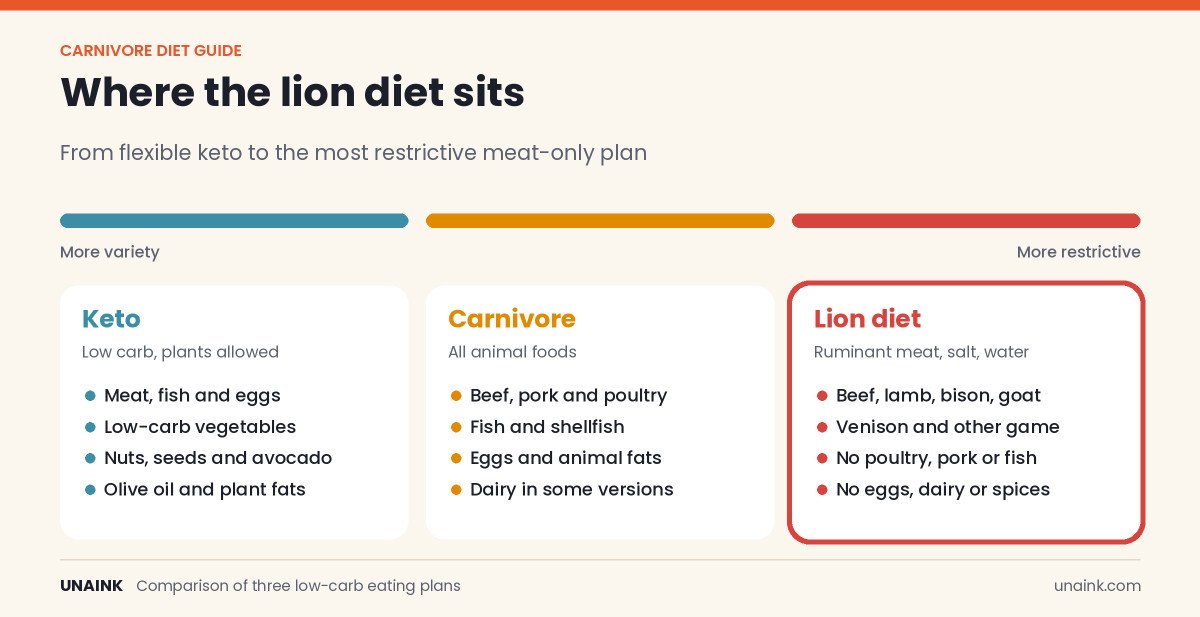
The lion diet takes its name from how lions are imagined to eat: red meat and little else. In practice it means eating meat from ruminants, which are animals with a multi-chambered stomach, such as cattle, sheep, goats, bison and deer. Salt and water complete the plan.
It is a subset of the broader carnivore diet. Whereas carnivore eating allows poultry, fish, eggs and often dairy, the diet strips everything back to a single food category. Interest grew after author and blogger Mikhaila Peterson described using it to manage symptoms she had struggled with for years, and the story spread widely on TikTok and other platforms.
Lion Diet Food List
| Allowed | Not allowed |
|---|---|
| Beef, including steak, roasts and ground beef | Chicken, turkey and other poultry |
| Lamb, goat and mutton | Pork, bacon and ham |
| Bison, buffalo, venison and elk | Fish and seafood |
| Salt | Eggs and dairy |
| Water | Fruit, vegetables, nuts, seeds and grains |
| Spices, herbs, sauces and sweeteners | |
| Coffee, tea and any drink other than water |
Because ruminant meat is the only food, most people choose beef for convenience and cost. There is usually no calorie counting. Followers are told to eat until they are full, often favoring fattier cuts. If you want to compare this list with a wider plan, see our carnivore diet food list.
How the Lion Diet Is Supposed to Work
The theory is that many people react to plant compounds, additives or common allergens without realizing it. Removing everything except one simple food, supporters say, gives the body a chance to settle. After a period of symptom improvement, foods are added back one at a time to see what causes problems. As Healthline explains, the plan is meant to be followed until symptoms ease and then broadened gradually.
How long people stay on it varies. Some describe a few weeks, others several months. No guidelines or trials set a proper duration, so these timelines come from personal experience.
Lion Diet vs Carnivore Diet
| Feature | Carnivore diet | Lion diet |
|---|---|---|
| Meats allowed | Beef, pork, poultry, fish and more | Ruminant meat only |
| Eggs and dairy | Often allowed | Not allowed |
| Seasonings | Salt, and sometimes spices | Salt only |
| Drinks | Water, often coffee or tea | Water only |
| Main purpose | Weight loss, simplicity, symptom relief | Strict elimination to find triggers |
| Typical length | Weeks to years | Weeks to a few months |
Looking for a looser option? The dirty carnivore diet allows seasonings and processed meats, while the animal based diet adds fruit and honey.
What Does the Research Say About the Lion Diet?
There are no clinical trials of the lion diet. The nearest evidence is for the carnivore diet in general, and that is thin. A 2026 scoping review in Nutrients found only nine human studies on carnivore-style eating, concluded that the quality was very limited and recommended against long-term adherence. The diet appears there as a related term, but it is not tested on its own.
When symptoms improve, several dietitians point out that the cause may be removal of problem foods or processed products, not a special property of ruminant meat. In other words, the diet may work by subtraction, which is why a structured elimination plan can often achieve the same goal with less risk.
Risks and Nutrient Concerns
Healthline’s bottom line is blunt: the lion diet is high in saturated fat, hard to sustain and likely to lead to nutritional deficiencies. Experts quoted in a Women’s Health piece agree that you cannot get every nutrient from meat alone. The main concerns are:
- Vitamin C and fiber. Neither is supplied in useful amounts. Prolonged vitamin C deficiency leads to scurvy.
- Calcium, magnesium and folate. Without dairy and plants, intake of these can drop.
- Saturated fat and LDL cholesterol. Red meat is high in saturated fat, and very low carb diets often raise LDL.
- Kidney strain and sodium. High protein and liberal salt can be problematic for anyone with kidney or blood pressure issues.
- Disordered eating. Dietitians warn that extreme food rules can trigger or worsen an unhealthy relationship with food.
- Low energy for athletes. Sports dietitians note that high-intensity training is hard on so few carbohydrates.
Who Should Avoid the Lion Diet?
- Children and teenagers.
- Pregnant and breastfeeding people.
- Anyone with kidney disease, kidney stones, gout or heart disease.
- People with high LDL cholesterol or a family history of early heart disease.
- Anyone with a history of an eating disorder.
- People taking insulin or other blood sugar medication unless a doctor supervises.
If You Still Want to Try the Lion Diet
Some people will try it regardless. If you do, treat it as a short, supervised experiment:
- Talk to a doctor or dietitian first and get baseline blood work, including cholesterol, kidney function and vitamin levels.
- Set a limited timeframe and write down your symptoms before you start.
- Plan a reintroduction. Add one food back every few days, noting any changes.
- Stay hydrated and mind your electrolytes. Fatigue and headaches are common early on.
- Stop and seek help if you feel unwell, lose weight too quickly or notice changes such as swelling, bleeding gums or irregular heartbeat.
Safer Alternatives to Find Food Triggers
If your goal is to learn which foods upset you, a guided elimination diet usually does the job with fewer risks. A dietitian can tailor it to your symptoms, for example using a low-FODMAP plan for irritable bowel syndrome. If you like the meat-forward approach but want more variety, consider the ketovore diet, which keeps some low-carb plants on the plate.
Frequently Asked Questions
What can you eat on the lion diet?
Only meat from ruminant animals such as beef, lamb, goat, bison and venison, plus salt and water. Poultry, pork, fish, eggs, dairy, spices and all plant foods are excluded.
Can you eat eggs on the lion diet?
No. Eggs are not meat from a ruminant, so they are not part of the standard lion diet.
Is the lion diet safe?
There are no long-term safety studies. Dietitians warn that it can cause nutrient deficiencies and it is not recommended for most people, especially without medical supervision.
How long should you do the lion diet?
There is no evidence-based duration. Supporters describe a few weeks to several months, followed by gradual reintroduction of foods, but a healthcare professional should guide any trial.
Does the lion diet cure autoimmune disease?
There is no reliable evidence that it does. Some people report improvements, but those are personal accounts, not proof of a cure.
Conclusion
The lion diet reduces eating to ruminant meat, salt and water, which makes it simple and very restrictive. It may help some people identify triggers because it removes so much, but it has no clinical trials behind it and carries clear nutrient and cholesterol concerns. If you are tempted, speak to a healthcare professional first and consider a guided elimination plan or a less extreme approach.
Medical note
This article is for general education and is not medical advice. Talk with a doctor or registered dietitian before making major diet changes, especially if you have a health condition, take medication, or are pregnant or breastfeeding.
Keep Reading
- What Is the Carnivore Diet?: the broader plan the lion diet comes from
- Carnivore Diet Food List: a wider list of animal foods
- What Is the Animal Based Diet?: meat with fruit and honey
- Dirty Carnivore Diet: the relaxed end of the spectrum
Sources
- Healthline. Lion Diet: Does It Work, Safety, and Risks: what the diet allows and its bottom line
- Lietz, Dapprich and Fischer. Carnivore Diet: A Scoping Review. Nutrients, 2026: evidence base for carnivore-style diets
- Women’s Health via AOL. The Lion Diet Prioritizes Red Meat. But Is It Safe?: nutritionist views on safety
- Narcity. The all-meat Lion Diet is blowing up on TikTok: dietitian comments on deficiency risks
- Harvard Health Publishing. What is the carnivore diet?: saturated fat, LDL and kidney concerns