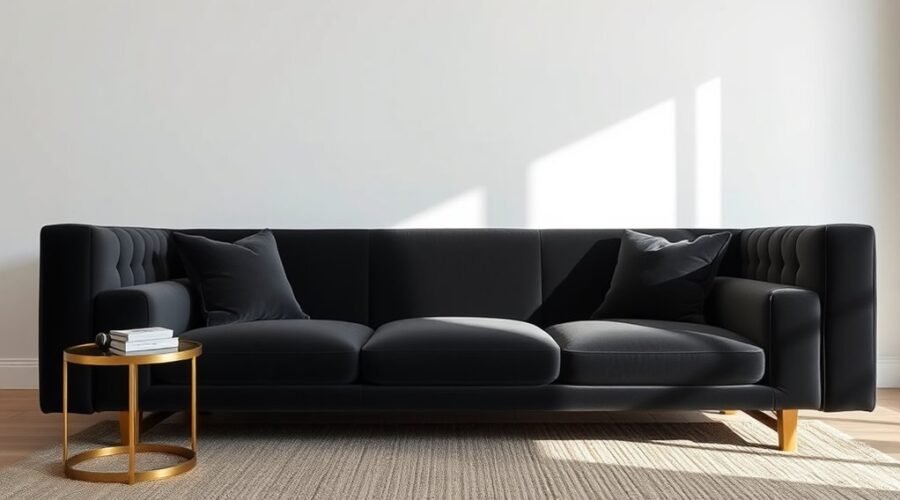
If you’re drawn to furniture with a crisp, tailored presence, a tuxedo sofa is easy to recognize once you know what to look for. Its main signature is simple: the arms rise to about the same height as the back, creating a clean, boxy outline. Beyond that basic shape, however, upholstery, tufting, cushion firmness, seat depth, and overall size can vary considerably from one sofa to another.
Quick Answer
A tuxedo sofa is a tailored sofa with arms that rise to about the same height as its back, creating a straight, boxy outline. Most versions look formal or architectural, but tufting, nailheads, cushion firmness, seat depth, and fabric vary by model. Comfort therefore depends on the specific sofa, not the silhouette alone.
Key Takeaways
- A tuxedo sofa is primarily identified by arms that reach approximately the same height as the back.
- Its straight, upholstered perimeter creates a structured, tailored appearance that suits contemporary, traditional, transitional, and Art Deco-inspired rooms.
- Tufting, nailheads, velvet, leather, and specific cushion types are optional details rather than requirements.
- Comfort varies by model, so check seat depth, seat height, cushion construction, arm thickness, and back support before buying.
- A tuxedo sofa can work in either a large or small room when its actual dimensions and usable seating width fit the space.
What Is a Tuxedo Sofa?
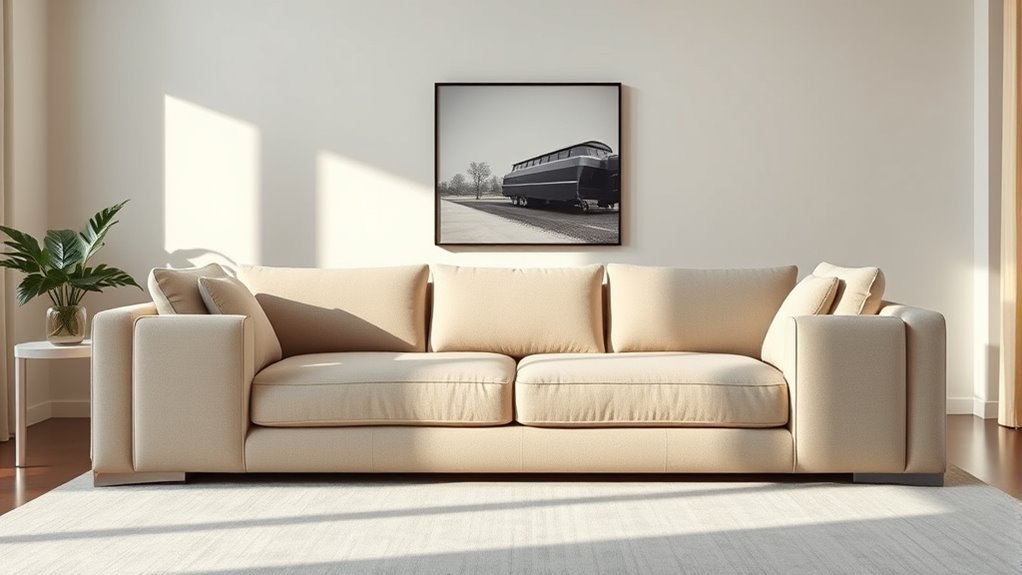
A tuxedo sofa is an upholstered sofa whose arms generally rise to the same height as its back. Furniture maker Barrymore Furniture describes the tuxedo profile as square, straight, and tailored, which captures the feature that most reliably separates it from many other sofa styles.
The continuous arm-and-back line gives the sofa a strong architectural outline. Some models use perfectly straight track-like arms, while others soften the perimeter with slightly flared or shelter-style arms without losing the basic high-arm silhouette.
The name is commonly associated with Tuxedo Park, New York, a community established in the late nineteenth century and closely connected with formal social culture. The Village of Tuxedo Park documents the community’s 1886 beginnings and its association with the tuxedo dinner jacket. The sofa’s exact original designer is less firmly documented, so it is safer to treat the Tuxedo Park connection as the traditional origin of the style’s name rather than crediting a specific inventor.
Modern tuxedo sofas appear in fabric and leather, with tight or loose cushions and with either decorative tufting or smooth upholstery. That variety is important: the silhouette defines the style more reliably than any single fabric or cushion construction.
Defining Features of a Tuxedo Sofa
The easiest way to identify a tuxedo sofa is to focus on its overall geometry rather than decorative details. The equal-height perimeter is essential; tufting, nailheads, bolster pillows, and particular fabrics are not.
Arm-Back Alignment
The most distinctive trait is the arm-back alignment. The arms rise to roughly the same height as the sofa’s back, creating a continuous horizontal line around the seating area.
This alignment gives the sofa its structured appearance. Straight or nearly straight arms reinforce the geometric effect, although some contemporary versions use shelter arms that curve slightly inward.
That balanced form can work in both traditional and contemporary rooms because the basic shape is simple enough to take on different personalities through fabric, legs, cushions, and trim.
Tufted Upholstery Details
Tufted upholstery is common on tuxedo sofas, but it is not required. Button, biscuit, or diamond tufting can add depth to the back and arms, especially in velvet or other fabrics that catch light across the surface.
A smooth tight back can create an equally authentic tuxedo-style outline. For example, Ethan Allen’s Anderson tuxedo-style sofa is offered with either diamond-tufted or smooth back and arm interiors.
Nailhead trim is also optional. It can emphasize the perimeter of the sofa, but leaving it off produces a quieter, more minimal look.
Note: Equal-height arms and back are the key identifying feature. Tufting, nailheads, velvet upholstery, bolster pillows, and exposed wood legs are style options, not requirements.
Formal Silhouette Appeal
A tuxedo sofa usually looks more structured than a low-arm, overstuffed sofa because its high perimeter creates a defined rectangular outline. That geometry can make a seating arrangement feel organized without requiring ornate detailing.
- It can serve as a strong focal point in a living room.
- It works with modern, transitional, Art Deco-inspired, and traditional interiors.
- Velvet can make the form feel richer and more dramatic.
- Linen and textured fabrics can soften the formal appearance.
- Smooth upholstery can emphasize the clean geometry.
- Tufting can add texture and visual depth.
The result can range from formal to relaxed depending on the upholstery, cushions, surrounding furniture, and color palette.
How to Identify a Tuxedo Sofa
When a sofa is labeled “tuxedo,” check the structure rather than relying only on the product name.
- Check the arm height: The arms should reach approximately the same height as the back.
- Look at the outline: The perimeter is usually squared, straight, or gently shelter-shaped rather than dramatically rolled.
- Ignore optional decoration: A tuxedo sofa does not need button tufting or nailheads.
- Check the cushions: Tight backs, loose backs, bench seats, and individual seat cushions can all appear on tuxedo-style sofas.
- Consider proportions: High, thick arms can make one model visually substantial, while narrow arms and exposed legs can make another appear lighter.
Tuxedo Sofa vs. Other Sofa Styles
The tuxedo sofa is easiest to distinguish from other classic silhouettes by comparing the shape and height of the arms.
| Style | Typical Arm and Back | Typical Character |
|---|---|---|
| Tuxedo | Arms approximately level with the back; usually straight or shelter-shaped | Tailored and architectural |
| Chesterfield | Substantial rolled arms commonly level with the back | Traditional, club-like, often deeply tufted |
| Lawson | Arms lower than the back with separate, cushioned construction | Relaxed and comfort-focused |
| Track-arm sofa | Straight, squared arms that may sit below the back | Clean and contemporary |
A Chesterfield and tuxedo sofa can both have arms that rise to the back, so arm height alone does not separate those two styles. The Chesterfield usually emphasizes rolled arms and deep button tufting, while the tuxedo silhouette generally relies on straighter, more geometric lines.
A Lawson sofa typically has lower arms and loose cushions, giving it a softer and more casual posture. A track-arm sofa can look similar to a tuxedo model from the front, but its arms do not have to rise to the same height as the back.
Benefits of a Tuxedo Sofa
The strongest advantage of a tuxedo sofa is its clear architectural shape. The high arms and back create visual order, making the sofa useful when you want one piece to anchor a seating arrangement.
- Its clean outline can work with several interior styles.
- It can look finished from multiple angles, which is useful when floating a sofa away from a wall.
- High arms can create a contained, sheltered feeling for some sitters.
- Fabric, leather, tufting, trim, legs, and cushion styles offer considerable room for customization.
- The structured outline can balance softer pieces such as rounded chairs, plush rugs, or flowing curtains.
There are tradeoffs too. Thick high arms can reduce usable seat width, and a tight back may feel more upright than a loose-cushion design. That is why the specific dimensions and cushion construction matter more than the tuxedo label alone.
Materials and Finishes That Fit the Look
Velvet, linen, woven fabric, performance textiles, faux leather, and genuine leather can all work with a tuxedo frame. Choose the material according to the room, expected wear, cleaning requirements, and the look you want rather than assuming one upholstery type is required.
Velvet, Linen, And Leather
Velvet emphasizes shadow and texture, so it can make tufting and the sofa’s geometric outline more noticeable.
Linen and linen-look fabrics create a lighter, less formal visual effect. Before buying, check the manufacturer’s fiber content and care code because stain resistance and cleaning requirements vary by fabric.
Leather gives the silhouette a smooth, substantial appearance, but care requirements vary by leather type and finish. Follow the sofa manufacturer’s cleaning instructions rather than assuming all leather can be treated the same way.
Blends and performance fabrics can also be practical when durability, pets, children, or frequent use are important considerations.
- Choose velvet when you want strong texture and depth.
- Choose linen or a textured weave for a lighter appearance.
- Choose leather for a smooth, structured surface.
- Choose performance upholstery when easy everyday care is a priority.
Tufting, Nailheads, And Trim
Tufting, nailheads, welted seams, and decorative trim change the mood of a tuxedo sofa without changing its basic identity.
| Detail | Effect | Works Well When |
|---|---|---|
| Tufting | Adds depth and shadow | You want a more decorative or traditional finish |
| Nailheads | Outlines the frame | You want the sofa’s edges emphasized |
| Welt or piping | Defines seams cleanly | You prefer tailored detail without metal trim |
| Smooth upholstery | Keeps the surface quiet | You want a minimal, contemporary look |
The best choice depends on the rest of the room. A highly tufted velvet sofa may need fewer competing decorative elements, while a smooth neutral version can support stronger artwork, patterned rugs, or sculptural furniture.
How Comfortable Is a Tuxedo Sofa?
A tuxedo sofa can be firm and upright, soft and lounge-friendly, or somewhere between the two. The silhouette does not dictate cushion firmness.
Current manufacturer examples demonstrate that variation. Ethan Allen’s Anderson uses poly-wrapped foam cushions and lists a 22-inch interior seat depth, while Room & Board’s Baylor describes its tuxedo-arm design as having softer, sink-in cushions and a deeper seat.
“Tuxedo” describes the sofa’s silhouette. Seat comfort still depends on the cushions, depth, height, back design, and your body proportions.
Before buying, pay attention to:
- Seat depth: A deeper seat can suit lounging and taller sitters but may leave shorter people without comfortable back support.
- Seat height: Your feet should rest comfortably on the floor when you sit upright.
- Back design: A tight back usually feels more structured; loose back cushions can feel softer.
- Cushion fill: Foam, fiber, springs, down alternatives, and combinations of these materials produce different levels of firmness and recovery.
- Arm thickness: Wide arms can make the sofa feel substantial but reduce the usable seating width.
- Bolster or lumbar pillows: These can improve support on deep or very upright models.
If possible, sit on the sofa before buying. If shopping online, compare the published seat depth, seat height, interior width, arm height, cushion construction, and return policy rather than judging comfort from photographs alone.
How to Choose the Right Tuxedo Sofa
Start with your intended use. A formal sitting room may benefit from a tighter back and structured cushions, while a family room may be better served by softer cushions, washable or durable upholstery, and enough seat depth for relaxed use.
Measure the Sofa and Room
Check the sofa’s full width, depth, and height, but also check the interior seating dimensions. Two sofas with the same overall width can provide very different usable seat widths if one has thick arms.
Mark the planned footprint on the floor with painter’s tape. Confirm that the sofa will not block doors, vents, walkways, drawers, or nearby furniture.
Measure the Delivery Route
A sofa that fits the room can still fail to fit through the house. Measure the narrowest doors, hallways, stair turns, elevators, and gates along the delivery path. Ethan Allen likewise advises customers to confirm that furniture will fit through all doors, stairways, elevators, hallways, and gates before ordering.
Pro Tip: Compare overall sofa width with interior seat width. High, thick tuxedo arms can consume more floor space than you expect, so this measurement is especially useful in apartments and narrow rooms.
Match Construction to Your Use
Look at the manufacturer’s specifications for the frame, suspension, cushions, upholstery, warranty, and care requirements. Do not assume that every tuxedo sofa uses the same foam density, spring system, wood species, or cushion fill.
For example, Bassett’s Reynolds is a large tufted tuxedo-style model with equal-height padded arms and back, while other current tuxedo-arm sofas use looser cushions and softer constructions. The style label therefore tells you what the sofa looks like, not how it is built internally.
Best Rooms for a Tuxedo Sofa
Because of its defined outline, a tuxedo sofa can work especially well as the anchor of a living room, parlor, reception space, office lounge, or conversation area.
In a formal living room, the high perimeter reinforces a composed seating arrangement. In a modern space, smooth upholstery and simple legs can make the same basic shape feel cleaner and less traditional.
A tuxedo sofa can also work in a studio or smaller room, but the style itself is not automatically compact. Current models range from loveseat-sized pieces to sofas more than eight feet wide, so always judge the actual measurements.
If the room is tight, look for narrower arms, exposed legs, a shallower overall depth, and enough space around the sofa for normal circulation.
In a large open room, a tuxedo sofa can also be floated away from the wall because its upholstered back and strong silhouette often look intentional from multiple directions.
How to Style a Tuxedo Sofa
To style a tuxedo sofa, use its clean-lined silhouette as one of the room’s strongest shapes and balance it with furniture that adds contrast rather than repeating the same geometry everywhere.
A neutral wall keeps attention on the sofa’s outline, while a darker or patterned wall can create a more dramatic setting. The right approach depends on how much visual emphasis you want the sofa to carry.
- Add decorative pillows to soften the straight perimeter.
- Use a throw to introduce texture without hiding the sofa’s overall shape.
- Pair the sofa with a round or oval coffee table to contrast with its boxy form.
- Use glass or slim metal tables when you want the room to feel visually lighter.
- Repeat one fabric, wood, or metal tone elsewhere in the room to create continuity.
- Leave enough space around high arms so the sofa does not feel wedged between other large pieces.
For a formal look, combine restrained colors, tailored curtains, and symmetrical lighting. For a more relaxed room, use textured pillows, casual rugs, warm wood, and softer shapes around the sofa.
Caring for a Tuxedo Sofa
Care depends more on the upholstery and cushion construction than on the tuxedo shape itself. Check the manufacturer’s care label before using water, solvents, conditioners, or stain treatments.
- Vacuum fabric upholstery gently with an upholstery attachment to remove dust and crumbs.
- Blot spills promptly instead of rubbing them deeper into the fabric.
- Follow the manufacturer’s cleaning code for the specific textile.
- Use leather products only when approved for that particular leather finish.
- Rotate removable seat cushions when the manufacturer permits it to encourage more even wear.
- Vacuum tufted depressions periodically because dust can collect around buttons and seams.
If the sofa has custom upholstery or a stain-resistant treatment, follow the maker’s instructions so an incompatible cleaner does not damage the finish.
Frequently Asked Questions
What is the difference between a Chesterfield sofa and a tuxedo sofa?
Both can have arms that rise to approximately the same height as the back. The clearest difference is usually arm shape and upholstery treatment. A traditional Chesterfield uses substantial rolled arms and is strongly associated with deep button tufting. A tuxedo sofa generally uses straighter, more geometric arms and can be either tufted or smooth.
What defines a tuxedo sofa?
The main defining feature is an upholstered sofa with arms that reach approximately the same height as its back, producing a squared or shelter-like perimeter. Straight lines and tailored upholstery are common. Tufting, nailheads, velvet, leather, loose cushions, and bolster pillows are optional variations.
Are tuxedo sofas comfortable?
They can be, but there is no single tuxedo-sofa comfort level. Some have structured foam cushions and an upright tight back, while others use deep seats and soft loose cushions. Check seat depth, seat height, cushion fill, back support, arm width, and interior seating dimensions before deciding whether a particular model suits you.
What couch styles are considered outdated?
There is no sofa silhouette that is universally outdated. Chesterfields, camelbacks, futons, sectionals, and tuxedo sofas all remain available in current furniture collections. What can make a sofa feel dated is often its proportion, fabric, color, condition, or how it is combined with the rest of the room rather than the style name alone.
Does a tuxedo sofa have to be tufted?
No. Tufting is a common decorative option, but it does not define the style. Smooth-back tuxedo sofas are also available. The more important identifying feature is the high arm line aligning approximately with the back.
Is a tuxedo sofa good for a small living room?
It can be if the dimensions fit. Look for a loveseat or compact sofa with narrow arms, modest depth, and enough open floor space around it. Do not assume the tuxedo label means compact: some models are more than eight feet wide and have thick arms that take up substantial room.
Conclusion
A tuxedo sofa is best understood by its silhouette: high upholstered arms that align approximately with the back to form a clean, structured perimeter. That shape can look formal and tailored, but the sofa does not have to be tufted, firm, compact, velvet-covered, or built in one particular way.
Choose the specific model by looking beyond its style name. Check seat depth, seat height, usable interior width, cushion construction, upholstery, overall dimensions, and delivery clearance. When those practical details match your room and the way you like to sit, a tuxedo sofa can provide both a distinctive architectural shape and comfortable everyday seating.
Sources
- Barrymore Furniture — Glossary of Upholstery Terms — supports the defining equal-height arm/back geometry and straight, tailored tuxedo profile.
- Bassett Furniture — Reynolds Tufted Bench Sofa — provides a current manufacturer example of a tuxedo-style sofa with equal-height arms and back and published dimensions.
- Ethan Allen — Anderson Sofa — documents optional tufting, multiple sofa widths, seat dimensions, cushion construction, frame details, and delivery-measurement guidance.
- Room & Board — Baylor Sofas — demonstrates that a tuxedo-arm sofa can use deeper seating and softer, sink-in cushions rather than a universally firm construction.
- Village of Tuxedo Park, New York — History — provides official historical context for Tuxedo Park, its 1886 origins, and the community’s association with the tuxedo name.