A rug can smell after cleaning when too much moisture remains in the pile, backing, rug pad, or floor beneath it. Old pet accidents, trapped soil, and cleaning-product residue can also become noticeable again after the rug is rewetted. The right fix depends on what the odor smells like, where the moisture is trapped, and what the rug is made from.
Quick Answer
A rug usually smells after cleaning because it stayed damp too long or moisture reached the backing, pad, or floor beneath it. Increase airflow, lower indoor humidity, and dry both sides completely. If the odor is urine-like, moldy, or still present after thorough drying, deeper contamination may need professional treatment.
Key Takeaways
- Check the rug backing, separate rug pad, and floor—not just the top of the pile.
- Use fans, dehumidification, air conditioning, and extraction to remove moisture quickly.
- A musty smell suggests prolonged dampness; an ammonia-like odor may point to an old pet accident.
- Do not assume vinegar, baking soda, sunlight, or heat is safe for every rug material.
- Call a qualified rug cleaner when the rug remains damp, has visible mold, contains deep urine contamination, or is handmade, antique, silk, or otherwise delicate.
Why Does a Rug Smell After Cleaning?
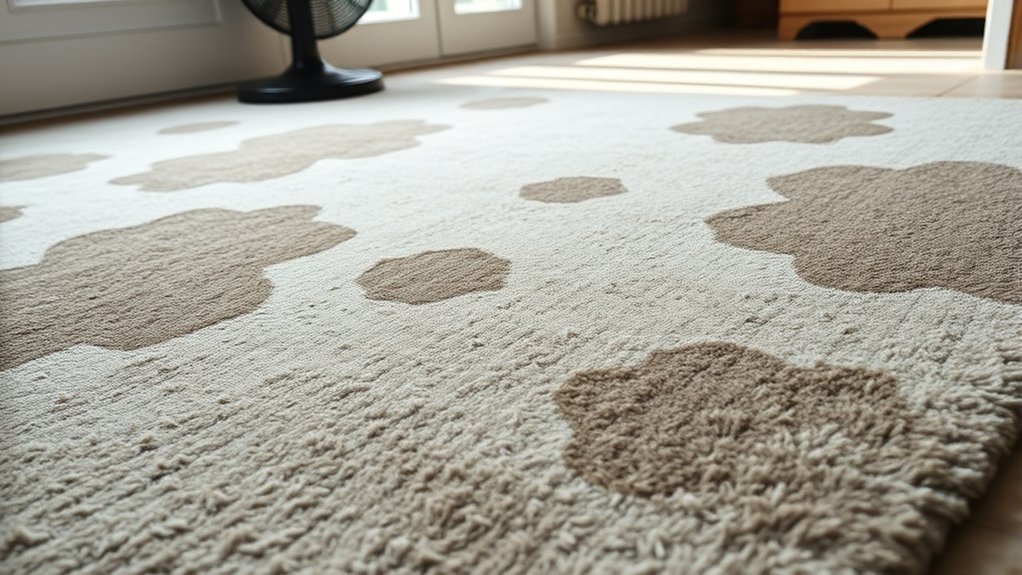
A rug may smell after cleaning because moisture or contamination remains below the surface. The pile can feel almost dry while the backing, separate pad, or floor underneath is still damp.
Prolonged moisture creates conditions in which mold and other microbial growth can develop. The U.S. Environmental Protection Agency recommends drying wet carpet and backing as quickly as possible and generally within 24 to 48 hours after water exposure to reduce the chance of mold growth.
Odors can also return when cleaning rewets an old spill or pet accident. In other cases, too much detergent or inadequate rinsing leaves residue in the fibers. The Carpet and Rug Institute notes that cleaning residues should be thoroughly rinsed because they can remain in carpet and attract soil.
What Does the Smell Tell You?
- Musty or damp-basement smell: Check for slow drying, trapped moisture, or possible mold growth.
- Sharp or urine-like smell: An old pet accident may have reached the backing, pad, or flooring.
- Soapy or chemical smell: Too much cleaning solution or incomplete rinsing may be involved.
- Original dirty odor returning: Moisture may have brought deeper contamination back toward the surface as the rug dried.
The smell alone cannot prove that mold is present, so start by finding the moisture source and checking how thoroughly every layer has dried.
Is Moisture Trapped in the Rug Pad?
Yes. Moisture can remain underneath a rug even when the exposed fibers feel dry. With an area rug, carefully lift an edge and check the backing, separate rug pad, and floor. All three should be dry before the rug is put fully back in place.
For installed wall-to-wall carpet, the pad beneath the carpet is harder to inspect. If the carpet was heavily saturated and the odor seems to come from below, professional extraction or inspection may be necessary.
- A cool, damp backing indicates the rug has not finished drying.
- A wet pad can keep transferring moisture and odor back into the rug.
- A hard floor beneath the rug must also be dried before the rug is laid flat again.
- Persistent odor from one specific area can point to an old spill or pet accident below the surface.
The EPA specifically advises drying carpet backing or padding along with the carpet itself. Leaving the lower layers wet can allow the moisture problem to continue even when the pile appears normal.
Did Over-Wetting Cause the Musty Smell?
Over-wetting is a likely explanation when a rug develops a musty smell after cleaning and remains noticeably damp for an unusually long time. It can happen when too much water or cleaning solution is applied or when the machine does not extract enough liquid during each pass.
Over-Wetting Signs
Look for signs that moisture has moved deeper than the surface:
- A soggy, unusually heavy, or cool feel
- Wetness on the backing or pad
- A musty smell that becomes stronger as the rug sits
- Damp flooring beneath an area rug
- Very slow drying in a humid or poorly ventilated room
A musty smell does not automatically prove mold growth, but a rug that stays wet deserves prompt attention. EPA moisture guidance emphasizes drying wet materials quickly, ideally within 24–48 hours.
Drying Fixes
If the rug is still damp, focus on removing moisture rather than adding more cleaner.
- Extract or blot excess water. Use clean absorbent towels for small damp areas. For a very wet rug, a suitable wet-extraction machine or professional service can remove much more water.
- Increase airflow. Run fans so air moves across the rug rather than remaining stagnant.
- Lower the room humidity. Use a dehumidifier or air conditioner, particularly when outdoor air is humid.
- Dry the underside. If the rug can be safely lifted, allow air to reach the backing. Dry the rug pad and floor separately if they are wet.
- Check before replacing furniture. The pile, backing, pad, and floor should all be dry first.
Pro Tip: A dehumidifier is especially useful in humid weather because opening windows can sometimes bring more moisture into the room instead of helping the rug dry.
Warning: Do not use concentrated heat from a hairdryer, space heater, or similar appliance as a general rug-drying method. Heat can affect dyes, fibers, adhesives, or backing materials. Direct sunlight can also fade or damage light-sensitive textiles. Follow the rug maker’s care instructions, especially for wool, silk, handmade, antique, Oriental, or Persian rugs.
Why Do Pet Urine Odors Come Back?
Pet urine odors can return after cleaning because the original accident may have penetrated farther than the visible pile. Moisture from cleaning can reach contamination in the backing, pad, or floor and make the odor noticeable again.
The Carpet and Rug Institute’s pet-urine guidance also notes that urine can affect carpet dyes and that older deposits can cause permanent changes.
- Blot fresh accidents promptly rather than scrubbing them deeper into the fibers.
- Avoid saturating the rug while trying to remove the smell.
- Use a product and method approved for the rug’s fiber and construction.
- If urine has reached the backing, pad, or flooring, surface deodorizing alone may not solve the problem.
For carpet urine spots, CRI advises extraction and cool-water rinsing rather than applying steam directly to the contaminated spot. Valuable or specialty rugs should be handled according to their care instructions or by an experienced rug-cleaning professional.
How Can You Dry a Rug Faster?
Faster drying comes from combining water removal, airflow, and humidity control. Start by extracting or blotting as much liquid as possible. Then run fans across the rug and use a dehumidifier or air conditioner when the room is humid.
The EPA recommends drying wet carpet and backing quickly—generally within 24 to 48 hours—to reduce the chance of mold growth.
If the rug is movable and its construction allows it, raise or position it so air can reach the underside. Do not put a damp rug back on a wet pad or floor, because that traps moisture where evaporation is slowest.
The Carpet and Rug Institute states that properly extraction-cleaned installed carpet should generally be dry within about 12 hours. Area-rug drying time can vary more because thickness, backing, fiber, cleaning method, airflow, and humidity differ widely.
Open windows only when the outdoor air is reasonably dry. In muggy weather, conditioned indoor air plus a dehumidifier may work better.
How Do Baking Soda and Vinegar Help?
Baking soda and white vinegar are sometimes useful for specific odor or spot-cleaning situations, but neither is a substitute for fixing trapped moisture or deep contamination.
Baking soda can help with some surface odors after a rug is fully dry, provided the rug manufacturer permits its use and the powder can be removed completely. It should not be relied on to dry wet backing or padding.
White vinegar is an acidic cleaner that the Carpet and Rug Institute includes in certain carpet spot-removal procedures. For example, CRI describes a mixture of one cup white vinegar to two cups water for certain applications. Its purpose in those procedures includes reducing alkalinity left by some detergents or spills.
That does not mean vinegar should be sprayed onto every rug. Dyes, fibers, backing materials, and finishes vary. Always check the care label or manufacturer instructions and test any permitted cleaner in an inconspicuous area first.
Note: For silk, handmade, antique, heirloom, Oriental, Persian, or otherwise valuable rugs, avoid experimenting with household cleaning mixtures unless the rug maker or a qualified rug-care professional confirms that the method is appropriate.
When Should You Call a Rug Cleaning Pro?
Professional help makes sense when the smell remains after the rug and everything underneath it have been thoroughly dried, or when the contamination has reached layers you cannot safely clean yourself.
Consider professional assessment when:
- The rug remains distinctly damp despite strong airflow and dehumidification.
- A urine odor repeatedly returns from the same area.
- The rug was heavily saturated and the pad or flooring underneath is also wet.
- Visible mold appears on the rug, backing, pad, or nearby surfaces.
- There was extensive water damage or the water may have been contaminated.
- The rug has bleeding dyes, fragile fringe, damaged backing, or other visible deterioration.
- The rug is silk, handmade, antique, heirloom, Oriental, Persian, or otherwise valuable.
The EPA’s mold-cleanup guidance advises professional help for substantial water damage, contaminated-water situations, and larger mold problems. It uses an area of roughly 10 square feet as an important threshold when deciding how to approach mold cleanup.
For valuable rugs, a specialist who cleans rugs off-site may be more appropriate than a general wall-to-wall carpet cleaner.
How Can You Prevent Rug Odors Next Time?
Preventing post-cleaning odor mainly means avoiding excess moisture and residue and making sure the entire rug system dries promptly.
- Follow the rug manufacturer’s care label and cleaning instructions.
- Vacuum regularly so grit and organic debris do not build up in the pile.
- Blot spills promptly with a clean white absorbent cloth instead of scrubbing.
- Use only as much cleaning solution as directed.
- Rinse permitted cleaning products thoroughly so residue does not remain in the fibers.
- Avoid saturating the rug or repeatedly passing a wet-cleaning machine over the same spot.
- Use fans, air conditioning, or dehumidification immediately after wet cleaning.
- Make sure the rug backing, pad, and floor are dry before putting everything back in place.
The Carpet and Rug Institute recommends professional deep cleaning of residential carpet about every 12 to 18 months, although the rug or carpet manufacturer’s own instructions and warranty requirements should take priority.
CRI also advises following manufacturer specifications or using appropriate professional care for Oriental, Turkish, Persian, and heirloom-type rugs.
Frequently Asked Questions
Why does my rug have a musty smell after being cleaned?
A musty smell usually suggests that part of the rug, backing, pad, or floor stayed damp too long. Increase airflow, reduce humidity, and check underneath the rug. A musty odor alone does not prove mold is present, but prolonged moisture should be corrected quickly.
How do I stop a rug from smelling damp?
Remove as much excess water as possible, run fans across the rug, lower indoor humidity with a dehumidifier or air conditioner, and make sure the underside, rug pad, and floor also dry. Do not keep adding deodorizer to a rug that is still wet.
Is it okay for carpet to be damp after cleaning?
Slight dampness immediately after wet cleaning can be normal, but the carpet should keep drying rather than remain wet. CRI says properly extraction-cleaned carpet should generally be dry within about 12 hours, while EPA guidance emphasizes getting wet carpet and backing dry within 24–48 hours to reduce mold risk.
How long does it take for carpet to stop smelling after cleaning?
A temporary damp-cleaning smell should fade as the carpet dries. Properly extraction-cleaned carpet is generally expected to dry within about 12 hours under suitable conditions. If a musty, urine-like, or sour odor remains after the carpet is fully dry, look for trapped moisture, residue, or deeper contamination rather than simply waiting longer.
Can a rug feel dry on top but still be wet underneath?
Yes. Moisture can remain in dense backing, a separate rug pad, or the floor underneath after the exposed pile feels dry. Lift an area-rug edge when it is safe to do so and check every layer before laying it flat again.
Is vinegar safe for every rug?
No. Diluted white vinegar appears in some carpet spot-cleaning procedures, but rug fibers, dyes, backings, and finishes differ. Check the manufacturer’s care directions and pretest any approved cleaner. Valuable, silk, handmade, antique, Oriental, or Persian rugs are better handled conservatively or professionally.
Conclusion
When a rug smells after cleaning, the first thing to investigate is moisture—not fragrance. Check the pile, backing, pad, and floor, then use extraction, airflow, and humidity control to dry every layer thoroughly. If an odor returns after the rug is dry, pet urine, cleaning residue, or other deep contamination may still be present.
Use household cleaners cautiously because not every rug tolerates the same treatment. For valuable or delicate rugs, recurring urine odor, visible mold, extensive saturation, or contaminated water, professional assessment is the safer approach.
Sources
- U.S. Environmental Protection Agency — A Brief Guide to Mold, Moisture and Your Home — supports moisture control and the 24–48-hour drying guidance.
- U.S. Environmental Protection Agency — Mold Cleanup in Your Home — supports escalation guidance for larger mold problems and significant water damage.
- Carpet and Rug Institute — Cleaning and Maintenance — supports rug-care, carpet-cleaning, residue, pet-accident, and professional-cleaning recommendations.
- Carpet and Rug Institute — Pet Urine and Carpet Technical Bulletin — supports guidance about pet-urine contamination and possible dye damage.
- Smithsonian Institution — Antique Textile Storage and Care — supports the caution that sunlight can damage light-sensitive textile fibers and dyes.