The main beef liver benefits come from its unusually dense supply of vitamin A, vitamin B12, folate, riboflavin, iron and copper. That density is why fans call it nature’s multivitamin. The label is partly fair, but liver is also so concentrated that too much can cause trouble, and no trial has shown that eating it improves long-term health outcomes.
Quick Answer
Beef liver is one of the most nutrient-dense foods, with a single 3-ounce serving supplying several times the daily value of vitamin A, B12, riboflavin and copper. The benefit is mainly filling nutrient gaps, not proven disease prevention. Because it is so concentrated, portion size and frequency matter, and some people should avoid it or ask a clinician first.
Key Takeaways
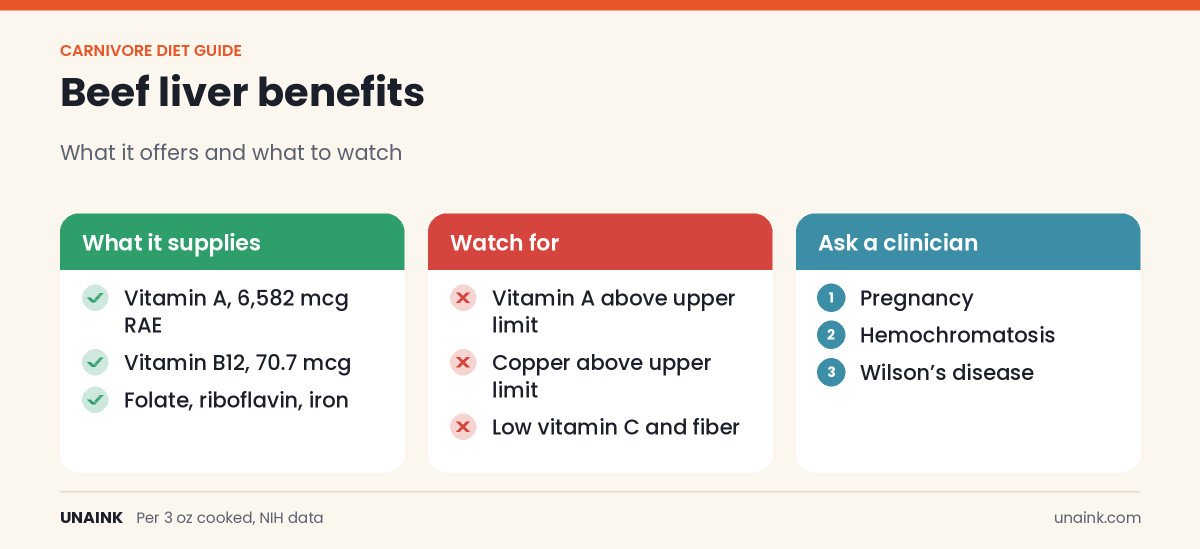
- A 3-ounce serving of pan-fried liver supplies 70.7 mcg of vitamin B12 and 6,582 mcg RAE of vitamin A, per NIH data.
- It also provides meaningful folate, riboflavin, iron and a very large amount of copper.
- Nature’s multivitamin is an overstatement: liver is low in vitamin C, vitamin D, calcium and fiber.
- One serving can exceed the daily upper limit for preformed vitamin A and copper, so frequency matters.
- Pregnancy, hemochromatosis and Wilson’s disease are reasons to check with a clinician before eating liver.
What Makes Beef Liver So Nutrient Dense
The liver stores and processes nutrients for the animal, so it holds high levels of several vitamins and minerals. The figures below come from the National Institutes of Health Office of Dietary Supplements fact sheets for a 3-ounce portion of cooked liver.
| Nutrient | 3 oz cooked liver | Adult daily need |
|---|---|---|
| Vitamin A | 6,582 mcg RAE | 700 to 900 mcg RAE |
| Vitamin B12 | 70.7 mcg | 2.4 mcg |
| Folate | 215 mcg DFE (braised) | 400 mcg DFE |
| Riboflavin | 2.9 mg | 1.1 to 1.3 mg |
| Iron | About 5 mg | 8 to 18 mg |
| Copper | 12,400 mcg | 900 mcg |
Vitamin A, B12 and Folate
Vitamin A supports vision, immune function and normal cell growth, and one serving of liver covers many times the daily need. Vitamin B12 is needed for nerve function and red blood cell formation, and liver is among the richest sources. Folate helps the body make DNA and red blood cells. For people who struggle to get these from other foods, small amounts of liver can help close gaps.
Iron, Copper and Riboflavin
Liver provides heme iron, which is absorbed more readily than the iron in most plant foods, and it supplies riboflavin (vitamin B2) for energy metabolism. Copper helps with iron handling and nerve and connective tissue function. Read how this plays out in anemia on carnivore and whether you need organ meat.
Is It Really Nature’s Multivitamin?
Only in part. Liver is low in vitamin C, contains little vitamin D, calcium or magnesium, and has no fiber. The 2026 carnivore diet scoping review flagged those same gaps, and noted that vitamin A intake in some liver-heavy plans was well above recommendations. Liver complements a varied diet but does not replace one. See nutrient deficiency on carnivore.
What the Research Does Not Show
The nutrient numbers are well documented. What is not established are claims about energy, fertility, skin, mood or disease prevention from eating liver. Those mostly rest on anecdotes and on the logic that correcting a deficiency helps. If you are not deficient, extra amounts add risk without a proven benefit. A pattern like nose-to-tail eating can be nutritious, yet it remains unstudied in large trials.
Risks and Who Should Be Careful
The tolerable upper intake level for preformed vitamin A is 3,000 mcg a day for adults, and for copper it is 10,000 mcg a day. A single 3-ounce serving can exceed both, which is why liver is best eaten in modest, infrequent portions. Chronic excess vitamin A can raise liver enzymes, and too much copper can cause stomach upset and liver damage.
- Pregnancy: preformed vitamin A above the upper limit is linked to birth defects, so talk with your obstetric provider before eating liver.
- Hemochromatosis: people who absorb too much iron should avoid iron-rich foods unless a clinician approves.
- Wilson’s disease: copper buildup makes liver unsafe for these patients.
- Gout or kidney stones: organ meats are often limited, so ask your care team.
- Children: do not feed liver in quantity without pediatric advice.
Using Liver Sensibly
For people who are eligible, a small portion occasionally is a common approach. See how much liver per week, how to clean beef liver and how to cook beef liver. Cook it to 160°F, the USDA temperature for ground meat, and not rare, to reduce food-safety risk.
Beef Liver Benefits: The Short Version
The best-supported beef liver benefits are nutrient supply, especially vitamin A, B12, folate, riboflavin and copper. Those beef liver benefits come with real limits, so keep portions small and talk with a clinician if you are pregnant or have iron or copper disorders.
Frequently Asked Questions
How much beef liver is safe to eat?
There is no single answer. One 3-ounce serving can exceed the upper limits for vitamin A and copper, so most people keep servings small and infrequent. A dietitian can personalize this.
Is beef liver better than a multivitamin?
It supplies several nutrients in food form, but it lacks vitamin C, vitamin D, calcium and fiber. It is not a complete substitute.
Can you eat beef liver while pregnant?
Preformed vitamin A above the upper limit is linked to birth defects, so check with your obstetric provider first.
Does liver store toxins?
The liver processes substances but is not a toxin sponge. The real concern is nutrient overload, especially vitamin A and copper.
What does liver do for energy?
Its B12, iron and riboflavin support normal energy metabolism, mainly if you were low in them. Extra beyond need is unlikely to boost energy.
Conclusion
Liver is a remarkably dense food and can be a useful occasional addition, yet the multivitamin label overreaches. Treat it as a nutrient-rich ingredient, watch portions, and speak with a doctor or dietitian if you are pregnant, take supplements or have a condition affecting iron, copper or the liver. In short, beef liver benefits are real but easy to overstate, so keep portions modest. The beef liver benefits come from its vitamin A, B12, iron and copper, not from any magic.
Medical note
This article is for general education and is not medical advice. Talk with a doctor or registered dietitian before making major diet changes, especially if you have a health condition, take medication, or are pregnant or breastfeeding.
Keep Reading
- What Are Organ Meats?: A guide to the most common types.
- How to Cook Beef Liver: Safe, tasty preparation.
- How Much Liver Per Week on Carnivore: Portion and frequency guidance.
- Beef Liver vs Chicken Liver: How the two compare.
Sources
- NIH Office of Dietary Supplements: Vitamin A: Liver content, upper limit, pregnancy warning
- NIH Office of Dietary Supplements: Vitamin B12: B12 content of liver
- NIH Office of Dietary Supplements: Copper: Copper content and upper limit
- NIH Office of Dietary Supplements: Folate: Folate content of liver
- NIH Office of Dietary Supplements: Iron: Iron content and hemochromatosis caution
- NIH Office of Dietary Supplements: Riboflavin: Riboflavin content of liver
- Carnivore Diet: A Scoping Review of the Current Evidence: Nutrient gaps and high vitamin A in some plans
- USDA FSIS safe temperature chart: Safe cooking temperatures