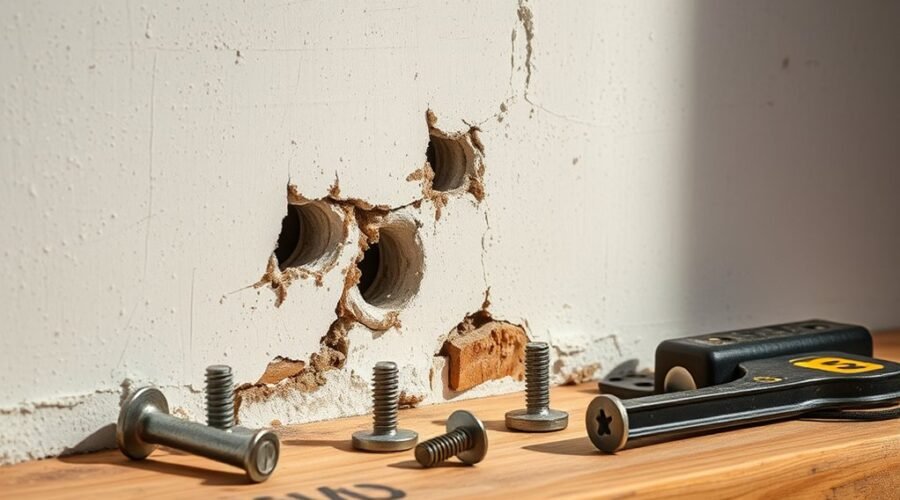
Drywall anchors usually pull out because the anchor is overloaded, the hole is damaged or oversized, the drywall is weak, or the hardware is not suited to the way the fixture loads the wall. A lasting repair means fixing any damaged drywall first, then using sound material, a correctly rated anchor, a toggle-style fastener, or wall framing as the job requires.
Quick Answer
If a drywall anchor keeps pulling out, do not simply push it back into the damaged hole or pack spackle around it. Remove the failed hardware, inspect the drywall, patch damaged areas when needed, and reinstall into sound drywall with a properly rated anchor, a toggle bolt, or a wall stud.
Key Takeaways
- Choose anchors by the manufacturer’s rating, drywall thickness, load direction, and wall condition—not by a universal weight cutoff.
- A loose or torn-out anchor should not be made structural again by packing spackle or joint compound around it.
- Toggle-style anchors spread force over the back of the drywall and are often better for fixtures exposed to repeated pulling or heavier loads.
- Use framing whenever the fixture instructions require it or when the item supports a person, experiences strong dynamic loads, or could cause serious injury if it falls.
At a Glance
| Time Required | About 15–45 minutes of active work; patching and paint may require additional drying time. |
| Difficulty | Easy to moderate, depending on wall damage and the replacement anchor. |
| Tools Needed | Screwdriver, pliers, drill and correct bit if required, stud finder, putty knife, and patch compound as needed. |
| Cost | Usually low for a small repair; total cost depends on the replacement anchor, fixture hardware, and amount of drywall repair required. |
Why Drywall Anchors Pull Out
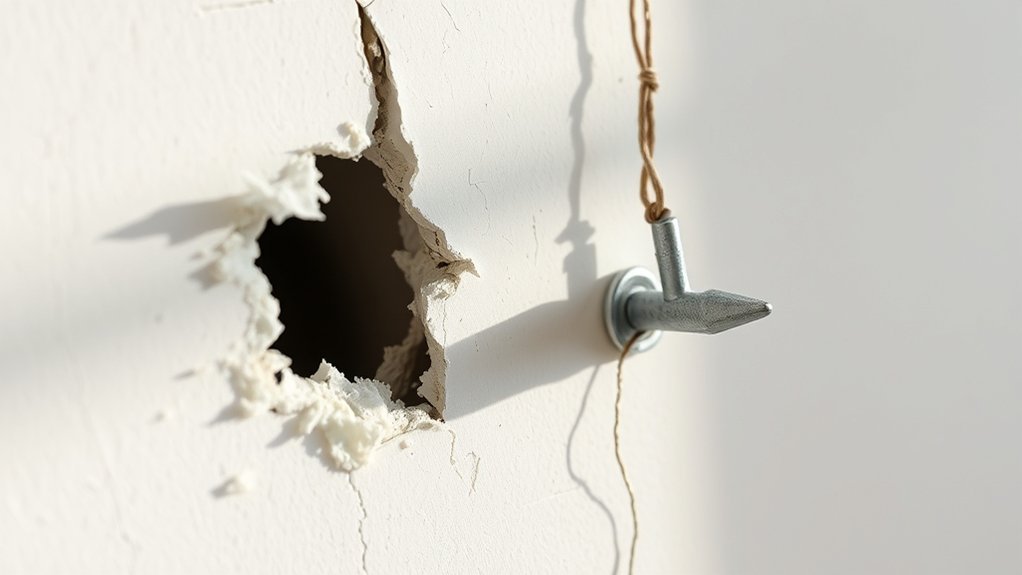
Drywall anchors pull out when the load and installation conditions exceed what the anchor-and-wall system can safely resist. The most common causes are an oversized or damaged hole, weak drywall, the wrong anchor type, poor installation, excessive loading, or repeated outward force on the fixture.
A towel bar, curtain bracket, shelf, or hook can be harder on an anchor than a picture of the same weight because people pull, bump, or lever the fixture away from the wall. A fixture that projects farther from the wall can also increase leverage on the anchor.
Water-damaged, soft, swollen, or crumbling drywall is another warning sign. Do not depend on an anchor installed in deteriorated gypsum. Repair the damaged wall material and correct the moisture source before remounting the fixture.
Pull-Out Vs Shear Load
Anchor ratings are not one simple number. Pull-out or tension force tries to pull the anchor straight out of the wall. Shear force acts mainly downward across the face of the wall. Many products have very different ratings for the two directions.
For example, Cobra lists its WallDriller Plus #6 in 1/2-inch drywall at a safe load of 40 lb in pull-out and 105 lb in shear. Larger sizes have different ratings. This is why saying an anchor “holds 105 lb” without identifying the load direction can be misleading. See the manufacturer’s WallDriller Plus specifications for the current size-specific data.
The safest anchor choice depends on the exact product rating, drywall thickness, wall condition, load direction, and installation—not object weight alone.
Choose Anchors by Item Weight
Item weight still matters, but it should be treated as one part of the selection process. Start by weighing or estimating the complete loaded fixture, including anything that will later be placed on a shelf, rack, cabinet, or bracket.
Then check the anchor manufacturer’s published rating for the same drywall thickness and the same type of loading. Do not substitute an ultimate laboratory failure number for a recommended working load.
Light Vs Heavy Items
Light decorations that sit close to the wall often place modest demands on drywall, so a properly installed light-duty anchor may be sufficient when its manufacturer approves the application.
As weight, leverage, or repeated handling increases, a stronger hollow-wall system becomes more appropriate. Toggle bolts, strap-style toggles, and similar anchors work by engaging a larger area behind the drywall rather than relying only on friction at the drilled hole.
For very heavy, high-consequence, or dynamic loads, wall framing is usually the better target when the fixture instructions allow or require it.
Warning: Do not support hammocks, grab bars, climbing equipment, suspended seats, or other human-support loads with ordinary drywall-only anchors unless the complete mounting system is specifically engineered and approved for that use. Secure these applications to suitable structural framing or another approved structural attachment.
Match Anchor Strength
Before choosing an anchor, verify all of the following:
- The total loaded weight of the fixture.
- The drywall thickness and condition.
- Whether the dominant force is pull-out, shear, or a combination.
- The number and spacing of mounting points.
- The anchor’s required hole diameter and cavity clearance.
- Any mounting restrictions from the fixture manufacturer.
Manufacturer data also shows why the details matter. TOGGLER publishes high ultimate test values for its SNAPTOGGLE anchors, but its technical data states that industry standards recommend using one-quarter of ultimate test load as a working-load guide and that substrate condition, hole diameter, bolt size, and distance of the load from the wall affect holding strength. See the SNAPTOGGLE technical data.
Note: A manufacturer’s “ultimate” test value is the load reached during a test failure condition. It should not automatically be treated as the allowable load for your installation.
How to Fix Loose Drywall Anchors
Once an anchor has started moving, the first task is to determine whether the anchor itself is loose or the surrounding drywall has already broken down. Do not keep tightening a spinning anchor; that can enlarge the hole and crush more gypsum.
1. Remove the Fixture and Load
Support the item before loosening its screws. Remove anything stored on a shelf or rack so the failing anchor is not carrying weight while you work.
2. Inspect the Drywall
Look for a clean, intact hole, torn face paper, crumbled gypsum, cracking, softness, or water damage. If the surrounding board is weak, repairing or replacing the damaged drywall is more important than installing a larger anchor.
3. Remove the Old Anchor Carefully
Some plastic or self-drilling anchors can be unscrewed. Others can be gripped carefully with pliers. A traditional toggle’s wings normally fall behind the wall when the bolt is fully removed. Avoid aggressively ripping an anchor through the face paper, because that can turn a small repair into a larger one.
4. Decide Whether the Location Is Still Usable
If the drywall around the opening is intact and a manufacturer-approved toggle or hollow-wall anchor is designed for an opening of that size, the same general location may still be usable.
If the hole is ragged, enlarged beyond the replacement anchor’s specification, or surrounded by crushed drywall, patch it and move the new mounting point to sound material or a stud.
5. Patch Damaged Drywall
Use patching compound or joint compound to repair the wall surface—not to create a structural anchor socket. USG’s drywall repair guidance calls for cleaning loose material from small holes before filling them and uses more substantial repair methods for larger or water-damaged openings. See the USG drywall repair guidance.
Let the repair fully harden before sanding, priming, and painting according to the patch-product instructions.
Pro Tip: If you can shift the bracket slightly and land on a stud without compromising the fixture layout, that often provides a simpler and more robust mounting point than trying to rescue badly damaged drywall.
6. Install the Correct Replacement
Follow the replacement anchor’s instructions exactly. Use the specified drill-bit size, confirm enough space exists behind the wall, seat the anchor correctly, and stop tightening once the fixture is snug. Overtightening can crush drywall or damage the anchor mechanism.
Before drilling a new location, check for possible electrical wiring, plumbing, blocking, or other hidden obstructions. Use appropriate locating tools and avoid drilling blindly where utilities may run.
When Toggle Bolts Work Better
Toggle bolts are useful when a hollow section of drywall must support a load that exceeds what a lighter expansion or self-drilling anchor can handle. The metal or reinforced element opens or rotates behind the wall and spreads force over a larger bearing area.
They are especially useful for fixtures that experience repeated handling, provided the anchor manufacturer rates the product for the fixture, wall thickness, and load.
- Confirm the required drywall thickness and rear-wall clearance.
- Mark the mounting point and check for hidden utilities.
- Drill the exact hole diameter specified by the anchor manufacturer.
- Insert or rotate the toggle mechanism behind the wall as instructed.
- Pull or seat the mechanism so it bears correctly against the back of the drywall.
- Install the fixture and tighten only until it is firmly seated.
For example, Cobra’s FlipToggle 1/4-inch model is currently listed for 1/2-inch drywall at a safe load of 74 lb in pull-out and 137 lb in shear. Those numbers apply to that specific product and test configuration—not to every toggle bolt. See the Cobra FlipToggle specifications.
Best Anchors for Heavy Items
There is no single “best” drywall anchor for every heavy object. The correct choice depends on how the item loads the wall, the number of attachment points, drywall condition, cavity depth, and the fixture manufacturer’s mounting requirements.
Toggle Bolts For Heavy Loads
Toggle bolts and heavy-duty hollow-wall anchors are useful because they develop a broad bearing surface behind the panel. This generally gives them more resistance to pull-out than a light plastic expansion anchor installed only in the gypsum surrounding a small hole.
However, large test numbers should be interpreted carefully. For example, TOGGLER reports ultimate tensile pull-out values of 238 lb and higher for several SNAPTOGGLE models in 1/2-inch drywall, while the same technical sheet says industry standards recommend one-quarter of ultimate test load and warns that substrate condition affects capacity.
Also verify the space behind the wall. Some toggle systems require substantial clearance for the channel or wings to turn and seat correctly.
Strap Toggles And Easy Anchors
Strap-style toggles are convenient because the metal channel can often be positioned behind the drywall before the bolt is installed. This can make fixture placement easier and may allow the bolt to be removed later without losing the anchor behind the wall, depending on the product.
Self-drilling drywall anchors are faster to install and can work well for appropriately rated loads. Their capacity still depends on anchor size, drywall thickness, and load direction. Cobra’s WallDriller Plus, for example, has separate pull-out and shear ratings by size and specifically states that it should not be used for mounting televisions.
Do not assume that an anchor marketed as “heavy duty” automatically makes a fixture safe. Follow both the fixture manufacturer’s and anchor manufacturer’s mounting instructions.
How to Keep Anchors From Loosening
Preventing another pull-out starts with matching the hardware to the real installation rather than simply choosing a larger anchor.
- Verify the fully loaded fixture weight.
- Identify whether the load pulls outward, downward, or both.
- Check the drywall for softness, cracks, torn paper, or moisture damage.
- Use the exact drill size required by the anchor manufacturer.
- Confirm sufficient cavity depth behind the drywall.
- Keep the anchor and screw aligned with the fixture hole.
- Do not overtighten the screw and crush the gypsum.
- Use framing when required by the fixture instructions or the consequences of failure are high.
- Recheck frequently handled fixtures if you notice movement, cracking, or a growing gap at the bracket.
Common Drywall Anchor Repair Mistakes
Putting the same anchor back into the stripped hole: once the gypsum has broken away, the anchor may no longer have material to grip.
Packing the hole with spackle and immediately reinstalling the anchor: patch compound can restore the finished surface, but it does not automatically recreate intact drywall with the original structural capacity.
Using the largest anchor that will fit: larger hardware is not automatically safer. It still needs suitable drywall, the correct hole size, adequate rear clearance, and an appropriate rating.
Ignoring pull-out force: a fixture that projects from the wall or gets pulled repeatedly may impose more tension than a flush-mounted object of similar weight.
Using drywall anchors for body-support loads: body weight, swinging, grabbing, or impact can create dynamic forces that ordinary wall anchors are not intended to handle.
Frequently Asked Questions
Why do my drywall anchors keep pulling out?
Repeated pull-outs usually mean the anchor is overloaded, the hole is enlarged, the drywall is damaged, the anchor is installed incorrectly, or the fixture creates more outward leverage than the anchor can resist. Check the wall condition and the manufacturer’s pull-out and shear ratings before reinstalling.
What should I do when a drywall anchor pulls out?
Remove the fixture and failed anchor, inspect the drywall, and clean away loose material. If the hole is damaged, patch it and move to sound drywall or a stud. If the opening remains structurally sound and matches a properly rated toggle-style anchor, that type of anchor may be able to use the location.
Why won’t my drywall anchors stay in?
Common reasons include an oversized drilled hole, crumbling drywall, using the wrong screw with the anchor, overtightening, poor anchor expansion, excessive weight, or repeated pulling on the fixture. A spinning anchor should not be trusted until the cause is corrected.
Should you pull out drywall anchors?
A secure anchor can usually stay in place until it is no longer needed. For removal, follow the anchor design: some unscrew, some can be pulled carefully, and traditional toggle wings normally fall into the wall cavity when the bolt is removed. Avoid tearing an anchor through the drywall face.
Can I reuse the same hole after an anchor pulls out?
Sometimes, but only if the surrounding drywall remains sound and the replacement anchor is specifically designed for the existing opening. A ragged, crumbling, oversized, or water-damaged hole should be repaired, and the new fastener should be installed in sound material.
Conclusion
Drywall anchors stay secure when the wall is sound, the hole is correctly sized, and the hardware matches the actual load. When an anchor pulls out, fix the cause rather than forcing the same anchor back into damaged gypsum. Patch damaged drywall for surface restoration, move to sound material when necessary, and use an appropriately rated toggle or wall framing for demanding fixtures. Manufacturer ratings and installation instructions should always take priority over generic weight rules.
Sources
- Cobra Anchors — WallDriller Plus — size-specific pull-out and shear ratings, supported drywall thicknesses, and mounting restrictions.
- Cobra Anchors — FlipToggle — safe working load examples and product installation specifications.
- TOGGLER — SNAPTOGGLE Heavy-Duty Toggle Bolts Technical Data — ultimate pull-out/shear data, required hole sizes, clearance, and working-load guidance.
- USG — Drywall Repair How-To — drywall hole and panel repair guidance.