If you want to display a collection without making a room feel busy, start by giving it a defined zone and a clear purpose. Use shelves, wall displays, cabinets, or built-ins to keep unrelated objects from spreading across every surface. Group pieces by theme, color, material, or story, vary their scale, and leave visible gaps so the collection reads as one display instead of scattered clutter.
Quick Answer
To display collections without making a room look cluttered, give each collection a defined zone, show only the strongest pieces, vary height and scale, and leave visible gaps between groups. Use vertical shelving or closed cases when appropriate, keep heavy items low, protect light-sensitive objects from direct sunlight, and rotate stored pieces periodically.
Key Takeaways
- Give each collection a defined shelf, cabinet, wall, tray, or other visual boundary.
- Show a selective group instead of trying to display every piece at once.
- Use negative space, varied heights, and repeated colors or materials to create visual order.
- Choose closed cases for better dust protection and use UV-filtering glazing when light-sensitive objects need additional protection.
- Secure tall furniture, respect shelf and mounting weight limits, and keep heavier objects on lower shelves.
- Rotate, store, and clean the collection according to the materials involved rather than using one care method for everything.
At a Glance
| Time Required | About 20–45 minutes to edit and style one shelf or small display area |
| Difficulty | Easy for styling; moderate if installing shelves or wall-mounted hardware |
| Tools Needed | Microfiber cloth, measuring tape, and optional level, mounting hardware, risers, trays, or display cases |
| Cost | Potentially $0 with existing furniture; higher if you add shelves, cases, lighting, or mounting hardware |
Pick One Collection to Feature First
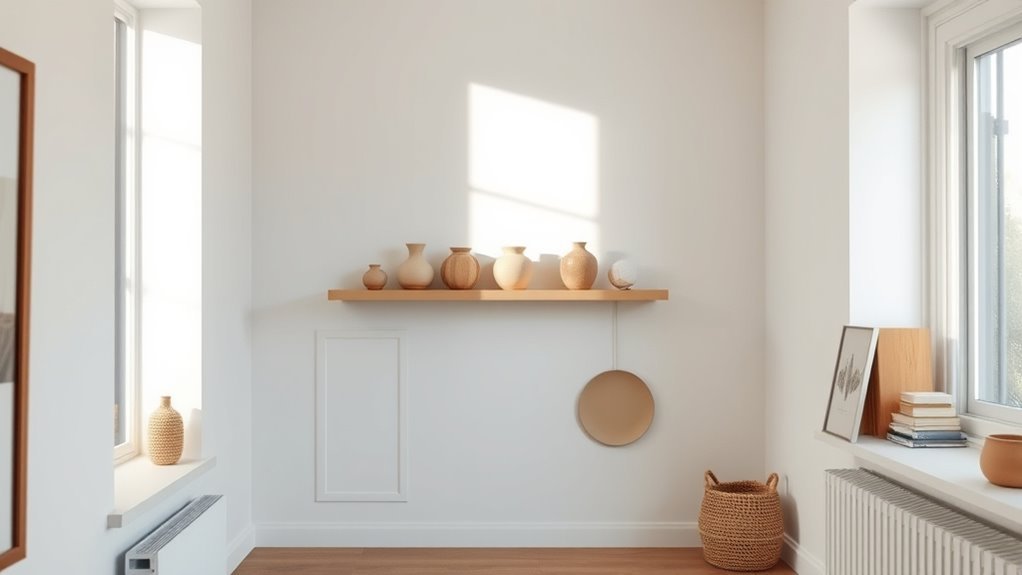
Start with one collection and give it a specific display zone. That boundary might be one shelf, the top of a console, a cabinet, a wall section, or a tray. Keeping related pieces together makes the display easier to read and prevents collectibles from spreading across the room.
Choose the group that tells the clearest story or contains the pieces you most want to enjoy. Instead of following a fixed item count, begin with a few strong pieces and add more only while the arrangement still has visible breathing room. Three to five objects can work well on a small shelf, but larger shelves and very small collectibles may support more.
Keep the backdrop simple when the collection itself contains many colors, shapes, or textures. Neutral walls, uncluttered shelving, or a repeated background material can help separate the collection from the rest of the room.
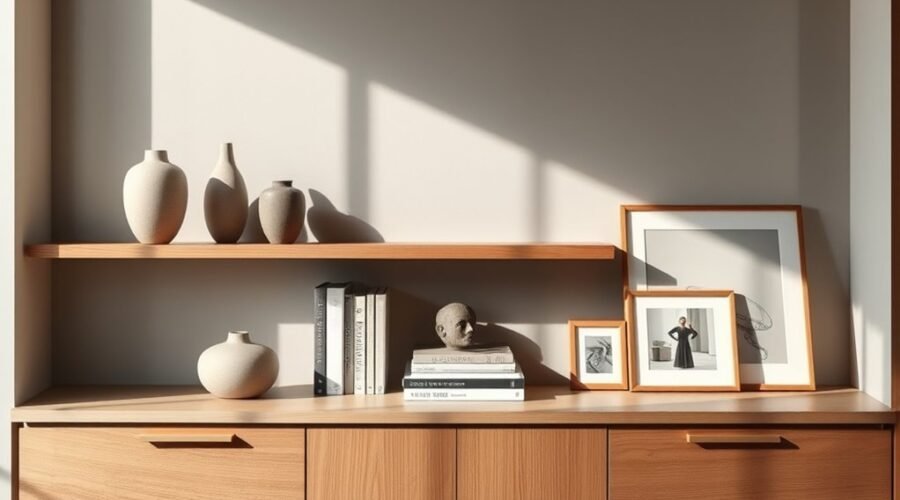
Vary height and scale so the display does not become a straight row. A taller vase, framed object, or sculptural item can act as an anchor, while smaller pieces can form supporting groups around it.
Pro Tip: Take a phone photo after arranging the shelf. A photograph often makes crowded areas, awkward gaps, or competing focal points easier to notice than they are when you are standing directly in front of the display.
When you want a change, rotate in another group rather than continually adding pieces to the existing display. Rotation gives more of the collection a turn without requiring every object to remain visible at once.
Choose the Right Display Case: Open or Closed
Open shelving works well when easy access matters and the objects can tolerate routine dusting. It feels visually light and makes rearranging simple, but it does not provide the same dust protection as an enclosed cabinet.
Choose a closed glass-front or acrylic-front cabinet when you want better protection from dust, accidental contact, or frequent handling. The Canadian Conservation Institute notes that display cases and other enclosures can reduce dust accumulation on exhibited objects.
| Option | Main Benefit | Best for |
|---|---|---|
| Open shelf or case | Easy access and a light visual feel | Durable items you rearrange often |
| Closed glass-front cabinet | Better dust and contact protection | Mixed or frequently handled collectibles |
| Clear acrylic enclosure | Minimal visual barrier and dust protection | Small or delicate individual pieces |
| Lit cabinet | Stronger visual emphasis | Durable display pieces when light exposure is controlled |
Adjustable shelves are useful because you can change the distance between objects instead of forcing everything into equal-height compartments. That flexibility helps large and small pieces share the same cabinet without looking compressed.
Lighting can add focus, but more light is not always better. For photographs, paper, textiles, dyed materials, and other light-sensitive objects, minimize unnecessary exposure and avoid direct sunlight. The Library of Congress explains that light damage is cumulative and can cause permanent fading, discoloration, and weakening.
Note: Do not assume ordinary glass or acrylic blocks enough ultraviolet light for a sensitive collection. If UV protection matters, choose glazing specifically sold or documented as UV-filtering or UV-absorbing.
Match the Display Method to the Collection
The best display method depends on what you collect. A ceramic figure, framed photograph, textile, metal object, and paper document do not have identical care needs, so avoid treating every collectible the same way.
| Collection Type | Useful Display Approach | Main Concern |
|---|---|---|
| Ceramics, glass, or sturdy figures | Open shelves or enclosed cabinets | Falls, chips, dust, and unstable shelving |
| Photos, prints, and paper items | Frames or enclosed displays with controlled light | Fading and cumulative light exposure |
| Textiles and dyed materials | Supported display with limited light exposure | Fading, dust, distortion, and prolonged exposure |
| Small keepsakes or miniatures | Compartment trays, shadowboxes, or acrylic enclosures | Visual clutter, dust, and loss |
| Heavy objects | Stable lower shelves or appropriately rated supports | Shelf failure, falls, and furniture instability |
If an item is valuable, fragile, historically important, or made from an unfamiliar material, use conservation guidance specific to that material before cleaning, mounting, or exposing it to prolonged light.
Display Collections on Walls, Shelves, and Built-Ins
Moving collections off tables and counters can free working surfaces while giving the display a dedicated home. Walls, floating shelves, ledges, and built-ins also let you use vertical space instead of spreading objects horizontally around the room.
- Use floating shelves to draw the eye upward and create a clear display zone.
- Install wall-mounted ledges for framed pieces or small objects you want to rearrange regularly.
- Use built-ins or freestanding shelving to give larger collections one consistent home.
- Leave open areas between groups instead of filling every available inch.
- Keep especially heavy pieces lower whenever practical so the arrangement has a more stable center of gravity.
A gallery wall can also display framed artwork, photos, prints, or flat memorabilia without taking up table space. Use consistent spacing, repeated frame colors, or a shared centerline to make different pieces feel connected.
Warning: Follow the shelf, bracket, anchor, and furniture manufacturer’s weight and installation instructions. Use mounting hardware appropriate for the wall type, and secure tall or top-heavy furniture where needed. The U.S. Consumer Product Safety Commission recommends anchoring furniture such as bookcases and keeping heavier objects on lower shelves to reduce tip-over risk.
As your collection grows, add capacity only when the display still looks deliberate and the structure can safely carry the load. More shelving is not automatically an improvement if it simply gives you more places to overcrowd.
Group Pieces by Theme or Color
Grouping related pieces creates visual order. You can connect objects by subject, color, material, era, origin, or even by the memory attached to them. The goal is not to make every object identical; it is to give the eye an obvious reason to understand why the items belong together.
| Theme | Repeated Element | Effect |
|---|---|---|
| Botanical | Green tones or plant motifs | Fresh and connected |
| Vintage | Brass, aged wood, or similar era | Warm and collected |
| Coastal | Blue, glass, shells, or natural textures | Light and relaxed |
On a small shelf, a group of three to five objects is often an easy starting point, but it is not a strict limit. Tiny items may work as a larger cluster, while one oversized object may need most of the shelf to itself.
Clear trays, shallow boxes, shadowboxes, or acrylic enclosures can help several small pieces read as one unit. That is especially useful for miniatures, souvenirs, stones, pins, or other collections that can otherwise appear scattered.
Mix Heights for a Balanced Look
Varying height keeps a display from looking like a straight line of unrelated objects. Start with one or two larger pieces, then build around them with medium and smaller items.
- Use stable risers, boxes, or stacked books to lift selected pieces.
- Mix taller and shorter objects instead of arranging everything at the same eye level.
- Use reflective surfaces sparingly when they genuinely add depth rather than visual noise.
- Let large pieces act as anchors while smaller objects form secondary groups.
- Avoid placing an unstable object on a riser simply to create height.
A good arrangement usually has more than one visual level but still gives the eye a clear place to start. If everything is equally tall, equally bright, or equally detailed, nothing becomes the focal point.
Leave Negative Space on Purpose
Open space is part of the arrangement, not wasted shelf space. A visible gap around a favorite object separates it from neighboring pieces and makes the overall collection easier to read.
You do not need equal spacing everywhere. Larger focal pieces can have more open area around them, while small related objects can sit closer together as a cluster.
Frame Each Piece
For artwork, photographs, prints, documents, or flat memorabilia, framing can create a clear boundary around each item. For three-dimensional collectibles, you can create the same effect with a tray, riser, compartment, backing panel, or a deliberate area of empty shelf.
- Use related frame finishes when you want different artworks to feel connected.
- Leave enough space between framed items for each one to read separately.
- Use simple mats or backings when a busy frame would compete with the object.
- Arrange pieces so there is a clear visual path from one part of the display to another.
This produces a gallery-like structure without requiring every object in the room to match.
Balance With Open Space
Negative space gives your eye somewhere to rest. Instead of filling every inch, alternate areas of detail with quieter areas so the arrangement has rhythm.
Use larger gaps around focal pieces and smaller gaps inside groups of related objects. This lets you highlight a favorite without adding another decorative item simply to fill the shelf.
If the display still feels busy after rearranging, removing one or two competing pieces usually works better than adding more accessories in an attempt to balance it.
Let Favorites Breathe
Give your most meaningful or visually strong pieces more space than supporting objects. When everything receives equal emphasis, the viewer has no clear place to look first.
- Start with your favorite or largest piece.
- Add supporting objects gradually.
- Stop before every gap is filled.
- Use a simple background if the objects themselves are visually complex.
- Move excess pieces into a rotation rather than squeezing them into leftover spaces.
If one vase, model, photograph, or heirloom matters most, let it carry the display. You do not need several neighboring objects competing for the same attention.
Style a Large Collection Without Showing Everything
A large collection does not require a large number of visible objects. Treat the full collection as your inventory and the current display as an edited selection.
Choose a theme for each display cycle, such as one era, one color family, one trip, one artist, or one material. Store the remaining pieces safely, then change the theme when you want a different look.
You can also divide a large collection into several clearly separated zones instead of spreading it evenly through the room. For example, framed pieces might stay on one wall while three-dimensional objects occupy one cabinet. This keeps the room from feeling as though the collection has taken over every surface.
Use Lighting Without Overexposing Sensitive Pieces
Lighting can make texture, color, and shape easier to appreciate, but light-sensitive materials should not remain under unnecessary illumination. Photographs, works on paper, textiles, dyes, and some plastics are especially vulnerable.
The Library of Congress advises limiting both the intensity and duration of light exposure because the damage is cumulative. Direct sunlight is particularly difficult to control and should generally be avoided for sensitive material.
For sensitive collections, better display lighting means enough light to enjoy the object without exposing it to more light than necessary.
If a display cabinet has built-in lights, turn them off when the collection is not being viewed when practical. If the light source produces noticeable heat, avoid placing vulnerable objects directly beside it.
Rotate Pieces to Keep It Fresh
Rotating pieces keeps shelves from becoming permanently overcrowded and lets more of the collection receive attention over time. It can also reduce prolonged display exposure for light-sensitive objects when the off-rotation pieces are stored in darker, more suitable conditions.
A simple system is to keep one active display group and one or more stored groups. Rotate by season, color, theme, memory, or whenever the current arrangement starts to feel visually dense.
The Smithsonian’s National Museum of American History notes that museums rotate objects partly because light, dust, and display conditions can affect their long-term preservation.
New acquisitions do not always need to be added immediately. When a new item comes in, decide whether it replaces something on display or belongs in the next rotation.
Store Off-Rotation Pieces Carefully
Rotation only works well if the items you remove have an appropriate place to go. Use clean, stable storage that keeps pieces from rubbing, crushing, falling, or becoming mixed together.
- Keep fragile items separated so hard surfaces do not strike one another.
- Use boxes, dividers, padded supports, or other material-appropriate protection where needed.
- Label containers so you do not have to unpack everything to find one object.
- Keep stored items away from obvious moisture, heat, and direct sunlight.
- For valuable paper, photographs, textiles, or historic material, follow preservation guidance specific to that material rather than relying on ordinary household storage products.
A simple inventory photo can also help you remember what is stored and plan future display rotations.
Protect Collectibles From Dust and Damage
Once the arrangement works visually, protect the objects according to their material and vulnerability. Dust, light, accidental contact, unstable supports, heat, moisture, and pollutants can affect different objects in different ways.
- Use closed display cases or enclosures when reducing dust accumulation is important.
- Use UV-filtering or UV-absorbing glazing when an object specifically needs that protection; do not assume all clear glass or acrylic provides the same UV performance.
- Keep sensitive photographs, paper, textiles, dyes, and similar materials away from direct sunlight.
- Use stable mounts, stands, shelves, and supports that are appropriate for the object’s weight and shape.
- Clean shelves, cabinet interiors, and glazing regularly so dust does not build up around the collection.
- Before cleaning a fragile or valuable collectible itself, use care guidance appropriate to its material rather than applying a general household cleaner.
Closed cases are especially useful when objects are delicate, difficult to clean, or handled frequently. The Canadian Conservation Institute recommends display cases as one method for reducing dust accumulation on exhibited collections.
Good display conditions can reduce avoidable deterioration, but they cannot guarantee that a collectible will retain a particular monetary value. The goal is to lower preventable risks while keeping the collection enjoyable and accessible.
Frequently Asked Questions
What are some effective ways to display my collections?
Give the collection a defined zone, group related pieces together, vary heights, and leave visible gaps. Use wall shelves when you want to free up tables, or choose closed cabinets when better dust and contact protection matters. Rotate excess pieces instead of trying to fit the entire collection into one display.
What is the 3-5-7 rule in interior design?
The 3-5-7 rule is a styling guideline that suggests arranging decorative objects in odd-numbered groups such as three, five, or seven. It can create relaxed asymmetry and visual movement, but it is not a requirement. Use it only when the number of pieces suits the size of the shelf or surface; symmetry and even-numbered arrangements can also look intentional.
How do you display knick-knacks without making them look cluttered?
Group knick-knacks by a shared theme, color, material, or story and keep them inside one defined area such as a shelf, tray, cabinet, or shadowbox. Mix sizes, keep some empty space visible, and remove pieces that compete with the main group. Small objects often look calmer when several of them are contained within one tray or compartmented display.
What is the best way to display collectibles?
The best setup depends on the collection. Durable objects may work on open shelves, while fragile or dust-sensitive pieces often benefit from closed cases. Keep heavy pieces on stable lower shelves, protect light-sensitive materials from direct sunlight, use suitable supports, and display an edited selection rather than crowding every item together.
Should collectibles be displayed in direct sunlight?
Direct sunlight is a poor choice for light-sensitive collections such as photographs, paper, textiles, dyes, and some plastics. Light damage accumulates over time and can cause irreversible fading or discoloration. Place sensitive pieces away from direct sun and limit unnecessary display lighting.
Do glass display cabinets keep collectibles from getting dusty?
A closed cabinet can substantially reduce dust compared with an open shelf, although it may not eliminate dust completely. Better-sealed enclosures generally provide more protection. Open shelving is easier to access but requires more frequent housekeeping.
Conclusion
You do not need to hide a collection to keep a room from looking cluttered. Give the objects a defined home, edit what stays visible, group related pieces, vary the scale, and protect some empty space around the display. Use closed cases when dust or handling is a concern, limit light exposure for sensitive materials, and make sure shelves and furniture can safely support what you place on them. Rotate the rest of the collection instead of crowding every piece into view, and the display can stay organized while still feeling personal.
Sources
- Library of Congress — Limiting Light Damage — supports guidance on cumulative light damage, direct sunlight, and UV-filtering glazing.
- Canadian Conservation Institute — Preventive Conservation Guidelines — supports guidance on display cases, dust reduction, and collection protection.
- U.S. Consumer Product Safety Commission — Anchor It! — supports furniture anchoring and tip-over prevention guidance.
- Smithsonian National Museum of American History — Collections Care — supports guidance on light, dust, display conditions, and rotating objects off display.