Steak lovers often ask whether dry aged vs wet aged beef is worth the price gap. Both styles rest beef after slaughter so natural enzymes can break down tough muscle fibers. The difference is whether the meat sits naked in a cold, controlled room or sealed in a vacuum bag.
Quick Answer
Dry aging holds beef uncovered in a cold room for weeks, which concentrates flavor and costs more because of moisture loss and trimming. Wet aging seals beef in a bag, so it stays juicy and costs less. Tenderness is similar for the same aging time, and flavor is the main reason people pay extra for dry aged beef.
Key Takeaways
- Dry aging is open-air in a refrigerated room; wet aging is vacuum-sealed.
- Dry aged beef loses moisture and needs trimming, so yield drops and price rises.
- Research suggests dry aging mainly changes flavor, while tenderness depends largely on aging time.
- Wet aged beef tastes milder and sometimes slightly metallic.
- Both styles are safe when handled well, and normal cooking temperatures still apply.
How Each Process Works
In wet aging, primal cuts are vacuum-packed and kept cold. The meat stays in its own juices, so it loses very little weight. Most grocery beef is wet aged during shipping, often for a week or two.
In dry aging, cuts are removed from bags and held on racks in a cooler. A University of Nevada, Reno fact sheet describes a 36°F cooler and commercial aging of 21 to 42 days. One research team used about 1°C, 85 percent humidity, and steady airflow for 28 days.
Dry Aged vs Wet Aged Beef Flavor
Dry aging evaporates water, which concentrates beefy flavor, and enzymes and microbes add roasted, nutty notes. In a 2019 study of Korean beef, dry-aged butt and sirloin earned higher flavor scores than wet-aged or fresh beef. The authors tied dry aging to a roasted, beefy character and wet aging to a more bloody, metallic note.
Not everyone likes it. Long dry aging can taste funky or cheese-like, and personal preference varies. If you want a classic juicy steak, wet aged is perfectly good.
Texture and Tenderness
Both methods tenderize as proteins break down. The Nevada study concluded that dry aging does not improve tenderness over wet aging, but longer aging, such as 42 days, did improve tenderness in mechanical tests. The Korean study found lower shear force with both methods, and sensory tenderness improved for some dry-aged cuts.
Wet aged beef tends to taste juicier since it keeps its moisture. Dry aged beef can feel denser and more concentrated.
Cost, Yield, and Safety
Dry aging shrinks meat. In the Nevada work, shrinkage reached about 9.7 percent at 42 days, and the dried outer crust had to be trimmed away, which cuts salable weight further. That is why dry aged steaks usually cost noticeably more.
Dry-aged surfaces in the same study had lower aerobic bacteria counts than wet-aged ones, though counts rose with longer aging. Safe results depend on controlled temperature, humidity, airflow, and clean handling, so home dry aging is best left to trained butchers or well-equipped hobbyists.
Side-by-Side Comparison
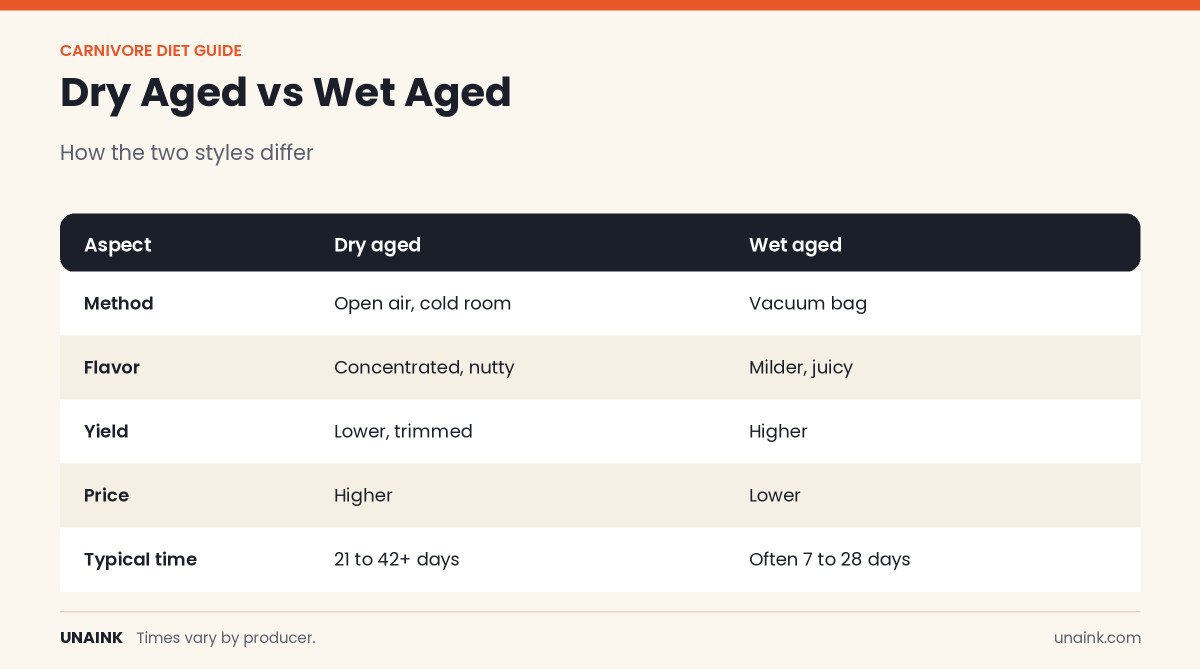
| Feature | Dry aged | Wet aged |
|---|---|---|
| Method | Uncovered, cold room, racks | Vacuum-sealed bag |
| Typical time | 21 to 42 days or more | Often 7 to 28 days |
| Flavor | Concentrated, nutty, roasted | Milder, sometimes metallic |
| Juiciness | Denser, less moisture | Juicier |
| Yield | Lower, shrink and trim | Higher |
| Price | Higher | Lower |
Cooking and Buying Tips
- Cook whole cuts of either style to 145°F with a three-minute rest, and ground beef to 160°F, per USDA guidance.
- Thick steaks suit dry aging best, since thin ones lose too much to trimming.
- Ask the butcher how long the beef aged and whether it was trimmed after aging.
- Salt moderately, since dry aged beef is already concentrated.
- Try our cast iron steak method for a strong sear.
For carnivore eaters, both are fine. The choice is about enjoyment and budget, and our grass fed vs grain fed beef guide covers another common upgrade question.
Dry Aged vs Wet Aged Beef: The Short Version
The dry aged vs wet aged beef decision comes down to flavor versus value. If you want deep, roasted flavor, try dry aged; if you want juicy beef at a fair price, choose wet aged, and in the dry aged vs wet aged beef contest neither one is unsafe or nutritionally superior.
Frequently Asked Questions
Is dry aged beef safer than wet aged beef?
Neither is inherently safer. Controlled dry aging produces dry surfaces with low bacteria counts, but safety depends on proper temperature, humidity, and handling. Cook to USDA temperatures either way.
Why is dry aged beef so expensive?
It loses moisture, requires cooler space and time, and needs trimming of the dry outer crust, so less meat reaches the customer.
How long is beef usually dry aged?
Commercial dry aging often runs 21 to 42 days, and some producers go longer for stronger flavor.
Can I dry age steak at home?
It is possible but risky without proper control of temperature, humidity, and airflow. Many people prefer to buy from a butcher who does it professionally.
Is dry aged beef more nutritious?
No strong evidence shows a nutrition advantage. The main change is flavor and moisture, not vitamins or minerals.
Conclusion
Dry aging is a flavor upgrade, and wet aging is the everyday standard. Pick based on taste, budget, and the cut, and cook either one to safe temperatures.
Medical note
This article is for general education and is not medical advice. Talk with a doctor or registered dietitian before making major diet changes, especially if you have a health condition, take medication, or are pregnant or breastfeeding.
Keep Reading
- How to Cook Steak in a Cast Iron Skillet: A reliable sear for any aged or fresh steak.
- Grass Fed vs Grain Fed Beef: Another common beef upgrade question.
- Carnivore Diet Food List: What to buy and what to skip.
- Carnivore Diet Dinner Ideas: Meals built around beef.
Sources
- University of Nevada, Reno Extension: Dry vs wet aging of beef: Shrinkage, tenderness, and bacterial counts for dry and wet aging.
- Food Science of Animal Resources: Kim et al., 2019 dry and wet aging study: Flavor and tenderness results at 28 days.
- USDA FSIS: Safe minimum internal temperature chart: Cooking temperatures for beef.