A carnivore diet for psoriasis is a topic that comes up often in patient forums, usually from people who have tried many creams and treatments and are looking for something more. Some describe calmer plaques on a meat-only plan, but those reports are anecdotes. This article explains what psoriasis is, what is known about diet and the condition, and what to consider before making a big change.
Quick Answer
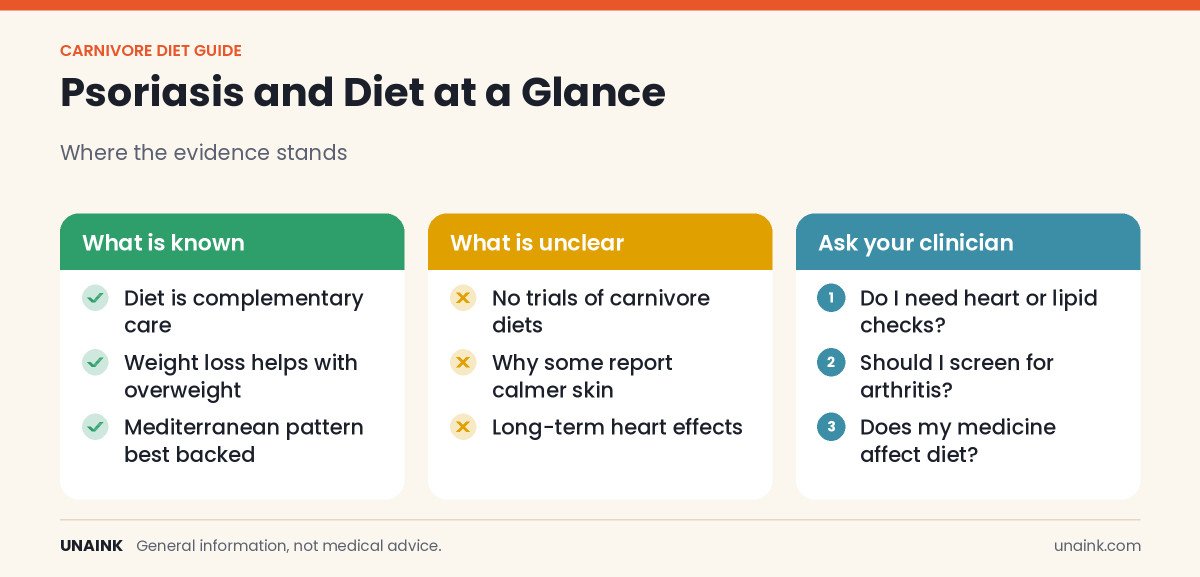
There are no clinical trials of a carnivore diet for psoriasis, so it cannot be called a proven approach. The best-supported dietary advice for psoriasis is weight reduction for people with overweight, and a Mediterranean-style pattern. Diet is meant to sit alongside medical treatment, not replace it.
Key Takeaways
- Psoriasis is an immune-mediated skin condition, and treatment decisions belong with a dermatologist.
- Diet is considered complementary care, not a stand-in for prescribed treatment.
- Weight loss helps many people with overweight; a Mediterranean-style pattern has the most support.
- Patient reports of improvement on meat-only diets are anecdotal and uncontrolled.
- Never stop or change psoriasis medicine, including biologics, because of a diet.
Psoriasis in Brief
Psoriasis is a long-term condition in which the immune system speeds up skin cell turnover, producing thick, scaly plaques. It runs in cycles of flares and quieter periods, and some people also develop psoriatic arthritis. Triggers differ, and can include stress, infections, skin injury, some medicines, and smoking.
Because psoriasis is linked with higher cardiovascular and metabolic risk, overall health habits matter alongside skin care.
What Diet Research Shows for Psoriasis
The National Psoriasis Foundation presents nutrition as a complementary part of care. In a 2022 podcast transcript, a dermatologist described central body fat as inflammatory, linked higher body weight with more severe disease, and pointed to small trials in which low-calorie diets helped. He described a Mediterranean pattern as the best-supported option and a gluten-free diet as useful mainly for people with celiac disease or gluten sensitivity (National Psoriasis Foundation discussion).
The same discussion raised concern that a paleo-style diet high in red meat could mean more saturated fat, and advised working with a dietitian or physician and avoiding drastic diets.
Carnivore Diet for Psoriasis: What Patients Report
Some people say a meat-only plan quieted their plaques. Others see no change. These are self-selected, unmeasured accounts, and flares naturally rise and fall. A 2021 survey of 2,029 carnivore eaters relied on self-reports (2021 survey), and a 2026 review of nine human studies found the evidence very limited (Nutrients review). Neither was built to test psoriasis.
Why Some People May See a Change
- Weight loss, which is linked with milder psoriasis in people who have overweight.
- Cutting alcohol, sugar, and ultra-processed food.
- Removing a personal trigger food, which is rare but possible.
- Less stress or better sleep from a new routine, plus natural fluctuations.
These are possible explanations, not findings about meat. A calorie-controlled diet with more variety might produce similar changes.
Concerns With a Meat-Only Plan
| Concern | Why it matters |
|---|---|
| Heart and metabolic risk | Psoriasis already raises these risks, and high saturated fat may push LDL cholesterol up in some people. |
| Vitamin D and calcium | Low vitamin D is common in psoriasis; a very narrow diet needs checking. |
| Fiber and plant nutrients | Not covered by a meat-only plan, with unknown long-term effects. |
| Missed medical care | A diet trial can delay treatments that control inflammation and joint damage. |
A carnivore diet for psoriasis should also be avoided in pregnancy, breastfeeding, childhood, and kidney disease unless a specialist is directly involved.
Medicines and Monitoring
Treatments range from topical steroids and vitamin D creams to light therapy, oral drugs, and biologics. Do not stop or change any of them because of a diet. Rapid weight loss, dehydration, or reduced food variety can change how you feel on certain medicines, so tell your dermatologist or rheumatologist about big diet changes and ask whether lab monitoring is needed.
A Practical Way Forward
- Book a visit to review your current treatment, and ask about screening for psoriatic arthritis if joints ache.
- Ask for vitamin D, cholesterol, and blood sugar checks.
- If you have overweight, discuss gradual, sustainable weight loss with a dietitian.
- If you still want to test a food, change one thing at a time and track skin changes for several weeks.
- Revisit the plan with your clinician instead of extending a restrictive diet indefinitely.
Carnivore Diet for Psoriasis: The Short Version
The case for a carnivore diet for psoriasis rests on patient stories, not trials, and well-supported dietary advice points elsewhere. Anyone considering a carnivore diet for psoriasis should keep prescribed treatment in place and involve their dermatologist.
Frequently Asked Questions
Can a carnivore diet help psoriasis?
Nobody knows, because it has not been studied for psoriasis. Some people report improvement, but those reports are uncontrolled and flares naturally come and go.
Which diet has the best evidence for psoriasis?
Reducing weight in people with overweight and following a Mediterranean-style pattern have the most support, according to the National Psoriasis Foundation discussion. Evidence overall is mostly from small trials.
Is gluten bad for psoriasis?
A gluten-free diet appears useful mainly for people with celiac disease or gluten sensitivity. Ask about testing before cutting gluten, since restricting first can complicate diagnosis.
Can I stop my biologic if my skin improves?
No. Stopping or changing treatment should only happen with your prescriber, because psoriasis can flare again.
Is red meat bad for psoriasis?
Evidence is limited, but very high intake of fatty red meat may add saturated fat, which matters because psoriasis comes with higher heart disease risk. A dietitian can help set a sensible balance.
Conclusion
Psoriasis is a medical condition with effective, well-studied treatments, and diet is best seen as a supporting player. Reports of relief on a meat-only plan are interesting but unproven, and the potential cardiovascular and nutritional trade-offs are real. Work with your care team, and treat any diet experiment as time-limited and monitored.
Medical note
This article is for general education and is not medical advice. Talk with a doctor or registered dietitian before making major diet changes, especially if you have a health condition, take medication, or are pregnant or breastfeeding.
Keep Reading
- Carnivore Diet and Eczema: Another skin condition people link to diet.
- Carnivore Diet for Autoimmune Disease: What is known about autoimmune conditions and diet.
- Carnivore Diet and Heart Health: Cholesterol and cardiovascular questions.
- Carnivore Diet for Rheumatoid Arthritis: Joint conditions and diet.
Sources
- Facts About Nutrition, Diets, and Psoriatic Disease (National Psoriasis Foundation): Complementary role of diet, weight, gluten, Mediterranean pattern.
- The role of lifestyle and nutrition in psoriasis (PMC): Review of lifestyle and nutrition in psoriasis.
- Nutritional Therapy in Persons Suffering from Psoriasis (PMC): Review of nutritional approaches.
- Nutrients scoping review of carnivore diets (PMC): Evidence on carnivore diets is very limited.
- Self-reported survey of 2,029 carnivore adults (PMC): Self-reported outcomes, not a trial.