Organ meats are the edible internal parts of animals, such as liver, heart, kidney and tongue. They were once ordinary food in most kitchens and are now a star of the carnivore and nose-to-tail communities, partly because they pack more vitamins and minerals per bite than muscle meat. They are also strong in flavor and, in the case of liver, very high in vitamin A. This guide explains what organ meats are, the main types, what each offers, how they taste and how to eat them safely.
Quick Answer
Organ meats, also called offal or variety meats, include liver, heart, kidney, tongue and tripe. They are rich in vitamin B12, iron, copper and other nutrients, and liver is exceptionally high in vitamin A, so small portions are enough. They taste stronger than steak, with heart and tongue the mildest and liver and kidney the most intense. Cook them to at least 160°F, and pregnant people should limit liver.
Key Takeaways
- Organ meats are nutrient-dense parts of the animal, including liver, heart, kidney, tongue and tripe.
- Three ounces of pan-fried beef liver supplies about 6,582 mcg of vitamin A, more than twice the 3,000 mcg adult upper limit, so portions should be small.
- Heart and tongue taste closest to ordinary beef, while liver and kidney taste stronger.
- USDA guidance recommends cooking variety meats to at least 160°F, and fresh liver keeps only a day or two in the fridge.
- Pregnant people should avoid high-vitamin A foods such as liver unless their clinician says otherwise.
What Are Organ Meats?
Organ meats are the parts of an animal other than the skeletal muscle we call steak or roast. Butchers and food-safety agencies often call them variety meats. In the carnivore world they are a central idea, because they fill nutrient gaps that a plate of only muscle meat can leave. They are also the heart of nose-to-tail eating, which aims to use as much of the animal as possible.
Types of Organ Meats
Liver
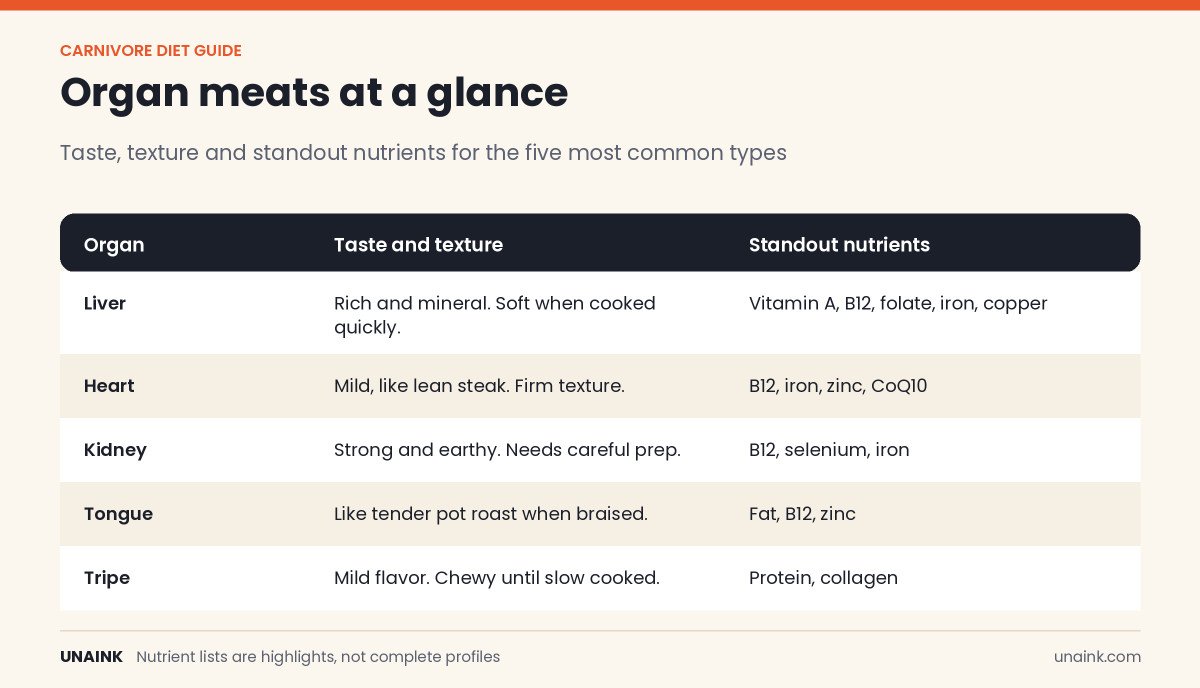
Liver is the best known and the most nutrient-dense. It is soft, rich and mineral in taste, and it supplies vitamin A, B12, folate, iron and copper. See our guide on how to cook beef liver.
Heart
Heart is a hard-working muscle, so it behaves like a lean, firm steak and is the easiest organ for beginners. It is a good source of B vitamins, iron and zinc. See how to cook beef heart.
Kidney
Kidney has an earthy, strong flavor and a rich supply of B12 and selenium. Soaking and trimming help tame the taste.
Tongue
Tongue is fatty and tender when braised and tastes like pot roast. Peel it after cooking.
Tripe, sweetbreads and others
Tripe is the stomach lining and is mild but chewy. Sweetbreads are glands such as the thymus. Brain is rarely sold from cattle because of prion disease concerns, so most people skip it.
Nutrients in Organ Meats
Liver is the headline. According to the NIH Office of Dietary Supplements, a 3-ounce serving of pan-fried beef liver contains 6,582 mcg RAE of vitamin A, which is 731 percent of the Daily Value. The adult tolerable upper limit for preformed vitamin A is 3,000 mcg RAE a day from all sources. Liver is also the richest common food source of copper, with an upper limit of 10 mg a day.
| Organ | Standout nutrients | Notes |
|---|---|---|
| Liver | Vitamin A, B12, folate, iron, copper | Very potent. Small portions only. |
| Heart | B12, iron, zinc, CoQ10 | Mild flavor, lean texture. |
| Kidney | B12, selenium, iron | Strong taste. Needs good prep. |
| Tongue | Fat, B12, zinc | Rich and tender when braised. |
| Tripe | Protein, collagen | Mild but chewy. |
Organ meats are also high in cholesterol, and NIH advises limiting how much beef liver you eat for that reason. They contain purines, so people with gout should ask their doctor.
How Do Organ Meats Taste?
Taste is the main hurdle. Liver is rich, metallic and slightly sweet, and it turns bitter and chalky when overcooked. Kidney is stronger and earthier. Heart tastes like lean steak. Tongue tastes like tender roast beef. If you dislike the flavor, our guide to how to eat organ meat covers ways to make it milder.
Are Organ Meats Safe?
- Cook thoroughly. Michigan State University Extension notes that USDA recommends cooking all variety meats to at least 160°F.
- Buy fresh and store briefly. Liver, kidney and tongue keep one to two days in the refrigerator, so freeze what you will not use.
- Watch vitamin A. Stay under 3,000 mcg RAE a day from all sources, which means liver once a week in a small portion is plenty for most people.
- Pregnancy. Pregnant people are advised to avoid high-dose preformed vitamin A, including liver, as MotherToBaby explains.
- Source well. Organs from healthy, well-raised animals from a trusted butcher are the best choice.
How to Start Eating Organ Meats
- Begin with heart or tongue, which taste closest to steak.
- Mix a small amount of finely chopped liver into ground beef.
- Cook liver quickly and season it with salt, butter or bacon fat.
- Try small portions once a week instead of daily.
- If you cannot enjoy them, ask a clinician about organ capsules, but check the vitamin A content on the label.
Frequently Asked Questions
What are organ meats?
Organ meats are edible internal parts of animals such as liver, heart, kidney, tongue and tripe. They are also called offal or variety meats.
What is the healthiest organ meat?
Liver is the most nutrient-dense, but also the most potent in vitamin A and copper, so portions must stay small. Heart is a milder option with B vitamins, iron and zinc.
How often should you eat organ meats?
Most people do well with small portions once or twice a week. Because liver contains so much vitamin A, daily liver is not recommended unless a professional advises it.
Do organ meats taste bad?
Many people find liver and kidney strong, while heart and tongue taste close to steak. Fresh organs, quick cooking and good seasoning make a large difference.
Are organ meats safe during pregnancy?
High-vitamin A foods such as liver are generally avoided in pregnancy. Ask your clinician before eating any organ meats.
Conclusion
Organ meats offer a lot of nutrition in a small package, but they are strong in flavor and in a few nutrients, especially vitamin A in liver. Start small, cook to 160°F, and choose heart or tongue if you want a gentle introduction. Check with a professional if you are pregnant, have gout or take medication that affects vitamin A.
Medical note
This article is for general education and is not medical advice. Talk with a doctor or registered dietitian before making major diet changes, especially if you have a health condition, take medication, or are pregnant or breastfeeding.
Keep Reading
- How to Cook Beef Liver: and actually enjoy the taste
- How to Eat Organ Meat: when you cannot stand the taste
- Nose to Tail Eating: why whole-animal nutrition matters
- Carnivore Diet Food List: what to eat and what to skip
Sources
- NIH Office of Dietary Supplements. Vitamin A fact sheet for health professionals: vitamin A in liver and the upper limit
- Michigan State University Extension. Are you throwing away valuable food? Part three: Meat: USDA 160°F guidance and storage for variety meats
- MotherToBaby. Vitamin A in pregnancy: vitamin A limits during pregnancy
- Lietz, Dapprich and Fischer. Carnivore Diet: A Scoping Review. Nutrients, 2026: nutrient gaps that organ meats may help fill