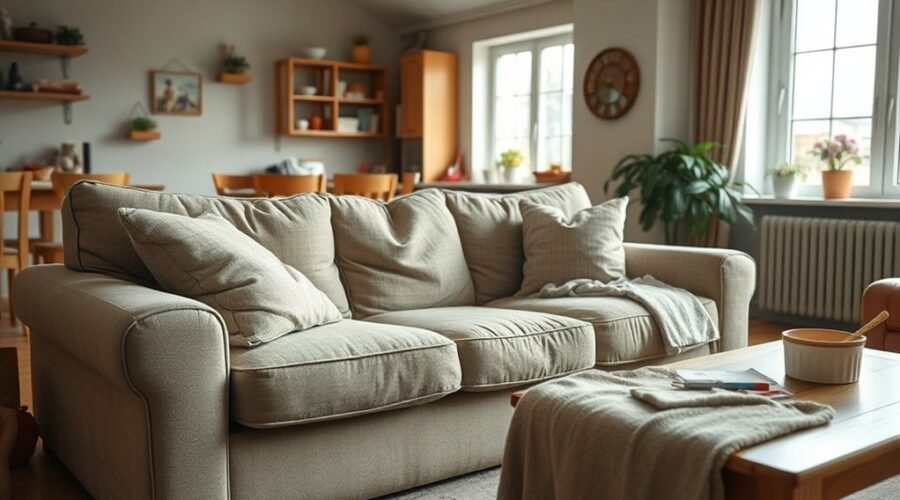
In a busy family home, a practical rule of thumb is to deep clean a sofa about every 6 to 12 months, while homes with pets, young children, frequent spills, or heavy daily use may benefit from cleaning closer to every 3 to 6 months. The exact timing depends on the upholstery, soil level, care label, and how the sofa is used. Vacuum fabric upholstery weekly, blot spills promptly, and clean sooner when odors, visible soil, or stubborn stains develop.
Quick Answer
Most busy households can use 6 to 12 months as a practical sofa deep-cleaning interval. Heavy use, pets, children, frequent spills, or allergy concerns may justify cleaning sooner. Vacuum weekly, treat spills promptly, and always follow the sofa’s W, S, WS, or X care code before using any cleaner.
Key Takeaways
- A 6- to 12-month deep-cleaning schedule is a useful household guideline, not a universal upholstery-industry rule.
- Vacuum fabric-covered furniture weekly or more often when pets, crumbs, or allergens are a concern.
- Blot spills instead of scrubbing them, and test any approved cleaner in a hidden area first.
- The upholstery care code matters more than the fabric name. An S or X sofa should not be treated like a water-cleanable W sofa.
- Use a professional cleaner when the sofa is generally soiled, the fabric is delicate, stains keep returning, or the care instructions rule out DIY wet cleaning.
At a Glance
| Time Required | About 10–20 minutes for weekly vacuuming; spot treatment varies by stain and care instructions |
| Difficulty | Easy for vacuuming; moderate for spot cleaning; professional service may be safer for delicate or heavily soiled upholstery |
| Tools Needed | Vacuum with upholstery attachment, clean white microfiber cloths, soft brush if permitted, and a manufacturer-approved upholstery cleaner |
| Cost | Low for routine care; professional cleaning varies by sofa size, fabric, condition, treatment, and location |
How Often Should You Deep Clean a Sofa?
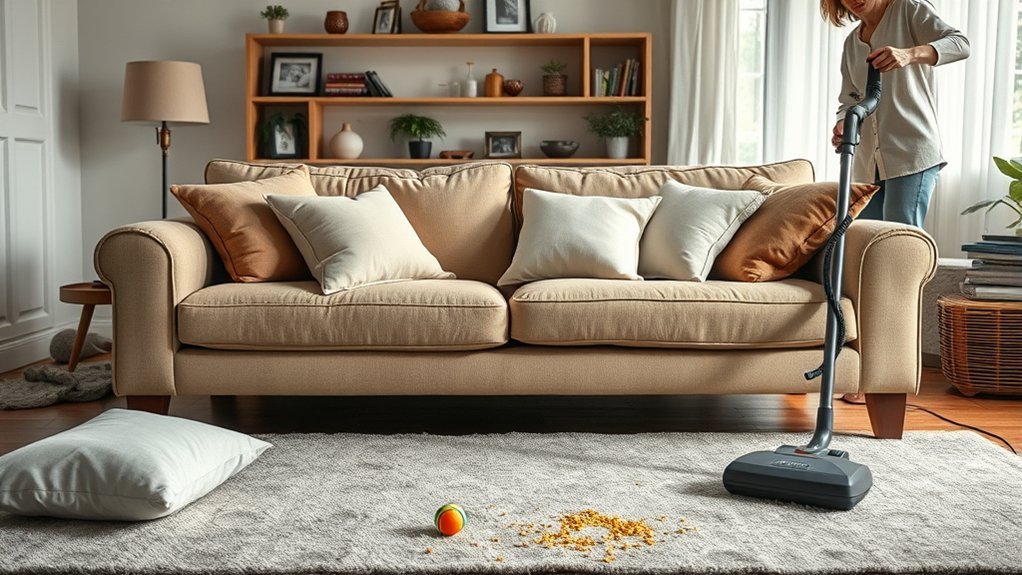
A sofa in a busy family home will often benefit from an overall deep clean about every 6 to 12 months. Treat that range as a practical maintenance guideline rather than a fixed rule, because upholstery manufacturers do not all prescribe the same cleaning interval.
Use, pets, food, children, indoor dust, and the upholstery itself matter more than the calendar. A lightly used sofa may remain in good condition for longer, while a couch used every day by a family and pets can become visibly soiled much sooner.
| Household use | Practical approach |
| Light use, few spills, no pets | Inspect regularly; an overall clean around once a year may be enough if the manufacturer allows it. |
| Typical family use | Use roughly 6–12 months as a starting point and adjust to visible soil and odor. |
| Pets, young children, heavy use, frequent spills | Inspect more often; an overall clean around every 3–6 months may be useful when soil builds quickly. |
| Fresh spill or stain | Blot immediately and follow the sofa’s stain-treatment instructions rather than waiting for the next scheduled deep clean. |
For allergen control, routine care matters too. The U.S. Environmental Protection Agency recommends vacuuming carpets and furniture every week or more often because indoor dust can contain pollen, pet dander, dust-mite material, and other particles.
Signs Your Sofa Needs Cleaning Now
A calendar can help with maintenance, but the sofa’s condition is a better signal of when cleaning is actually needed.
Persistent odors after normal vacuuming can mean odor-producing material remains in the upholstery or cushions. Before applying a deodorizer, check the care label and identify the source; pet urine, mildew, food, and smoke can require very different treatment.
Clean based on the sofa’s condition as well as the calendar. Visible soil, recurring odor, sticky residue, and stubborn stains are stronger signals than an arbitrary date.
Stains that keep returning after DIY treatment can indicate that residue or contamination remains below the surface or that too much cleaner was used.
A sofa that looks dull, greasy, or darker in high-contact areas may have accumulated body oils and soil even if no single stain stands out.
If allergy or asthma symptoms seem worse indoors, upholstered furniture may be one of several possible reservoirs for dust mites or animal allergens. That does not prove the sofa is the cause, so persistent breathing or allergy symptoms should be addressed as a broader indoor-environment or medical issue rather than relying on upholstery cleaning alone.
Why Family Sofas Need More Cleaning
Family sofas tend to collect soil faster because more people use them, snacks are eaten nearby, pets may climb on them, and children bring dust and outdoor debris into the seating area.
Soft upholstery can also hold dust, pet dander, pollen, skin flakes, and other particles that settle into seams, cushion edges, and the fabric surface. Regular vacuuming removes loose material before it becomes harder to extract.
Kids, Pets, and Spills
Kids and pets can add crumbs, hair, dander, tracked-in soil, food stains, and occasional accidents to a sofa. In those households, waiting a full year regardless of condition may be too long.
A useful routine is to vacuum weekly, remove pet hair before it becomes embedded, blot fresh spills immediately, and inspect high-contact areas every few months. Schedule an overall clean when routine maintenance is no longer keeping the fabric looking and smelling clean.
Washable throws or furniture covers can also reduce direct soil on the upholstery, provided they do not interfere with recliners, vents, heated seats, or other sofa mechanisms.
Hidden Dirt and Allergens
Upholstered furniture can collect dust mites and animal dander. The Asthma and Allergy Foundation of America notes that dust mites can live deep in upholstered furniture and that vacuuming helps reduce exposure even though it may not remove everything embedded inside cushions and stuffing.
The EPA likewise recommends frequent cleaning to reduce the buildup of indoor dust and allergens, including vacuuming fabric-covered furniture weekly or more often.
That makes consistent maintenance more useful than relying on a dramatic “sanitizing” percentage. No single allergen-removal percentage applies to every upholstery fabric, machine, chemical, technician, or cleaning method.
Note: Claims such as “removes 98% of allergens” may come from testing of one proprietary cleaning system under defined conditions. They should not be assumed to describe all professional upholstery cleaning.
How to Keep Your Sofa Clean Between Deep Cleans
Weekly maintenance can slow the buildup that eventually makes an overall cleaning necessary.
- Vacuum weekly. Use the upholstery attachment and work over seats, backs, seams, under removable cushions, and accessible crevices.
- Blot spills immediately. Use a clean absorbent cloth and press rather than scrub.
- Rotate removable cushions if the manufacturer allows it so wear is distributed more evenly.
- Control pet hair. Vacuum or use a fabric-safe hair-removal tool before hair becomes packed into seams.
- Use washable throws in high-soil households when practical.
- Protect the sofa from prolonged strong sunlight if fading is a concern, especially on fabrics identified by the manufacturer as light-sensitive.
These habits do not replace an eventual overall cleaning, but they can reduce how quickly the sofa becomes visibly soiled.
Best DIY Sofa Cleaning Methods
Before putting any liquid, detergent, solvent, vinegar, baking soda, or upholstery machine on a sofa, find the manufacturer’s care label. The cleaning code is more important than the fabric’s everyday name.
Warning: Do not assume a homemade vinegar-and-dish-soap mixture, steam cleaner, or water extractor is safe for every sofa. Water can mark, shrink, distort, or bleed some upholstery, while solvent-sensitive fabrics require different treatment. Follow the manufacturer’s care code first.
Check Fabric Care Code
Common upholstery codes include W, S, WS or W-S, and X. The wording on the actual furniture label takes priority over any general chart.
| Code | General meaning | Main caution |
| W | Water-based upholstery cleaning products may be permitted. | Do not assume saturation, machine washing, or hot-water extraction is allowed. Follow the complete label. |
| S | A water-free upholstery solvent may be required. | Do not use water unless the manufacturer specifically permits it. Solvents require proper ventilation and careful handling. |
| WS / W-S | Water-based or approved solvent methods may be permitted. | Pretest first and avoid over-wetting. |
| X | Vacuuming or light brushing only is generally permitted for routine care. | Do not apply water-based or solvent cleaning products unless directed by the manufacturer or a qualified professional. |
If no care label can be found, check the manufacturer’s manual or support information before experimenting. When the upholstery is unknown or valuable, professional evaluation is safer than guessing.
Vacuum Before Cleaning
Vacuuming should come before spot treatment because loose dust, crumbs, hair, and grit can turn into muddy residue when liquid cleaner is introduced.
| Area | Action |
| Cushions | Vacuum accessible sides and beneath removable cushions. |
| Crevices | Use a crevice or upholstery attachment without forcing it against delicate fabric. |
| Frame and accessible deck | Remove crumbs, pet hair, and loose debris. |
| Upholstery surface | Use the upholstery attachment and light passes rather than aggressive scrubbing. |
Spot Clean Gently
For a fresh spill, place a clean white absorbent cloth over the area and blot. Work from the outside edge toward the center when appropriate so the stain does not spread.
Then follow the exact product and method allowed by the care code. Test the cleaner in a hidden area first and check for color transfer, texture change, watermarking, or other damage before treating the visible stain.
Avoid soaking the upholstery. More liquid does not necessarily produce a better result, and moisture that reaches cushion filling or backing can take much longer to dry.
Baking soda is often suggested for odors, but it should not automatically be applied to every sofa. Fine powder can be difficult to remove from some textiles and seams, so use it only if the furniture manufacturer permits it.
Pro Tip: Keep the care-label information with your household records or take a clear photo of it. That prevents guesswork when a spill happens months later.
How to Clean Different Sofa Fabrics
Fabric type gives useful clues, but it does not replace the manufacturer’s cleaning code. Two microfiber sofas, for example, can have different safe-cleaning instructions.
| Fabric | Best starting point | Key caution |
| Microfiber | Vacuum first, then follow its W, S, WS, or other manufacturer code. | Do not assume all microfiber is safely cleaned with water. |
| Velvet | Vacuum gently and use only the method specified by the manufacturer. | Moisture, aggressive rubbing, and incorrect brushing can alter the pile or finish. |
| Leather | Use products and conditioning instructions approved for that leather type. | Do not soak leather or assume every conditioner is suitable for every finish. |
| Cotton / linen | Follow the sewn-in care label and upholstery code. | A zipper does not automatically mean the cover can be machine washed; shrinkage or dye movement can occur. |
| Synthetic blends | Check the actual cleaning code rather than assuming mild detergent and water are safe. | Coatings, backing, dyes, and blended fibers can change what the upholstery tolerates. |
What Happens During Professional Sofa Cleaning?
A professional upholstery cleaner should begin by inspecting the sofa’s fabric, construction, care instructions, stains, wear, and overall soil level. Testing for colorfastness or other risks may also be appropriate before cleaning starts.
Dry soil is normally removed first. Stains and high-soil areas may then receive targeted pre-treatment when the fabric allows it.
The main cleaning method is selected for that particular upholstery. Depending on the material and care instructions, that may involve a controlled water-based process, low-moisture method, approved solvent process, extraction system, or another professional technique. Hot-water extraction is one method, not a universal requirement.
The safest professional process starts with identifying the upholstery and selecting the method to fit it—not forcing every sofa through the same cleaning system.
After cleaning, excess moisture or cleaning residue should be removed as appropriate, the pile or texture may be groomed, and the sofa should be allowed to dry completely before normal use.
Drying time varies with the cleaning method, fabric, cushion construction, indoor humidity, airflow, temperature, and how much moisture was used. Ask the technician for a realistic drying window for your sofa rather than assuming every couch will take the same number of hours.
How to Choose a Professional Sofa Cleaner
Before booking, ask whether the company identifies upholstery fibers and care codes, tests delicate fabrics, carries appropriate insurance, explains stain limitations, and follows a recognized professional standard such as ANSI/IICRC S300.
Be cautious with guarantees that every stain, odor, allergen, or microorganism will be completely removed. A reputable cleaner should explain what can realistically improve and what damage or discoloration may be permanent.
How Much Does Sofa Cleaning Cost?
Sofa-cleaning prices vary by location, sofa size, number of sections, fabric, condition, stain treatment, pet contamination, and the cleaning method required. There is no single national or citywide price that applies to every job.
For a real 2026 NYC example, Cleaning LAB publishes prices of $97–$219 for a straight 2- to 4-seat couch, $149–$279 for an L-shaped or modular sectional, and $197–$319 for larger multi-section sectionals. The company also lists a $150 minimum service charge. Those figures are that provider’s published prices, not an official NYC market average.
The most useful quote is therefore one based on the actual sofa. Send clear photos, provide dimensions or seating configuration, identify the fabric if known, and disclose stains, odors, pet accidents, or previous DIY products so the cleaner can price the job accurately.
When comparing quotes, ask what is included. Stain treatment, odor treatment, pet-hair removal, fabric protectant, accelerated drying, or specialty-fabric work may cost extra.
When to Replace or Reupholster a Sofa
Cleaning cannot correct every problem. Replacement or reupholstery becomes more relevant when the sofa has torn fabric, failed seams, collapsed cushion foam, broken springs or webbing, a damaged frame, permanent discoloration, or contamination that cannot be safely removed.
Reupholstering is worth considering when the frame and suspension remain strong, the sofa fits the room well, or the piece has sentimental or design value. The work can include new fabric, cushion foam, padding, webbing, and repairs rather than merely covering old upholstery.
Replacement may make more sense when the frame or support system is failing, several components need major repair, or reupholstery would cost more than the household wants to invest in the piece.
There is no dependable age alone at which every sofa should be discarded. Construction quality, household load, cushion design, fabric, maintenance, and repair history matter more than a fixed “5 to 15 year” rule.
What Sofa Cleaning Schedule Fits Your Home?
The best cleaning schedule combines frequent light maintenance with less frequent overall cleaning.
- Every week: vacuum fabric upholstery, seams, cushions, and accessible crevices.
- Immediately after a spill: blot excess liquid and follow the manufacturer’s stain instructions.
- Every few months: inspect high-contact areas, cushion edges, arms, headrests, and pet-favorite spots for developing soil or odor.
- About every 6–12 months: consider an overall clean in an actively used family home if the care instructions permit it.
- Closer to every 3–6 months when needed: heavy-use households may choose a shorter interval when pets, children, food, odor, or visible soil cause faster buildup.
Do not clean more aggressively simply because a date has arrived. If the upholstery still looks clean, smells normal, and is maintained regularly, follow the manufacturer’s care guidance. Likewise, do not wait for the calendar if a spill, odor, or heavily soiled area needs attention now.
Frequently Asked Questions
How Often Should a Sofa Be Deep Cleaned?
For a busy household, every 6 to 12 months is a useful starting guideline. A heavily used sofa with pets, children, frequent snacks, stains, or odors may need attention sooner. Weekly vacuuming and prompt spill treatment can slow buildup. Always follow the upholstery manufacturer’s care instructions because some fabrics require professional cleaning or prohibit common DIY methods.
What Is the 2-2-1 Rule for Sofas?
The 2-2-1 rule is a throw-pillow styling formula, not a cleaning schedule. It generally means placing two larger pillows toward the sofa ends, two additional pillows layered inward, and one accent pillow near the center. It has no recognized connection to how often upholstery should be deep cleaned.
What Is the 20/10 Rule for Cleaning?
The 20/10 cleaning method means working for 20 minutes and then taking a 10-minute break. It is a time-management technique for household chores rather than a sofa-care standard. It can make routine tasks such as vacuuming, tidying, and stain checks easier to break into manageable sessions.
What Is the 2/3 Rule for a Sofa?
The two-thirds rule is an interior-design proportion guideline, not a cleaning rule. One common version suggests choosing a sofa roughly two-thirds the length of the wall behind it so the furniture does not appear too small or overwhelm the wall. Similar two-thirds proportions are sometimes used for coffee tables or artwork.
Conclusion
In a busy family home, sofa care works best as an ongoing routine rather than a once-a-year rescue job. Vacuum weekly, deal with spills as soon as they happen, and inspect the upholstery regularly for odor, soil, and stubborn stains. Use 6 to 12 months as a practical deep-cleaning guideline, shortening the interval when heavy family use, children, or pets create faster buildup.
Most importantly, let the sofa’s care label determine how it is cleaned. The correct W, S, WS, or X method can prevent a small stain from turning into permanent watermarks, shrinkage, dye movement, or fabric damage. When the upholstery is delicate, generally soiled, or difficult to identify, a qualified professional is safer than trial and error.
Sources
- U.S. Environmental Protection Agency — Sources of Indoor Particulate Matter — supports weekly furniture vacuuming and information about dust, pet dander, pollen, and dust-mite material.
- Asthma and Allergy Foundation of America — Dust Mite Allergy — supports information about upholstered furniture, dust mites, HEPA vacuuming, and allergen control.
- La-Z-Boy — Fabric and Leather Care — supports upholstery cleaning-code guidance, pretesting, blotting, moisture limits, and manufacturer-specific cleaning methods.
- IICRC — ANSI/IICRC S300 Standard for Professional Upholstery Cleaning — supports professional inspection, cleaning-method selection, stain treatment, leather cleaning, and upholstery-care principles.
- Microsoft — How to Use the 20/10 Cleaning Method — supports the definition of the 20-minute cleaning / 10-minute break method.
- Cleaning LAB — 2026 NYC Couch Cleaning Prices — supports the provider-specific NYC pricing examples and minimum service charge discussed above.