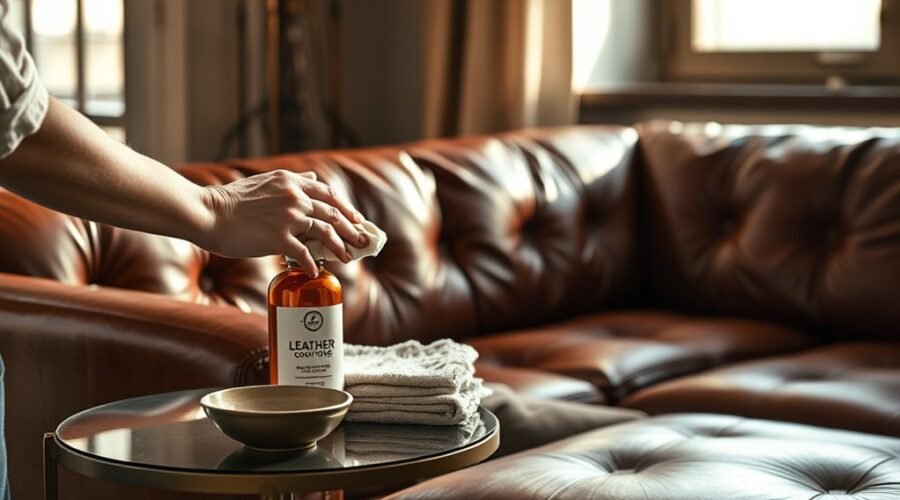
Leather furniture usually benefits from periodic conditioning, but there is no single schedule that fits every sofa or chair. About every six months is a common starting point for many genuine-leather care systems, while the correct interval depends on the leather type, finish, amount of use, environment, and the furniture maker’s instructions. Clean the surface first, spot-test any product, and never assume a conditioner made for smooth genuine leather is safe for suede, nubuck, vinyl, or faux leather.
Quick Answer
For many genuine-leather sofas, conditioning about every six months is a practical starting point, but follow the furniture and conditioner manufacturers first. Condition sooner only when approved for your leather and the surface feels noticeably dry. Always identify the leather type, clean gently, spot-test the product, apply a thin coat, and allow the label-specified drying time.
Key Takeaways
- About every six months is common for some genuine-leather care systems, but your furniture manufacturer’s instructions take priority.
- Identify whether you have aniline, semi-aniline/pigmented, nubuck, suede, synthetic, or another finish before choosing a cleaner or conditioner.
- Dust or vacuum gently before conditioning and use only products approved for that leather type.
- Spot-test every cleaner or conditioner in a hidden area and allow the test area to dry before treating the whole piece.
- Direct sunlight and nearby heat can accelerate fading and drying, so reducing exposure is as important as conditioning.
- Drying and buffing times vary by product; the product label is more reliable than a universal timing rule.
At a Glance
| Time Required | About 15–30 minutes of hands-on work, plus the cleaner and conditioner’s label-specified drying time |
| Difficulty | Easy, provided you know the leather type and follow the product instructions |
| Tools Needed | Soft lint-free or microfiber cloths, soft-brush vacuum attachment, and leather-type-approved cleaner/conditioner |
| Cost | Product-dependent; use an approved leather-care product or kit rather than choosing by price alone |
How Often Should You Condition Leather Furniture?
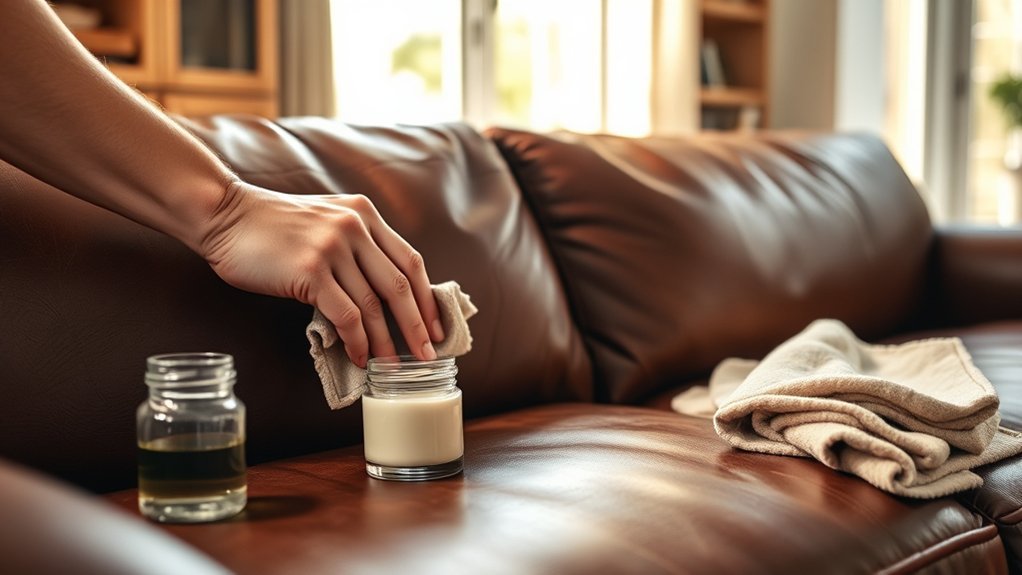
Many genuine-leather furniture care systems use roughly a six-month maintenance interval. For example, UNITERS recommends cleaning and re-protecting certain leather furniture every six months, with more frequent care possible in high-use rooms. Leather Honey also recommends its conditioner about every six months.
A six-month interval is a useful starting point for some genuine-leather furniture, not a universal rule. The sofa manufacturer and conditioner label should determine the final schedule.
Some furniture does not need conditioner on a calendar schedule. Room & Board, for example, recommends conditioning top-grain leather when it feels dry or appears lighter in color. Leather type, protective finish, body oils, friction, room conditions, and the approved care product all affect how often treatment is appropriate.
Furniture exposed to heavy daily use may need closer inspection, but frequent conditioning should not be used as a substitute for fixing the environment. Direct sunlight and nearby heat can fade or dry leather, so moving a sofa away from a sunny window, radiator, fireplace, or strong heat vent may reduce unnecessary stress on the material.
Pro Tip: Write the date of each conditioning treatment in your phone or household maintenance notes. At the next inspection, judge the leather by its feel and the furniture maker’s guidance instead of automatically applying another coat.
Know Your Leather Type Before Conditioning
Before cleaning or conditioning, identify what is actually covering the furniture. Leather finishes respond differently to moisture and care products, and a treatment that works on protected top-grain leather may permanently change a more absorbent surface.
- Aniline leather: minimally protected and more absorbent, so liquids and conditioners can darken it more easily. Use only products specifically approved for aniline leather.
- Semi-aniline or pigmented/top-grain leather: usually has more surface protection and is often easier to maintain, but you should still follow the furniture maker’s approved-care instructions.
- Nubuck or suede: has a soft, raised surface and generally needs dedicated nubuck/suede products rather than standard smooth-leather conditioner.
- Synthetic or faux leather: is not animal hide and may require a completely different cleaner or protectant. Do not assume a genuine-leather conditioner is compatible.
- Bonded or coated upholstery: may contain leather fibers or polyurethane layers, so care should follow the specific furniture label rather than generic “real leather” advice.
Room & Board specifically recommends confirming whether furniture is top-grain, nubuck, or synthetic before choosing cleaning or conditioning products. When the leather type is uncertain, check the retailer, manufacturer, original receipt, care tag, or product page before proceeding.
Warning: Do not use a standard leather conditioner on suede, nubuck, faux leather, vinyl, or an unknown upholstery surface unless the furniture and product manufacturers specifically approve that use.
Tools and Products You Need
For most routine leather conditioning, you need only a few supplies: a soft lint-free or microfiber cloth, a vacuum with a soft upholstery attachment, and a cleaner and conditioner approved for your particular leather.
A soft cloth helps distribute product without aggressively rubbing the finish. Distilled water may be appropriate for light cleaning on some furniture, but even water should be used according to the manufacturer’s care instructions because highly absorbent leather can react differently from protected leather.
Before full treatment, perform a spot test in a hidden area. Apply the product exactly as directed, allow the test area to dry completely, and check for darkening, color transfer, tackiness, loss of sheen, or any change in texture.
Choose products according to leather type rather than marketing claims alone. A conditioner made for smooth genuine leather may not be appropriate for suede, nubuck, synthetic leather, or vinyl.
How to Clean Leather Furniture Before Conditioning
Leather should be free of loose dust and surface soil before conditioning. Conditioning over dirt can trap grime on the surface and make the finish look uneven.
| Step | Tool | Purpose |
|---|---|---|
| Dust or vacuum | Soft cloth or soft-brush attachment | Remove loose dust, crumbs, and debris |
| Clean if needed | Leather-type-approved cleaner | Remove compatible surface soil before conditioning |
| Dry | Clean cloth and normal room airflow | Prepare the surface for the next product |
For routine maintenance, gently dust or vacuum the furniture. UNITERS recommends weekly dusting with a soft cloth or soft-brush vacuum attachment for leather furniture. If deeper cleaning is needed, use the method approved for the particular leather rather than automatically reaching for dish soap, vinegar, alcohol, multipurpose cleaner, or another household product.
Ashley advises against abrasives, harsh chemicals, common household cleaners, and leather cleaners containing oils, soaps, or detergents on its leather furniture. Other furniture makers may give different product-specific directions, which is why the original care instructions should come first.
Do not soak the surface. Apply an approved cleaner in the amount directed by its label and let the leather dry as instructed before conditioning.
Note: If your furniture manufacturer says to use only distilled water, a particular cleaner, or professional cleaning, follow that direction even if a general leather-care article recommends something else.
How to Remove Stains From Leather Furniture
Spills should be blotted promptly with a clean, absorbent cloth. Avoid aggressive rubbing, which can spread the spill or change the appearance of the finish.
After blotting, identify both the stain and the leather type before doing anything stronger. Water-based spills, oil spots, ink, dye transfer, and body oils may require different treatment. Household remedies such as vinegar, baking soda, alcohol, or soap should not be treated as universally safe because manufacturer instructions vary.
Always spot-test an approved treatment in an inconspicuous area first. If the stain is large, has penetrated absorbent aniline leather, involves ink or dye, or has already changed the finish, professional leather cleaning may be safer than repeated DIY treatment.
Blot Spills Quickly
When liquid lands on leather furniture, press a clean, absorbent cloth lightly onto the spill and lift the moisture rather than scrubbing it across the surface. Work from the outside of the affected area toward the center when practical.
For many finished leathers, the safest immediate action is simply to remove excess liquid and allow the area to air-dry. Room & Board advises blotting spills instead of rubbing, while its treatment recommendations differ according to leather type and stain type.
Do not apply conditioner automatically while the area is still wet. First let the leather dry and determine whether your furniture maker recommends conditioning after cleaning.
Treat Stains Gently
Start with the least aggressive method authorized for the leather. On furniture with a protected finish, that may mean a manufacturer-approved leather cleaner. On more sensitive upholstery, the maker may advise little more than blotting or professional treatment.
Oil spots are especially finish-dependent. Some furniture-care instructions recommend blotting excess oil and allowing the remaining mark to disperse naturally rather than wet-cleaning it. Ink, permanent marker, nail polish, paint, and dye transfer deserve extra caution because repeated rubbing can make permanent damage worse.
After treatment, let the area dry naturally. Avoid hair dryers, heaters, and direct sunlight.
How to Apply Leather Conditioner Evenly
Once you have confirmed that the conditioner is compatible with the furniture, use a controlled application rather than saturating the surface.
- Check the label. Confirm that the conditioner is approved for your leather type and read its application, drying, and buffing instructions.
- Clean first. Remove dust and any soil that the furniture manufacturer says should be cleaned before conditioning.
- Spot-test. Treat a hidden area and let it dry completely so you can check for darkening, discoloration, tackiness, or texture changes.
- Apply a thin, even coat. Use the applicator specified by the product maker. Some conditioners call for a lint-free cloth, while others specify a sponge.
- Work section by section. Cover panels consistently without flooding seams, perforations, stitching, or creases.
- Allow the required dwell or drying time. Do not rely on a universal number of minutes.
- Remove excess and buff if directed. Use a clean, dry cloth only when the product instructions call for it.
For example, Leather Honey directs users to apply a thin layer with a clean lint-free cloth rather than pouring the conditioner directly onto the leather. Other products may specify a different applicator, so the product directions matter.
Pro Tip: More conditioner is not automatically better. A thin, even application is easier to control, easier to evaluate, and less likely to leave excess residue than repeatedly saturating the surface.
How Long Leather Conditioner Takes to Dry
There is no universal drying time for leather conditioner. The formula, amount applied, leather finish, temperature, airflow, and manufacturer’s directions all matter.
For example, Leather Honey instructs users to let its conditioner dry for at least two hours and preferably overnight. Leather CPR uses a different application method and instructs users to allow the product to work briefly before wiping away excess product and dirt. These differences show why a generic “30 minutes to 2 hours” rule can be misleading.
Keep the furniture away from direct sunlight, heaters, or other attempts to force-dry the surface. Allow it to dry naturally under normal room conditions unless the care-product instructions state otherwise.
Do not sit on or cover freshly treated furniture until the product has reached the condition specified by its manufacturer. If the leather remains unusually sticky, oily, or wet-looking beyond the expected period, stop adding product and follow the conditioner manufacturer’s troubleshooting directions.
How to Buff Leather for a Smooth Finish
Buffing can remove excess conditioner and even out the appearance, but it should be done only when the care-product instructions call for it.
Use a clean, dry, lint-free or microfiber cloth and light pressure. Work across the surface evenly instead of scrubbing one small area aggressively. The goal is to lift excess residue and leave a consistent finish, not to polish the leather until it becomes unnaturally glossy.
Do not assume that buffing should always begin after 10 to 15 minutes. Some products require considerably more absorption or drying time before excess conditioner should be removed.
After buffing, inspect the furniture under normal room light. If some sections look darker, tackier, or significantly shinier than others, allow additional drying time before considering another treatment.
Best Leather Conditioners for Furniture
There is no single conditioner that is best for every leather sofa. The most important factors are compatibility with the leather type, clear manufacturer instructions, ease of controlled application, and whether the furniture maker permits the product.
Leather Honey is one option for compatible genuine leather. Its current manufacturer instructions recommend spot testing, applying a thin coat, and treating about every six months. However, Leather Honey specifically says its conditioner is not for suede, faux leather, or vinyl.
Leather CPR is a cleaner-and-conditioner product marketed for leather furniture. The manufacturer describes the formula as dermatologist-tested, but product directions still call for a spot test, and available labeling warns against use on porous leather such as suede. Compatibility should therefore be checked before use rather than assuming it is suitable for every upholstery surface.
For synthetic leather, nubuck, suede, or specialty finishes, select a product specifically designed for that material. A care system recommended by the furniture manufacturer is preferable to a generic conditioner chosen only because it has strong reviews or broad marketing claims.
How to Prevent Leather Furniture From Cracking
Conditioning is only one part of crack prevention. Leather lasts longer when it is protected from the conditions that accelerate fading, drying, surface wear, and contamination.
| Action | Result |
|---|---|
| Condition when appropriate | Helps maintain softness on compatible genuine leather |
| Limit direct sunlight | Reduces avoidable fading and drying |
| Keep away from strong heat | Reduces prolonged heat-related drying |
| Dust and clean correctly | Prevents abrasive grime and body oils from building up |
| Treat spills promptly | Reduces the chance of staining or finish damage |
Ashley recommends keeping leather furniture out of direct sunlight and away from heat sources to help avoid fading and cracking. UNITERS and Room & Board give similar advice.
Sharp objects, pet claws, abrasive debris, unsuitable cleaners, excess water, and repeated friction can also damage the surface. Regular inspection lets you address dryness, spills, or wear before the problem becomes severe.
Leather Care Mistakes to Avoid
The most common mistakes are using the wrong product, over-applying a compatible product, treating an unknown leather as though every finish behaves the same way, and trying increasingly aggressive household remedies when a mark does not disappear immediately.
Careful product selection, spot testing, and measured application protect the finish better than frequent experimentation.
Harsh Cleaners
Bleach, ammonia, abrasive cleaners, strong solvents, and many general household cleaners can damage leather color or finish. Furniture manufacturers may also prohibit soaps, detergents, oils, polishes, preservers, or saddle soap on particular upholstery.
Excess water is another concern, especially on absorbent leather. Use only the amount and method allowed by the furniture maker. Steam cleaning should not be treated as a routine leather-furniture cleaning method unless the manufacturer specifically approves it.
If the care instructions are missing and the furniture is valuable, highly absorbent, antique, or already damaged, a professional leather cleaner is safer than testing multiple household products.
Overconditioning Risks
Applying too much conditioner or conditioning more often than necessary can leave residue, an uneven sheen, darkened areas, or a tacky surface that attracts dust.
- Use the quantity recommended by the conditioner maker.
- Do not add another coat simply because the surface has not dried as quickly as expected.
- Stop if the leather becomes sticky, excessively oily, dramatically darker, or uneven after the spot test.
- Do not use a standard smooth-leather conditioner on suede, nubuck, faux leather, or vinyl unless it is expressly approved.
If excess product remains after the recommended drying period, follow the conditioner manufacturer’s removal instructions. Adding another cleaner or solvent can compound the problem.
Frequently Asked Questions
What Is the Best Thing to Condition a Leather Couch With?
The safest choice is a conditioner approved for your couch’s specific leather type and allowed by the furniture manufacturer. Products such as Leather Honey or Leather CPR can work on compatible genuine leather, but neither should be assumed suitable for every finish. Always read the label and perform a hidden spot test first.
Is Murphy’s Oil Soap Good for Leather Furniture?
Murphy currently lists leather conditioning among its suggested uses, so a blanket claim that it can never be used on leather is inaccurate. However, many furniture manufacturers tell owners to avoid household soaps or to use only approved leather-care products. Follow the couch manufacturer’s instructions first; if they prohibit soap or specify another product, that guidance should take priority.
What Can Ruin a Leather Couch?
Direct sunlight, prolonged heat, sharp objects, pet claws, excess moisture, abrasive rubbing, unsuitable cleaners, spills left untreated, and incompatible conditioners can all damage leather. The exact risks vary with the leather finish, so manufacturer-specific care instructions are important.
How Can You Tell if Leather Needs Conditioner?
Compatible genuine leather may be ready for conditioning when it feels noticeably dry or stiff or appears drier or lighter than usual. Normal patina and color variation are not automatically signs of damage. Check the furniture maker’s care guidance before treating the surface, especially with aniline or specialty leather.
Can You Overcondition Leather Furniture?
Yes. Applying excessive product or conditioning more often than the leather or product requires can leave the surface tacky, greasy-looking, unusually dark, or uneven. Use a thin application at the recommended interval and stop if a hidden spot test produces an unwanted change.
Can You Use Regular Leather Conditioner on Suede, Nubuck, or Faux Leather?
Not unless the product specifically says it is compatible. Suede and nubuck normally require dedicated products, while faux or synthetic leather has a different surface construction from genuine hide. Using an incompatible conditioner can darken, flatten, stain, soften, or otherwise alter the upholstery.
Conclusion
Regular care can help leather furniture remain soft, attractive, and serviceable, but successful conditioning starts with identifying the material rather than following a rigid schedule. About every six months is a common interval for some genuine-leather care systems, while other furniture should be conditioned only when the manufacturer or condition of the leather calls for it. Dust gently, clean with an approved method, spot-test every treatment, apply conditioner sparingly, and follow the product’s actual drying instructions. Avoid direct sunlight, strong heat, excess moisture, harsh cleaners, and incompatible DIY remedies. When the leather type is unknown or a stain has already damaged the finish, professional care is the safer option.
Sources
- Room & Board — Leather Furniture Care and Cleaning — leather-type identification, spill treatment, cleaning, and conditioning guidance.
- Ashley — Care and Cleaning — sunlight, heat, household-cleaner, spot-testing, and leather-care precautions.
- UNITERS — Leather Care Tips — routine cleaning, heat and sunlight precautions, spot testing, and six-month care guidance.
- Leather Honey — How to Use Leather Conditioner — application method, six-month interval, spot testing, and drying instructions.
- Leather Honey — Leather Conditioner — compatibility limitations including suede, faux leather, and vinyl.
- Murphy Oil Soap — Product Uses — manufacturer guidance regarding its stated use on leather.