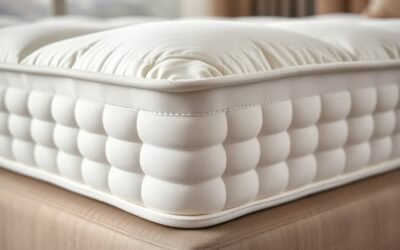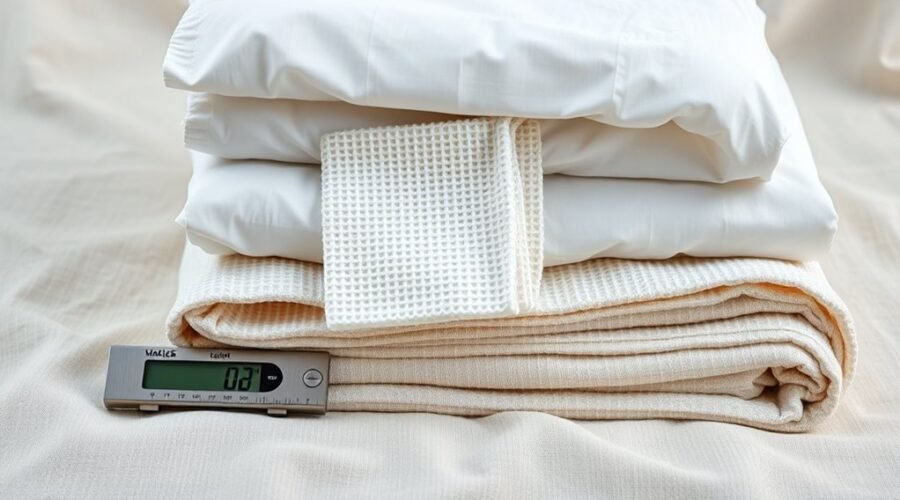
If you shop for sheets, you’ll see GSM, or grams per square meter, used to describe fabric weight and density. It tells you how much one square meter of fabric weighs, which helps you judge thickness, drape, and warmth. But GSM doesn’t tell the full story on its own, and the same number can feel quite different across materials. That difference matters more than you might expect.
Key Takeaways
- GSM means grams per square meter, a standard measure of fabric weight and density in bedding.
- Higher GSM usually means a thicker, warmer sheet, while lower GSM means lighter, cooler, and more breathable fabric.
- Mills measure GSM by cutting a 10 cm by 10 cm sample, weighing it, and multiplying the weight by 100.
- GSM helps compare bedding weight, but comfort also depends on fiber type, weave, hand feel, and drape.
- Cotton sheets often perform best around 140–180 GSM, while warmer or cooler climates may need different ranges.
What Does GSM Mean in Bedding?
GSM, or grams per square meter, is the standard measure used to describe the weight and density of bedding fabrics, giving you a clear indicator of thickness and overall quality.
When you measure GSM, you assess fabric weight, which helps you judge how sheets will feel, wear, and regulate temperature.
In cotton sheets, a 140-180 GSM range often delivers the best balance of softness and durability for premium use.
If you sleep in heat, lighter sheets at 80-120 GSM can improve airflow; if you need more insulation, 200-240 GSM offers greater warmth.
Linen usually sits at 160-220 GSM and gives you breathable, moisture-wicking performance across seasons.
By learning to measure GSM, you stop relying on vague marketing claims and start choosing bedding that supports your comfort, autonomy, and restorative sleep.
The number doesn’t dictate quality alone, but it gives you a reliable technical baseline.
How Is GSM Measured at the Mill?
At the mill, GSM gets verified through a controlled sampling process, not guesswork. You’ll see technicians cut a 10cm × 10cm fabric sample in a humidity-controlled room so the fibers don’t absorb stray moisture and distort accuracy. They weigh that square, then multiply the result by 100 to convert it to GSM, giving you a standardized reading of fabric weight.
To protect reliability, they don’t stop at one cut; they take multiple samples across the roll because weave density can shift from edge to center. That spread matters when you want truth, not marketing.
Mills also document the method under strict protocols and certifications, including GOTS, to keep GSM measured consistently and to defend product quality.
When the numbers are precise, you can judge comfort, durability, and application with confidence, and choose bedding that serves your body without compromise.
GSM vs Thread Count: Which Matters More?
GSM and thread count measure different things, so the better indicator depends on the fabric and how you want it to perform. You use GSM to assess fabric weight, density, and thermal behavior; you use thread count to gauge yarn quantity per square inch and, often, surface smoothness. Don’t let marketing trap you: higher thread count doesn’t automatically mean better sheet quality.
GSM shows fabric weight and warmth; thread count hints at smoothness, but higher numbers don’t guarantee better sheets.
- Higher GSM usually means more durability and warmth.
- Higher thread count can increase softness in cotton sheets.
- Linen and wool demand GSM more than thread count.
- Balanced specs often beat extremes for comfort.
For cotton sheets, thread count still matters, but you should read it alongside GSM and fiber type. A moderate GSM can feel crisp and breathable, while excessive numbers may add weight without real performance gains.
In practice, you win by choosing the spec that matches your climate, touch preference, and freedom from hype.
What GSM Is Best for Bed Sheets?
For most bed sheets, you should target about 140–180 GSM, since that range balances softness, durability, and year-round performance.
You’ll want to adjust by fabric type: cotton percale works best around 140–160 GSM, while linen typically performs well at 160–220 GSM for absorbency and comfort.
Your sleep style and climate should guide the final choice, with lighter 90–120 GSM sheets fitting warm conditions and heavier sheets above 170 GSM offering more warmth in cold environments.
Ideal GSM Ranges
When you’re choosing bed sheets, the ideal GSM range usually falls between 90 and 170, with the best option depending on your climate, sleep preferences, and desired feel.
GSM measures fabric weight and density, so you can compare sheets across different parts of your sleep setup with precision.
- 90–120 GSM: choose this for warm climates and faster drying.
- 120–170 GSM: choose this for balanced comfort and year-round use.
- Above 170 GSM: choose this for added warmth and a more substantial hand.
- Match your target GSM to your room conditions and personal comfort goals.
These ideal GSM ranges let you select with clarity, not guesswork, and claim comfort on your terms.
Fabric Type Differences
Fabric type changes the GSM target you should look for because each fiber behaves differently in weight, drape, breathability, and thermal retention.
For cotton, you’ll usually want 110 to 170 GSM, where the fabric can balance comfort and airflow.
Linen performs best near 160 GSM; lighter 110 to 150 GSM feels less dense, while 180 to 220 GSM gives more structure.
Eucalyptus TENCEL™ keeps a cool, soft feel at 140 to 160 GSM, so you can choose it when you want low-weight performance without sacrificing touch.
Bamboo often sits in the mid-range and delivers a softer drape that moves with you.
Above 170 GSM, the fabric gains a heavier weight and a more substantial, insulated feel.
Sleep Style And Climate
Your sleep style and local climate should guide the GSM range you choose for bed sheets, because the right weight affects airflow, warmth, and drying time.
You can optimize sleep quality by matching fabric mass to your physiology and environment.
- hot sleepers: choose 200-400 GSM for lighter coverage and stronger airflow.
- average sleepers: select 400-500 GSM for balanced, year-round performance.
- cold sleepers: use 550+ GSM for insulation and thermal retention.
- warm climate: prefer 90-120 GSM sheets for cooler contact and faster drying.
In a local climate with heat or humidity, lower GSM supports liberation from sweat and cling.
In cooler seasons, higher GSM increases comfort without sacrificing control.
The best bed sheets align with your body temperature, not marketing claims.
What GSM Works Best for Linen Sheets?
For linen sheets, you’ll usually get the best year-round balance at around 160 GSM, which gives you breathable comfort without sacrificing too much warmth.
If you want a lighter summer option, choose 110–150 GSM, while 180–220 GSM adds more insulation for colder months.
Above 220 GSM, linen starts to behave more like flannel weight, so you’re better off using it only in extreme winter conditions.
Ideal Linen GSM Range
Linen’s sweet spot usually falls between 160 and 180 GSM, a range that gives you a strong balance of breathability, durability, and year-round comfort.
In grams per square meter terms, this ideal GSM range lets linen sheets stay light enough to move air while still holding structure. Weight plays a measurable role in how the fabric drapes, resists wear, and manages moisture.
You get better temperature regulation because the weave can wick sweat without feeling dense or restrictive.
- 160 GSM: maximum airflow
- 180 GSM: balanced resilience
- 200 GSM: added heft
- 220+ GSM: colder-climate feel
Seasonal Linen Weight Choices
Seasonal comfort depends on matching linen GSM to the climate and your sleep preferences.
For summer, choose linen sheets at 110-150 GSM; they’re lightweight, breathable, and support airflow, so you stay cooler without losing coverage.
If you want one set for most of the year, target about 160 GSM, which balances breathability and warmth with clean efficiency.
In winter, move to 180-220 GSM for denser fabric, stronger insulation, and reliable warmth.
Above 220 GSM, linen sheets become flannel-weight and deliver exceptional coziness for cold rooms.
You control sleep comfort by selecting the fabric mass that fits your conditions, not by accepting a one-size-fits-all standard.
That flexibility gives you practical freedom and better rest.
Why Sheets With the Same GSM Feel Different?
Sheets with the same GSM can still feel noticeably different because GSM measures weight, not hand feel, breathability, or drape. Your sheet weight is only one variable; fabric type, weave, and finishing change how sheets feel different in use.
- Fiber structure: cotton, linen, and bamboo behave differently; natural fibers vary in thickness, resilience, and surface friction.
- Weave geometry: percale reads crisp and cool, while sateen feels smoother and silkier at the same GSM.
- Finishing: mercerization or sandwashing can refine the surface, changing softness without changing GSM.
- Performance: moisture-wicking and breathability alter skin contact, so comfort shifts even when the numbers match.
When you compare bedding, treat GSM as a density signal, not a full comfort score.
To choose sheets that support your freedom and rest, evaluate the fiber, weave, and finish together, because those variables govern how the fabric moves, breathes, and lands against your skin.
How Do You Check GSM on Your Own Sheets?
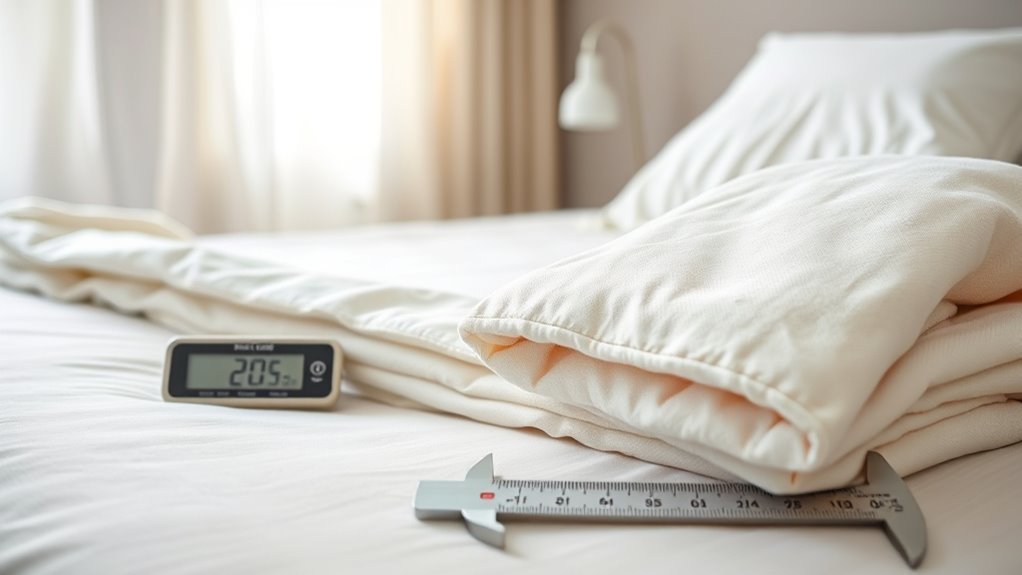
To check the GSM of your own sheets, cut a 10 cm × 10 cm fabric sample, then weigh it in grams on a scale in a humidity-controlled environment. This gives you a controlled check on actual fabric mass.
Record the sample weight, then multiply it by 100 to convert directly to GSM, because your sample is one-hundredth of a square meter.
Repeat the process on multiple areas of the sheet, including center and edge zones, and average the results to reduce local variation. That average is your best estimate of true GSM.
Use a clean blade or scissors so you don’t distort the fabric edge, and keep handling consistent.
If a brand won’t disclose GSM, you can’t verify its weight claim independently, so treat the omission as a warning sign.
Common GSM Mistakes When Buying Sheets
One of the biggest GSM mistakes you can make is treating a higher number as an automatic sign of better sheets. GSM measures weight, not performance, so higher GSM means little if the fiber, weave, or finish is poor.
You also shouldn’t compare GSM across cotton, linen, and silk as if they’re equivalent; each behaves differently.
- Check product specs for fiber type first.
- Verify origin claims; European flax linen can outperform weaker linen at the same GSM.
- Inspect finishing treatments, because they change hand feel and durability.
- Confirm authenticity through reputable sources or GOTS certification, since some brands inflate numbers.
Don’t let low GSM or high GSM dictate your judgment alone. A precise reading of GSM helps you reject hype, compare material integrity, and choose sheets that support comfort, durability, and personal autonomy.
How Do You Choose the Right GSM for Bedding?
How do you choose the right GSM for bedding? Start by matching GSM to your thermal needs and sleep profile.
If you run hot, choose 200-400 GSM; it gives lightweight coverage, improves airflow, and reduces overheating.
If you sleep at a neutral temperature, 400-500 GSM usually delivers a good GSM range for year-round use and a stable balance of comfort.
If you get cold easily, select 550 GSM or higher for stronger insulation and deeper warmth.
Weight matters, but climate matters too: warmer regions reward lighter fabrics, while colder regions justify heavier ones.
For best results, pair your chosen GSM with breathable materials such as cotton or linen.
That combination supports temperature regulation, reduces moisture buildup, and keeps your bedding responsive to your body.
You’re not buying heaviness for its own sake; you’re choosing fabric performance that lets you sleep on your own terms.
Frequently Asked Questions
What Is a Good GSM for Bed Sheets?
A good GSM for bed sheets is usually 140 to 180, because you get solid fabric durability without losing comfort.
You’ll often prefer lighter 90 to 120 GSM for hot rooms, while 170+ feels warmer and denser.
Don’t fixate on thread count alone; material types, breathability factors, and washing care matter too.
You can choose cotton or linen based on your climate, sleep style, and desire for easier maintenance.
Is 300 GSM a Heavy Blanket?
Yes, you’re dealing with a heavy blanket at 300 GSM. You’ll get strong warmth retention, denser insulation, and better cold-weather performance than lightweight blankets.
That extra weight can improve fabric durability, but it may reduce material breathability.
For washing care, you should follow the label closely, because thicker weaves hold moisture longer and need gentler handling.
If you want a cozier, more enveloping sleep, 300 GSM fits that goal.
What Does a 700 GSM Quilt Mean?
A 700 GSM quilt means you’re getting a very heavy, dense layer that boosts quilt warmth and sleeping comfort.
In a weight comparison, it sits well above lighter options, so you’ll notice more insulation and a plush feel.
You’ll often find material types like down or high-quality synthetics, which improve fabric durability.
If you run hot, you may want a lower GSM for freer, cooler sleep.
Which Comforter Is Better, a 120 GSM or a 220 GSM Fabric?
You should choose 120 GSM if you want lighter fabric thickness and better breathability; choose 220 GSM if you need more warmth retention.
Which matters more to you: cool airflow or winter comfort?
You’ll usually see a durability comparison favor the denser option, and comfort level shifts with climate and preference.
Price differences often reflect material use, so you can align cost, insulation, and freedom from overheating with your needs.
Conclusion
Now you can read GSM like a map: a lower number means lighter, airier sheets, while a higher one signals denser, warmer fabric. When you compare GSM with fiber type, weave, and finish, the choice becomes clear, not coincidental. You’ll spot why two sheets with the same number can still feel different, and you’ll know how to check labels before you buy. In bedding, GSM gives you a precise, practical measure of weight.