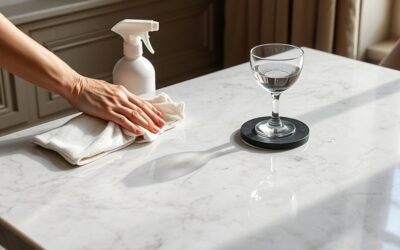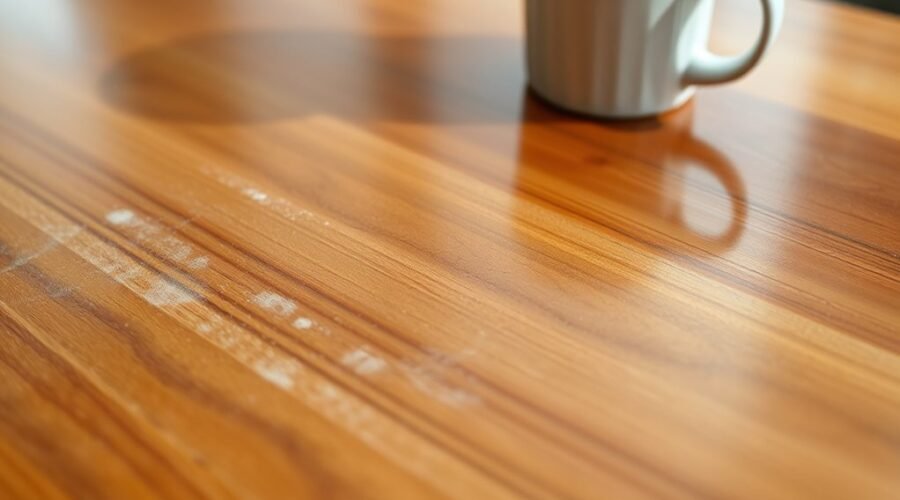
White heat marks on wood furniture usually mean the surface finish has turned cloudy after exposure to heat, moisture, or both. A hot mug, serving dish, pizza box, or damp object can affect the clear coating without permanently burning the wood below. Pale, smooth marks are often easier to repair than dark stains, rough blistering, or actual char, but the safest treatment depends on the finish.
Quick Answer
A smooth white heat ring usually involves clouding or moisture in the furniture finish rather than a deep burn in the wood. Start by letting the area dry, identify the finish if possible, and test treatments in a hidden spot. Dark, rough, blistered, charred, veneered, or valuable surfaces need more cautious repair.
Key Takeaways
- White or cloudy marks commonly involve moisture-related clouding, or blushing, in the clear finish.
- A dark mark is not automatically a burn. Water that reaches the wood can also create dark staining.
- Do not assume every finish can tolerate an iron, alcohol, abrasive paste, oil, or steel wool.
- Start with drying and the least aggressive treatment, then escalate only if the finish is known and stable.
- Antiques, veneer, marquetry, unstable finishes, and valuable furniture are better handled by a qualified furniture conservator or restorer.
At a Glance
| Time Required | A few minutes for diagnosis; several minutes to several hours depending on drying and treatment |
| Difficulty | Easy for a fresh, smooth white mark; moderate to professional-level for damaged finishes, veneer, dark stains, or burns |
| Tools Needed | Soft white cotton cloth, good lighting, optional hairdryer, and only finish-compatible repair products |
| Cost | Little or no cost for basic drying; specialized finish repair, refinishing, or professional conservation varies |
Warning: Do not start with an iron, strong solvent, steel wool, sanding, or an unknown restoration product on antique, veneered, high-gloss, shellac-coated, cracked, flaking, or valuable furniture. Heat, alcohol, abrasion, and solvents can permanently change some finishes.
What Causes Heat Stains on Wood?
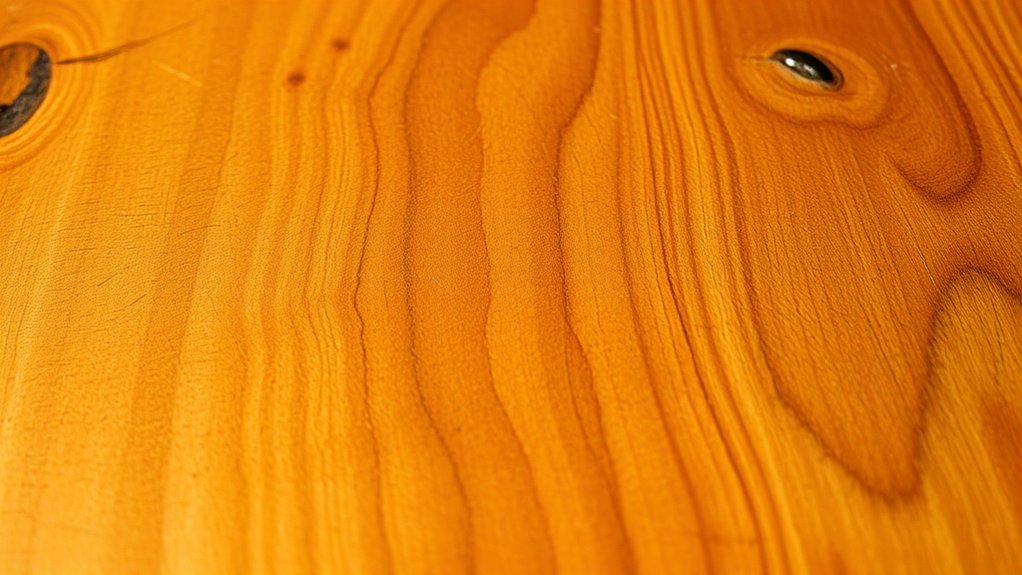
White heat stains on wood are usually changes in the surface finish, not deep burns in the wood. A hot mug or dish can heat and soften a coating, while steam, condensation, or existing moisture can contribute to cloudiness within that film.
The Canadian Conservation Institute notes that water can leave cloudy white patches in wood finishes. In lacquer finishing, the similar cloudy effect is commonly called blushing; Mohawk Finishing Products describes lacquer blush as cloudiness caused by trapped moisture.
It is therefore more accurate to think of a white mark as a finish problem than to assume that heat simply “opens the wood pores.” The exact reaction depends on the coating, its age and condition, the amount of moisture present, the temperature of the object, and how long it remained on the surface.
If exposure is severe enough to blister, melt, crack, brown, or char the coating and wood below it, the problem is no longer a simple white moisture haze. That deeper damage may require finish repair or refinishing.
Why Do Heat Rings Form on Wood Tables?
A heat ring often follows the shape of a mug, plate, pot, or food container because that is the area where the finish experienced heat and, frequently, moisture at the same time. When the affected finish becomes cloudy, tiny changes within the coating scatter light and make the area look pale or milky.
A smooth white ring usually points to a change in the finish; a rough, dark, blistered, or charred mark suggests a different and potentially deeper problem.
A fresh white mark may fade as moisture leaves the finish. Older or more severely altered coatings may need a finish-specific repair. Repeated direct contact with hot or wet objects can also weaken an already worn surface.
The simplest prevention is to interrupt the contact. Use dry coasters for drinks and heat-resistant trivets or pads under hot serving dishes, cookware, small appliances, and takeout containers.
White Heat Stains vs Dark Burn Marks
Color is useful, but it should not be the only diagnostic clue. A pale, cloudy, smooth mark generally points to the finish. A dark area can be an actual heat scorch, but moisture that reaches the wood can also produce brown, gray, or black staining.
| Appearance | Likely Problem | Typical Response |
|---|---|---|
| White, cloudy, smooth haze | Finish clouding or moisture-related blush | Dry first; use finish-compatible treatment |
| White but rough, bubbled, cracked, or sticky | Heat-softened or physically damaged finish | Stop DIY heat; inspect coating damage |
| Dark stain after prolonged moisture | Moisture has reached or chemically stained the wood | May require stripping, stain treatment, and refinishing |
| Brown or black char with rough fibers | Actual scorching or burned wood | Material removal and compatible refinishing may be required |
White Moisture Rings
Cloudy white rings are commonly associated with moisture in or beneath a clear surface coating. If the grain remains visible, the surface feels smooth, and there is no charring or blistering, the underlying wood may still be sound.
| Indicator | What It Suggests |
|---|---|
| Cloudy white ring | Finish haze or trapped moisture |
| Smooth surface | Damage may be limited to the coating |
| Visible grain beneath mark | Underlying wood may be unaffected |
| Mark slowly fades while drying | Moisture is likely leaving the finish |
| No cracking or blistering | Gentle treatment may be appropriate |
Start with drying rather than abrasion. If the mark changes or fades while left uncovered in a dry room, that is a good reason not to escalate immediately.
Dark Scorch Marks
A true scorch forms when enough heat reaches the finish or wood to cause permanent discoloration, blistering, carbonization, or char. The area may look brown or black and can feel rough instead of merely cloudy.
Do not confuse this with a dark water stain. Moisture that penetrates a worn finish can also darken wood without burning it. The history of the mark matters: a blackened patch directly beneath a very hot pan is more suggestive of scorching than a dark ring beneath a leaking planter.
When fibers are actually burned, a surface treatment for a white ring will not restore them. Damaged material may have to be removed before color and finish can be rebuilt.
Damage Repair Difficulty
White, smooth marks are usually the easiest category because the defect may be limited to the finish. Drying, controlled moving warmth, or a coating-specific repair can sometimes clear the haze.
Dark moisture stains are harder because discoloration may extend into the wood itself. Actual scorch marks are harder still because burned fibers cannot simply be dried clear.
Veneer raises the risk substantially. Sanding through a thin veneer can expose the substrate and turn a small mark into permanent structural and cosmetic damage.
Pro Tip: Look across the mark under side lighting. If the area is still smooth and only the transparency has changed, treat it as a finish problem first. If you see lifting, cracking, bubbles, missing finish, raised veneer, or charred fibers, stop using white-ring remedies.
How Heat and Moisture Create a White Finish Haze
A white mark does not require a single universal “open-pore” process. Furniture coatings differ widely, and heat, humidity, liquid water, steam, wax, and coating condition can interact in different ways.
In a susceptible coating, moisture can produce a whitish or cloudy appearance. The Canadian Conservation Institute’s furniture-finish guidance describes blanching as a white or cloudy reaction that must be checked when evaluating a coating.
Heat Can Soften or Stress the Finish
Rather than assuming heat simply opens wood pores, focus on the coating. A hot object may soften, stress, or alter a finish and can arrive with moisture from steam, condensation, food, or the surrounding environment.
On a lacquer finish, moisture-related cloudiness is a recognized problem. Professional lacquer repair products may work by briefly re-flowing the coating so moisture can escape, but that process is specific to suitable lacquer systems and is not a general cure for every finish.
Moisture Can Cloud the Coating
When moisture affects a clear finish, the film can become pale or cloudy even though the wood grain remains visible. Short, mild exposure may improve as the coating dries. Longer exposure, a deteriorated finish, or direct liquid penetration may lead to more persistent damage.
- A smooth pale haze is more likely to be a finish-level problem.
- A rough, cracked, blistered, or sticky surface suggests physical finish damage.
- A dark stain can mean moisture has passed beyond the clear finish.
- Charred fibers indicate actual heat damage rather than simple moisture haze.
Which Wood Finishes Show Heat Marks Most?
There is no reliable rule that one broad category such as “water-based” is always safer than every “oil-based” finish. According to the USDA Forest Products Laboratory, finish selection and performance depend on the coating, desired protection, substrate, and service conditions.
| Finish Type | What to Know About White Marks |
|---|---|
| Shellac and other natural-resin finishes | Can be sensitive to water, solvents, age, and prior treatments. Avoid experimenting with alcohol on shellac. |
| Conventional lacquer | Can develop moisture-related blushing. Lacquer-specific blush repair products exist, but should be used only on compatible lacquer finishes. |
| Varnish and polyurethane | Performance varies by formulation, film thickness, cure, age, and exposure. Do not assume one treatment works for every product. |
| Waxed surfaces | Heat and humidity can whiten or cloud wax itself. The National Park Service notes that wax can turn cloudy under excessive heat or relative humidity. |
| Oil or oil-and-wax surfaces | These do not behave like a thick clear film. Follow the original finish manufacturer’s maintenance instructions rather than applying a film-finish remedy automatically. |
Note: If you cannot identify the finish and the piece is old, valuable, veneered, or previously restored, the safest assumption is that aggressive heat, alcohol, solvents, abrasives, and steel wool may cause more damage.
How to Identify the Finish Before Repair
You do not need laboratory identification for every modern table, but you should gather enough information to avoid an obvious compatibility mistake.
- Check the manufacturer or care label. Modern furniture may specify polyurethane, lacquer, conversion varnish, oil, wax, or another coating.
- Consider the age. Older furniture is more likely to have traditional or previously repaired finishes whose reactions are harder to predict.
- Look at the surface. Cracking, flaking, crazing, softness, lifting veneer, or uneven previous repairs are reasons to stop.
- Test any treatment in an inconspicuous area first. Watch for color transfer, dulling, stickiness, whitening, softening, or a change in sheen.
- Do not use a destructive solvent test on valuable furniture. A chemical that dissolves a finish can damage the very surface you are trying to identify.
How to Remove White Heat Stains
Use the least aggressive method first. A smooth white mark does not justify immediate sanding, steel wool, solvent, or refinishing.
- Remove the hot or wet object. Blot any surface moisture with a clean, soft cloth rather than rubbing hard.
- Leave the spot uncovered and dry. Give a fresh mark time to change before adding another product.
- Evaluate the finish and furniture. Do not continue with DIY treatment if the piece is valuable, antique, veneered, cracked, blistered, flaking, or of unknown finish.
- For a stable, compatible finish, try moving warm air. Minwax recommends keeping warm air from a hairdryer moving over small areas of finish blush. Check the area often and stop if the surface softens, becomes sticky, or changes sheen.
- Escalate only with a finish-appropriate method. For conventional lacquer, a product specifically intended for lacquer blush may be suitable. For other known finishes, follow the coating or furniture manufacturer’s repair instructions.
- Use mild abrasion only when appropriate. Minwax describes baking soda mixed with non-gel toothpaste as a mild abrasive for some white rings, but abrasion can change gloss. Test first and stop as soon as the mark improves.
- Stop when the treatment is not working. Repeated rubbing, heating, or chemical treatment can turn a small defect into a larger one.
Minwax’s finishing guidance documents both moving warm air for small areas of moisture blush and mild-abrasive treatment for some white rings. Those methods are not automatically appropriate for every historic or unknown finish.
Warning: Denatured alcohol appears in some manufacturer white-ring instructions, but alcohol can attack shellac and other alcohol-sensitive coatings. Do not use it when the finish is shellac, unknown, valuable, or unstable. Keep all flammable solvents away from ignition sources and use adequate ventilation and the product’s required protective equipment.
How to Fix Dark Burn Marks on Wood
First confirm that the mark is truly scorched. A dark water stain and a heat burn may need completely different treatments.
If the surface is brown or black, rough, charred, blistered, or missing finish directly where a very hot object touched it, burned material may need to be removed. On ordinary modern solid wood, repair can involve removing damaged finish, carefully sanding only as far as necessary, blending the color, and rebuilding the coating.
Always work with the grain and avoid creating a low spot. Do not keep sanding simply because discoloration remains; deep heat damage may extend farther than is reasonable to remove.
Veneer requires special caution. A thin decorative veneer can be sanded through quickly, exposing a different substrate underneath. Raised, loose, bubbled, or scorched veneer is a good reason to use a furniture professional.
After damaged material is corrected, use a finish compatible with the surrounding coating. Do not automatically spot-coat every table with oil-based polyurethane. Differences in chemistry, gloss, color, and film thickness can make a repair obvious or create adhesion problems.
Best Products and Methods for Heat-Stain Removal
The most useful product is the one that matches the actual finish and type of damage. There is no single bottle that safely removes every white ring.
- For moisture blush on a stable modern finish: drying and controlled moving warm air may be enough.
- For conventional lacquer: Mohawk No Blush Plus Retarder is specifically designed to re-flow suitable lacquer finishes and release trapped moisture. Follow its product and safety directions.
- For some white rings on compatible finishes: Minwax documents a mild-abrasive approach using non-gel toothpaste and baking soda, while warning that buffing can alter sheen.
- For wax maintenance: use a suitable furniture paste wax only when wax is appropriate for the existing stable finish.
Gentle Household Methods: Limits and Risks
Mayonnaise, petroleum jelly, olive oil, vinegar, salt, toothpaste, and baking soda are commonly suggested online, but they are not interchangeable and several are not cleaners at all.
Oily products may temporarily change how a cloudy area looks, yet they can also leave residue or complicate later refinishing. The Canadian Conservation Institute warns that commercial restoration mixtures containing oils, waxes, or silicones can create buildup and compatibility problems on museum-quality furniture.
Toothpaste and baking soda work differently: they are mildly abrasive. That can reduce some white-ring haze on compatible finishes, but the same abrasion may leave a dull patch on a glossy surface.
Vinegar-and-oil, salt-and-oil, mayonnaise, petroleum jelly, and improvised steel-wool mixtures should therefore not be presented as universally low-risk treatments. Test any non-manufacturer method first, and avoid it entirely on valuable or unknown finishes.
Wood-Safe Polish and Wax Options
A polish may improve sheen, but it should not be confused with repairing damaged wood or removing every white heat mark.
For historic furniture, conservation guidance favors restrained treatment. The Canadian Conservation Institute states that finished wood does not need to be routinely “fed” with oils. Products that leave residues can change the surface and complicate future work.
When a stable clear finish is suitable for waxing, the U.S. National Park Service recommends thin applications of suitable paste wax rather than heavy buildup. Wax can protect against handling and minor splashes, but it is not a substitute for trivets or other heat barriers.
Products such as Howard Feed-N-Wax are maintenance products rather than universal heat-stain removers. Follow the manufacturer’s instructions and test first instead of assuming regular application is necessary for every furniture finish.
What Not to Do With a White Heat Mark
- Do not sand a smooth white haze first. You may cut through an otherwise repairable finish.
- Do not use steam. Adding moisture is a poor default response to a moisture-related cloudy finish.
- Do not place a hot iron directly on the furniture. Additional concentrated heat can damage the coating.
- Do not use denatured alcohol on shellac or an unknown finish.
- Do not scrub aggressively with baking soda, toothpaste, or steel wool. Abrasion can permanently change gloss.
- Do not apply multiple oils, waxes, polishes, and solvents one after another. Their residues and interactions can make diagnosis and later refinishing harder.
- Do not sand veneer until you know its thickness and condition.
How to Prevent Heat Rings and Spots
Prevention works better than repeated repair. Separate hot, wet, or sweating items from the finish before they can affect it.
Use dry coasters for drinks and a heat-resistant trivet, pad, or table protector under hot dishes. A decorative placemat alone may not provide enough thermal insulation for very hot cookware.
- Wipe spills and condensation promptly.
- Do not leave damp planters, vases, or containers directly on finished wood.
- Keep furniture away from strong heat sources when practical.
- Follow the furniture or finish manufacturer’s cleaning and maintenance directions.
- Use wax only when it is appropriate for the existing finish, and apply it sparingly rather than on an arbitrary six-month schedule.
- Replace or repair a badly worn finish if ordinary use repeatedly produces rings.
The Canadian Conservation Institute recommends coasters and other physical protection against water damage and cautions that environmental conditions and improper care can damage furniture finishes.
When to Call a Furniture Pro
Professional evaluation is appropriate when the value of the furniture or the risk of making the damage worse is greater than the benefit of another DIY experiment.
Contact a furniture conservator or experienced restorer when:
- the furniture is antique, collectible, historically important, or expensive;
- the finish type is unknown and previous treatments are visible;
- the surface has veneer, marquetry, inlay, gilding, or painted decoration;
- the finish is cracked, flaking, sticky, blistered, or lifting;
- the mark is dark and its cause is unclear;
- wood fibers are actually charred;
- veneer is swollen, bubbled, or separating;
- a large area needs color matching or refinishing; or
- several gentle attempts have already changed the sheen without removing the mark.
The Canadian Conservation Institute recommends professional care for extensive repairs and for degraded finishes because original surfaces can carry historical, aesthetic, and financial value.
Frequently Asked Questions
How to Get White Heat Rings off Wood Furniture?
Start by drying the surface and leaving the mark uncovered. If it stays smooth and white, identify the finish and test any treatment in a hidden spot. On a stable compatible finish, moving warm air from a hairdryer may help moisture-related cloudiness. Stop if the surface becomes soft, sticky, rough, or changes sheen.
How Do You Get Rid of White Ring Marks on Wood?
Determine whether the ring is in the finish or the wood. Smooth white haze often involves the clear coating, so begin with drying and a finish-compatible treatment. Mild abrasion may help some finishes, but it can change gloss. Dark stains, blistering, veneer damage, or char need a different repair.
How to Fix White Marks on Wood Furniture?
Use the least aggressive method first. Let the area dry, inspect the finish, and test in a hidden location. Controlled moving warm air can help some moisture-related finish haze. Avoid automatically using steel wool, olive oil, alcohol, or an iron because those methods can damage certain coatings.
How to Fix a White Heat Stain on a Wood Table?
For a smooth white heat stain, first let the table cool and dry. If the finish is stable and compatible, try gently moving warm air across the mark while checking it frequently. If the haze remains, use only a repair method suitable for that finish or consult a restorer.
Can You Use an Iron to Remove a White Heat Mark?
Iron methods are widely circulated, but concentrated heat can soften, dull, print, or otherwise damage an unknown finish. A moving hairdryer provides more controllable warmth and is documented by Minwax for small areas of finish blush. Avoid an iron on valuable, antique, shellac-coated, veneered, or unidentified furniture.
Does Mayonnaise Remove Heat Rings From Wood?
Mayonnaise is a traditional home remedy, but it is not a universal furniture treatment and the oil can leave residue. It should not be a first choice for valuable, antique, or unknown finishes. Drying and a finish-specific repair method provide a more predictable approach.
Conclusion
White heat marks on wood furniture are often finish-level problems rather than permanent burns. The important step is diagnosing the mark before treating it: smooth white haze, dark moisture staining, damaged coating, and charred wood require different responses. Let fresh marks dry, use the least aggressive compatible treatment, and avoid adding heat, solvent, oil, or abrasion blindly. Coasters and heat-resistant trivets prevent most repeat damage, while valuable, veneered, or severely damaged furniture is safest in the hands of an experienced restorer.
Sources
- Canadian Conservation Institute — Care of Furniture Finishes — finish identification, water sensitivity, cleaning precautions, oils, waxes, and conservation care.
- Canadian Conservation Institute — Basic Care: Furniture and Objects Made of Wood — cloudy water marks, environmental damage, coasters, cleaning, and professional repair.
- USDA Forest Products Laboratory — Chapter 16: Finishing Wood — finish performance, moisture protection, coating selection, and wood-finishing principles.
- Minwax — Wood Finishing Frequently Asked Questions — moisture blush, moving warm air, white-ring repair, and mild abrasion guidance.
- Mohawk Finishing Products — No Blush Plus Retarder — lacquer blushing, trapped moisture, and lacquer-specific repair.
- U.S. National Park Service — Waxing Furniture and Wooden Objects — appropriate waxing, thin application, finish compatibility, and wax clouding under heat or humidity.