
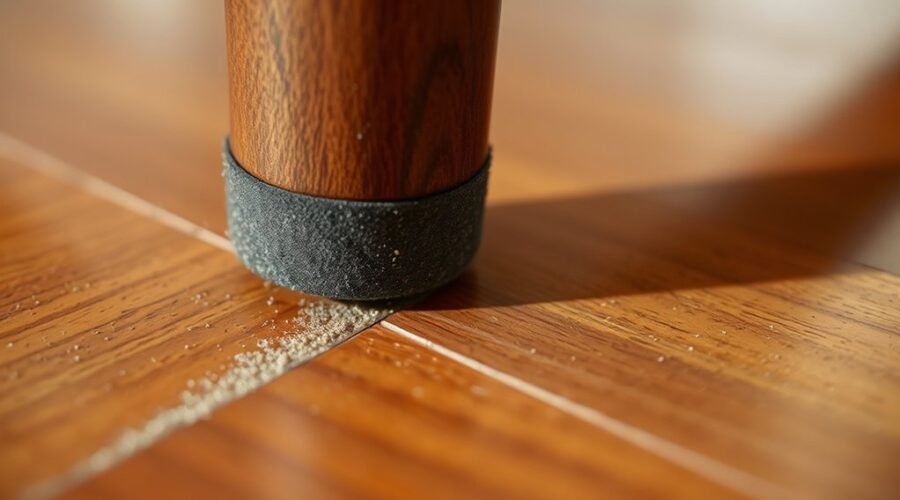
Furniture legs scratch floors because their weight concentrates on small contact points, especially on narrow or sharp edges. When chairs or tables move, loose grit and debris get trapped beneath pads and work like sandpaper. Worn felt, rubber, or plastic protectors lose cushioning and expose wood to direct abrasion. Dense felt or matched glides reduce this damage, but only if kept clean and replaced before flattening. More details explain how to stop the wear before it starts.
Why Furniture Legs Scratch Hardwood Floors
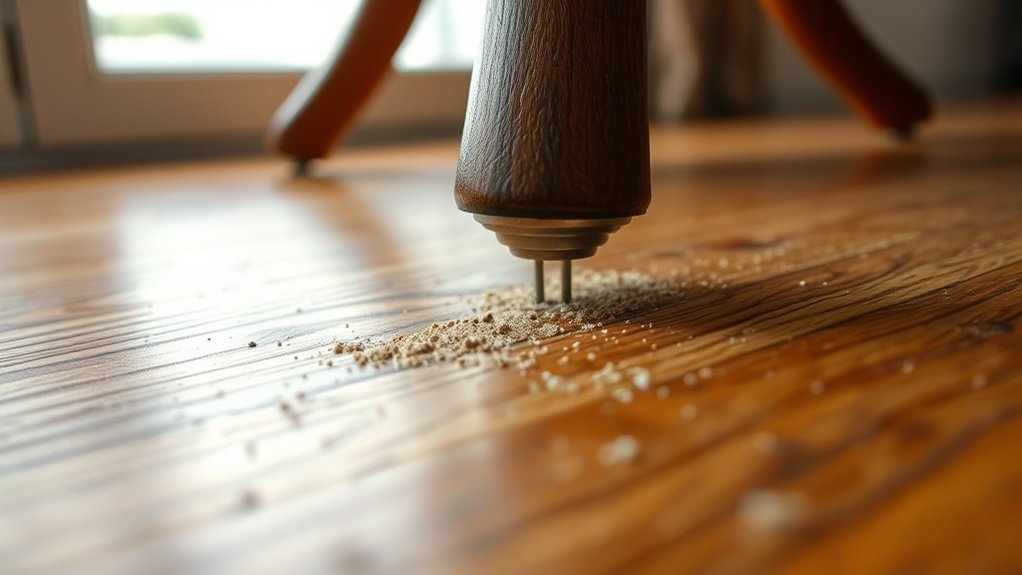
Furniture legs scratch hardwood floors because concentrated weight is transferred through small contact points, creating high pressure that can dent and abrade the finish over time.
Chair legs with narrow or sharp edges intensify this effect, especially when dragged, pushed, or shifted across the surface. Movement can also trap grit and debris beneath the leg, turning each slide into a grinding action that behaves like sandpaper.
Narrow chair legs and trapped grit turn every slide into a grinding motion that can scratch hardwood floors.
Over time, that abrasive contact wears through protective coatings and exposes bare wood. Worn pads or missing protection increase risk by allowing direct contact between leg and floor.
Dense felt pads can reduce impact and distribute load, but only when they remain intact and clean. Regular dust removal matters because accumulated grit is a hidden source of damage.
To prevent scratches, the surface must stay free of debris and furniture must move with controlled, low-friction contact, not force.
Choose the Right Floor Protectors
Selecting the correct floor protector begins with material choice: dense felt pads suit hardwood by reducing friction, while rubber or silicone caps with felt bottoms improve grip on thin or angled legs.
The protector should match the floor surface, since hard, smooth floors and tile require different contact characteristics to limit scratches, scuffs, and dents.
Worn, flattened, or loosened pads should be replaced promptly to preserve consistent coverage and prevent renewed abrasion.
Best Pad Materials
The right pad material can make the difference between minor wear and visible floor damage.
Felt remains the most reliable choice for hardwood, engineered wood, and laminate because it lowers friction and interrupts micro-scratching with a soft interface.
Rubber pads and silicone pads provide strong grip on tile, yet they should be selected carefully on hardwood because poorly matched compounds can leave scuff marks.
PTFE/Teflon Slider Pads are engineered for heavy furniture on hard surfaces, where very low friction allows controlled movement with minimal abrasion.
Nylon and plastic glides suit carpeted areas, but their grit buildup can threaten hard floors.
For office chairs, soft polyurethane casters protect hardwood better than hard plastic casters.
Material selection is consequently a practical defense for liberated, low-maintenance interiors.
Match Pads to Floors
Proper pad selection depends on the floor beneath the furniture: felt pads are best for hardwood and laminate, while rubber or nylon glides are more appropriate for carpeted surfaces.
On hardwood, pads should fully cover furniture legs so load is distributed across a broader contact area, reducing point pressure and dent formation. Wider pads are preferable under heavy pieces because they spread force more effectively.
Tile benefits from non-marking rubber that adds grip without abrasion. Rubber should be avoided on hardwood if discoloration is a concern.
Each installation should be checked for full contact, alignment, and grit intrusion. When pads flatten or harden, friction rises and scratches become more likely; periodic inspection preserves surface freedom and keeps furniture moving cleanly.
Replace Worn Protectors
Worn protectors should be replaced as soon as they flatten, peel, or harden, since degraded pads no longer cushion furniture legs effectively and can increase friction on hardwood floors. Routine checks help prevent grit from lodging beneath damaged pads, which worsens scratching. To replace worn protectors, choose sizes that cover the full contact area and shift weight evenly. Thick felt suits heavy pieces; silicone caps fit angled legs. | Protector | Best Use | Risk Reduced |
| — | — | — |
|---|---|---|
| Thick felt | Heavy furniture | Dents |
| Silicone caps | Angled legs | Slip |
| Larger pads | Broad feet | Pressure |
Match materials to the finish; some rubber can discolor surfaces. Proper selection restores mobility and protects hardwood floors, giving rooms a freer, cleaner path.
Match Pads to Floor Type and Traffic
Floor protection depends on matching pad material and size to both the surface and the load. Hardwood and laminate generally call for thick felt pads, which spread contact and reduce abrasion; tile usually performs better with rubber or silicone, since those materials grip without scuffing.
In busy rooms such as dining areas, a chair mat or durable felt or rubber protectors should be selected for chairs and tables that move often, because wear accelerates when traffic is constant. Low-traffic zones can use lighter pads, but coverage must still fit the leg profile.
Heavy furniture needs wider protectors, especially under sofas, cabinets, and other heavy furniture, because broader contact lowers point pressure and helps prevent dents. Pads should be checked regularly in active spaces and replaced when compressed or worn.
Adequate thickness and full coverage are essential, since undersized protection leaves room for grit, load shifts, and slow floor damage.
Install Felt Pads the Right Way
A secure felt-pad installation begins with complete coverage of each furniture leg so no sharp edge can touch the floor and leave a scratch. Before application, the leg bottoms should be wiped with rubbing alcohol and allowed to dry; dust or oils weaken adhesion and can let grit migrate under the felt pads. On hardwood flooring, high-density felt pads give better wear resistance and help preserve the finish under repeated movement.
- Trim or select pads that extend beyond every corner of the leg.
- Use adjustable felt pads, or paired pads, when legs are uneven.
- Inspect pads routinely; replace any that flatten, shed fibers, or collect debris.
Correct placement keeps contact stable, limits edge pressure, and reduces friction. When the pad footprint matches the leg, the load is spread more evenly, and the furniture can move without scraping.
That small, deliberate step supports a quieter room and a freer, less protected floor.
Protect Heavy Furniture From Dents
Heavy furniture concentrates substantial force on relatively small contact points, so over time it can compress hardwood fibers and leave visible dents.
To protect flooring, wide felt protectors or furniture cups should be placed under each load-bearing leg, creating a soft barrier that spreads pressure across a larger area. This simple redistribution reduces peak stress and slows permanent deformation in hardwood.
Any heavy item should be checked routinely; pads that have flattened, hardened, or shifted can no longer absorb force effectively and should be replaced.
Clean floors matter as well: sweeping or vacuuming removes grit that can grind between leg and floor like abrasive particles.
Stable indoor humidity also helps, because excessive drying can open gaps and make furniture less secure, increasing point loading.
With these controls in place, heavy furnishings remain anchored without surrendering the floor to avoidable dents, preserving both function and material freedom.
Replace Worn Chair Glides
Worn chair glides should be inspected regularly, because repeated movement gradually compresses the material and can expose sharp chair-leg edges that scratch hardwood. When chair glides lose thickness, they no longer distribute load effectively, and friction rises with every shift.
To protect hardwood floors, it is prudent to replace worn components before damage accumulates.
- Choose larger, denser felt pads or rubber caps to spread pressure.
- Select chair glides rated for hardwood floors to reduce drag and abrasion.
- Check each leg for uneven wear, cracks, or missing material.
A timely replacement routine preserves freedom from avoidable repairs and keeps seating mobile without unnecessary floor wear.
Neglected chair glides can leave scratches and dents that diminish appearance and value, turning a simple maintenance task into a costly restoration.
Stop Chair Legs From Scuffing Floors
The most effective chair-leg protection typically uses dense felt pads or silicone caps with felt bottoms, since these materials lower friction and spread load across a larger contact area.
Protection also depends on keeping grit away, because trapped debris between the leg and floor acts like an abrasive and quickly scuffs hardwood surfaces.
Regular sweeping or vacuuming, combined with inspection of pad wear, helps maintain consistent floor protection and prevents visible scratches.
Best Pad Materials
For hardwood and tile, felt pads are typically the most effective choice because they reduce friction and help prevent micro-scratching from chair legs. Thicker felt is especially important under heavier furniture, where it spreads load more evenly and lowers the risk of permanent dents.
In practice, felt is usually the first line for quiet, low-drag movement.
- Rubber pads or silicone caps add traction on tile, limiting unwanted sliding.
- Nylon and plastic glides suit carpet, enabling clean movement without surface damage.
- PTFE/Teflon sliders support heavy pieces on hard floors with very low friction and minimal impact.
Selection should match floor type and load, so furniture moves freely while the surface stays protected.
Keep Grit Away
Even when chair legs are fitted with felt, rubber, or other low-friction pads, loose grit can still act like an abrasive between the pad and the floor finish, especially in entryways, kitchens, and other high-traffic zones. Routine sweeping or vacuuming removes debris before it is driven into wood grain.
| Action | Effect |
|---|---|
| Clean floors often | Reduces grit buildup |
| Inspect furniture pads | Maintains contact and cushioning |
| Move chair legs carefully | Limits scuffing forces |
A disciplined cleaning schedule keeps chair legs from becoming scratch tools and preserves the pad’s protective function. When grit is controlled, furniture pads can do their job, lowering friction and extending floor life. This small maintenance practice supports safer, cleaner, and more liberated domestic movement.
Keep Grit Off Hardwood Floors
Grit and debris should be kept off hardwood floors because even fine particles can act like sandpaper when furniture legs shift across the surface, wearing through the finish over time.
On hardwood floors, liberation from damage begins with control of grit at the source. Regular sweeping or vacuuming removes abrasive particles before they settle into traffic lanes, while entry rugs and mats intercept dirt at doors so it never reaches the room.
The pads beneath furniture legs should be inspected and cleaned often; if grit lodges there, each movement becomes a cutting stroke against the finish.
- Place mats at every entrance and clean them routinely.
- Vacuum high-use zones with a soft-floor setting.
- Wipe furniture leg pads and replace worn protectors.
Stable indoor humidity also matters. Wood that swells or shrinks under moisture stress can worsen abrasion, so maintaining balanced conditions helps hardwood floors resist both movement and wear.
Frequently Asked Questions
How to Stop Chair Legs From Scratching the Floor?
Use chair leg protectors such as thick felt pads, silicone caps, or chair socks to stop scraping immediately.
Regular replacement of worn pads is essential.
Floor maintenance tips include frequent sweeping and cleaning both chair legs and flooring to remove abrasive debris.
Furniture placement strategies should guarantee level legs, even weight distribution, and proper pad fit.
Sliding discs designed for hardwood or laminate can also preserve movement while defending the surface.
How to Keep Furniture From Scratching Floors?
Furniture can be kept from scratching floors with furniture leg pads, even if someone doubts they will stay in place; thick felt or silicone-backed pads usually do.
Effective floor protection strategies include distributing weight, cleaning pads and floors regularly, and replacing flattened pads before they fail.
For heavier pieces, sliders prevent dragging damage.
These scratch prevention tips reduce friction, preserve finishes, and free interiors from avoidable wear.
Why Does My Wood Floor Scratch so Easily?
Wood floors scratch easily because the floor material is often softer than the force placed on it, so furniture weight concentrates stress on small points.
Repeated movement adds friction, while tiny grit particles act abrasively and wear the finish. Softer species and thin coatings are especially vulnerable.
Practical maintenance tips include felt pads, routine sweeping, and lifting furniture instead of sliding it, preserving a freer, longer-lasting surface.
What Can I Put Under Furniture Legs to Protect Hardwood Floors?
Furniture pads, felt protectors, or rubber caps are the discreet guardians a floor deserves. Thick felt pads suit hardwood best, while silicone or rubber caps with felt bottoms improve grip on thin or angled legs.
Heavy pieces benefit from caster cups, which spread load and reduce dents. For a resourceful fix, carpet scraps can work.
Pads should be inspected regularly and replaced when compressed, so protection remains effective and liberation from wear continues.
Conclusion
Furniture legs scratch floors when small particles of grit are trapped between hard contact points and the finish, turning movement into abrasion. The best protection comes from selecting the correct pads, matching them to floor type and traffic, and installing them securely. Worn glides, heavy loads, and neglected cleaning all raise damage risk. As the old adage says, an ounce of prevention is worth a pound of cure; regular maintenance preserves hardwood integrity.


