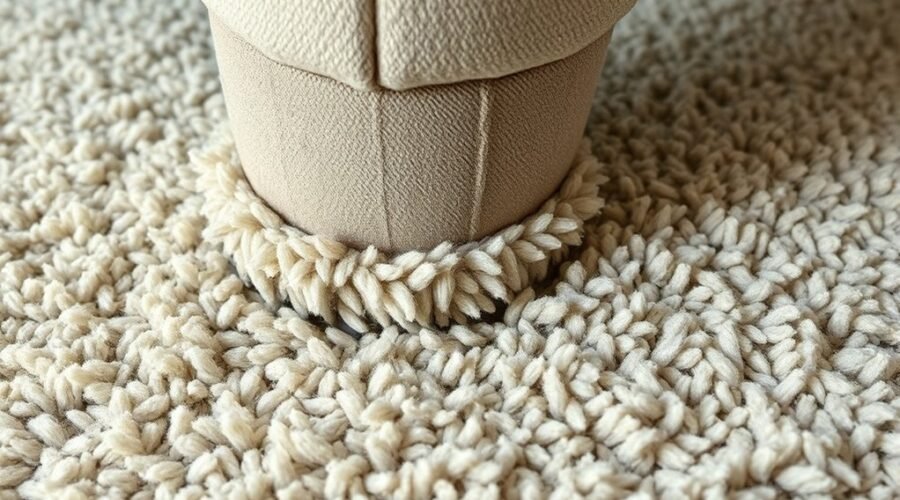
Furniture dents carpet when heavy pieces compress the pile and crush the fibers below. Softer, lower-density carpets show marks faster, especially under narrow legs or long-term weight. The pile recovers as fibers spring back, with nylon and polyester rebounding best. Moisture can help loosen the crush, and dense underlay spreads pressure for better support. Ice, steam, and simple fluffing can restore shape, and the next steps reveal which fix suits each dent.
What Causes Furniture Dents
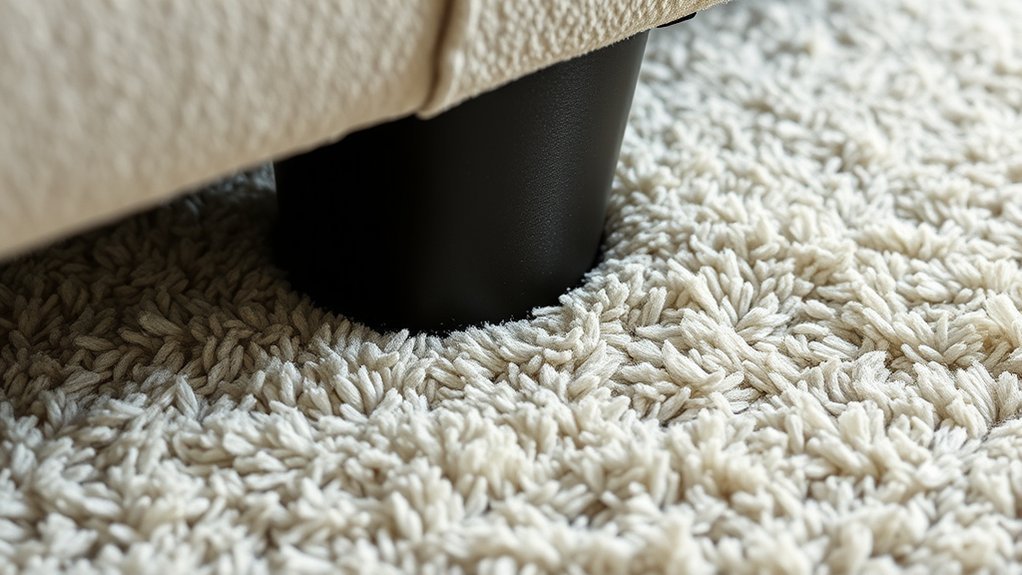
Furniture dents form when heavy pieces compress carpet fibers over time, leaving visible impressions where the pile has been pushed down. These furniture dents appear most clearly in softer, lower-density carpets, where the surface gives way under sustained load.
Weight matters: a solid sofa or cabinet exerts more pressure than a light chair, and longer contact deepens the mark. Fiber choice also shapes the result. Nylon and polyester often handle compression better than wool or olefin, while tighter, high-density piles stand firmer in busy rooms.
Underlay quality adds another layer of defense; a dense pad spreads pressure and supports the carpet’s profile, reducing indentation. The effect is both practical and visual, altering the room’s clean lines.
For those seeking liberated spaces, the material selection matters: a resilient carpet system preserves freedom of movement, protects the floor’s appearance, and keeps heavy furnishings from dictating the design narrative.
How Carpet Pile Recovers
When carpet pile recovers, it does so by slowly springing back from the pressure of heavy furniture, with each fiber acting like a tiny coil that has been pressed flat and must rise again.
In many carpet dents, the process is strongest in nylon and polyester, whose resilient structure supports a quicker return to shape than wool. Dense pile gives the field more resistance, so the surface holds its profile better and the impression fades sooner.
Moisture can assist recovery: a light steam or ice cube method lets fibers absorb water, swell, and stand upright again. Regular vacuuming and gentle fluffing also help, lifting the nap and keeping the room looking open and unburdened.
Light steam or an ice cube can help fibers swell, lift, and stand upright again.
The result is a floorcovering that regains its visual rhythm, easing the marks of furniture and restoring a freer, cleaner line across the space.
What Affects Dent Depth
Dent depth is shaped first by the weight of the piece pressing down: heavier furniture compresses the fibers more deeply, leaving a more pronounced mark.
In practical terms, furniture with a broad base spreads force more evenly, while narrow legs concentrate pressure and cut sharper dents into the surface. Fiber type changes the result too; nylon and polyester tend to spring back better, while wool may hold the impression longer.
Carpet pile density matters as well, since tightly packed fibers resist crushing and keep dents shallower than loose constructions.
Time under load is another factor: a chair moved daily leaves lighter traces than a sofa left still for months.
Beneath it all, a high-density underlay acts like a hidden shield, absorbing pressure and helping the floor read as composed, open, and free rather than visibly marked by dents.
Use Ice to Lift Carpet Dents
One or two ice cubes can be placed directly on the carpet dent, where the slow melt gives compressed fibers time to absorb moisture and rise.
After 8 to 10 hours, the area should be blotted dry with a sponge or towel to remove excess water.
The fibers can then be lifted with a spoon or fingertips, restoring a cleaner, more even surface.
Ice Cube Placement
Place ice cubes directly on the carpet dents and let them melt slowly over 8 to 10 hours, allowing moisture to penetrate the compressed fibers and help them expand back into shape.
The method works best on deep dents where the pile has been flattened by furniture weight. As the ice disappears, the carpet receives a controlled dose of moisture instead of a harsh soaking, preserving a clean, restrained look.
Once dry, excess water can be blotted with a sponge or towel to protect the backing. Synthetic carpets often respond with greater ease, regaining their profile with less effort.
For spaces meant to feel open and free, this quiet repair can restore texture, shadow, and movement without disturbing the room’s design.
Fiber Lifting Steps
With the ice fully melted and the carpet dry to the touch, the lifted area can be coaxed back into shape with a spoon or fingertips, gently teasing the fibers upward and restoring their texture.
This final step in the ice cube method turns dents in carpet into a surface that reads open, balanced, and free. After blotting away excess moisture, the pile is worked in short, deliberate motions, lifting without pulling.
The repair is most visible on synthetic carpet, where the strands rebound with ease and regain their original contour. Natural fibers, especially wool, may respond more slowly, yet careful lifting still improves the profile.
The result is a cleaner visual plane, less compression, and a room that feels released from furniture marks.
Try Steam for Deep Carpet Dents
Steam can soften deep furniture dents by loosening crushed carpet fibers and helping them rebound toward their original shape.
A damp towel placed over the spot, followed by a steam iron held a few inches above it for 1 to 2 minutes, lets the moisture work through the pile without direct contact.
Once the fibers lift, a quick vacuum can refine the texture and restore a cleaner, fuller look.
Steam Loosens Crushed Fibers
For deep carpet dents, a careful burst of heat and moisture can help compressed fibers rebound. Steam works by softening the crushed pile, letting each strand swell and remember its original form. In a room where furniture once pinned the surface flat, the change can look dramatic and freeing.
- Hold a damp cloth or iron steam over the dent for 30-60 seconds.
- Let heat and moisture reach synthetic fibers, especially nylon, which recover well.
- Keep the treatment light and measured, so the texture stays clean and open.
This method can restore deep impressions and reduce long-term compression. With regular steam care, the carpet keeps a more lifted, resilient profile, giving the floor a refreshed visual line and a sense of release.
Lift Pile After Steaming
After steaming, the carpet pile should be lifted while the fibers are still warm and pliable. A damp cloth and a steam iron held a few inches above the dent send moisture into the compressed zone, softening the shape held by furniture.
After 30 to 60 seconds, the surface can be brushed or finger-fluffed so the strands stand upright again, restoring a clean visual line. This approach works especially well on dense synthetic carpets, and even a low pile can regain definition when treated promptly.
Immediate attention keeps dents from becoming permanent marks and preserves the room’s open, liberated feel. Regular maintenance supports recovery, keeping the floor plane smooth, responsive, and balanced rather than pinned down by heavy objects.
Use Heat to Lift Carpet Dents
A gentle blast of heat can help lift carpet dents by loosening the compressed pile and encouraging the fibers to spring back into shape. In a clear, design-minded routine, the carpet is first lightly misted, then warmed with a blow dryer held about 10 cm above the surface. The added moisture helps the heat travel evenly, while fingers can guide the pile upward for a cleaner finish.
- Spritz the dented area lightly, never soaking it.
- Move the dryer slowly over the spot, keeping the carpet from overheating.
- Fluff the fibers by hand, then let the surface cool fully.
This method is especially useful for synthetic carpet, where repeated passes may be needed for deeper impressions. Once cooled, the revived texture holds its lifted profile better, restoring a freer, more open floor plane.
Let Carpet Dents Lift Naturally
Once the furniture is moved, carpet dents can begin easing back on their own as the fibers relax and spring upward.
Synthetic piles such as nylon and polyester often show the best natural recovery, especially when vacuuming helps lift the nap.
With time and no added weight, the indentations usually soften over days or weeks, and deeper pile carpets tend to rebound more quickly.
Natural Fiber Recovery
Let carpet dents lift naturally by giving the fibers time to rebound on their own. In natural fibers, the pile behaves like a field of small springs, releasing pressure and slowly rising after heavy furniture moves away. Dense constructions recover with a cleaner silhouette, while lighter pieces leave shallower marks.
- Rotate furniture to free compressed zones.
- Favor high-density carpet for stronger rebound.
- Watch wool and other natural fibers; they may rise more slowly, yet they can restore a tufted, relaxed finish.
The visual result is a smoother surface, less trapped shadowing, and a room that feels open again.
With basic care, the floor regains its shape without force, preserving design and easing the hold of heavy furniture on the landscape.
Time And Patience
Time works quietly on carpet dents, allowing compressed fibers to rebound like small springs after the weight of furniture is removed. A heavy sofa or table may leave a visible shadow, but most pile relaxes with time, not force.
Recovery can take a few hours or several days, depending on depth and fiber type; wool often lingers longer, while nylon and polyester rise sooner. Letting dents lift naturally protects the carpet’s structure and avoids aggressive methods that can fray or distort the surface.
Regular vacuuming and light fluffing support the process, keeping the field open and resilient. Patience gives the room a cleaner line, and the carpet regains its design without strain, preserving both comfort and freedom.
Prevent Carpet Dents From Returning
Preventing carpet dents from returning starts with reducing concentrated pressure and giving fibers room to rebound. A room gains visual freedom when heavy pieces rest on furniture coasters or felt pads, spreading load across a wider footprint and softening sharp impressions.
- Place furniture coasters under heavy pieces to distribute weight evenly.
- Rearrange seating and tables regularly so one area is not held down too long.
- Choose deep pile carpet with high-density underlay for stronger support and quicker recovery.
This approach keeps the floor plane calmer, with fewer fixed shadows under legs and bases. Rotating furniture placement periodically also preserves a cleaner design rhythm, preventing one patch from becoming marked while others stay untouched.
High-density underlay acts like a quiet foundation beneath the surface, helping the carpet hold shape. With these small interventions, the room remains open, resilient, and less captive to compression.
When Carpet Dents Need Replacement
When do carpet dents move beyond repair? When the pile stays crushed after repeated recovery efforts, the surface may have crossed into replacement territory.
Deep, persistent dents can flatten the room’s visual rhythm, leaving shadows and hard edges where soft texture should breathe. Significant fraying around the imprint is another warning sign; once fibers break down, the carpet has lost structure, not just shape.
Natural fibers such as wool often resist heavy furniture less effectively than nylon or polyester, so they may show earlier failure. In low-pile styles, prolonged pressure can create permanent indentations that no restoration can lift.
If the underlay is compressed or damaged, the floor loses support, and the whole field can look tired and uneven. At that point, replacement is not defeat but a clean release from compromised material.
Which Carpet Dent Fix Works Best?
- Ice for shallow dents and patient recovery.
- Steam for compressed, visible hollows.
- Blow Dryer for quick visual renewal.
Regular vacuuming keeps the texture open, while nylon or polyester usually rebounds better than wool.
The best result comes from matching method to damage, not from using maximum heat.
Frequently Asked Questions
How Do You Get Rid of Carpet Indentations From Furniture?
Carpet indentations from furniture can be removed by shifting furniture placement, then using ice, a damp towel, or light steam to relax the fibers.
After the area softens, the pile is fluffed with fingers or vacuumed for lift. A gentle blow-dry can help restore shape, too.
Consistent carpet maintenance, including regular vacuuming and prompt attention, keeps the surface visually open, resilient, and freer from lasting pressure marks.
Are Carpet Indentations Permanent?
Carpet indentations are usually not permanent. With time, carpet fibers often rebound after furniture weight is removed, especially in resilient synthetics.
A practical, visual fix can include ice, steam, or gentle heat, followed by fluffing and vacuuming. High-density underlays improve support and reduce lasting marks.
If a dent remains after treatment, the pile may be damaged, and professional cleaning or replacement may be needed for full restoration.
How to Stop Dents in Carpet?
To stop dents in carpet, thoughtful furniture placement and carpet protection matter most. Heavy pieces should rest on coasters or felt pads so weight spreads evenly across the floor.
Rotating furniture and shifting layouts prevents one spot from being compressed too long. High-density underlays add resilience beneath the surface.
On low-pile carpets, lighter arrangements help preserve form. If dents appear, ice or steam can restore a clean, liberated finish quickly.
Does Putting Ice Cubes on Carpet Dents?
Yes, ice cubes can help carpet dents, sometimes dramatically, as if a tiny winter storm were gently rebuilding the floor.
Their slow melt adds moisture, improving ice cube effectiveness by letting compressed fibers swell. That supports carpet pile recovery, especially on synthetic carpet.
After 8-10 hours, blot excess water and lift fibers with a spoon or fork. The result can look strikingly renewed, almost liberated from the weight of furniture.
Conclusion
Furniture dents are often temporary impressions, not permanent damage. Carpet pile can rebound like grass after a footstep, slowly lifting as fibers release pressure and regain their shape. Shallow marks may fade with time, while deeper dents respond better to ice, steam, or patience. Protecting the carpet with furniture pads and rotation helps prevent repeat compression. If the pile stays crushed or worn, replacement may be the most practical solution.